Australian tree fern
Sphaeropteris cooperi. Family Cyatheaceae. Fern.
Also called Cooper's tree fern, Lacy tree fern, Coin-spot tree fern, Cyathea cooperi.
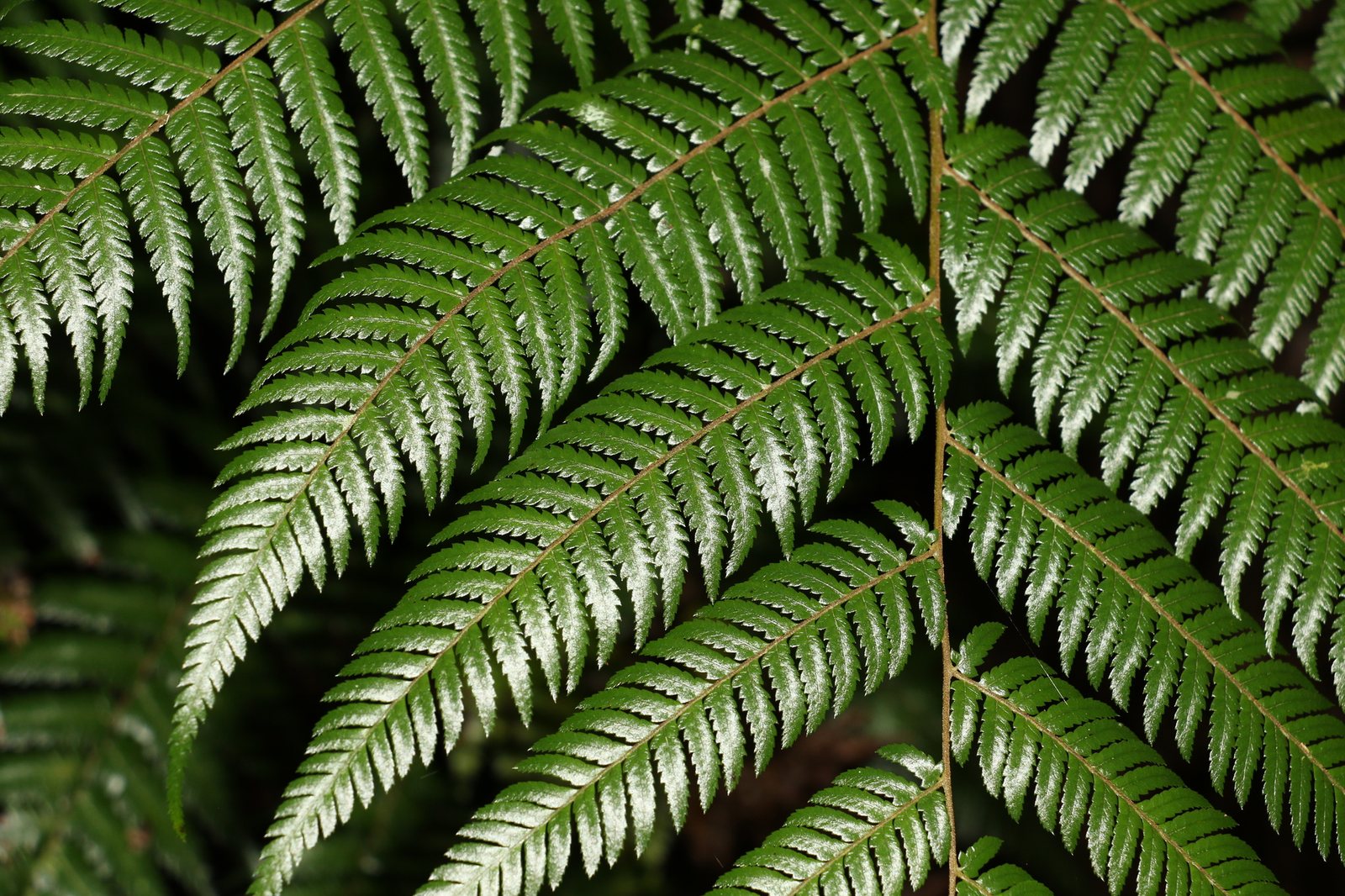
This fast-growing Australian tree fern develops a slender trunk topped by a broad crown of finely divided, arching fronds. Gardeners grow it for its lush canopy and strong vertical shape in sheltered, humid gardens; in colder climates, it needs a conservatory or frost-free winter shelter.
At a glance
- Sun
- Partial shade or bright filtered light; tolerates more sun in humid coastal climates if the roots stay moist. Shelter from hot afternoon sun and drying winds.
- Water
- Keep the root zone consistently moist but not waterlogged. Water frequently during hot weather; container plants may need daily watering.
- Soil
- Humus-rich, moisture-retentive soil with good drainage, preferably slightly acidic. Avoid compacted soil and standing water.
- Height
- 20-40 ft (6-12 m) outdoors in suitable climates; usually smaller in containers
- Spread
- 10-15 ft (3-4.5 m)
- Foliage
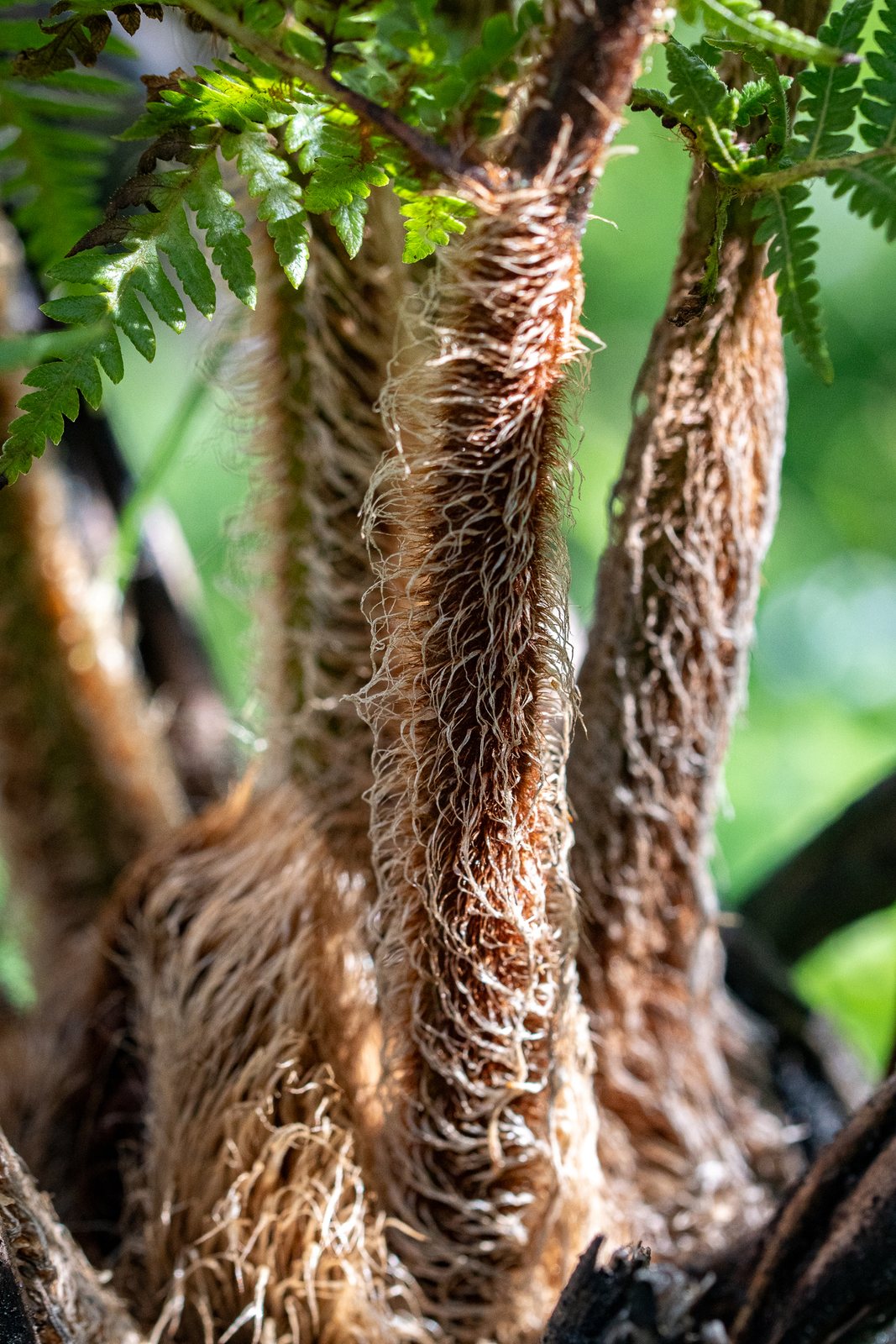
- Evergreen. Large, bright to mid-green, finely divided fronds form an umbrella-like crown. Young fronds unfurl as hairy croziers, and older trunks develop conspicuous oval leaf scars.
- Growth
- Fast for a tree fern in warm, moist conditions; slow in cool climates or containers.
- Care needed
- Medium
The year at a glance
- Heat tolerant
- Wildlife
- Low allergen
| J | F | M | A | M | J | J | A | S | O | N | D | |
|---|---|---|---|---|---|---|---|---|---|---|---|---|
| Plant |
Northern hemisphere months. In Australia, shift them by six.
- Difficulty
- Hard
- Toughness
- Needs looking after
Will it suit your garden?
Pick your zone, country, light and whether you have pets.
Full sun is 6 or more hours of direct sun a day, part shade 3 to 6 hours, shade under 3.
How it grows
Planting day
4 ft (1.1 m)
After 1 year
12 ft (3.7 m)
After 2 years
21 ft (6.4 m)
After 3 years
30 ft (9 m)
full size
About 3 years to full size.
From a typical nursery size, at an average rate for this kind of plant. A rule of thumb, not a forecast.
Good to know
- Cats and dogs
- Safe
- Native to
- Australia
- Invasive in
- the US
- Growth rate
- Moderate
Care
Jobs through the year
- WaterApr–May, Sep, every 4 days
- For established plants outdoors, keep roots moist but drained; young or potted plants need more frequent checks.
- WaterJun–Aug, every 2 days
- Water the root zone during dry weather; pots may need daily watering in heat.
- WaterJan–Mar, Oct–Dec, every 14 days
- In frost-free winter shelter, check the root ball and water only enough to keep it slightly moist.
- FeedMay–Aug, every 30 days
- Apply dilute balanced liquid feed during active growth at the labelled container rate.
- MulchMay
- Refresh leaf mould or compost around roots, keeping the trunk base clear.
- PruneMay–Aug
- Remove fully brown or broken fronds only; never cut the growing tip.
- ProtectSep–Oct
- Not winter-hardy locally: grow in a movable container and bring into bright, frost-free shelter before frost.
- ProtectJan–Apr, Oct–Dec, every 14 days
- Inspect sheltered fronds for scale and mites; keep the crown frost-free.
- Water the soil deeply and regularly; do not rely on misting the trunk or foliage to supply the roots.
- Apply a dilute, balanced liquid feed monthly during active growth, following the product's container-plant rate.
- Mulch the root zone with leaf mould or compost, keeping mulch clear of the trunk base.
- Shelter the crown from frost and cold wind; move container plants into a bright, frost-free space before freezing weather.
- Plant nursery-grown specimens with an intact root system; do not buy or plant severed trunks as you might with some other tree ferns.
Pruning. Remove fully brown or broken fronds in spring or during active growth, cutting the stalk without damaging the trunk or crown. Leave green fronds in place and never cut off the growing tip.
Through the year
- Spring
- Plant or repot once frost risk has passed, preserving the root ball and the original planting depth.
- Spring
- Refresh the mulch and begin dilute feeding when new fronds start expanding.
- Summer
- Check soil moisture frequently and water deeply, especially during hot or windy weather.
- Late summer
- Inspect frond undersides for scale insects and mites, particularly on plants kept under cover.
- Autumn
- Stop feeding as growth slows and arrange frost-free shelter for container plants in cold regions.
- Winter
- Keep sheltered plants slightly moist rather than wet, and remove heavy snow before it bends or breaks fronds.
In the garden
- Use as a canopy plant above lower ferns and shade-loving groundcovers in a sheltered woodland garden.
- Place as a single architectural specimen in a courtyard with enough room for the mature fronds.
- Combine with broad-leaved plants such as hostas and cast-iron plants for contrasting foliage textures.
- Grow in a large movable container beside a shaded terrace where winter shelter is available.
Garden styles it suits: Modern tropical, Architectural minimal, Woodland, Tropical, Australian native and Luxury resort.
Plant it with: Bird's nest fern, Cast-iron plant, Clivia, Hosta, Japanese painted fern and Soft shield fern.
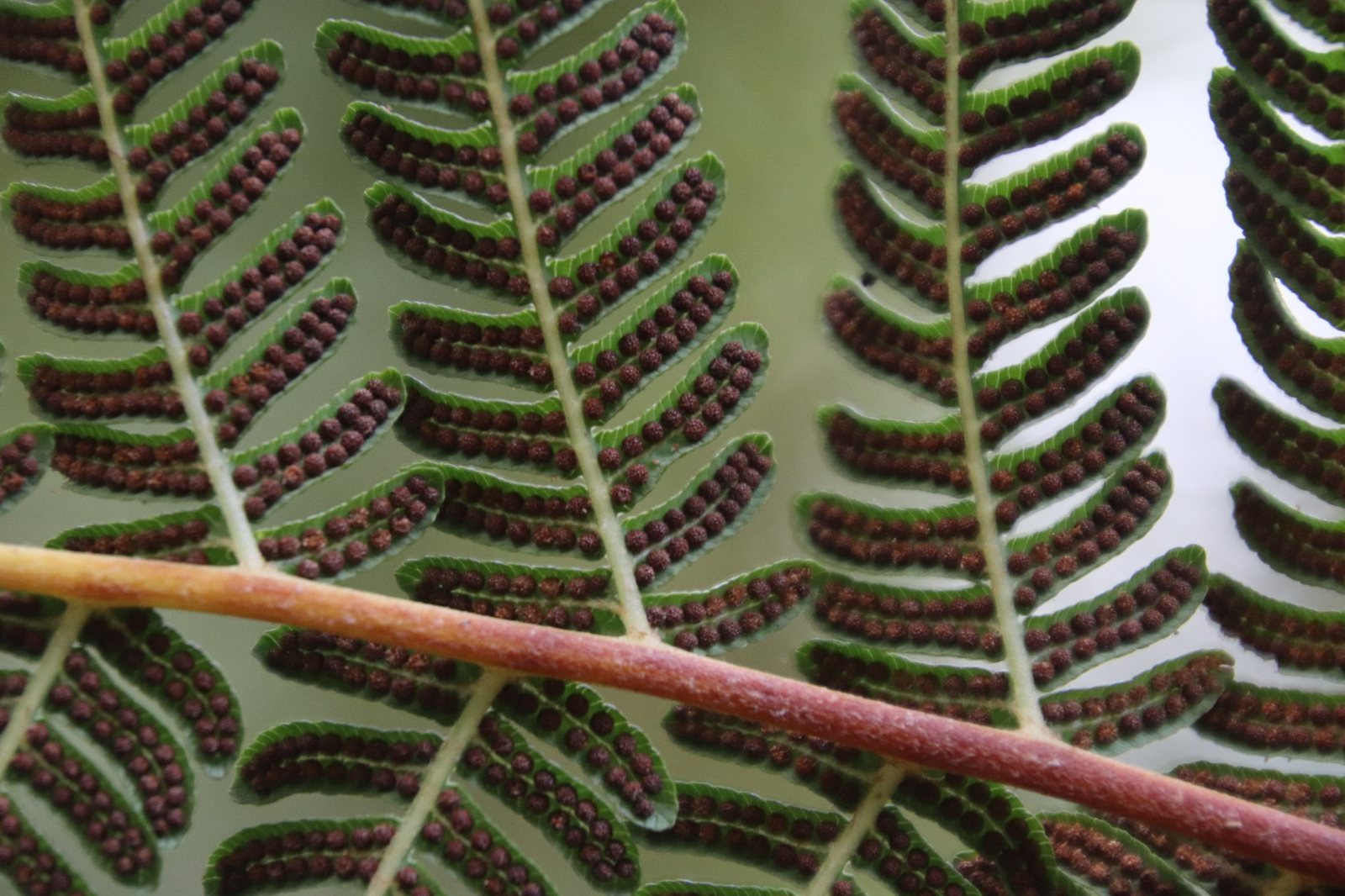
Wildlife: The crown and fibrous trunk can shelter small invertebrates, and older trunks may support mosses and other ferns in humid gardens. It produces spores rather than flowers, so it offers no nectar or pollen.
Problems to watch for
- Brown, crisp fronds usually indicate dry roots, hot sun or drying wind: restore steady watering and provide afternoon shade and shelter.
- Frost can blacken fronds and kill the growing point: protect before freezing weather rather than relying on recovery afterward.
- Scale insects and spider mites can infest sheltered plants: inspect frond undersides, wash off mites and treat persistent infestations with a product labelled for ferns.
- Root rot causes decline in persistently wet, poorly aerated soil: improve drainage, empty container saucers and avoid keeping the root ball saturated.
Safety
Not known to be toxic to people, cats, dogs or horses, although species-specific toxicity information is limited. Do not eat the fronds or croziers; the hairs and scales on young growth can irritate skin and eyes.
Where it spreads. Invasive in Hawaii and parts of New Zealand and South Africa, where windblown spores allow it to colonize moist habitats. Check local restrictions before planting, especially near native forest.
Easily confused with
Soft tree fern (Dicksonia antarctica)
Usually has a much thicker, densely fibrous trunk and a slower growth rate. Australian tree fern has a slimmer trunk with conspicuous oval scars where old fronds have fallen.
Rough tree fern (Cyathea australis)
Usually has a rougher trunk with persistent, prickly frond bases and coarser foliage. Australian tree fern generally sheds old frond bases more cleanly, exposing oval scars.
The name
The epithet cooperi honours Daniel Cooper, a nineteenth-century Australian politician and patron.
Propagation. Propagate from spores sown on a clean, moist medium under warm, humid conditions; raising a trunked plant takes years. It is not normally divided and will not reliably regrow from a severed trunk.
Checked against open data
- Accepted botanical name
- Sphaeropteris cooperi
- Native range
- New South Wales and Queensland.
Sources: GBIF (CC BY 4.0) and Trefle (CC BY 4.0). The care and design notes are LandscapeGPT's own.
See it in your own yard.
Upload a photo of your yard and see it redesigned with plants that suit your climate, each checked against your zone.