Bald cypress
Taxodium distichum. Family Cupressaceae. Tree.
Also called Baldcypress, Swamp cypress, Deciduous cypress.
Bald cypress is a large, deciduous conifer native to the southeastern United States, grown for its feathery foliage, rusty autumn colour and flared trunk. It thrives beside water but also grows in ordinary garden soil with adequate moisture; older trees in wet ground may develop woody root projections called knees.
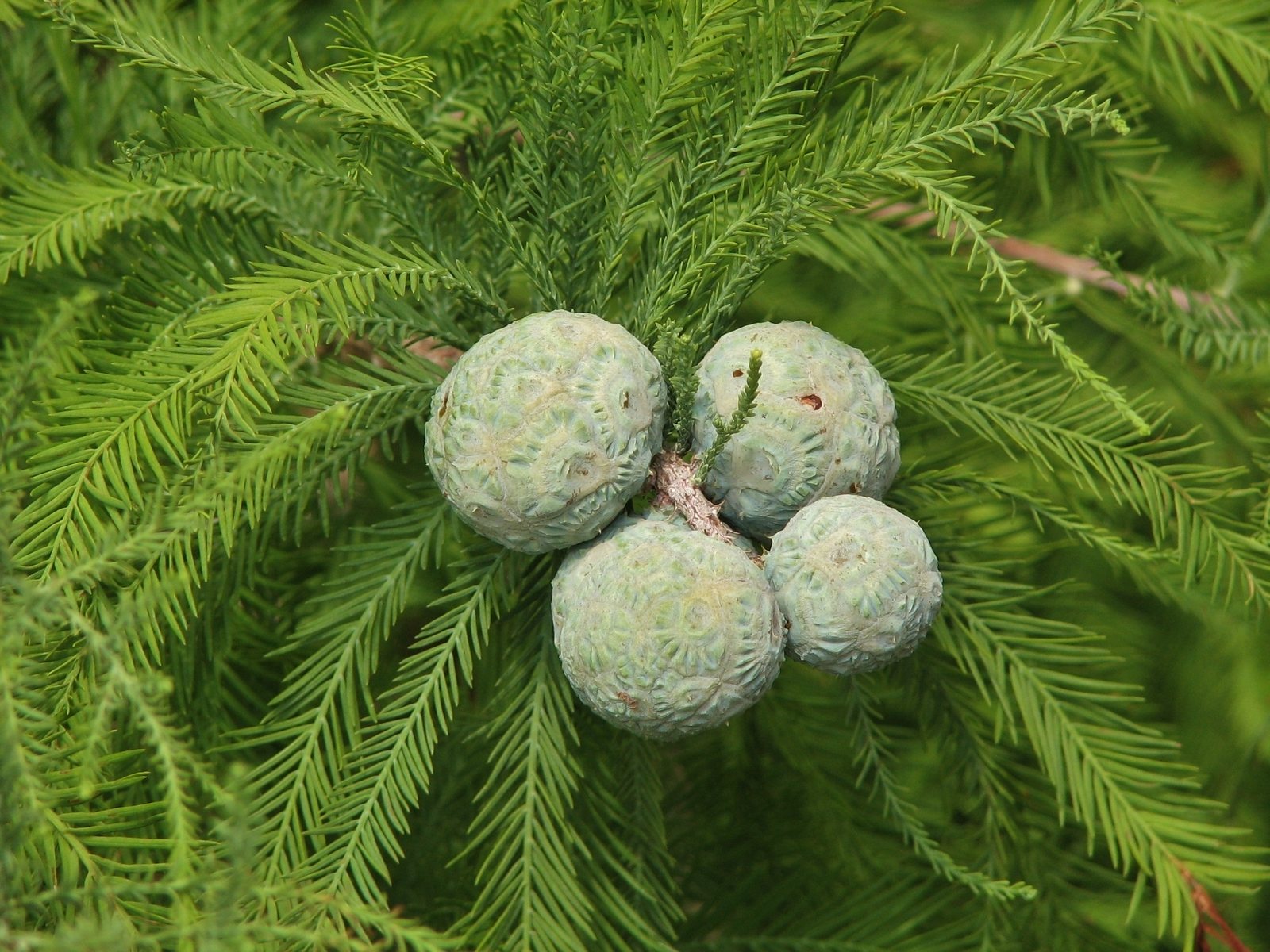
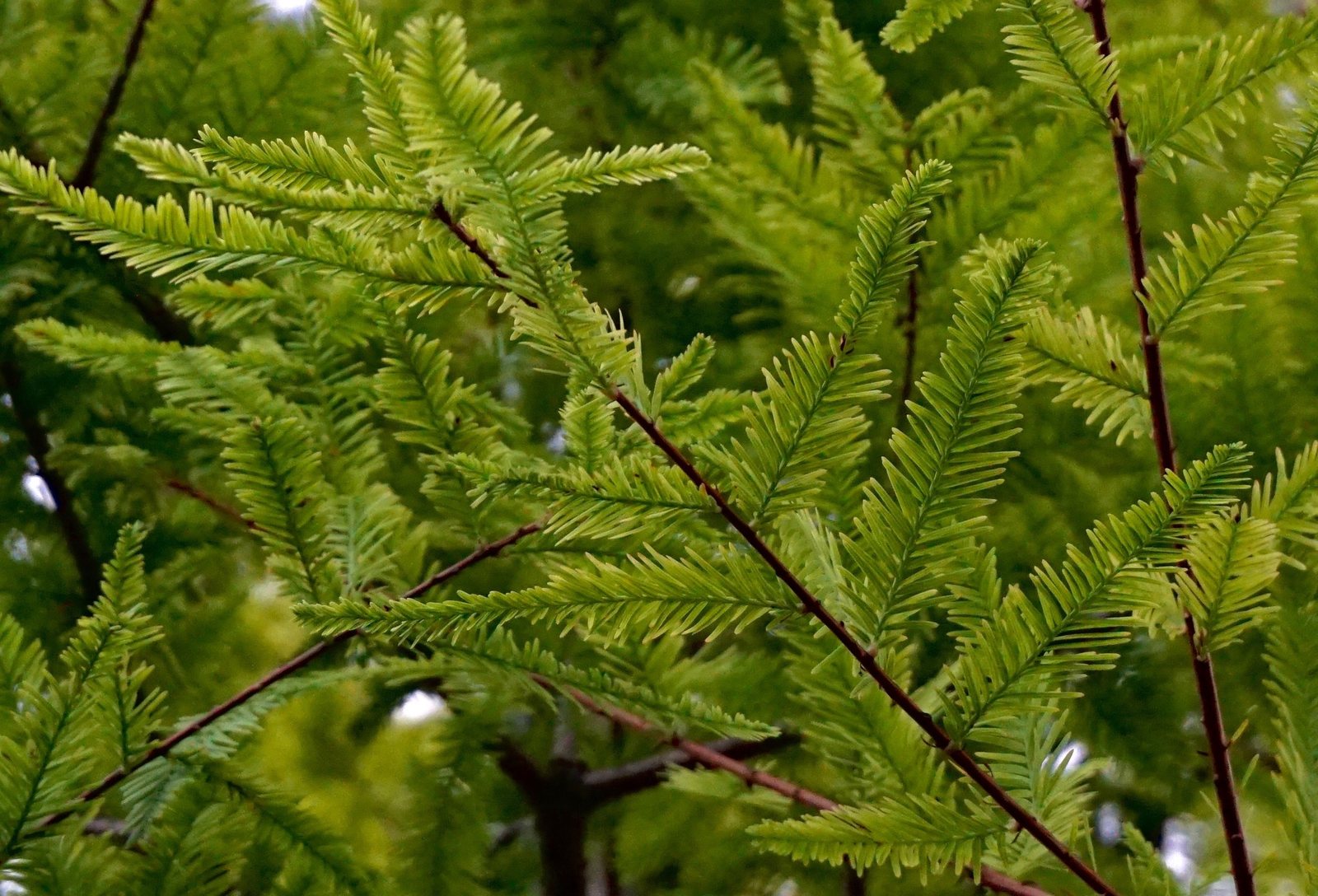
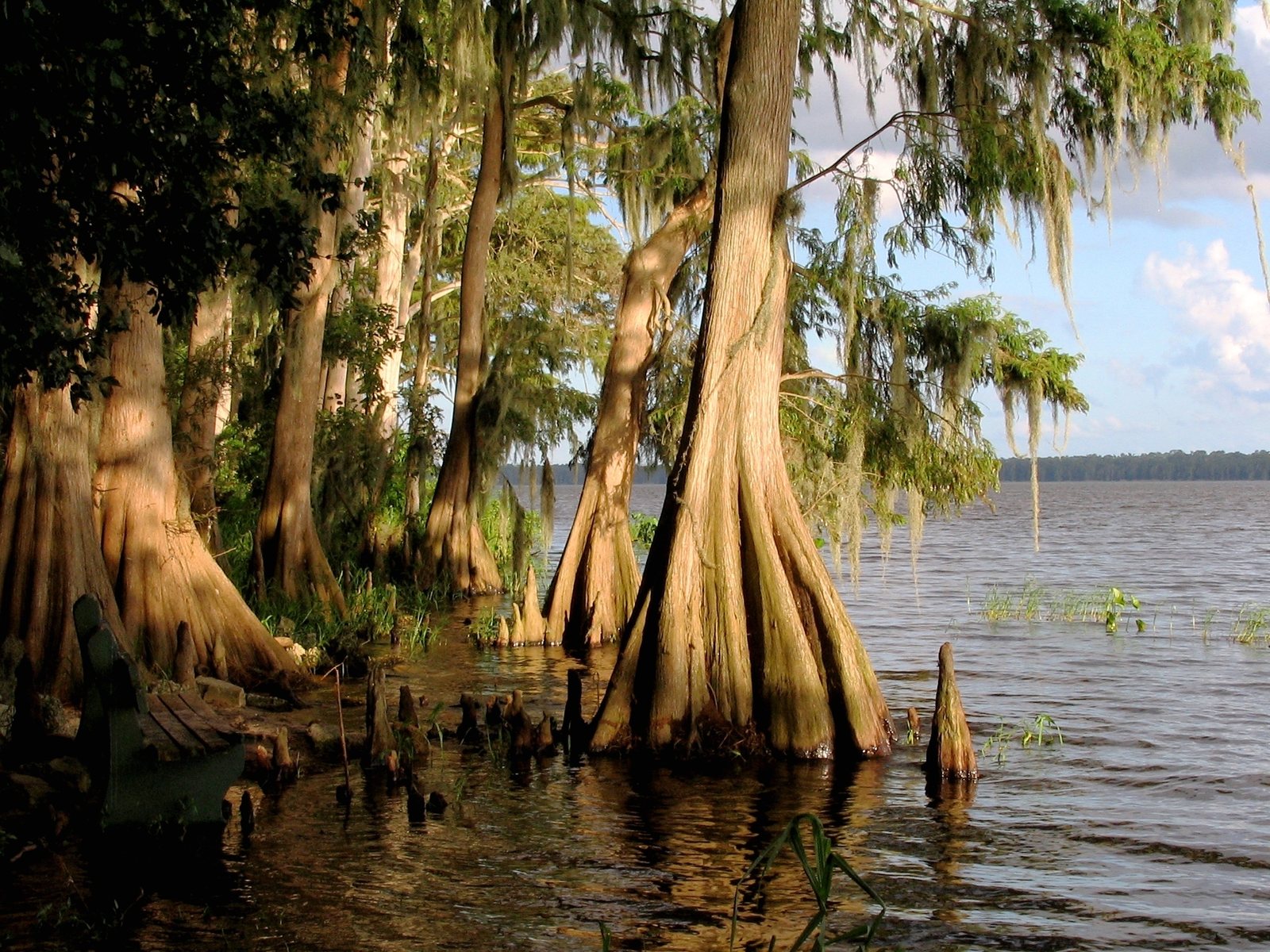
At a glance
- Sun
- Full sun; tolerates light shade but develops a better crown in an open position.
- Water
- Prefers consistently moist to wet ground and tolerates prolonged flooding once established. Established trees tolerate occasional dry spells, but young trees need regular watering.
- Soil
- Deep, acidic to neutral soil is best. Tolerates clay, poor drainage and standing fresh water; strongly alkaline soil can cause yellowing foliage.
- Height
- 50-70 ft (15-21 m), sometimes considerably taller with age
- Spread
- 20-30 ft (6-9 m), sometimes wider on old trees
- Foliage
- Soft, flat, yellow-green to mid-green needles arranged in two ranks along slender shoots. Foliage turns coppery orange to rusty brown in autumn, then falls with the small leafy branchlets.
- Growth
- Moderate to fast with ample moisture; slower in dry soil or cool summers.
- Care needed
- Low
The year at a glance
- Cold hardy
- Heat tolerant
- Wildlife
| J | F | M | A | M | J | J | A | S | O | N | D | |
|---|---|---|---|---|---|---|---|---|---|---|---|---|
| Fruit | ||||||||||||
| Plant |
Northern hemisphere months. In Australia, shift them by six.
- Difficulty
- Easy
- Toughness
- Very tough
Will it suit your garden?
Pick your zone, country, light and whether you have pets.
Full sun is 6 or more hours of direct sun a day, part shade 3 to 6 hours, shade under 3.
How it grows
Planting day
7 ft (2.2 m)
After 1 year
10 ft (3 m)
After 2 years
12 ft (3.7 m)
After 3 years
15 ft (4.5 m)
After 5 years
20 ft (6.1 m)
About 20 years to full size.
From a typical nursery size, at an average rate for this kind of plant. A rule of thumb, not a forecast.
Good to know
- Cats and dogs
- Safe
- Native to
- the US
- Growth rate
- Moderate
Care
Jobs through the year
- WaterApr–May, Sep–Oct, every 14 days
- Deep-water established trees if soil dries; water young trees more often for their first three seasons.
- WaterJun–Aug, every 7 days
- In dry weather, soak the root zone; omit watering where soil remains moist or wet.
- MulchMar–Apr
- Maintain 5–8 cm of organic mulch over roots, clear of the trunk.
- PruneFeb–Mar
- Remove dead, damaged or crossing branches before growth starts; preserve the central leader.
- Choose a permanent site with room for a large crown and broad, flared trunk.
- Water deeply during dry weather for the first two or three growing seasons.
- Apply a 2-3 in (5-8 cm) mulch layer over the root area, keeping it clear of the trunk.
- Feed only if growth is poor and a soil test identifies a nutrient shortage.
- Allow space for possible knees in wet ground; keep these areas away from mowing routes and paths.
- Stake only if the root ball moves in the wind, and remove supports after establishment.
Pruning. Prune in late winter or early spring before new growth, removing dead, damaged or crossing branches. Preserve the central leader and avoid topping or unnecessary removal of large limbs.
Through the year
- Autumn
- Plant while the soil is workable, or wait until spring in very cold regions.
- Late winter
- Check the branch structure and remove dead or damaged growth before buds open.
- Spring
- Refresh mulch and check that ties or tree guards are not restricting the trunk.
- Late spring
- Check new foliage for persistent yellowing; test soil pH before applying fertiliser.
- Summer
- Water young trees deeply during dry spells, soaking the root area rather than sprinkling the surface.
- Late autumn
- Clear fallen branchlets from paths and drains; leave them as litter beneath the tree where practical.
In the garden
- Plant beside a large pond or rain garden for reflected foliage, autumn colour and a sculptural trunk.
- Use as a specimen in a broad lawn, allowing for eventual shade and possible knees in damp ground.
- Plant loose groups in a large wet garden with sedges, rushes and moisture-loving perennials.
- Use its fine-textured foliage as a contrast to broad-leaved trees and shrubs in a spacious woodland garden.
Garden styles it suits: Bog garden, Woodland, Southern, Grand estate, Autumn colour and Architectural minimal.
Plant it with: Virginia sweetspire, Buttonbush, Royal fern, Swamp milkweed, Blue flag iris and Tussock sedge.
Wildlife: Seeds are eaten by squirrels and some birds, including waterfowl. Mature trees provide nesting and shelter, and trees growing in wetlands contribute valuable waterside habitat.
Problems to watch for
- Yellow foliage with greener veins can indicate iron chlorosis in alkaline soil. Test the soil; use an appropriate iron treatment for short-term relief, but favour a more suitable site where alkalinity is persistent.
- Drought can cause browning and early leaf drop, especially on young trees. Water deeply and mulch the root area.
- Bagworms can strip foliage in regions where they occur. Remove bags by hand on small trees in winter; seek locally appropriate treatment advice for larger infestations.
- Woody knees can obstruct mowing and become trip hazards in wet sites. Plan an unmown planting area around the tree rather than repeatedly cutting the knees.
Safety
Not known to be toxic to cats, dogs, horses or people. No part is recognised as a significant poisoning hazard, but needles, cones and wood are not food and may cause stomach upset if eaten.
Easily confused with
Dawn redwood (Metasequoia glyptostroboides)
Also loses its feathery foliage in autumn, but its leaves and small branchlets occur in opposite pairs; bald cypress has alternate leaves and branchlets.
Pond cypress (Taxodium ascendens)
Usually has short, awl-shaped leaves held close to upright shoots rather than the flat, spreading, two-ranked foliage typical of bald cypress. It is sometimes classified as a variety of bald cypress.
Montezuma cypress (Taxodium mucronatum)
Often retains its foliage in mild climates and is less cold-hardy. It rarely develops the conspicuous knees associated with bald cypress, though young trees can be difficult to distinguish.
The name
Taxodium means yew-like, distichum refers to the two-ranked leaves, and bald cypress describes its bare winter crown.
Propagation. Grow from seed collected from mature cones. Seeds usually benefit from about two to three months of cold, moist stratification before spring sowing; keep seedlings consistently moist but not submerged. Named cultivars are generally propagated by grafting.
Checked against open data
- Accepted botanical name
- Taxodium distichum
- In the US and Canada
- Native in the lower 48 states.
- Native range
- Alabama, Arkansas, Delaware, Florida, Georgia, Guatemala, Illinois, Indiana, Kentucky, Louisiana, Maryland and Mexico Central.
- Measured
- Soil pH 4.5 to 6. Average height 3220 cm.
Sources: GBIF (CC BY 4.0), USDA PLANTS and Trefle (CC BY 4.0). The care and design notes are LandscapeGPT's own.
See it in your own yard.
Upload a photo of your yard and see it redesigned with plants that suit your climate, each checked against your zone.