Bamboo muhly
Muhlenbergia dumosa. Family Poaceae. Ornamental grass.
Also called Bamboo muhly grass.
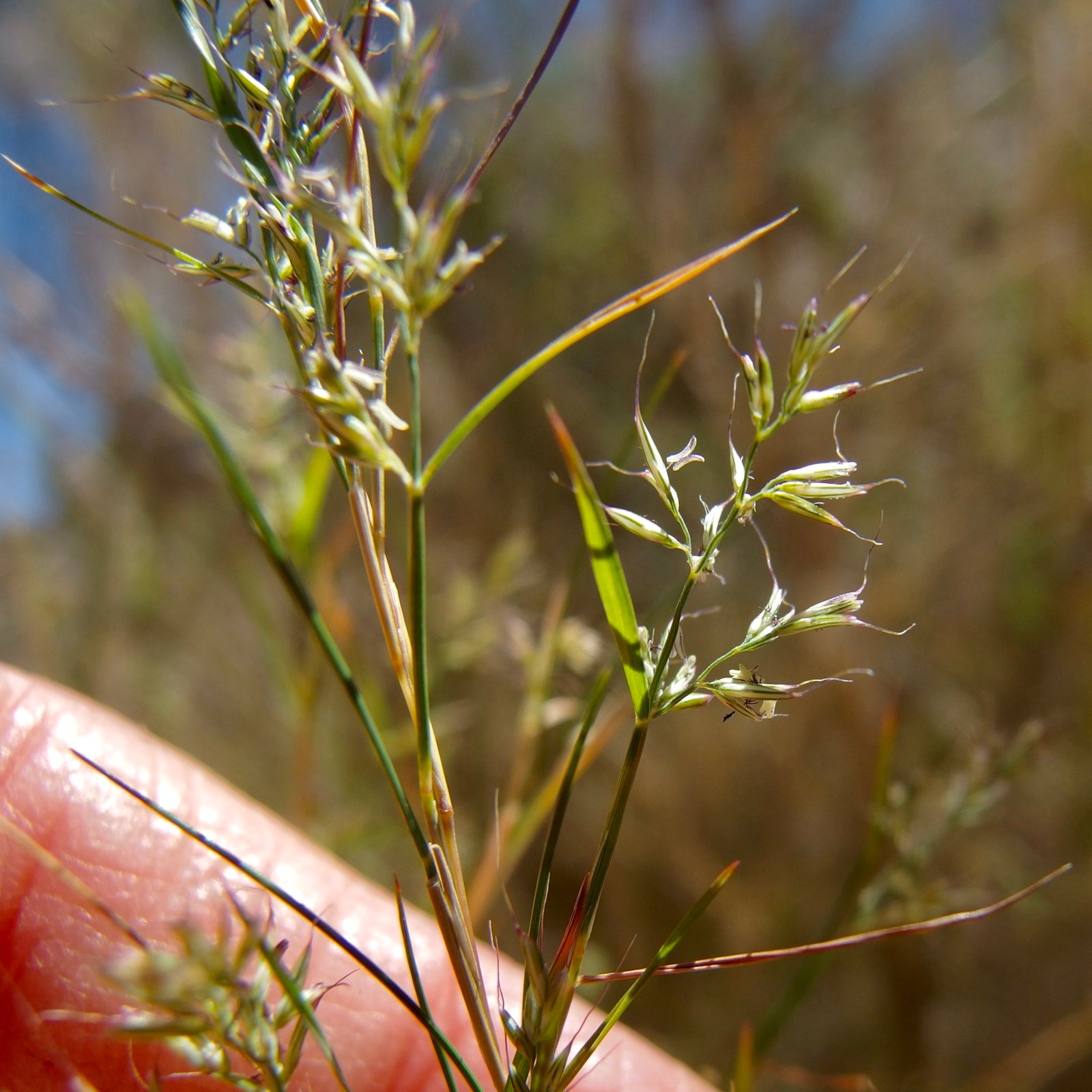
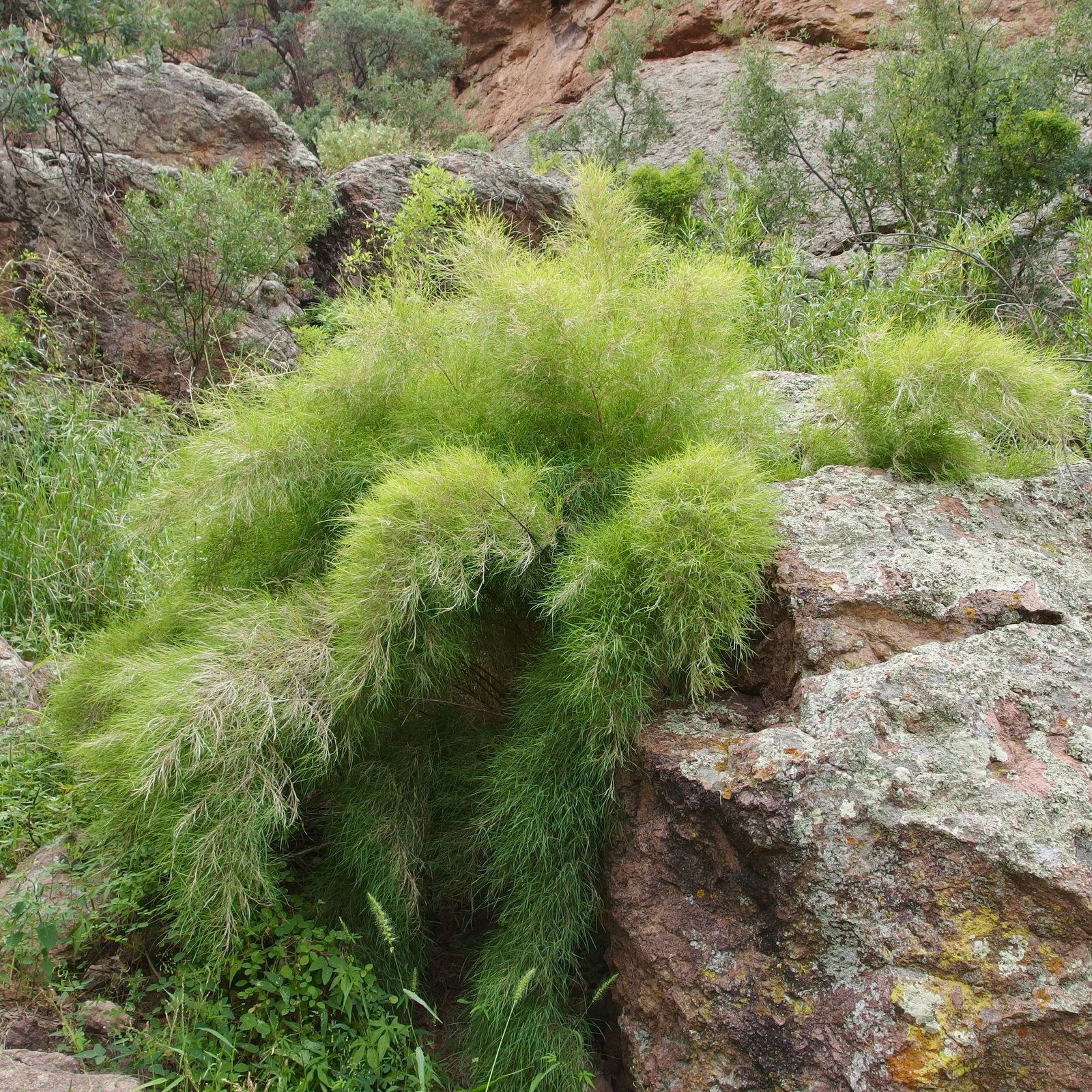
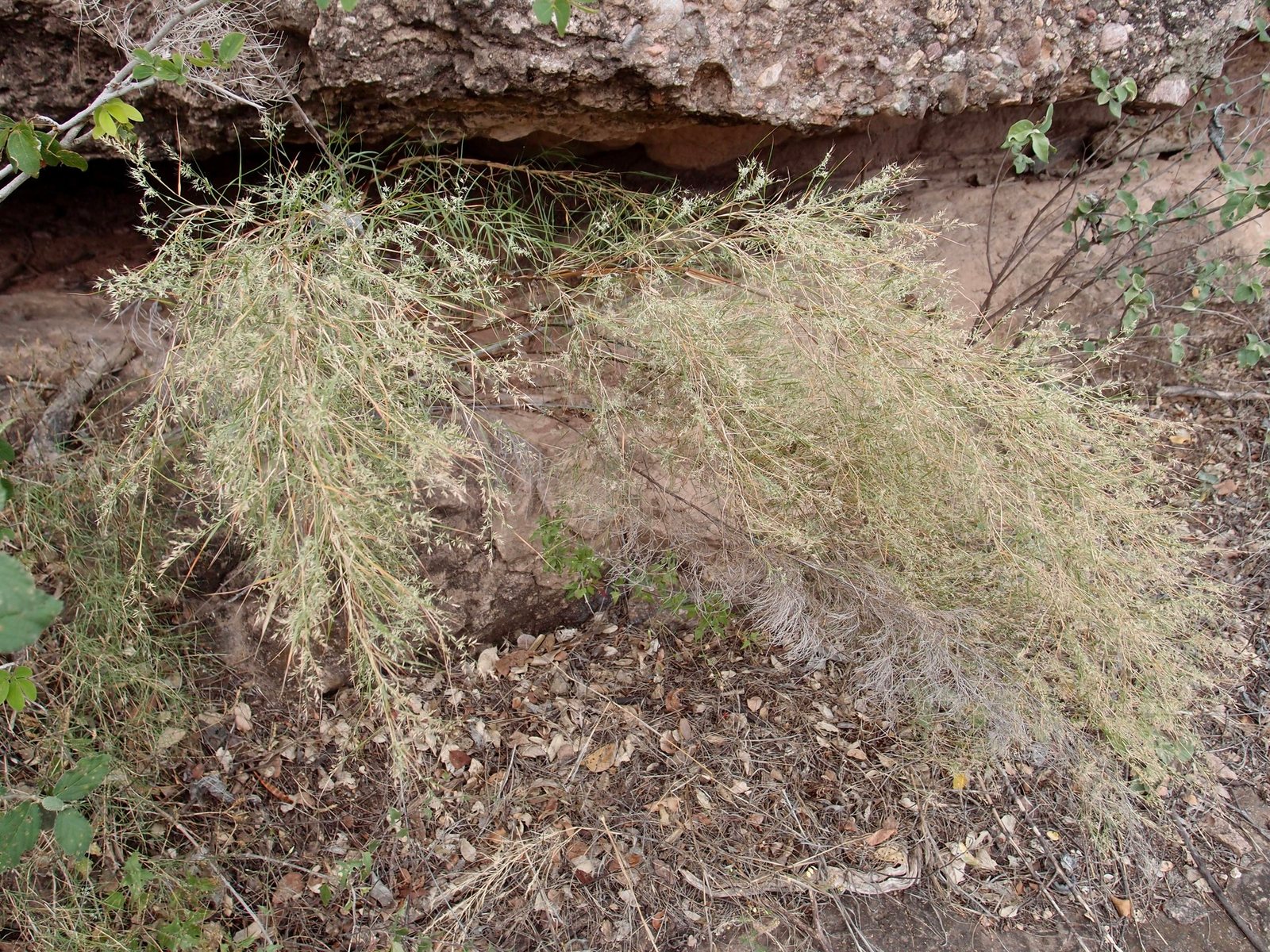
Bamboo muhly is a clump-forming grass native to southern Arizona and Mexico, grown for its fine leaves and airy, bamboo-like stems. It adds soft texture and movement without the running habit of many bamboos. It stays evergreen in frost-free gardens but may lose foliage or die back after freezing weather.
At a glance
- Sun
- Full sun to light partial shade; best with some afternoon shade in very hot inland gardens.
- Water
- Water regularly while establishing, then deeply during prolonged dry spells. Established plants tolerate drought but look fuller with occasional summer watering.
- Soil
- Well-drained sandy, gravelly or loamy soil; tolerates relatively poor soil but dislikes waterlogged ground, especially in winter.
- Height
- 4-6 ft (1.2-1.8 m)
- Spread
- 3-5 ft (0.9-1.5 m)
- Flowers
- Small, inconspicuous greenish flowers in late summer to autumn, becoming tan; grown mainly for foliage.
- Foliage
- Evergreen. Very narrow, soft green leaves carried along slender, branching stems, giving an open, feathery appearance.
- Growth
- Moderate to fast in warm weather.
- Care needed
- Low
The year at a glance
- Drought tolerant
- Heat tolerant
- Wildlife
| J | F | M | A | M | J | J | A | S | O | N | D | |
|---|---|---|---|---|---|---|---|---|---|---|---|---|
| Plant |
Northern hemisphere months. In Australia, shift them by six.
- Difficulty
- Moderate
- Toughness
- Fairly tough
Will it suit your garden?
Pick your zone, country, light and whether you have pets.
Full sun is 6 or more hours of direct sun a day, part shade 3 to 6 hours, shade under 3.
How it grows
Planting day
1.1 ft (0.35 m)
After 1 year
3 ft (0.93 m)
After 2 years
5 ft (1.5 m)
full size
About 2 years to full size.
From a typical nursery size, at an average rate for this kind of plant. A rule of thumb, not a forecast.
Good to know
- Cats and dogs
- Safe
- Growth rate
- Fast
Care
Jobs through the year
- WaterApr–May, Sep, every 14 days
- Water established plants only as soil dries; containers and new plants need more frequent checks.
- WaterJun–Aug, every 14 days
- Give established clumps a deep soak during prolonged drought; avoid standing water.
- WaterJan–Mar, Oct–Dec, every 28 days
- For frost-free overwintering containers, water sparingly before the root ball dries completely.
- FeedApr–May
- Apply a light balanced feed only if growth is weak.
- MulchMay
- Apply a thin mulch, keeping it clear of stems and crown.
- PruneMay
- Remove dead stems and lightly thin after frost risk passes; do not shear to ground level.
- DivideMay–Jun
- Divide established clumps only if propagation or size reduction is needed.
- ProtectJan–Apr, Oct–Dec
- In zone 6–7 or cold UK gardens, overwinter containers in bright, frost-free shelter.
- Water deeply through the first growing season, allowing the soil surface to dry between waterings.
- Keep the crown out of standing water; use a container or raised bed where winter drainage is poor.
- Feed lightly in spring only if growth is weak; avoid heavy nitrogen feeding.
- Apply a thin mulch around the clump, keeping it clear of the stems.
- In colder climates, grow in a container and overwinter in a bright, frost-free place.
Pruning. In spring, after the risk of hard frost has passed, remove dead or frost-damaged stems at the base and lightly thin congested growth. Avoid routinely shearing the whole clump to the ground, which removes its branching framework and can leave it slow to regain its shape.
Through the year
- Spring
- Remove dead stems once frost risk has passed and new growth is visible.
- Late spring
- Plant or divide once the soil is warm, and water thoroughly.
- Summer
- Water young plants regularly; give established clumps a deep soak during extended drought.
- Autumn
- Leave healthy stems standing and check that drainage is clear before wetter weather.
- Late autumn
- Move container plants under bright, frost-free cover where winters are too cold.
- Winter
- Water sheltered container plants sparingly, keeping the root ball from drying out completely.
In the garden
- Plant behind agaves or aloes to contrast soft foliage with bold, sculptural leaves.
- Repeat loose clumps through gravel gardens for movement without a dense visual barrier.
- Use beside a patio or courtyard wall as a light, informal screen in warm climates.
- Grow in a large container where the arching stems can be seen against a plain background.
Garden styles it suits: Desert modern, Modern Mediterranean, Southwestern, Dry gravel garden, Desert / xeriscape and Modern courtyard.
Plant it with: Red yucca, Parry's agave, Autumn sage, Desert marigold, Pink muhly grass and Trailing lantana.
Wildlife: Dense clumps provide shelter for insects and small garden animals. The flowers are wind-pollinated rather than a useful nectar source.
Problems to watch for
- Root and crown rot in wet soil: improve drainage, reduce watering and replace badly rotted plants.
- Frost-browned foliage or stem dieback: wait until spring to remove damaged growth; shelter containers before freezing weather.
- Sparse, floppy growth in deep shade: move to a brighter position and avoid excessive feeding.
- Brown leaf tips during prolonged drought: water deeply and check that container roots have not become severely crowded.
Safety
Not known to be toxic to people, cats, dogs or horses; no part is recognized as poisonous. It is an ornamental grass, not a food plant.
Easily confused with
Mexican weeping bamboo (Otatea acuminata)
A true bamboo with much taller, woody canes and long, drooping leaves; bamboo muhly forms a smaller, softer mound with very fine foliage.
Pink muhly grass (Muhlenbergia capillaris)
Has leaves concentrated near the base and conspicuous pink flower clouds in autumn, rather than leafy, branching, bamboo-like stems.
The name
Muhlenbergia honors botanist Gotthilf Heinrich Ernst Muhlenberg, while dumosa means bushy, referring to the plant's branching growth.
Propagation. Divide established clumps in late spring or early summer as active growth begins. Use a sharp spade or saw, retain roots and several healthy stems on each division, and keep watered until established.
Checked against open data
- Accepted botanical name
- Muhlenbergia dumosa
- Native range
- Arizona, Mexico Central, Mexico Northeast, Mexico Northwest and Mexico Southwest.
Sources: GBIF (CC BY 4.0) and Trefle (CC BY 4.0). The care and design notes are LandscapeGPT's own.
See it in your own yard.
Upload a photo of your yard and see it redesigned with plants that suit your climate, each checked against your zone.