Bangalow palm
Archontophoenix cunninghamiana. Family Arecaceae. Tree.
Also called King palm, Piccabeen palm.
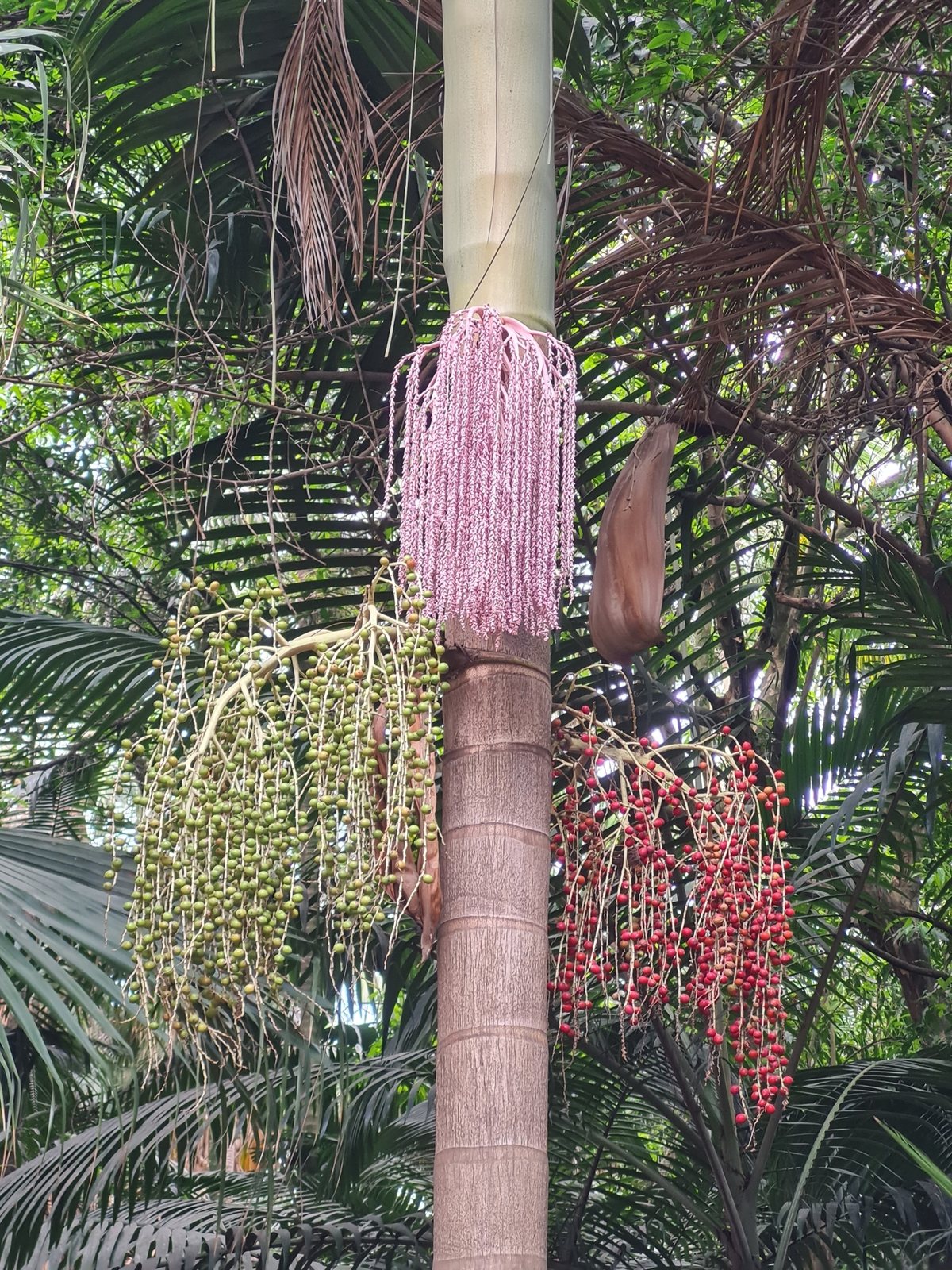
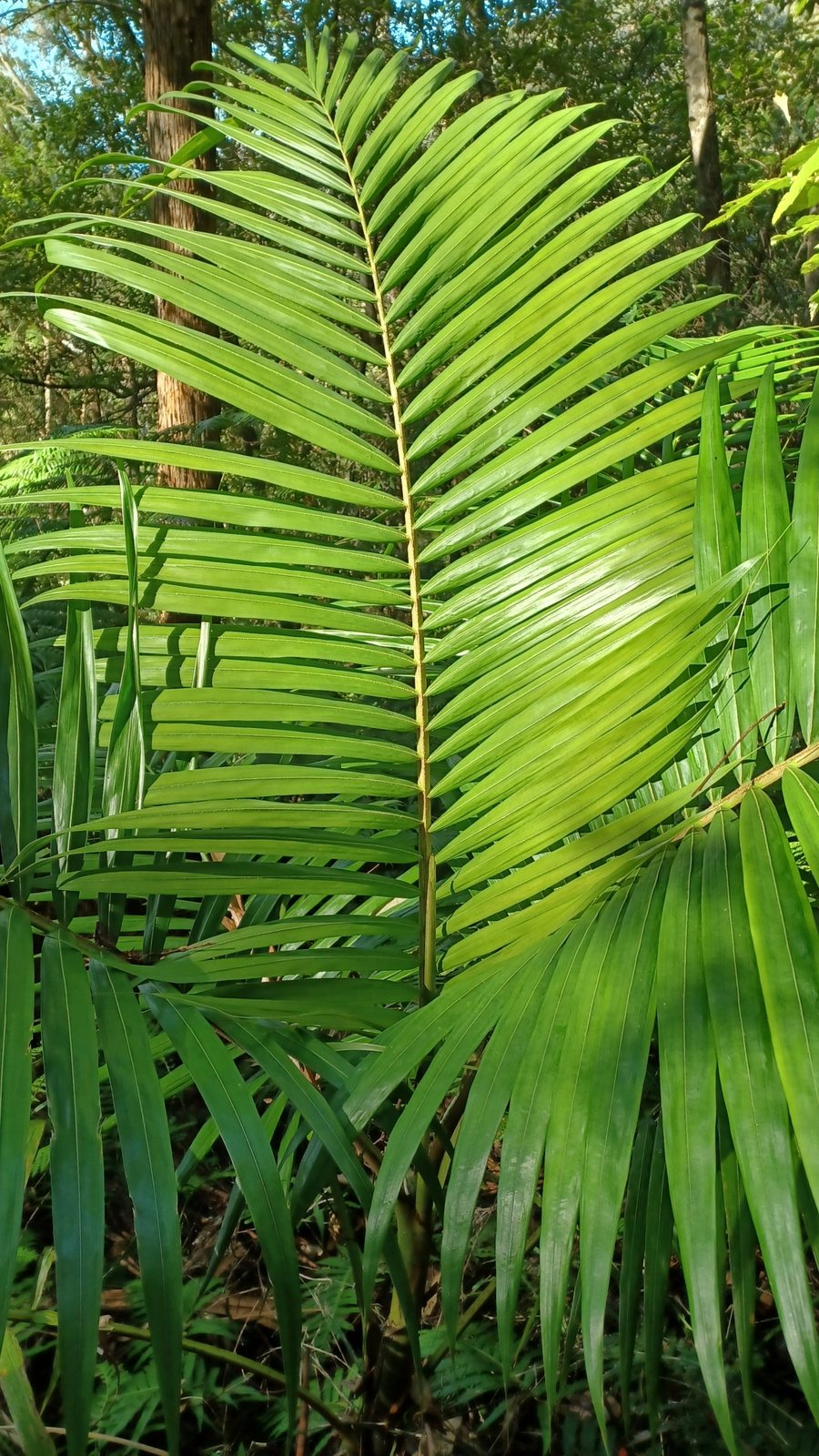
A tall, evergreen palm from eastern Australia's moist forests, with a slender, ringed trunk, smooth green crownshaft and arching feather-like fronds. Grow it for a leafy canopy and strong vertical shape in warm, sheltered gardens; it needs regular moisture and is not reliably hardy through freezing winters.
At a glance
- Sun
- Full sun to partial shade; young palms benefit from light shade, especially in hot, dry climates.
- Water
- Keep the root zone consistently moist but not waterlogged. Established palms still need deep watering during dry weather.
- Soil
- Moist, fertile, well-drained soil, preferably slightly acidic to neutral; avoid dry sand, strongly alkaline soil and stagnant water.
- Height
- 40-65 ft (12-20 m)
- Spread
- 10-15 ft (3-4.5 m)
- Flowers
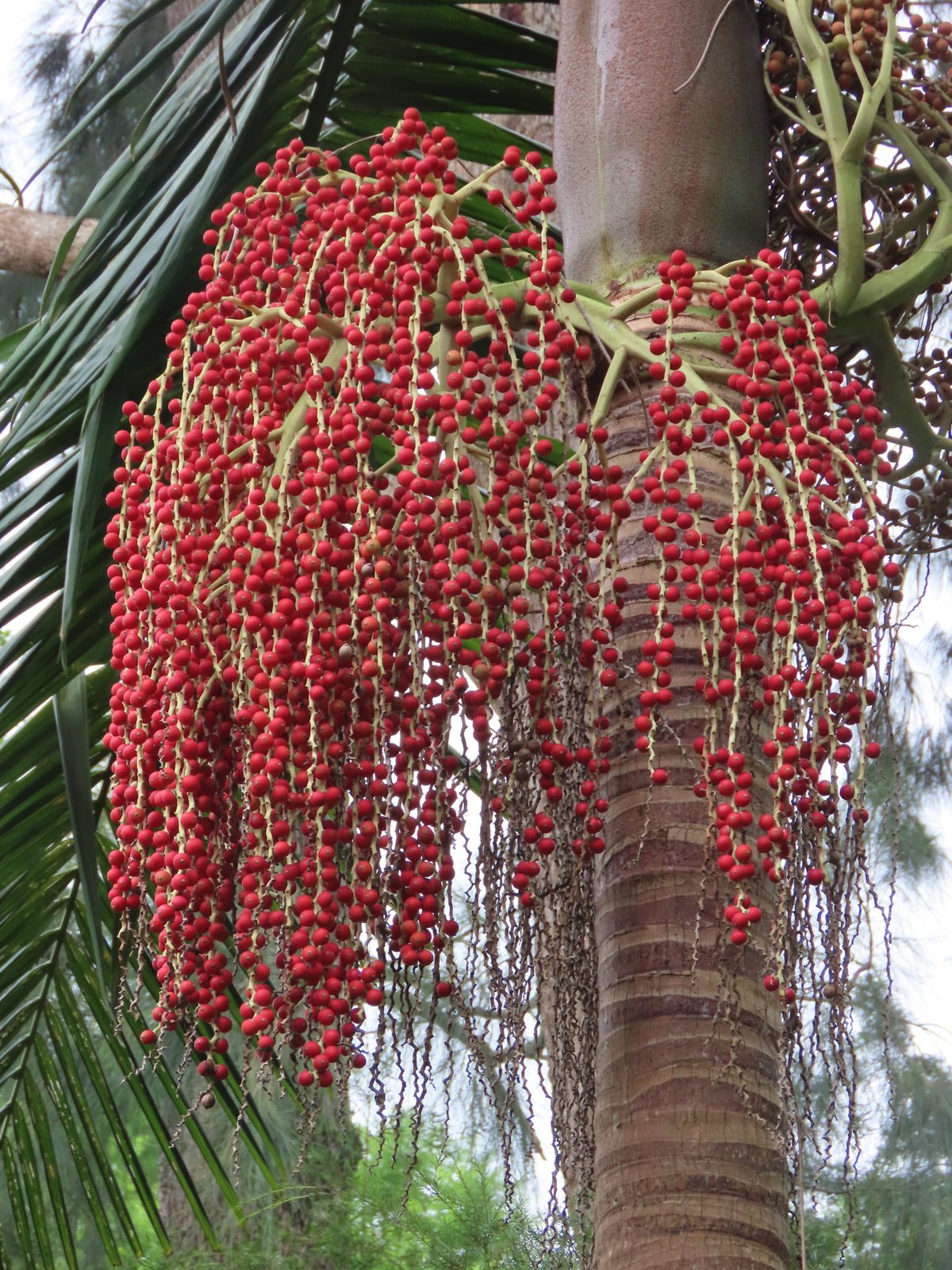
- Branched clusters of small lilac to purple flowers below the crownshaft, mainly in spring and summer; flowering can extend longer in warm climates. Small red fruits follow.
- Foliage
- Evergreen. Long, arching, feather-like fronds with narrow green leaflets that are green beneath rather than silvery.
- Growth
- Moderate to fast with warmth, moisture and adequate nutrition.
- Care needed
- Medium
The year at a glance
- Pollinators
- Heat tolerant
- Wildlife
| J | F | M | A | M | J | J | A | S | O | N | D | |
|---|---|---|---|---|---|---|---|---|---|---|---|---|
| Flowers | ||||||||||||
| Fruit | ||||||||||||
| Plant |
Northern hemisphere months. In Australia, shift them by six.
- Difficulty
- Hard
- Toughness
- Needs looking after
Will it suit your garden?
Pick your zone, country, light and whether you have pets.
Full sun is 6 or more hours of direct sun a day, part shade 3 to 6 hours, shade under 3.
How it grows
Planting day
7 ft (2 m)
After 1 year
9 ft (2.9 m)
After 2 years
12 ft (3.8 m)
After 3 years
15 ft (4.6 m)
After 5 years
21 ft (6.4 m)
About 16 years to full size.
From a typical nursery size, at an average rate for this kind of plant. A rule of thumb, not a forecast.
Good to know
- Cats and dogs
- Safe
- Native to
- Australia
- In the garden
- Spreads vigorously: plan to contain it.
- Growth rate
- Fast
Care
Jobs through the year
- WaterApr–May, Sep–Oct, every 7 days
- For established ground-grown palms in suitable climates, water if soil begins drying; containers and young palms need more.
- WaterJun–Aug, every 3 days
- Water established palms deeply as needed to maintain moist, freely draining soil; check containers daily.
- WaterJan–Mar, Nov–Dec, every 14 days
- Under winter cover, check moisture and water lightly before the root ball dries out.
- FeedMay–Aug, every 60 days
- Apply palm fertilizer with magnesium and trace elements; follow its label interval.
- MulchMay
- Maintain 5–8 cm of organic mulch, clear of the trunk.
- PruneMay–Aug
- Remove only fully brown fronds if necessary; never cut the growing tip.
- ProtectJan–May, Sep–Dec
- Not reliably hardy in zones 6–7; grow in a movable container and overwinter in bright, frost-free shelter.
- Plant in spring after frost risk has passed, keeping the root ball at its original depth.
- Water deeply during establishment and dry spells; do not let newly planted root balls dry out.
- Spread a 2-3 in (5-8 cm) layer of organic mulch over the root zone, keeping it clear of the trunk.
- Feed during the warm growing season with a palm fertiliser containing magnesium and trace elements, following the label.
- Choose a position sheltered from drying winds and salt spray, with room for falling fronds.
- Protect young palms from frost; in colder regions, grow young specimens in movable containers and overwinter them under cover.
Pruning. Remove only completely brown fronds if they do not fall away naturally, cutting without damaging the trunk or crownshaft. Never cut the growing tip or remove healthy green fronds to reduce the palm's height.
Through the year
- Spring
- Plant or repot young palms once frost risk has passed and temperatures are rising.
- Spring
- Apply palm fertiliser as directed and renew mulch without piling it against the trunk.
- Summer
- Water deeply during dry spells and check container plants frequently for drying.
- Summer
- Inspect foliage for mites and nutrient-deficiency symptoms; remove unwanted seedlings while small.
- Autumn
- Move container-grown palms under cover before cold nights and clear fallen fruit from paths.
- Winter
- Protect young outdoor palms during brief cold spells; water sheltered container plants sparingly but do not let the root ball dry out.
In the garden
- Plant as a tall focal point in a sheltered lawn or generous courtyard, allowing space for the mature canopy.
- Group several palms at irregular intervals to create a light canopy over ferns and other shade-tolerant foliage plants.
- Use beside a broad path or entrance for vertical emphasis, setting trunks back from areas where falling fronds could cause damage.
- Combine with large-leaved plants in a moist, tropical-style garden for contrasting leaf shapes.
Garden styles it suits: Modern tropical, Tropical, Luxury resort, Architectural minimal, Australian native and Balinese.
Plant it with: Bird's nest fern, Soft tree fern, Clivia, Cast-iron plant, Philodendron and Ginger lily.
Wildlife: Flowers attract visiting insects, and the red fruits are eaten by fruit-eating birds, which also disperse the seeds. This bird dispersal contributes to its spread outside cultivation.
Problems to watch for
- Brown tips and scorched fronds: check for dry soil, drying wind or salt exposure; water deeply and provide shelter.
- Yellowing or spotted older fronds: nutrient deficiencies are possible, especially in alkaline soil; use a complete palm fertiliser and investigate soil conditions rather than adding individual nutrients blindly.
- Spider mites on sheltered or indoor plants: look for fine webbing and stippled leaves; rinse foliage thoroughly and use an appropriate labelled treatment if needed.
- Root or crown rot: avoid stagnant soil and water collecting around damaged growing tissue; improve drainage and keep mulch away from the trunk. A dead growing point usually means the palm cannot recover.
Safety
Not known to be toxic to people, cats, dogs or horses, although species-specific information for horses is limited. No part is recognised as a major poisoning hazard; the fruits are not recommended for eating, and swallowed seeds may pose a choking risk.
Where it spreads. Invasive in parts of northern New Zealand, including the Auckland region, and in Atlantic Forest remnants in southeastern Brazil, where birds spread its seed. It is also naturalised in Hawaii. Avoid planting near vulnerable native forest in affected regions and remove volunteer seedlings.
Easily confused with
Alexandra palm (Archontophoenix alexandrae)
Its leaflets usually have conspicuously silvery-white undersides; Bangalow palm leaflets are green beneath.
Solitaire palm (Ptychosperma elegans)
Usually more slender, with leaflets that have blunt, irregularly notched tips rather than the pointed leaflet tips of Bangalow palm.
Kentia palm (Howea forsteriana)
Lacks the smooth green crownshaft below the leaves and generally has a more open crown with strongly drooping leaflets.
The name
The species name cunninghamiana honours the botanist and explorer Allan Cunningham.
Propagation. Grow from fresh seed. Remove the fruit flesh, clean the seeds and sow in a warm, moist, free-draining medium; germination can take several weeks to a few months. It is a solitary palm and cannot be divided.
Checked against open data
- Accepted botanical name
- Archontophoenix cunninghamiana
- Native range
- New South Wales and Queensland.
- Measured
- Average height 1500 cm.
Sources: GBIF (CC BY 4.0) and Trefle (CC BY 4.0). The care and design notes are LandscapeGPT's own.
See it in your own yard.
Upload a photo of your yard and see it redesigned with plants that suit your climate, each checked against your zone.