Beach strawberry
Fragaria chiloensis. Family Rosaceae. Groundcover.
Also called Coastal strawberry, Chilean strawberry, Sand strawberry.
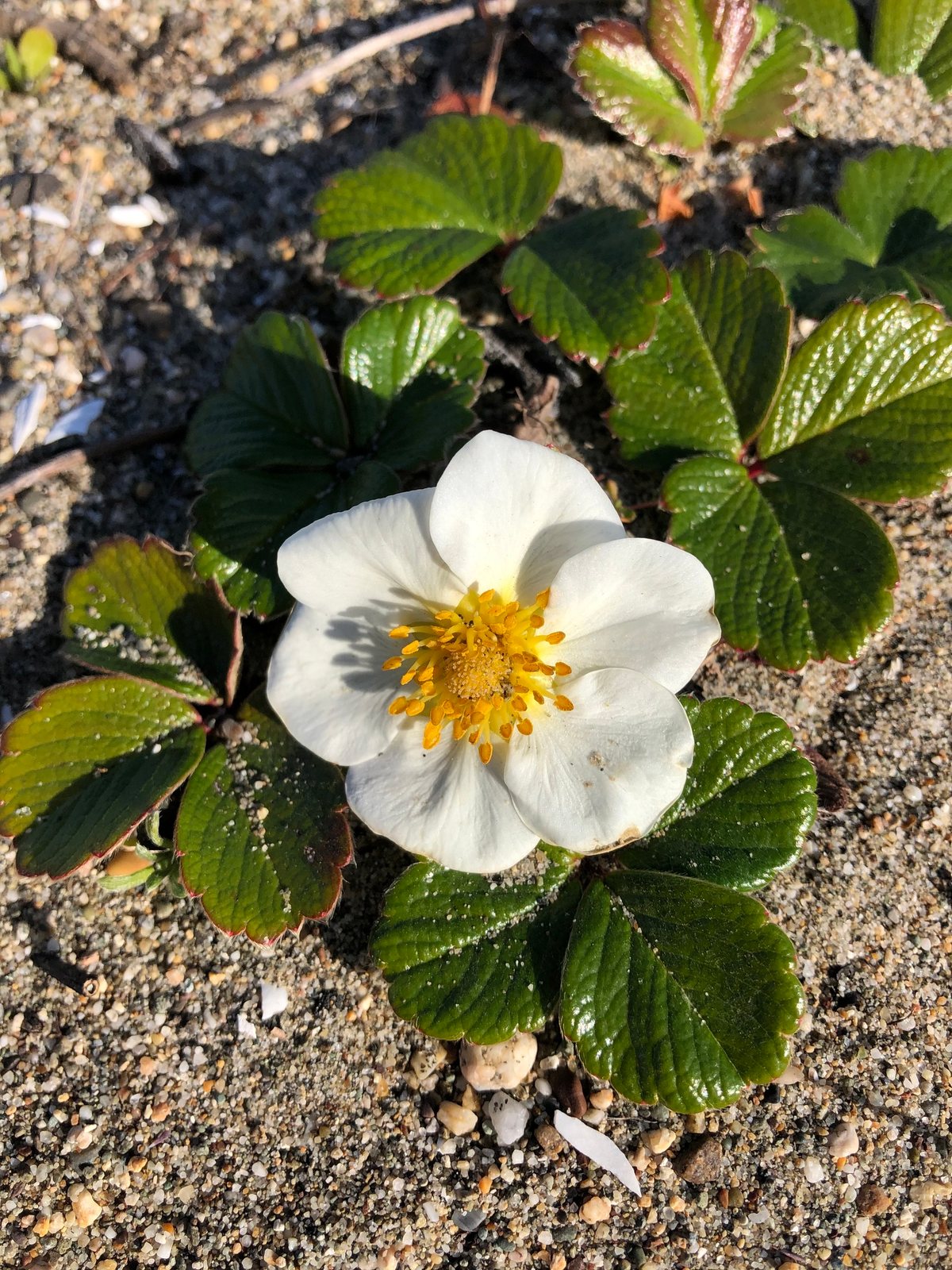
Beach strawberry is a low, runner-forming perennial native to Pacific coastal areas of North and South America. Gardeners grow it for its glossy leaves, white flowers and ability to cover sunny coastal ground; edible fruit is a bonus, but some groundcover selections crop poorly or not at all.
At a glance
- Sun
- Full sun to partial shade; flowering and fruiting are usually best in sun.
- Water
- Water regularly while establishing. Established plants tolerate some drought in cool coastal climates, but need occasional deep watering during prolonged dry weather.
- Soil
- Well-drained sandy or loamy soil, preferably slightly acidic to neutral. Tolerates coastal sand and salt spray, but not persistently waterlogged ground.
- Height
- 0.3-0.8 ft (0.1-0.25 m)
- Spread
- 2-3 ft (0.6-0.9 m) initially; runners can eventually cover a much wider area.
- Flowers
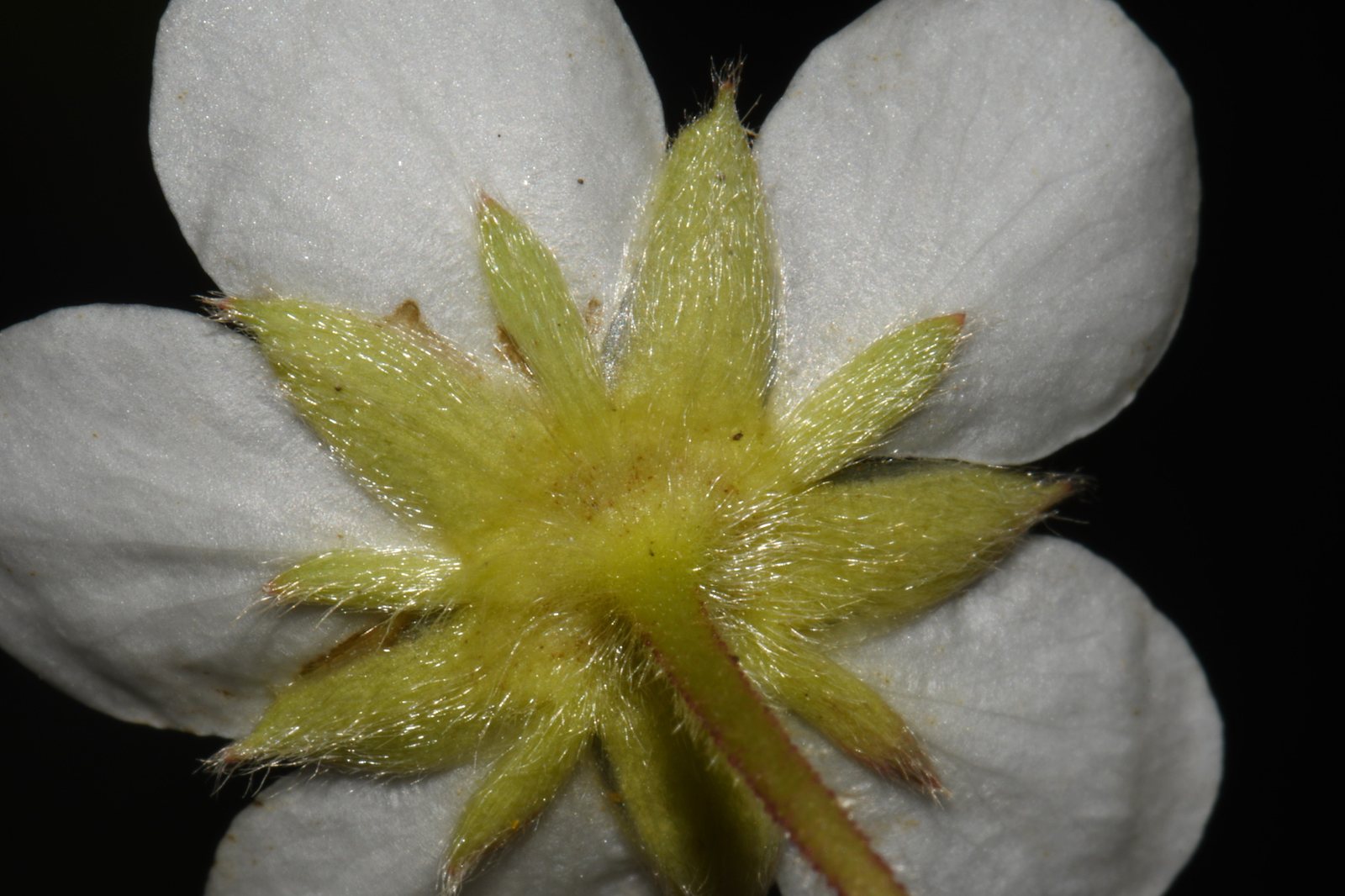
- White, five-petalled flowers in spring to early summer.
- Foliage
- Glossy, leathery leaves divided into three toothed leaflets; leaves may turn bronze or reddish in cold weather. Evergreen in mild climates, but partly deciduous in colder areas.
- Growth
- Moderate to fast once established.
- Care needed
- Low
The year at a glance
- Pollinators
- Drought tolerant
- Wildlife
- Low allergen
- Edible
| J | F | M | A | M | J | J | A | S | O | N | D | |
|---|---|---|---|---|---|---|---|---|---|---|---|---|
| Flowers | ||||||||||||
| Fruit | ||||||||||||
| Plant |
Northern hemisphere months. In Australia, shift them by six.
- Difficulty
- Moderate
- Toughness
- Fairly tough
Will it suit your garden?
Pick your zone, country, light and whether you have pets.
Full sun is 6 or more hours of direct sun a day, part shade 3 to 6 hours, shade under 3.
How it grows
Planting day
0.1 ft (0.04 m)
After 1 year
0.4 ft (0.11 m)
After 2 years
0.6 ft (0.18 m)
full size
About 2 years to full size.
From a typical nursery size, at an average rate for this kind of plant. A rule of thumb, not a forecast.
Good to know
- Cats and dogs
- Safe
- Native to
- the US and Canada
- In the garden
- Spreads vigorously: plan to contain it.
- Growth rate
- Fast
Care
Jobs through the year
- WaterMar–Apr, Sep–Oct, every 14 days
- Water established plants if soil is dry; water new plants whenever the upper soil begins drying.
- WaterMay–Aug, every 7 days
- Water deeply when rain is insufficient, especially during fruiting; avoid wet crowns.
- PruneFeb–Mar
- Remove dead leaves and thin crowded crowns without cutting into them.
- MulchMar–Apr
- Apply a thin compost top-dressing around, not over, the crowns.
- MulchMay
- Place clean straw beneath developing berries to keep them off damp soil.
- PruneMay–Sep, every 21 days
- Trim unwanted runners and thin congested growth to maintain airflow.
- HarvestMay–Jul
- Pick fragrant, slightly soft berries fully coloured for the selection; compatible pollination may be needed.
- DivideSep
- Detach and transplant rooted runners if more plants are wanted.
- ProtectMay–Jul
- Check for slugs and use taut, wildlife-safe fruit protection if birds take the crop.
- PruneNov
- Clear dead debris from crowns and ensure winter rain drains freely.
- Plant with the crown level with the soil surface, not buried.
- Water new plants whenever the upper soil begins to dry; avoid keeping the crowns constantly wet.
- Apply a thin layer of compost in spring; avoid heavy nitrogen feeding, which encourages leaves and runners rather than fruit.
- Use clean straw beneath fruiting plants to keep berries off damp soil.
- Remove runners at bed edges and thin crowded patches to maintain airflow.
Pruning. In late winter or early spring, snip away dead and damaged leaves without cutting into the crowns. Trim unwanted runners during the growing season, leaving any you want to root and fill gaps.
Harvest
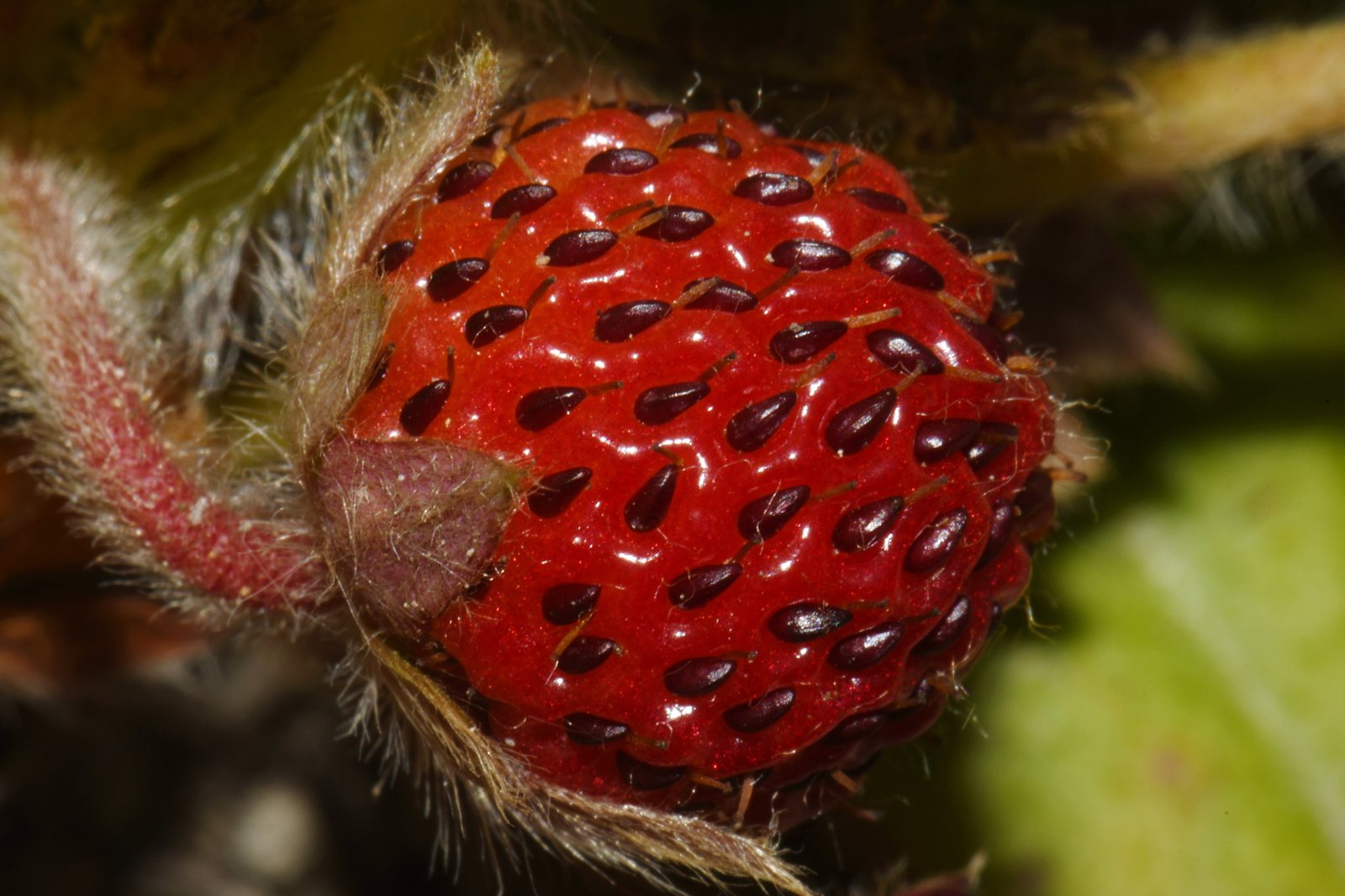
Pick berries in late spring or summer when they are fragrant, slightly soft and fully coloured for the form you are growing; most ripen red, while some Chilean forms remain pale. Clip or pinch the stalk just above the berry, and expect a modest first crop within 1-2 years from rooted plants. Fruiting varies greatly between selections, and female plants need a compatible pollen-producing plant flowering nearby.
Through the year
- Early spring
- Remove damaged foliage, thin crowded crowns and top-dress lightly with compost.
- Spring
- Plant rooted plants in well-drained ground and keep them watered while establishing.
- Late spring
- Place clean straw beneath developing berries and check for slugs.
- Summer
- Harvest ripe berries, water during prolonged dry spells and trim runners crossing bed edges.
- Early autumn
- Lift and transplant rooted runners while soil is still warm and moisture is available.
- Late autumn
- Clear fallen debris from crowns and check that winter rain can drain away.
In the garden
- Use as a low carpet beneath open shrubs, where its glossy leaves cover otherwise bare soil.
- Plant along sunny coastal paths with thrift and sea campion for a low, wind-tolerant edge.
- Let runners soften retaining-wall tops or spill over the edges of large containers.
- Use on well-drained banks to knit the soil surface together, away from delicate plants that runners could overwhelm.
Garden styles it suits: Coastal, California native, Pacific Northwest woodland, Wildlife garden, Edible landscape and Low-maintenance.
Plant it with: Thrift, Sea campion, Blue fescue, Yarrow, California fuchsia and Douglas iris.
Wildlife: Flowers provide pollen and nectar for bees and other insects. Birds and small mammals eat the berries, and dense foliage provides shelter for small invertebrates.
Problems to watch for
- Slugs and snails chew leaves and berries: remove hiding places, pick pests off at dusk and use an approved iron-phosphate bait if needed.
- Grey mould rots berries in damp, crowded growth: remove affected fruit, thin the patch and keep ripening berries off wet soil.
- Crown and root rot develop in waterlogged soil: improve drainage, keep crowns at soil level and replace badly affected plants.
- Few or no berries may result from a non-fruiting selection, incompatible flower types or too much shade: choose plants sold for fruit production and provide compatible pollination and more sun.
Safety
Not known to be toxic to people, cats, dogs or horses. The ripe fruit is edible; as with other strawberries, allergic reactions are possible in susceptible people.
Easily confused with
Woodland strawberry (Fragaria vesca)
Usually has thinner, softer, less glossy leaves with more pronounced teeth; beach strawberry has thicker, leathery leaflets.
Garden strawberry (Fragaria × ananassa)
Usually has larger fruit and coarser, less leathery foliage. It is a hybrid descended partly from beach strawberry, so foliage alone is not always enough for a confident identification.
Mock strawberry (Potentilla indica)
Has yellow flowers rather than white, and upright red fruits with conspicuous raised seeds.
The name
Fragaria comes from a Latin word referring to fragrance, chiloensis refers to Chiloé in Chile, and beach strawberry describes its coastal habitat.
Propagation. Peg runners onto moist soil or into small pots, then sever them from the parent once well rooted. Transplant in spring or early autumn; runner propagation preserves the parent plant's characteristics, whereas seedlings can vary.
Checked against open data
- Accepted botanical name
- Fragaria chiloensis
- In the US and Canada
- Native in Canada, Hawaii and the lower 48 states. Introduced in Alaska and the lower 48 states.
- Native range
- Argentina South, Bolivia, British Columbia, California, Chile Central, Chile South, Hawaii, Oregon and Washington.
- Measured
- Soil pH 5.8 to 7.8. Average height 22 cm.
Sources: GBIF (CC BY 4.0), USDA PLANTS and Trefle (CC BY 4.0). The care and design notes are LandscapeGPT's own.
See it in your own yard.
Upload a photo of your yard and see it redesigned with plants that suit your climate, each checked against your zone.