Douglas iris
Iris douglasiana. Family Iridaceae. Perennial.
Also called Douglas's iris, Pacific Coast iris.
Douglas iris is an evergreen, rhizomatous perennial native to coastal California and southern Oregon. Gardeners grow it for its spring flowers and spreading clumps of arching, sword-shaped leaves; it performs best where winters are mild and wet and summers are relatively dry.
At a glance
- Sun
- Full sun near the coast; partial shade in hotter inland gardens.
- Water
- Moderate water during establishment and active growth. Established plants tolerate dry summers, but may need occasional deep watering away from cool coastal conditions.
- Soil
- Well-drained soil, preferably slightly acidic to neutral, with some organic matter. Avoid waterlogged ground, especially in summer.
- Height
- 1-2 ft (0.3-0.6 m)
- Spread
- 2-3 ft (0.6-0.9 m), gradually wider where conditions suit it
- Flowers
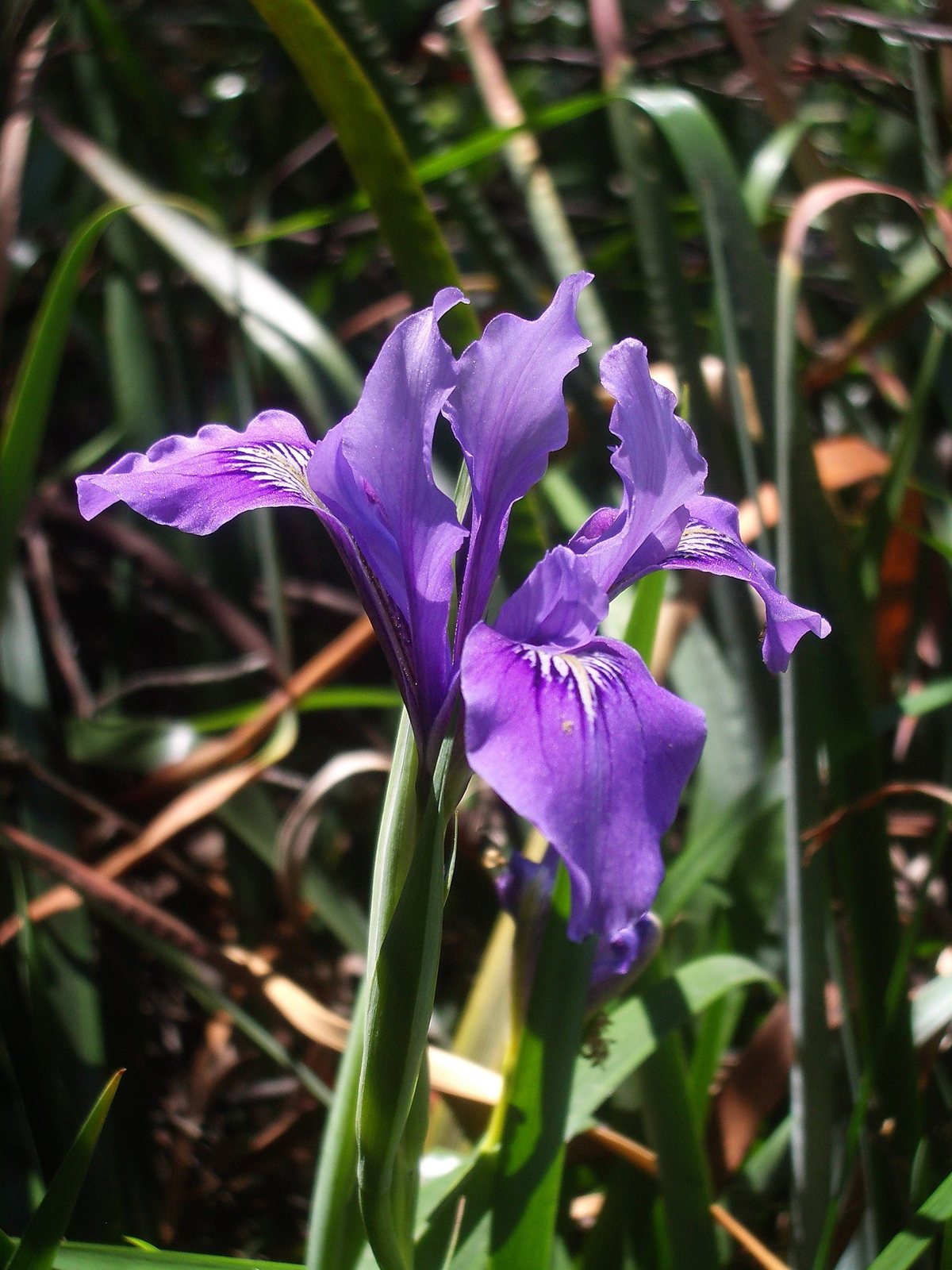
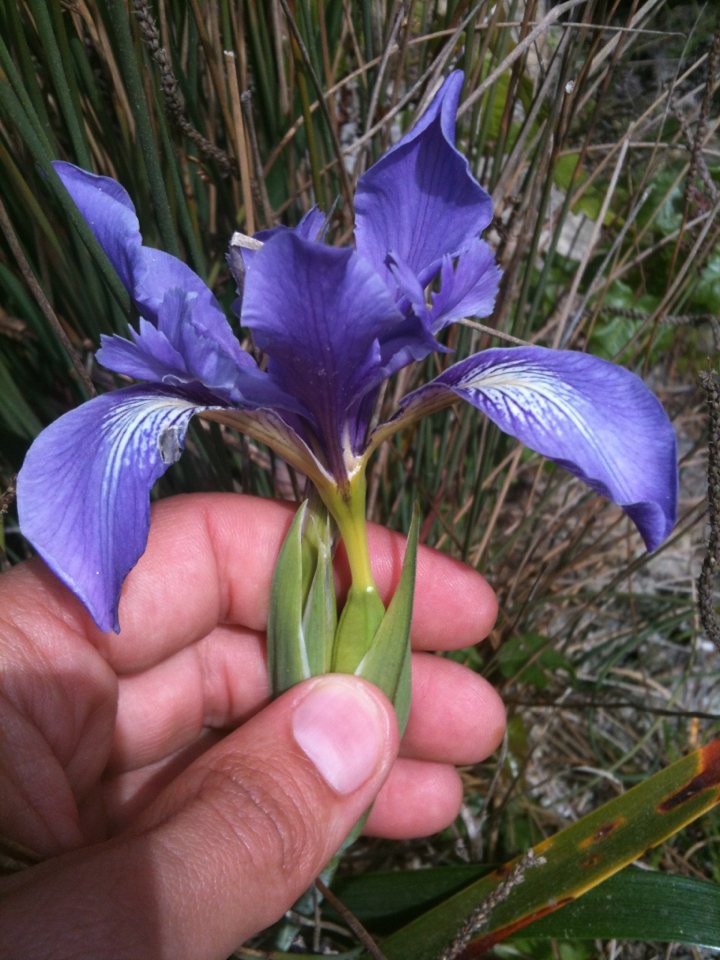
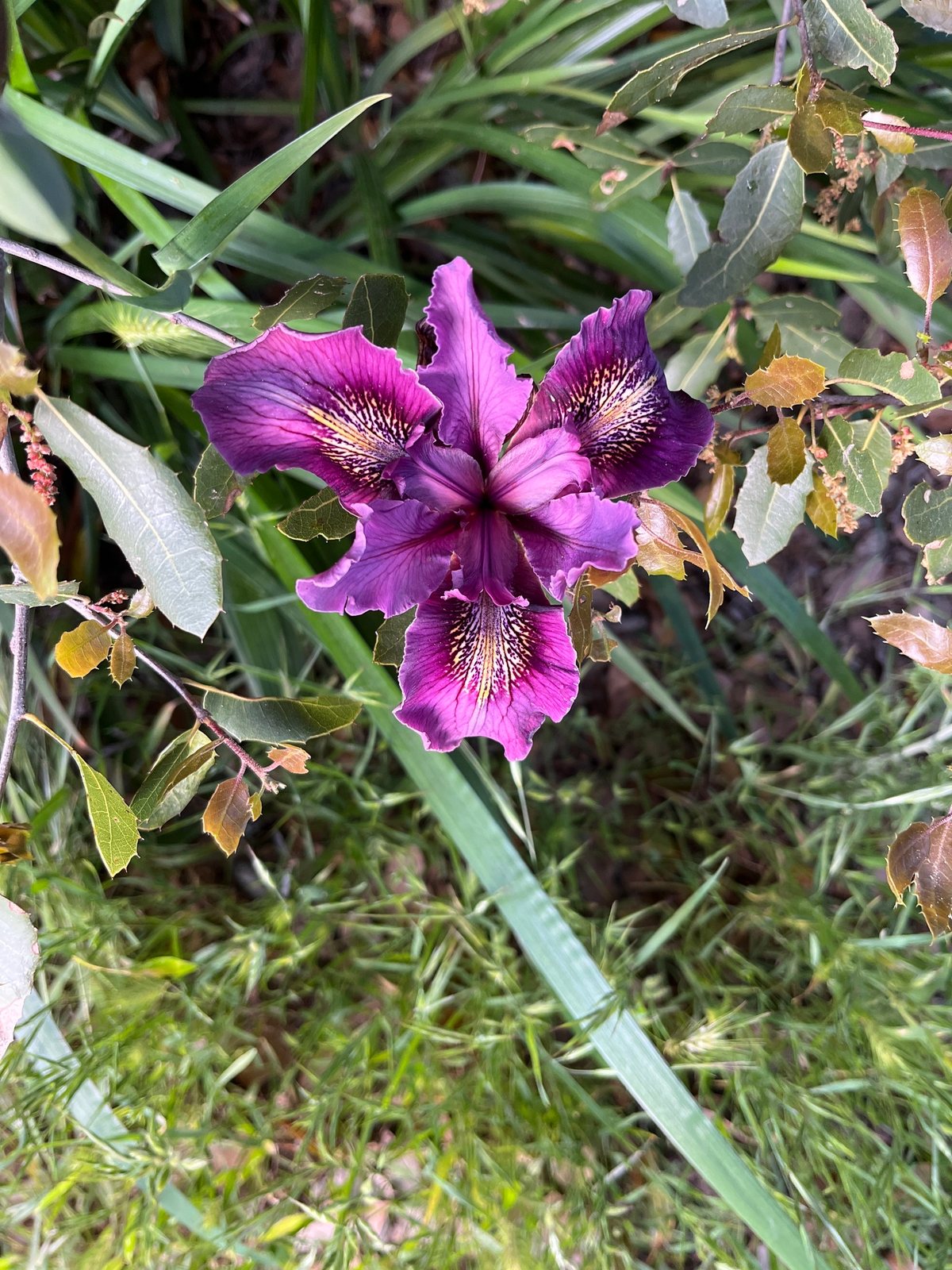
- Spring to early summer; usually lavender, violet or blue-purple, with pale, strongly veined markings on the lower petals. Wild plants can also have cream or white flowers.
- Foliage
- Dense fans of tough, arching, dark green leaves; usually evergreen, though frost or drought can damage older foliage.
- Growth
- Moderate
- Care needed
- Low
The year at a glance
- Pollinators
- Deer resistant
- Drought tolerant
- Wildlife
- Low allergen
| J | F | M | A | M | J | J | A | S | O | N | D | |
|---|---|---|---|---|---|---|---|---|---|---|---|---|
| Flowers | ||||||||||||
| Fruit | ||||||||||||
| Plant |
Northern hemisphere months. In Australia, shift them by six.
- Difficulty
- Moderate
- Toughness
- Fairly tough
Will it suit your garden?
Pick your zone, country, light and whether you have pets.
Full sun is 6 or more hours of direct sun a day, part shade 3 to 6 hours, shade under 3.
How it grows
Planting day
1 ft (0.3 m)
After 1 year
1.1 ft (0.35 m)
After 2 years
1.3 ft (0.4 m)
After 3 years
1.5 ft (0.45 m)
full size
About 3 years to full size.
From a typical nursery size, at an average rate for this kind of plant. A rule of thumb, not a forecast.
Good to know
- Cats and dogs
- Toxic
- Native to
- the US
- Growth rate
- Moderate
Care
Jobs through the year
- WaterMar–May, Sep–Oct, every 14 days
- Water established clumps during dry active growth; newly planted clumps need closer moisture checks.
- WaterJun–Aug, every 30 days
- Water established clumps occasionally during prolonged drought; avoid frequent summer irrigation.
- PruneFeb–Mar
- Remove dead or badly damaged leaves individually; do not shear healthy foliage.
- DeadheadMay–Jul
- Remove finished stems at the base, leaving some if decorative seed capsules are wanted.
- DivideSep–Oct
- Divide only when necessary as fresh roots begin growing; keep roots moist and replant immediately.
- MulchOct–Nov
- Apply a thin compost dressing, keeping it away from leaf bases.
- ProtectJan–Mar, Nov–Dec
- In zone 6, use sheltered container culture with cool frost-free winter protection; ensure excellent drainage.
- Plant with the rhizomes just below the soil surface, rather than exposed like those of bearded irises.
- Water regularly through the first growing season, allowing the soil surface to dry between waterings.
- Once established, reduce summer watering and never leave the crown in soggy soil.
- Apply a light compost dressing in autumn; avoid heavy feeding.
- Divide only when necessary, in autumn as new roots begin to grow, and replant immediately.
Pruning. Cut spent flower stems back to their bases after flowering. Remove dead or badly damaged leaves individually in late winter; do not shear healthy evergreen foliage.
Through the year
- Late winter
- Remove dead leaves and check that water drains freely around the clumps.
- Spring
- Water new plants during dry spells and check emerging growth for slugs and snails.
- Late spring
- Remove finished flower stems unless you want to collect seed.
- Summer
- Reduce watering on established plants; avoid frequent shallow irrigation.
- Early autumn
- Plant or divide when cooler weather returns and fresh roots begin growing; keep roots moist while handling.
- Late autumn
- Apply a thin compost dressing around the clump, keeping it away from the leaf bases.
In the garden
- Plant in drifts beneath open-canopied trees for spring flowers above a lasting carpet of foliage.
- Use along coastal paths and borders where arching leaves soften hard edges.
- Combine with western sword fern and coral bells in lightly shaded woodland margins.
- Mass on well-drained banks to provide year-round cover and help hold surface soil.
Garden styles it suits: California native, Pacific Northwest woodland, Coastal, Woodland, Low-maintenance and Mediterranean.
Plant it with: Western sword fern, Coral bells, Western columbine, California fescue, Pacific bleeding heart and Manzanita.
Wildlife: Flowers attract bees and other flower-visiting insects. Dense clumps provide shelter for small invertebrates; deer often leave the foliage alone, but may still browse it.
Problems to watch for
- Rhizome or crown rot in wet soil: improve drainage, reduce summer irrigation and discard rotting sections.
- Slugs and snails chewing young leaves and flowers: hand-pick at dusk or use an iron-phosphate bait according to its label.
- Leaf spotting in damp, crowded clumps: remove affected foliage, improve airflow and avoid overhead watering.
- Poor establishment after moving: transplant during autumn root growth, keep roots from drying out and avoid disturbing established clumps unnecessarily.
Safety
Toxic to people, cats, dogs and horses if eaten. All parts should be treated as toxic, especially the rhizomes; ingestion can cause mouth irritation, vomiting, abdominal pain and diarrhoea. Sap may irritate skin, so wear gloves when dividing.
Easily confused with
Oregon iris (Iris tenax)
Usually has narrower leaves and a smaller, more open habit; its foliage is more likely to die back in winter. Flower colour overlaps, so colour alone is unreliable.
Del Norte iris (Iris innominata)
Generally shorter, with much narrower leaves and typically golden-yellow flowers marked with darker veins. Hybrids can blur these differences.
The name
The epithet douglasiana honours the Scottish botanist and plant collector David Douglas.
Propagation. Divide carefully in autumn when fresh roots are starting to grow, keeping several healthy leaf fans on each division. Alternatively, sow fresh seed outdoors in autumn; germination can be slow and uneven, and seedlings may differ where other Pacific Coast irises grow nearby.
Checked against open data
- Accepted botanical name
- Iris douglasiana
- In the US and Canada
- Native in the lower 48 states.
- Native range
- California and Oregon.
Sources: GBIF (CC BY 4.0), USDA PLANTS and Trefle (CC BY 4.0). The care and design notes are LandscapeGPT's own.
See it in your own yard.
Upload a photo of your yard and see it redesigned with plants that suit your climate, each checked against your zone.