Western columbine
Aquilegia formosa. Family Ranunculaceae. Perennial.
Also called Crimson columbine, Red columbine.
Western columbine is a usually short-lived perennial native to western North America, grown for its nodding red-and-yellow flowers and finely divided foliage. It suits lightly shaded borders and woodland edges, often renewing itself by seed where the soil stays moderately moist.
At a glance
- Sun
- Partial shade; full sun in cool climates if the soil stays moist. Give afternoon shade in hot districts.
- Water
- Moderate; keep evenly moist while establishing and during active growth, without waterlogging. Established plants tolerate brief dry spells but may go dormant in dry summers.
- Soil
- Humus-rich, well-drained soil; tolerates sandy or loamy soils and a range of pH levels. Avoid heavy, persistently wet ground.
- Height
- 1.5-3 ft (0.45-0.9 m)
- Spread
- 1-1.5 ft (0.3-0.45 m)
- Flowers
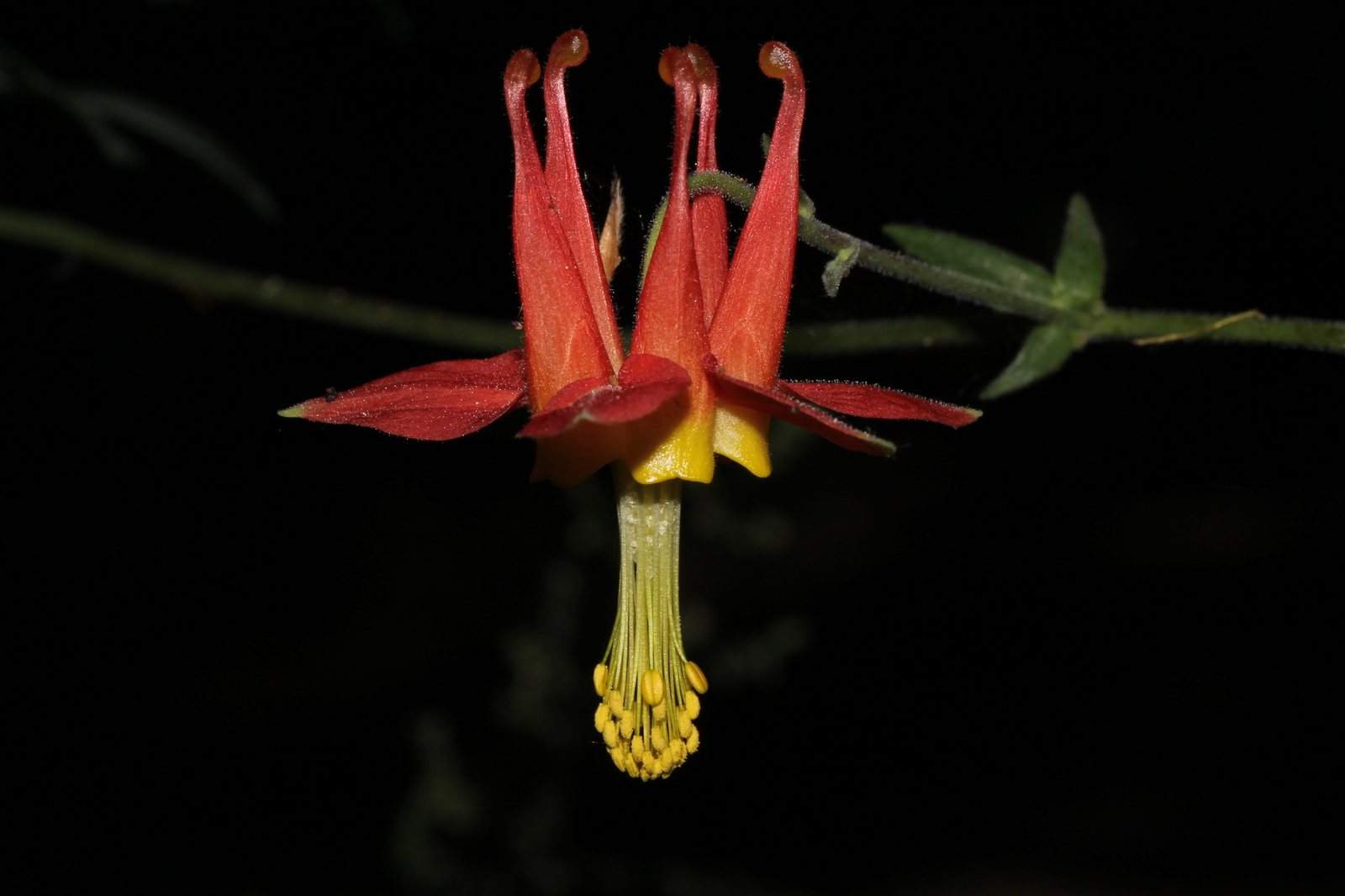
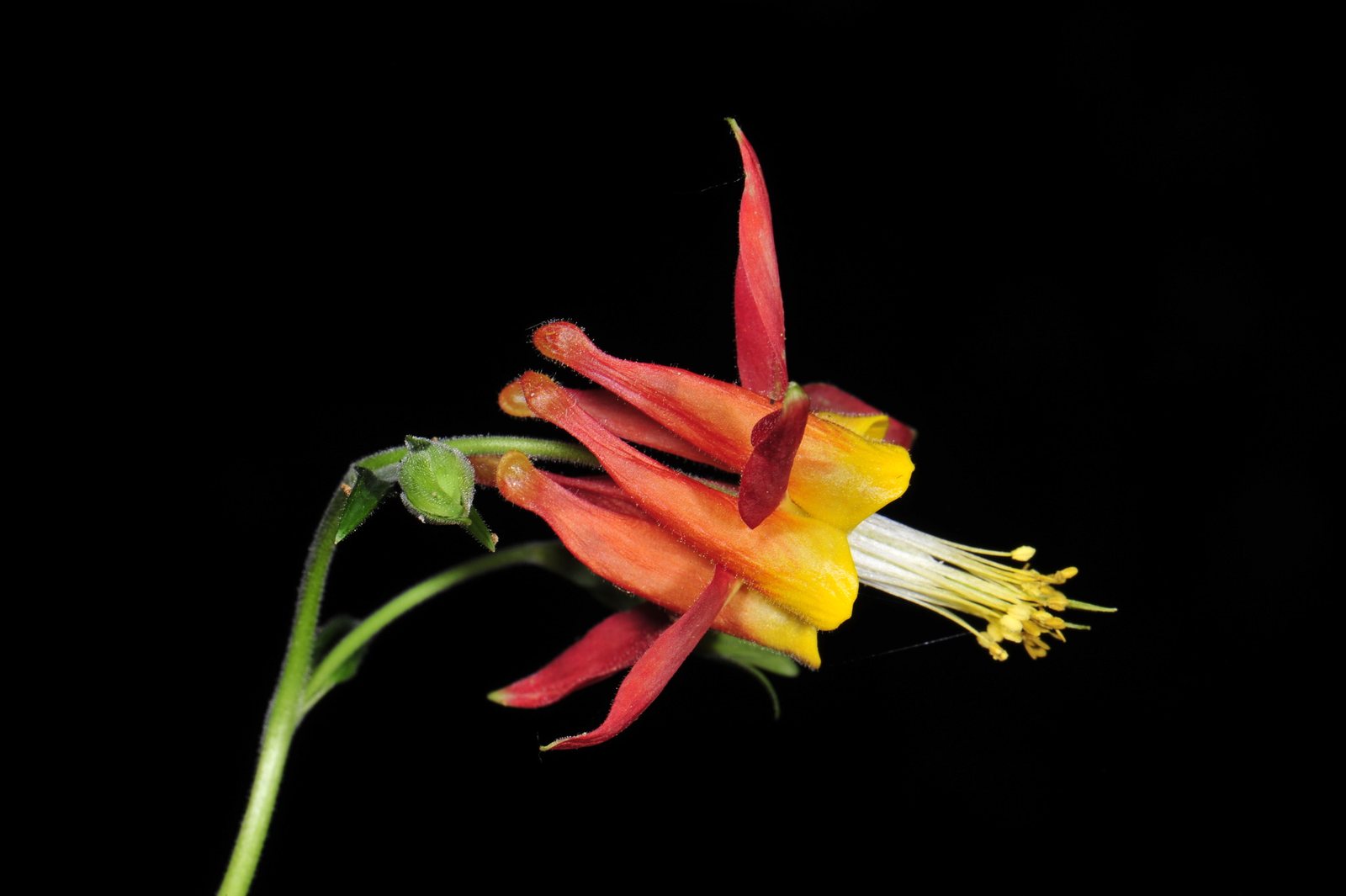
- Late spring to midsummer, depending on climate; nodding flowers with red sepals and spurs, yellow petals and projecting yellow stamens.
- Foliage
- Soft green to blue-green, divided into rounded, lobed leaflets. Usually deciduous, though some foliage may persist in mild winters.
- Growth
- Moderate; often flowers in its second year from seed.
- Care needed
- Low
The year at a glance
- Pollinators
- Deer resistant
- Cold hardy
- Low allergen
| J | F | M | A | M | J | J | A | S | O | N | D | |
|---|---|---|---|---|---|---|---|---|---|---|---|---|
| Flowers | ||||||||||||
| Fruit | ||||||||||||
| Plant |
Northern hemisphere months. In Australia, shift them by six.
- Difficulty
- Easy
- Toughness
- Fairly tough
Will it suit your garden?
Pick your zone, country, light and whether you have pets.
Full sun is 6 or more hours of direct sun a day, part shade 3 to 6 hours, shade under 3.
How it grows
Planting day
1 ft (0.3 m)
After 1 year
1.4 ft (0.43 m)
After 2 years
1.8 ft (0.55 m)
After 3 years
2.2 ft (0.68 m)
full size
About 3 years to full size.
From a typical nursery size, at an average rate for this kind of plant. A rule of thumb, not a forecast.
Good to know
- Cats and dogs
- Toxic
- Native to
- Canada
- Growth rate
- Moderate
Care
Jobs through the year
- WaterMar–Apr, Sep–Oct, every 14 days
- Water established plants if soil is drying; keep newly planted seedlings consistently moist.
- WaterMay–Aug, every 7 days
- Water deeply during dry weather while actively growing; reduce watering if summer-dormant.
- MulchMar
- Apply a thin compost or leaf-mould dressing without covering the crown.
- DeadheadJun–Aug, every 14 days
- Remove spent flower stems, leaving selected pods if replacement seedlings are wanted.
- PruneMar, Nov
- Cut away dead foliage; remove badly mined or mildewed leaves when necessary.
- Water deeply when the upper soil begins to dry during establishment and flowering.
- Apply a thin layer of compost in spring; rich feeding is unnecessary.
- Mulch lightly with leaf mould or fine compost, keeping it clear of the crown.
- Leave a few seedheads if you want replacement plants, but remove unwanted seedlings while small.
- Avoid routinely dividing established clumps; their roots resent disturbance.
Pruning. Remove spent flower stems after flowering unless you want seed. Cut dead foliage to the base in late autumn or early spring; badly mildewed or leaf-mined foliage can be removed earlier.
Through the year
- Early spring
- Remove dead foliage and apply a thin compost mulch around emerging growth.
- Spring
- Plant young plants in well-drained soil and water regularly while they establish.
- Late spring
- Check leaves for leaf miners and aphids; tolerate minor damage rather than spraying routinely.
- Summer
- Remove faded flower stems, leaving selected seedheads to ripen if you want seedlings.
- Late summer
- Collect seed as the pods turn brown but before they split, and sow promptly.
- Autumn
- Move small self-sown seedlings to suitable gaps and keep them watered until established.
In the garden
- Plant in loose groups along woodland edges, where the flowers rise above ferns and low groundcover.
- Thread through informal borders with hardy geraniums and spring-flowering perennials for light, open texture.
- Use in western North American native gardens with plants suited to lightly shaded, moderately moist soil.
- Place near paths or seating so the nodding flowers and visiting hummingbirds can be seen closely.
Garden styles it suits: Woodland, Wildlife garden, Cottage garden, Pacific Northwest woodland, California native and Mountain lodge.
Plant it with: Western sword fern, Fringecup, Pacific bleeding heart, Foamflower, Hardy geranium and Tufted hair grass.
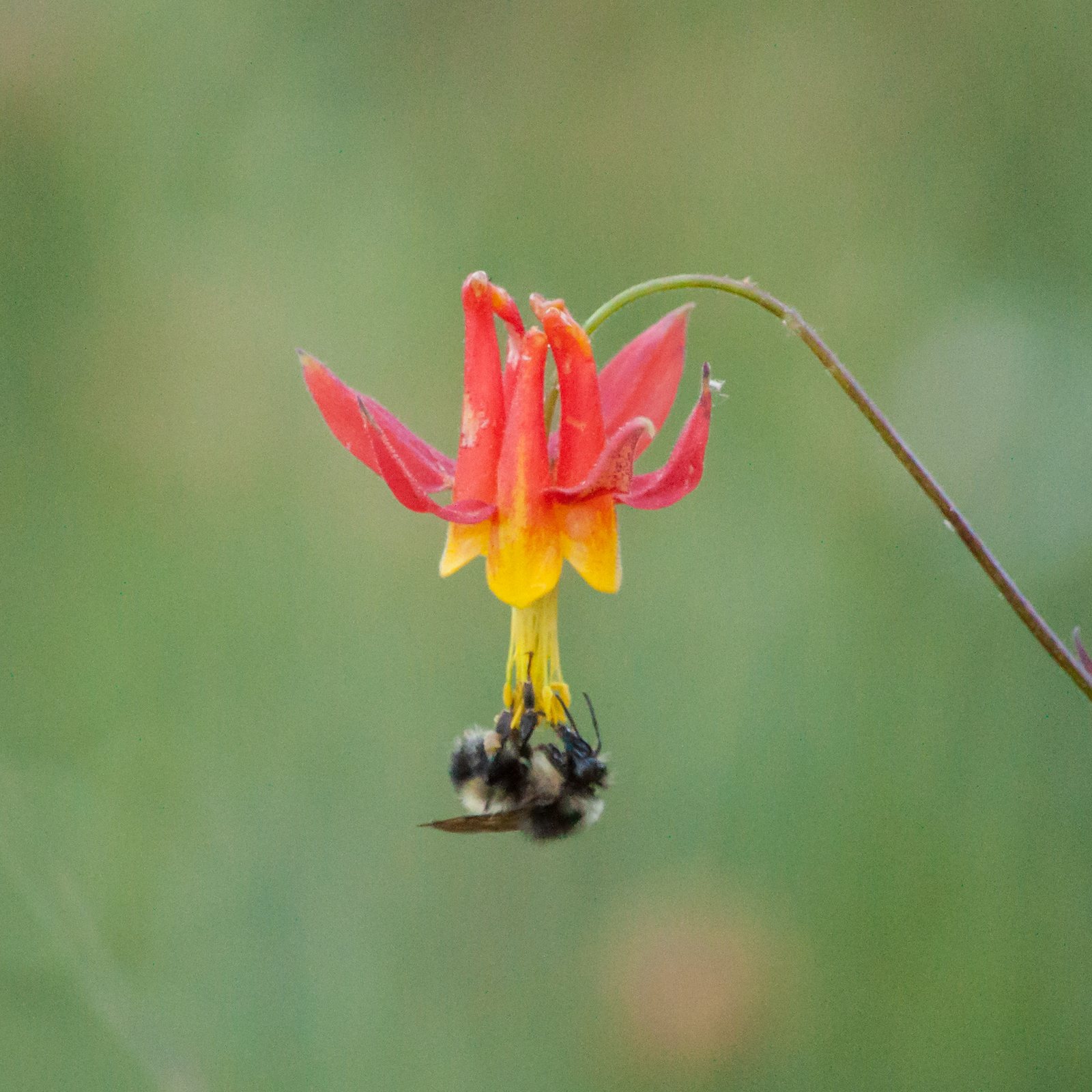
Wildlife: Flowers attract hummingbirds within their North American range and are also visited by bumblebees. Bees sometimes obtain nectar by piercing the spurs.
Problems to watch for
- Columbine leaf miners leave pale winding trails or blotches. Remove badly affected leaves and dispose of them; light damage rarely harms the plant.
- Powdery mildew can develop on stressed or crowded plants. Improve airflow, water the soil during dry weather and remove badly affected foliage.
- Aphids gather on soft shoots and flower stems. Wash them off with water and allow ladybirds and other predators to work.
- Crown or root rot occurs in waterlogged soil. Improve drainage and avoid burying the crown or keeping mulch against it.
Safety
Treat all parts, especially seeds and roots, as potentially poisonous to people, cats, dogs and horses if eaten. Columbines contain toxic compounds, although species-specific evidence on poisoning severity is limited; ingestion may cause digestive upset. Do not use the flowers or other parts as food, and seek medical or veterinary advice after significant ingestion.
Easily confused with
Yellow columbine (Aquilegia flavescens)
Usually has pale yellow flowers rather than the strong red sepals and yellow petals of western columbine. The two can hybridize where their ranges overlap.
European columbine (Aquilegia vulgaris)
Typically has blue, purple, pink or white flowers with distinctly hooked spurs; western columbine has red-and-yellow flowers with much straighter spurs.
The name
The species name formosa means beautiful, while columbine comes from the Latin word for dove, referring to the flower's perceived resemblance to a group of doves.
Propagation. Grow from seed, preferably sown fresh outdoors in pots protected from disturbance. Stored seed may benefit from several weeks of cold, moist treatment, and germination can be uneven. Transplant seedlings while small; plants may cross with other columbines, so saved seed may not come true.
Checked against open data
- Accepted botanical name
- Aquilegia formosa
- Native range
- Alaska, Alberta, British Columbia, California, Idaho, Mexico Northeast, Mexico Northwest, Montana, Nevada, Oregon, Utah and Washington.
Sources: GBIF (CC BY 4.0) and Trefle (CC BY 4.0). The care and design notes are LandscapeGPT's own.
See it in your own yard.
Upload a photo of your yard and see it redesigned with plants that suit your climate, each checked against your zone.