Bigtooth maple
Acer grandidentatum. Family Sapindaceae. Tree.
Also called Canyon maple, Western sugar maple.
Bigtooth maple is a deciduous tree native to the western United States and northern Mexico, grown for its rounded crown and yellow, orange or red autumn foliage. Usually a small tree in gardens, it tolerates alkaline soil and seasonal dryness better than many maples, though autumn colour varies with the tree and growing conditions.
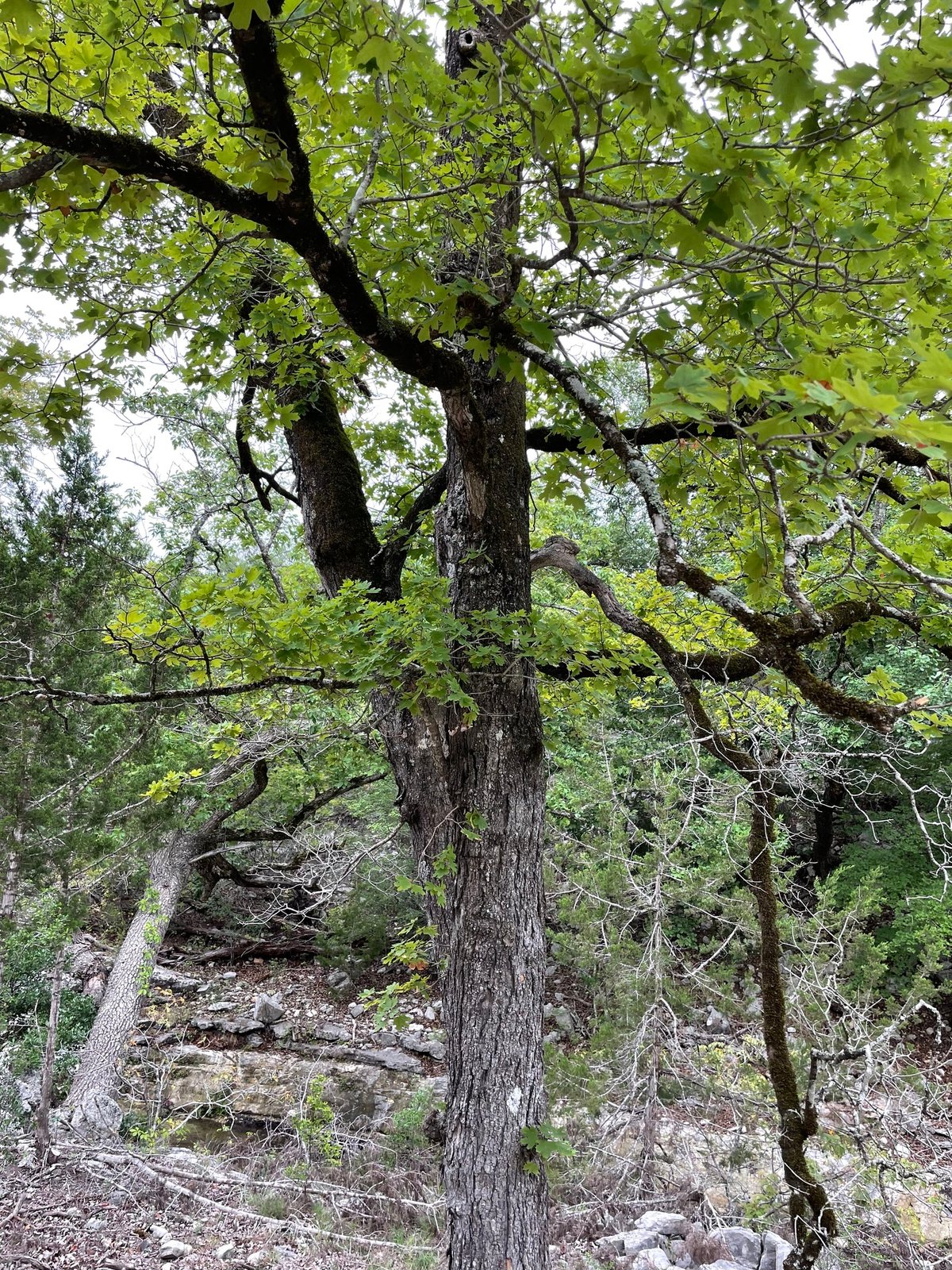
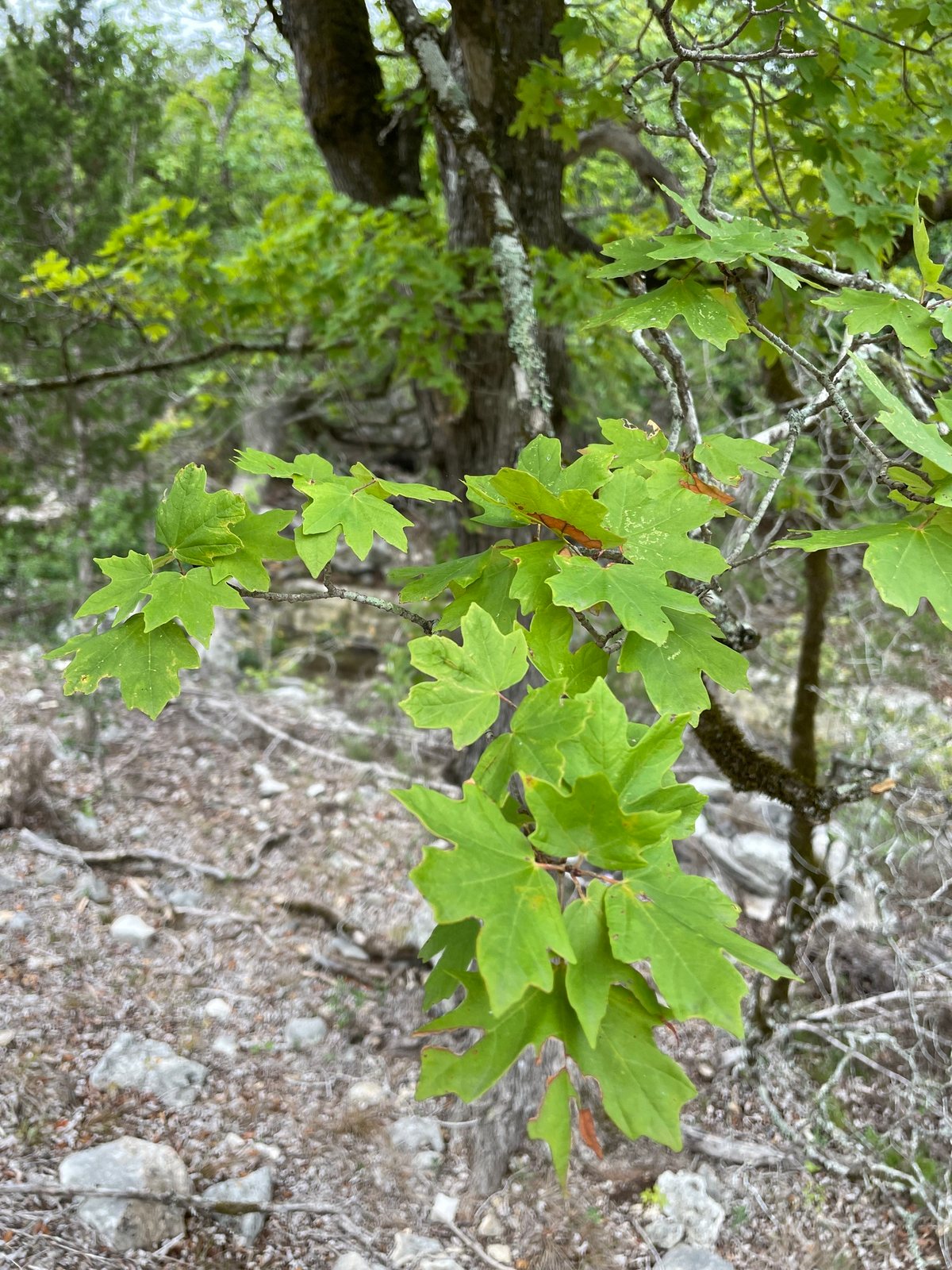
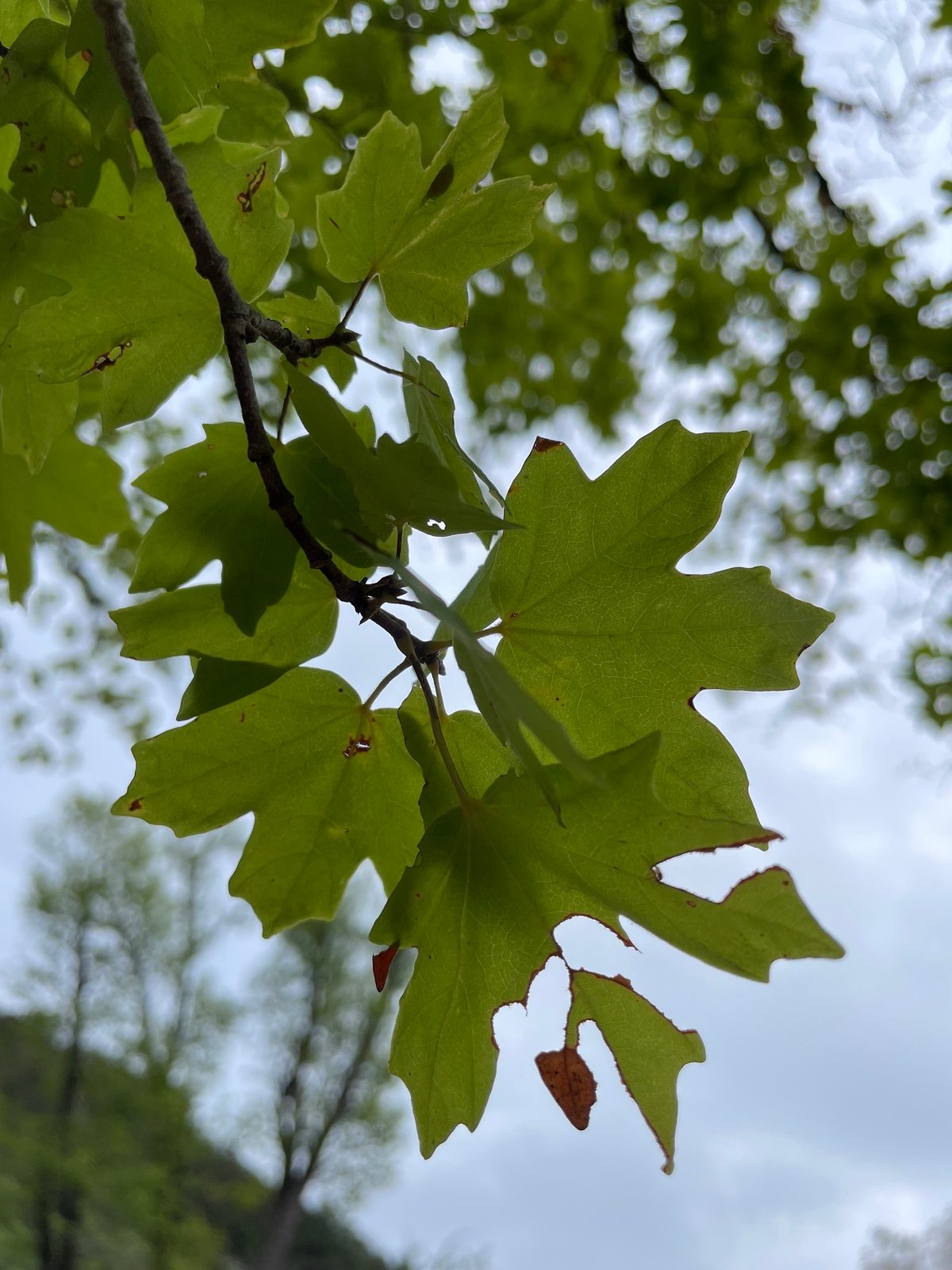
At a glance
- Sun
- Full sun to partial shade; afternoon shade is helpful in hot, dry gardens.
- Water
- Water regularly while establishing; established trees tolerate seasonal drought but benefit from occasional deep watering during prolonged dry spells.
- Soil
- Well-drained loam, clay loam or rocky soil; tolerates alkaline and limestone-based soils. Avoid waterlogged ground.
- Height
- 20-30 ft (6-9 m), occasionally 40-50 ft (12-15 m) in favourable conditions
- Spread
- 20-30 ft (6-9 m)
- Flowers
- Small yellow-green flowers in spring, opening with or just before the leaves.
- Foliage
- Opposite, green leaves with three to five lobes and large, blunt teeth; autumn colour ranges from yellow to orange and red.
- Growth
- Slow to moderate
- Care needed
- Low
The year at a glance
- Pollinators
- Drought tolerant
- Cold hardy
- Wildlife
| J | F | M | A | M | J | J | A | S | O | N | D | |
|---|---|---|---|---|---|---|---|---|---|---|---|---|
| Flowers | ||||||||||||
| Fruit | ||||||||||||
| Plant |
Northern hemisphere months. In Australia, shift them by six.
- Difficulty
- Easy
- Toughness
- Very tough
Will it suit your garden?
Pick your zone, country, light and whether you have pets.
Full sun is 6 or more hours of direct sun a day, part shade 3 to 6 hours, shade under 3.
How it grows
Planting day
7 ft (2 m)
After 1 year
7 ft (2.2 m)
After 2 years
8 ft (2.4 m)
After 3 years
9 ft (2.6 m)
After 5 years
10 ft (3.1 m)
About 26 years to full size.
From a typical nursery size, at an average rate for this kind of plant. A rule of thumb, not a forecast.
Good to know
- Cats and dogs
- Safe
- Native to
- the US
- Growth rate
- Slow
Care
Jobs through the year
- WaterApr–May, Sep–Oct, every 28 days
- Deep-water established trees only during prolonged dry spells; water young trees more often for their first three seasons.
- WaterJun–Aug, every 21 days
- During prolonged drought, soak the root zone deeply; skip watering when rainfall is adequate.
- MulchApr
- Maintain 5–8 cm of organic mulch over the root zone, keeping the trunk and root flare clear.
- PruneJul–Aug
- Make only necessary light structural cuts; remove dead or damaged wood whenever noticed.
- ProtectFeb
- Check young trunks and ties for rubbing or storm damage; remove supports once established.
- Plant with the root flare at soil level, leaving room for the mature crown.
- Water deeply during dry weather for the first two or three growing seasons; let the surface soil begin to dry between soakings.
- Spread 2-3 in (5-8 cm) of organic mulch over the root area, keeping it clear of the trunk.
- Avoid routine feeding; use a soil test before applying fertiliser to a poorly growing tree.
- Stake only if the root ball moves in the wind, and remove supports after establishment.
Pruning. Make necessary shaping cuts in midsummer, removing crossing branches and poorly attached competing leaders while they are small. Remove dead or damaged wood when noticed; avoid topping and heavy pruning.
Through the year
- Autumn
- Plant while the soil is workable, allowing time for roots to establish before severe cold.
- Late winter
- Check young trunks, ties and branches for rubbing or storm damage.
- Spring
- Refresh mulch and check soil moisture as new leaves open.
- Early summer
- Inspect leaves for aphids and watch for wilting or scorched margins during dry weather.
- Midsummer
- Carry out light structural pruning if needed.
- Late autumn
- Water young trees before the ground freezes if autumn has been dry.
In the garden
- Use as a small shade tree over a lawn or seating area, allowing space for its broad crown.
- Place against evergreen shrubs to make its autumn foliage stand out.
- Combine with drought-tolerant grasses and perennials in a western woodland-edge planting.
- Grow as a multistemmed specimen in an informal garden, retaining its natural branching.
Garden styles it suits: Woodland, Autumn colour, Mountain lodge, Southwestern, Wildlife garden and Modern rustic.
Plant it with: Gambel oak, Utah serviceberry, Mountain mahogany, Creeping Oregon grape, Little bluestem and Rocky Mountain penstemon.
Wildlife: Flowers provide early food for visiting insects, and the seeds are eaten by some birds and small mammals. The crown offers shelter and nesting sites.
Problems to watch for
- Leaf scorch: dry roots, hot wind or reflected heat can brown leaf margins; water deeply, mulch and avoid planting beside heat-reflecting paving in hot climates.
- Aphids: colonies may produce sticky honeydew; rinse reachable foliage with water and protect natural predators rather than using broad-spectrum insecticides.
- Verticillium wilt: sudden branch dieback can indicate this soilborne disease; seek a diagnosis, remove dead branches and replace badly affected trees with a resistant species.
- Root decline in wet soil: poor drainage or deep planting can cause persistent wilting and dieback; correct drainage and expose a buried root flare where practical.
Safety
Not known to be toxic to people, cats or dogs. Safety for horses is not well established for this species; do not assume its leaves or seeds are safe forage, as some other maples cause serious poisoning in horses.
Easily confused with
Sugar maple (Acer saccharum)
Very closely related and sometimes treated within the same species. Sugar maple generally has larger leaves with longer, more pointed lobes; bigtooth maple has coarser, blunter teeth and is usually a smaller tree.
Norway maple (Acer platanoides)
Norway maple usually has sharply pointed leaf lobes and releases milky sap from a freshly broken leaf stalk; bigtooth maple has clear sap.
Field maple (Acer campestre)
Field maple has smaller, rounded-lobed leaves and may develop corky ridges on young branches; its broken leaf stalks release milky sap.
The name
The species name grandidentatum means large-toothed, referring to the coarse teeth along the leaf margins.
Propagation. Grow from seed sown outdoors in autumn and protected from rodents. Germination can be slow and uneven because seed dormancy varies; some seeds may take more than one season to emerge. Named selections are usually grafted.
Checked against open data
- Accepted botanical name
- Acer grandidentatum
- In the US and Canada
- Native in the lower 48 states.
- Native range
- Arizona, Colorado, Idaho, Montana, Mexico Northeast, Mexico Northwest, Nevada, New Mexico, Oklahoma, Texas, Utah and Wyoming.
- Measured
- Soil pH 3.7 to 7.9. Average height 1100 cm.
Sources: GBIF (CC BY 4.0), USDA PLANTS and Trefle (CC BY 4.0). The care and design notes are LandscapeGPT's own.
See it in your own yard.
Upload a photo of your yard and see it redesigned with plants that suit your climate, each checked against your zone.