Black dalea
Dalea frutescens. Family Fabaceae. Shrub.
Also called Black prairie clover.
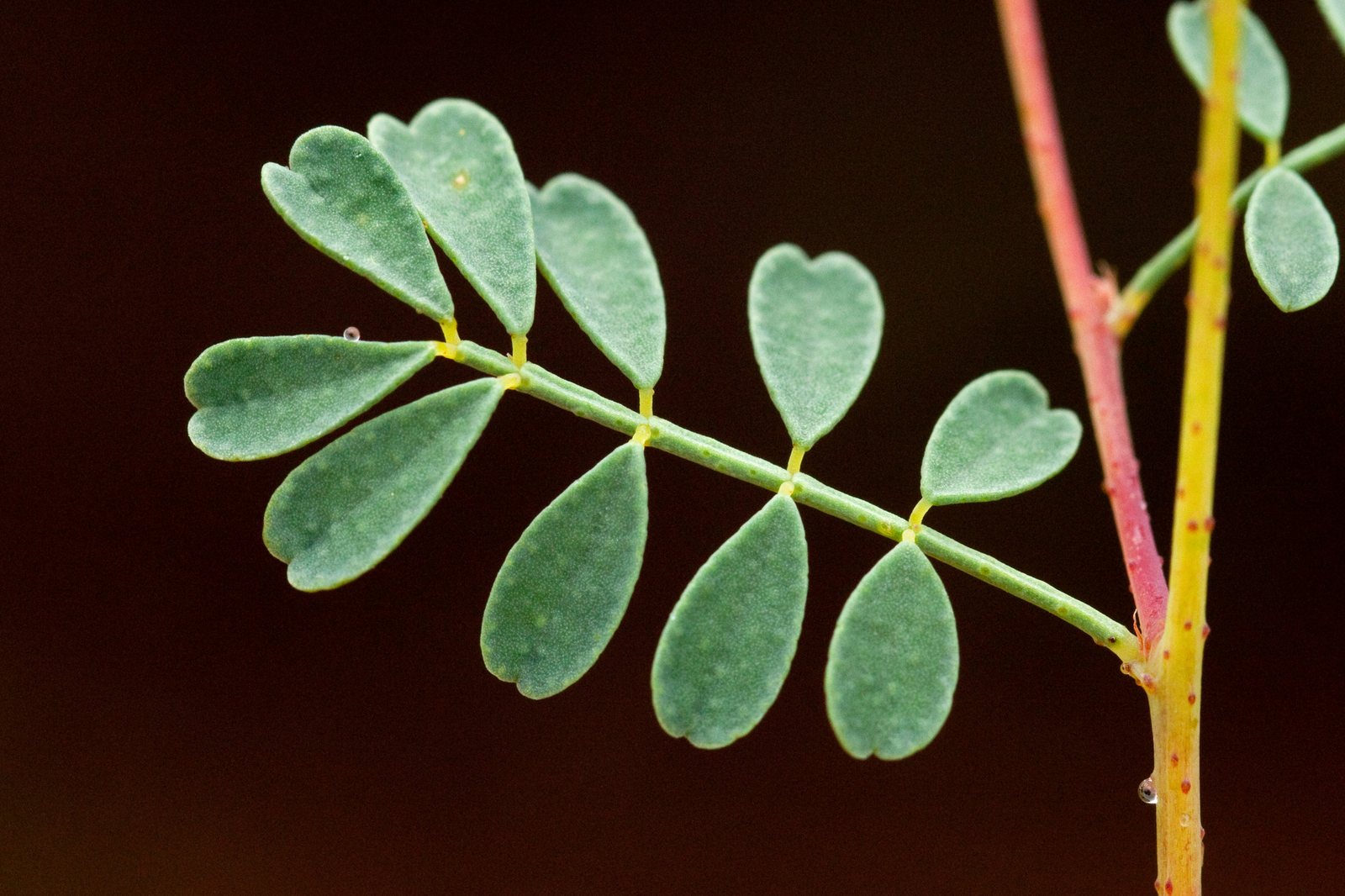
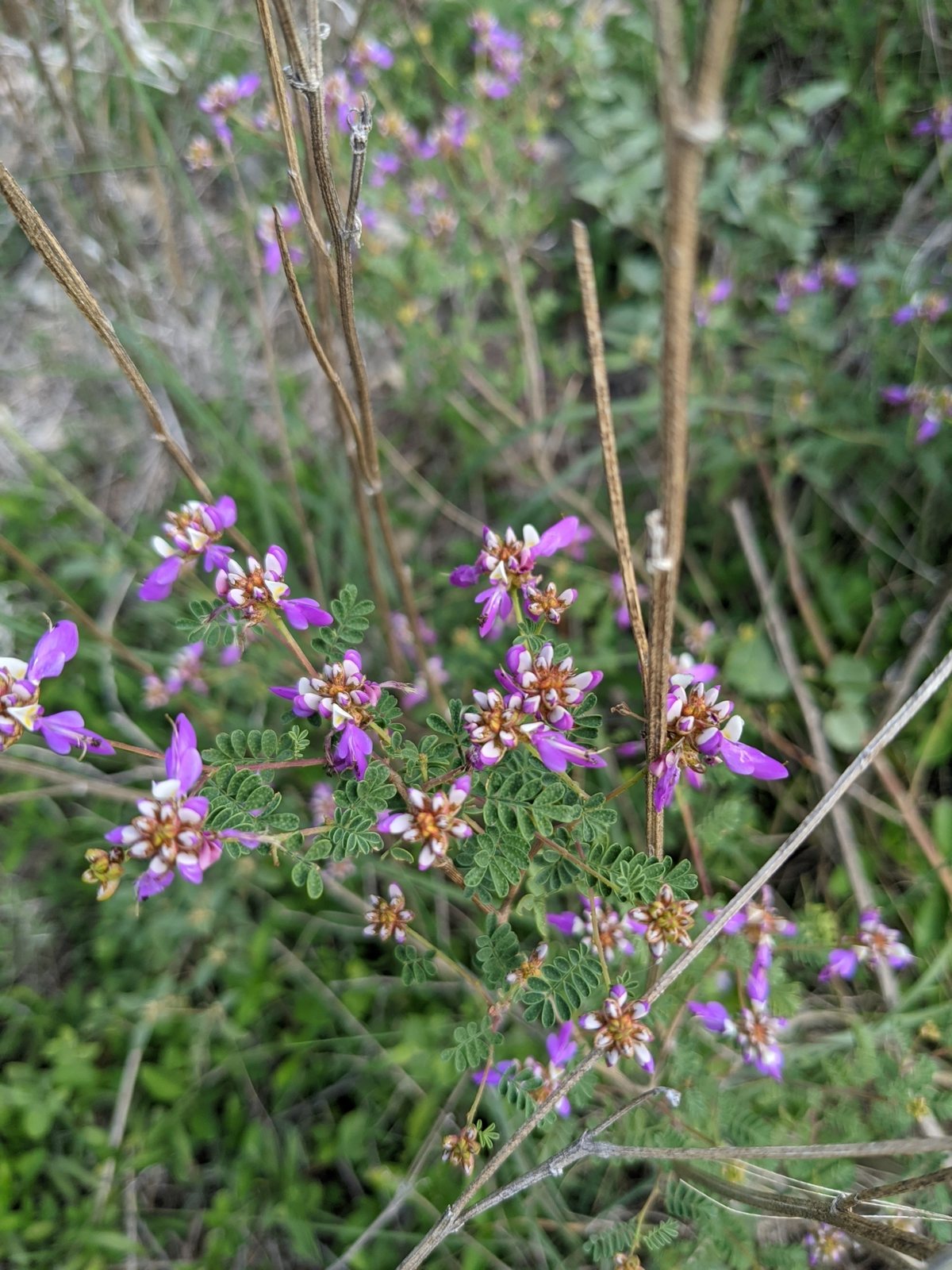
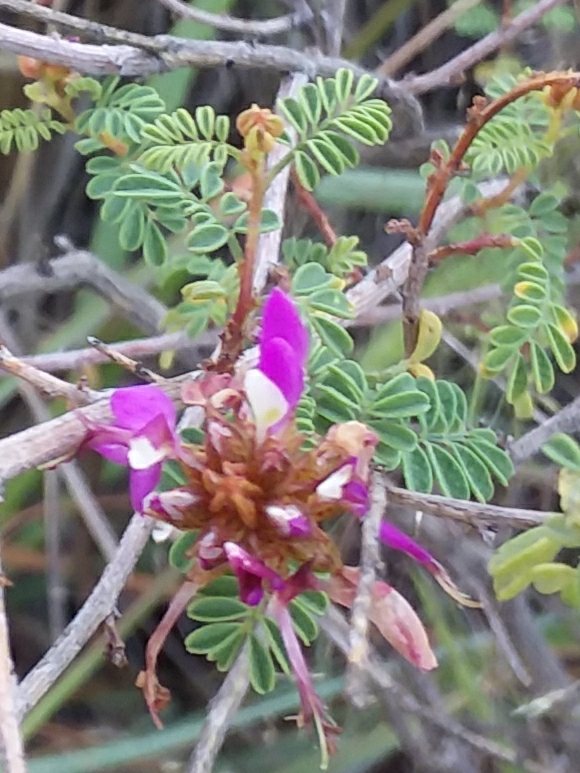
Black dalea is a small, airy shrub from the southwestern United States and northern Mexico, grown for its fine foliage and pink-purple flowers in late summer and autumn. It suits sunny, dry gardens with excellent drainage, especially gravel beds and naturalistic plantings. Cold, wet winters are more troublesome than summer heat.
At a glance
- Sun
- Full sun; flowering and growth become less compact in shade.
- Water
- Low once established. Water regularly through the first growing season, allowing the soil to dry between soakings; established plants usually need supplemental water only during prolonged drought.
- Soil
- Well-drained sandy, gravelly or rocky soil, including alkaline limestone soils. Avoid heavy, persistently wet ground.
- Height
- 2-3 ft (0.6-0.9 m)
- Spread
- 3-4 ft (0.9-1.2 m)
- Flowers
- Small pink-purple to violet flowers in short clusters, mainly from late summer through autumn; flowering often increases after rain.
- Foliage
- Fine-textured, dark green, compound leaves with many tiny leaflets. Usually deciduous in colder conditions and partly evergreen in mild winters.
- Growth
- Moderate
- Care needed
- Low
The year at a glance
- Pollinators
- Drought tolerant
- Heat tolerant
- Low allergen
| J | F | M | A | M | J | J | A | S | O | N | D | |
|---|---|---|---|---|---|---|---|---|---|---|---|---|
| Flowers | ||||||||||||
| Fruit | ||||||||||||
| Plant |
Northern hemisphere months. In Australia, shift them by six.
- Difficulty
- Moderate
- Toughness
- Fairly tough
Will it suit your garden?
Pick your zone, country, light and whether you have pets.
Full sun is 6 or more hours of direct sun a day, part shade 3 to 6 hours, shade under 3.
How it grows
Planting day
1.6 ft (0.5 m)
After 1 year
1.8 ft (0.55 m)
After 2 years
2 ft (0.6 m)
After 3 years
2.1 ft (0.65 m)
After 5 years
2.5 ft (0.75 m)
full size
About 5 years to full size.
From a typical nursery size, at an average rate for this kind of plant. A rule of thumb, not a forecast.
Good to know
- Cats and dogs
- Safe
- Native to
- the US
- Growth rate
- Moderate
Care
Jobs through the year
- WaterApr–May, Sep–Oct, every 28 days
- For established ground plants, soak only during prolonged drought; water young plants more often.
- WaterJun–Aug, every 21 days
- Water established ground plants only in prolonged drought, letting soil dry between soakings.
- PruneApr–May
- Once growth reveals living wood, remove frost damage and lightly shorten untidy shoots.
- MulchMay
- Apply a thin gravel mulch, keeping stem bases clear.
- ProtectJan–Apr, Oct–Dec
- Not reliably hardy in zones 6–7; grow in a movable container and overwinter bright, cool and frost-free.
- Plant in full sun where water drains away quickly; use a raised bed if your soil stays wet in winter.
- Water deeply during establishment, then let the root zone dry before watering again.
- Skip routine feeding; rich soil and heavy fertilizing encourage loose growth.
- Use a light gravel mulch and keep it clear of the stem bases.
- Allow room for the naturally spreading branches rather than repeatedly shearing them.
Pruning. In late winter or early spring, remove dead or frost-damaged wood once healthy growth is easy to identify. Lightly shorten untidy shoots to shape the shrub, avoiding repeated hard cuts into old, bare wood.
Through the year
- Late winter
- Check for winter damage and make sure fallen leaves or mulch are not trapping moisture around the crown.
- Spring
- Plant after severe frost has passed, water thoroughly, and apply a light gravel mulch.
- Late spring
- Remove dead tips and lightly shape established shrubs as new growth develops.
- Summer
- Water new plants deeply between dry spells; water established shrubs only if drought is prolonged.
- Autumn
- Enjoy the main flowering display and leave some spent flower heads if you want to collect seed.
In the garden
- Plant in small groups beside boulders and gravel paths for a soft contrast to stone.
- Combine with agaves, yuccas and low ornamental grasses in a dry, sunny border.
- Use along the front of an informal shrub planting, leaving space for its spreading outline.
- Include in a pollinator garden to provide flowers late in the growing season.
Garden styles it suits: Desert / xeriscape, Southwestern, Texas Hill Country, Dry gravel garden, Pollinator garden and Low-maintenance.
Plant it with: Red yucca, Autumn sage, Blackfoot daisy, Damianita, Sideoats grama and Parry's agave.
Wildlife: Flowers attract bees and butterflies, providing nectar and pollen during the late-season flowering period.
Problems to watch for
- Root rot in poorly drained soil: improve drainage or relocate to a raised, gravelly bed; do not keep the root zone constantly moist.
- Frost dieback near the cold limit: choose a sheltered, sunny position and wait until spring growth starts before removing damaged stems.
- Sparse flowering and floppy growth in shade: move to full sun and avoid high-nitrogen fertilizer.
Safety
Not known to be toxic to people, cats, dogs or horses, but species-specific safety information is limited. No particular plant part is established as poisonous; it is not a food plant, and deliberate ingestion is best avoided.
Easily confused with
Trailing dalea (Dalea greggii)
Forms a low, spreading groundcover with gray-green foliage, rather than the taller, dark-green shrubby outline of black dalea.
Bush dalea (Dalea pulchra)
Usually has noticeably silvery, hairy foliage and flowers mainly in late winter and spring, rather than chiefly in late summer and autumn.
The name
Dalea honours the English physician and botanist Samuel Dale, while frutescens means becoming shrubby.
Propagation. Sow seed in spring after lightly scarifying the hard seed coat, using a free-draining seed mix. Semi-ripe cuttings taken in summer are another option.
Checked against open data
- Accepted botanical name
- Dalea frutescens
- In the US and Canada
- Native in the lower 48 states.
- Native range
- Mexico Northeast, New Mexico, Oklahoma and Texas.
Sources: GBIF (CC BY 4.0), USDA PLANTS and Trefle (CC BY 4.0). The care and design notes are LandscapeGPT's own.
See it in your own yard.
Upload a photo of your yard and see it redesigned with plants that suit your climate, each checked against your zone.