Sideoats grama
Bouteloua curtipendula. Family Poaceae. Ornamental grass.
Also called Side-oats grama.
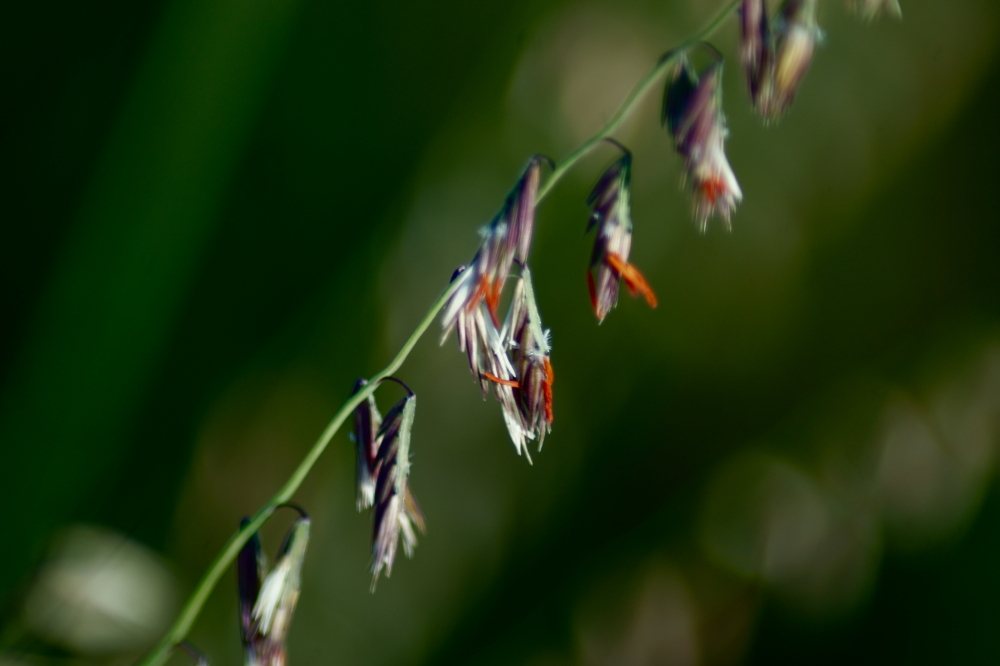
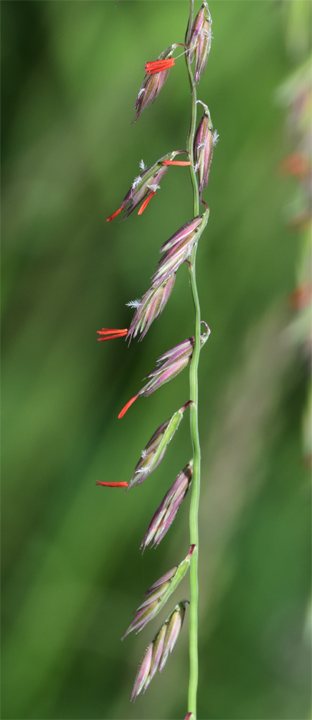
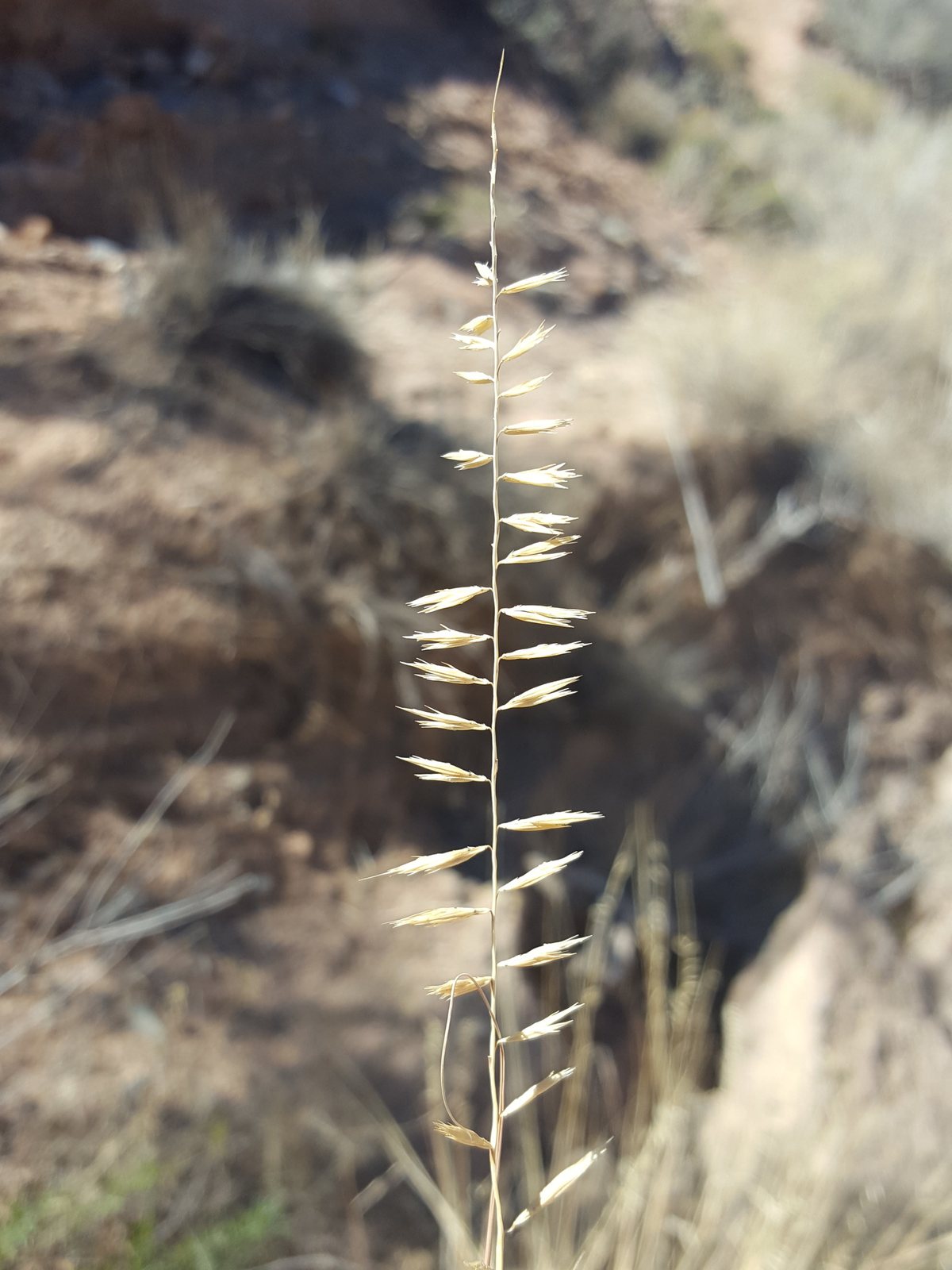
Sideoats grama is a warm-season perennial grass native to much of the Americas, including North American prairies. Gardeners grow it for its narrow, arching leaves and distinctive oat-like flower clusters that hang along one side of each stem. It suits sunny, dry gardens and starts growing relatively late in spring.
At a glance
- Sun
- Full sun; tolerates light shade but flowers less and may flop.
- Water
- Low once established; water regularly during establishment, then mainly during prolonged drought.
- Soil
- Well-drained sandy, loamy or clay soil, including shallow, rocky and limestone soils. Avoid persistently wet ground, especially in winter.
- Height
- 1.5-3 ft (0.45-0.9 m)
- Spread
- 1-2 ft (0.3-0.6 m), gradually wider where short rhizomes spread
- Flowers
- Summer to early autumn; small green to purplish spikelets with briefly visible orange-red anthers, followed by tan seed heads.
- Foliage
- Narrow green to blue-green leaves form an upright, arching clump, turning straw-coloured in autumn; sometimes develops reddish or purplish tones.
- Growth
- Moderate once established; slow to start in cool spring weather.
- Care needed
- Low
The year at a glance
- Deer resistant
- Drought tolerant
- Cold hardy
- Heat tolerant
- Wildlife
| J | F | M | A | M | J | J | A | S | O | N | D | |
|---|---|---|---|---|---|---|---|---|---|---|---|---|
| Flowers | ||||||||||||
| Fruit | ||||||||||||
| Plant |
Northern hemisphere months. In Australia, shift them by six.
- Difficulty
- Easy
- Toughness
- Very tough
Will it suit your garden?
Pick your zone, country, light and whether you have pets.
Full sun is 6 or more hours of direct sun a day, part shade 3 to 6 hours, shade under 3.
How it grows
Planting day
1.1 ft (0.35 m)
After 1 year
1.5 ft (0.45 m)
After 2 years
1.8 ft (0.55 m)
After 3 years
2.1 ft (0.65 m)
After 5 years
2.2 ft (0.68 m)
full size
About 3 years to full size.
From a typical nursery size, at an average rate for this kind of plant. A rule of thumb, not a forecast.
Good to know
- Cats and dogs
- Safe
- Native to
- the US and Canada
- Growth rate
- Slow
Care
Jobs through the year
- WaterApr–May, Sep–Oct, every 28 days
- Water established ground-grown plants only during extended drought; water new plants when the root zone begins drying.
- WaterJun–Aug, every 21 days
- Water established clumps deeply only during prolonged drought; young plants need more frequent watering.
- PruneFeb–Mar
- Cut old stems to 8–10 cm before fresh shoots lengthen.
- MulchApr–May
- After planting, use a thin gravel mulch if needed and leave the crown clear.
- DivideApr–May
- Divide crowded or spreading clumps only as needed when new growth begins.
- Water new plants deeply when the root zone begins to dry during their first growing season.
- Once established, water only during extended dry spells; avoid frequent lawn-style irrigation.
- Do not routinely fertilise; rich soil and heavy feeding can cause floppy growth.
- Keep mulch thin and away from the crown; gravel mulch suits dry planting schemes.
- Divide crowded clumps in spring as new growth begins, if needed.
Pruning. Leave the dry stems standing through winter for structure and seed. In late winter or early spring, cut them back to 3-4 in (8-10 cm) before new shoots lengthen.
Through the year
- Late winter
- Cut back old stems before fresh growth begins.
- Spring
- Plant or divide as the soil warms; do not mistake its late emergence for winter damage.
- Late spring
- Remove weeds around young clumps and water new plantings as needed.
- Summer
- Enjoy the hanging flower clusters; avoid unnecessary feeding and irrigation.
- Autumn
- Collect ripe seed if wanted, or leave seed heads for birds and winter interest.
- Winter
- Check that water is not pooling around crowns, particularly in heavy soil.
In the garden
- Repeat small groups through a sunny perennial border to add fine texture without hiding neighbouring flowers.
- Combine with prairie wildflowers in a meadow planting for summer movement and autumn seed heads.
- Use among rocks and gravel on a dry bank, where its roots help hold soil.
- Plant beside paths where the one-sided seed heads can be seen close up.
Garden styles it suits: Native meadow, Midwest prairie, New perennial (prairie), Dry gravel garden, Desert / xeriscape and Wildlife garden.
Plant it with: Butterfly weed, Purple prairie clover, Pale purple coneflower, Prairie dropseed, Little bluestem and Lanceleaf coreopsis.
Wildlife: Seeds feed small birds, and the foliage provides cover for insects and other small wildlife. In its native range it is a larval food plant for several skipper butterflies. Flowers are wind-pollinated rather than a nectar source for bees.
Problems to watch for
- Crown decline or rot in wet soil: improve drainage or move the plant to higher, drier ground.
- Floppy stems and sparse flowering: provide full sun and stop fertilising or overwatering.
- Rust leaf spots: remove badly affected foliage and improve air circulation; established plants usually tolerate minor infection.
- Unwanted seedlings or expanding patches: pull seedlings while small and divide or edge spreading clumps.
Safety
Not known to be toxic to cats, dogs, horses or people. Its leaves and stems are used as livestock forage; no part is recognised as a significant poisoning hazard.
Easily confused with
Blue grama (Bouteloua gracilis)
Usually shorter, with one or a few horizontal, eyebrow-like flower spikes per stem rather than many small drooping clusters arranged down one side.
Little bluestem (Schizachyrium scoparium)
Has more upright, often blue-toned shoots and fluffy white seed tufts, not the neat row of dangling oat-like clusters.
The name
The common name describes the oat-like spikelets hanging along one side of the stem, while curtipendula means short-hanging.
Propagation. Sow seed in spring when the soil is warming, covering it lightly and keeping it moist until established. Divide clumps in spring as active growth begins; replant divisions promptly and water them in.
Checked against open data
- Accepted botanical name
- Bouteloua curtipendula
- In the US and Canada
- Native in Canada and the lower 48 states. Introduced in Hawaii.
- Native range
- Alabama, Alberta, Argentina Northeast, Argentina Northwest, Arizona, Arkansas, Bolivia, British Columbia, California, Colombia, Colorado and Connecticut.
- Measured
- Soil pH 5.5 to 7.8. Average height 43 cm.
Sources: GBIF (CC BY 4.0), USDA PLANTS and Trefle (CC BY 4.0). The care and design notes are LandscapeGPT's own.
See it in your own yard.
Upload a photo of your yard and see it redesigned with plants that suit your climate, each checked against your zone.