Blackcurrant
Ribes nigrum. Family Grossulariaceae. Shrub.
Also called Black currant, European blackcurrant.
Blackcurrant is a deciduous fruiting shrub grown for its tart, aromatic black berries, usually made into preserves, drinks and desserts. It crops best in cool climates with cold winters and steady soil moisture; hot summers and mild winters can reduce yields.
At a glance
- Sun
- Full sun in cool climates; light afternoon shade where summers are warmer. Heavy shade reduces cropping.
- Water
- Keep the root zone evenly moist, especially during flowering and fruit development. Water deeply during dry spells without leaving the soil waterlogged.
- Soil
- Fertile, moisture-retentive but well-drained soil, ideally slightly acidic to neutral. Improve sandy or heavy soil with organic matter before planting.
- Height
- 3-6 ft (0.9-1.8 m)
- Spread
- 3-6 ft (0.9-1.8 m)
- Flowers
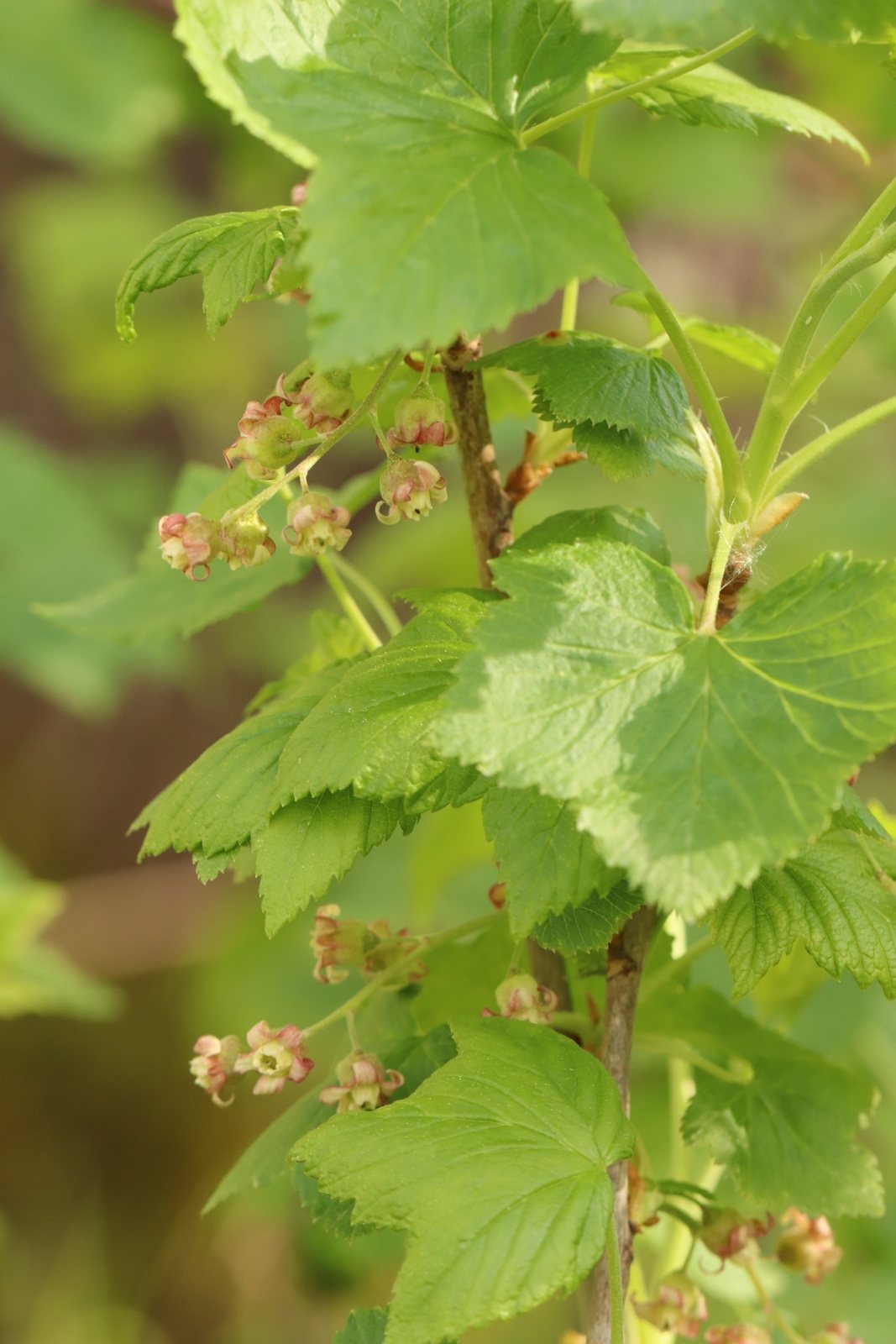
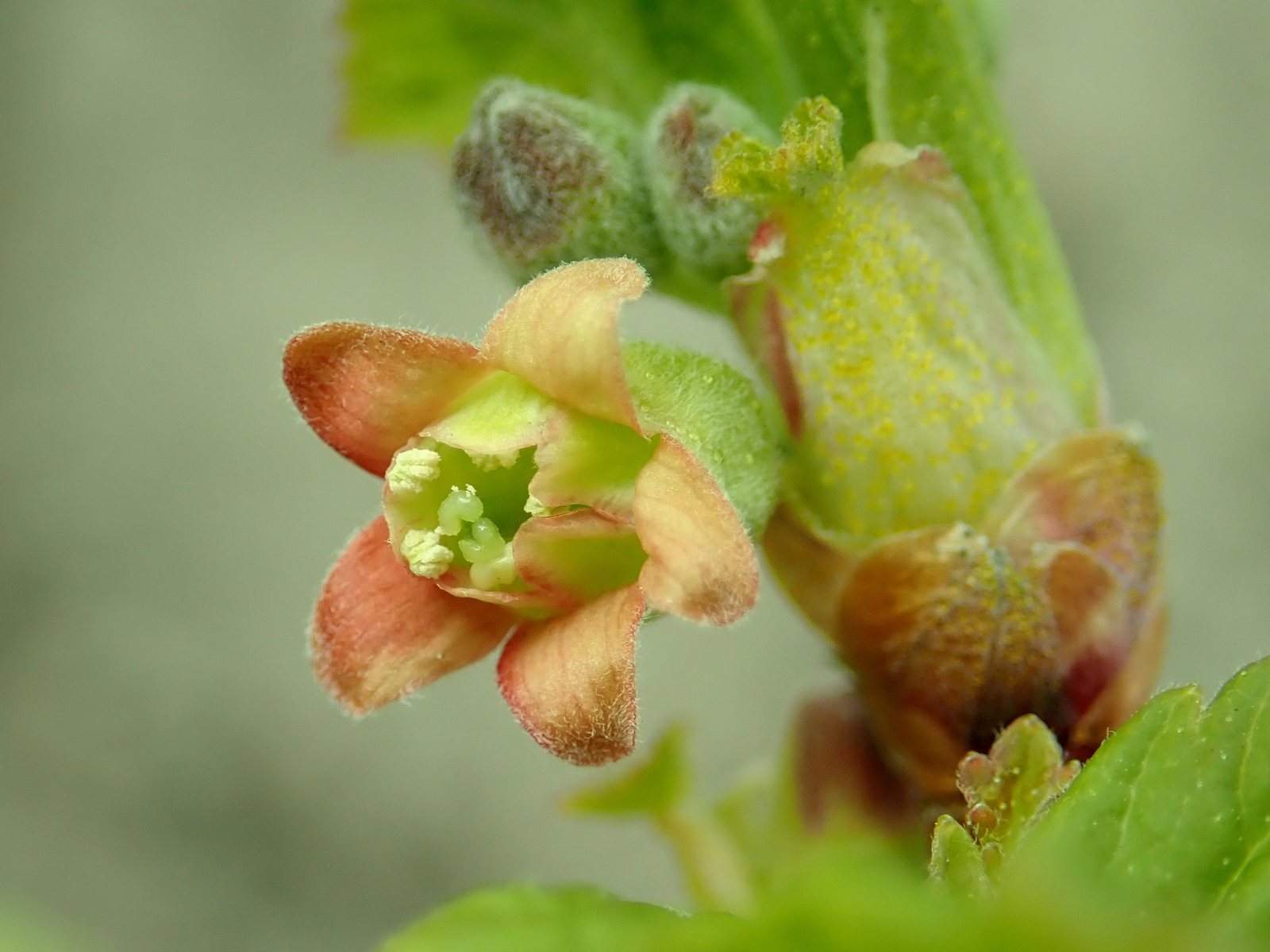
- Mid- to late spring; small, drooping clusters of greenish flowers, often flushed pink or reddish brown.
- Foliage
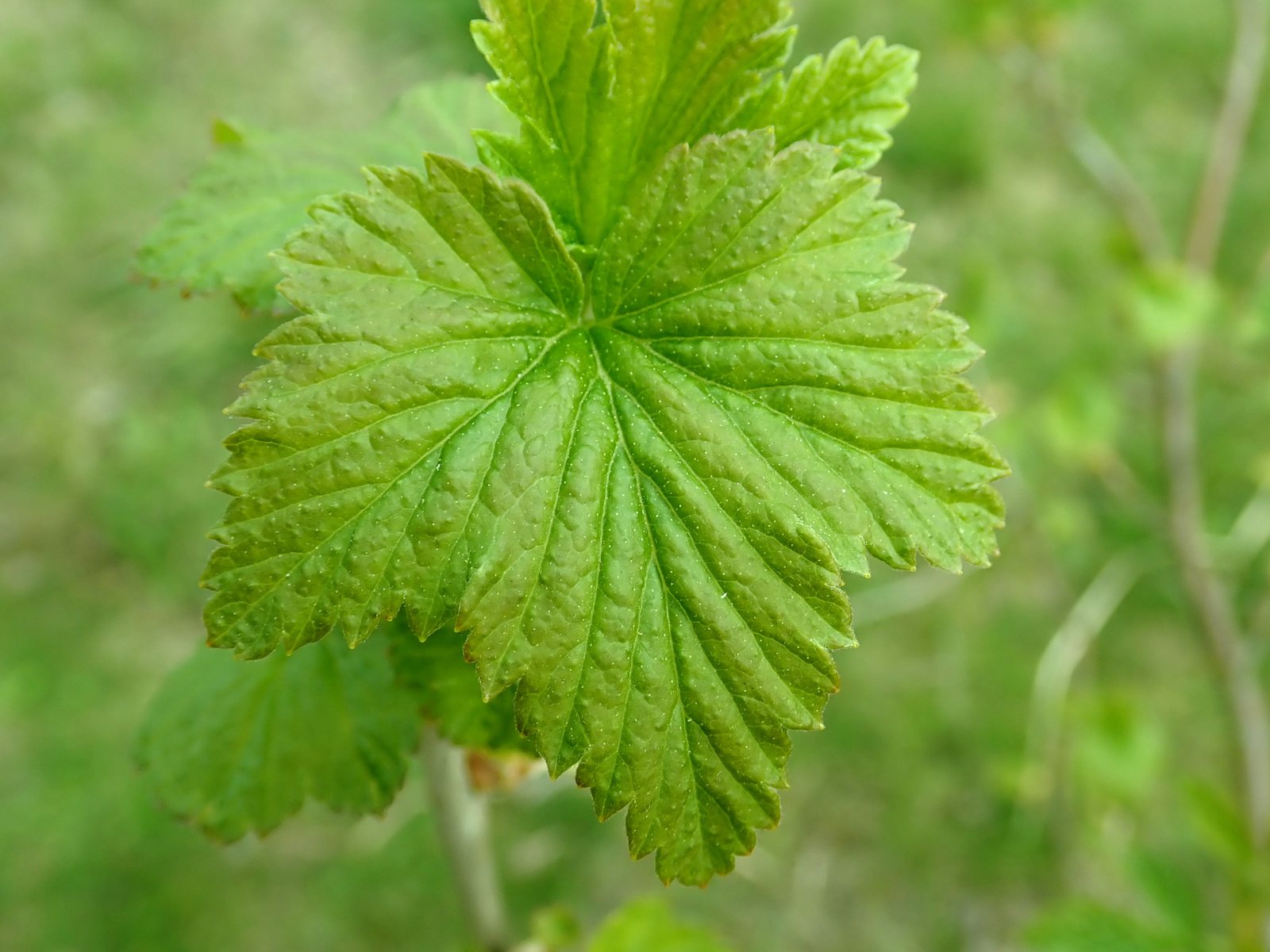
- Lobed, toothed green leaves with a strong blackcurrant scent when rubbed; leaves fall in autumn.
- Growth
- Moderate to fast
- Care needed
- Medium
The year at a glance
- Pollinators
- Cold hardy
- Wildlife
- Low allergen
- Edible
| J | F | M | A | M | J | J | A | S | O | N | D | |
|---|---|---|---|---|---|---|---|---|---|---|---|---|
| Flowers | ||||||||||||
| Fruit | ||||||||||||
| Plant |
Northern hemisphere months. In Australia, shift them by six.
- Difficulty
- Moderate
- Toughness
- Fairly tough
Will it suit your garden?
Pick your zone, country, light and whether you have pets.
Full sun is 6 or more hours of direct sun a day, part shade 3 to 6 hours, shade under 3.
How it grows
Planting day
1.6 ft (0.5 m)
After 1 year
2.3 ft (0.71 m)
After 2 years
3 ft (0.93 m)
After 3 years
4 ft (1.1 m)
After 5 years
4 ft (1.4 m)
full size
About 4 years to full size.
From a typical nursery size, at an average rate for this kind of plant. A rule of thumb, not a forecast.
Good to know
- Cats and dogs
- Safe
- Growth rate
- Fast
Care
Jobs through the year
- WaterMar–Apr, Sep–Oct, every 7 days
- Water established bushes during dry spells; newly planted bushes need more frequent moisture checks.
- WaterMay–Aug, every 5 days
- Water deeply when rainfall is insufficient, keeping roots evenly moist through fruit swelling and harvest.
- FeedMar
- Apply balanced fruit fertiliser at the recommended rate as spring growth begins.
- MulchMar
- Apply 5–8 cm of compost or well-rotted organic matter, clear of stem bases.
- PruneJan–Feb, Dec
- Once each winter, remove up to one-third of the oldest stems at ground level, retaining strong young shoots.
- ProtectApr–May
- Cover flowering bushes with fleece on frosty nights and uncover during the day for pollination.
- ProtectJun–Aug
- Fit taut, securely enclosed bird netting before berries colour and check daily for trapped wildlife.
- HarvestJun–Aug
- Pick fully black, plump, slightly soft berries individually or snip uniformly ripe clusters.
- ProtectFeb–Mar
- Inspect for abnormally swollen buds; remove affected buds and replace severely infested or virus-infected bushes.
- Before buying, check local rules: blackcurrant planting is restricted in parts of the United States because it can host white pine blister rust.
- Plant while dormant, setting bare-root plants slightly deeper than their nursery soil mark to encourage shoots from the base.
- Water deeply during dry weather, particularly from flowering until harvest.
- Apply compost and a balanced fruit fertilizer in early spring, following the product rate.
- Mulch annually with 2-3 in (5-8 cm) of compost or well-rotted organic matter, keeping it clear of stem bases.
- Protect ripening fruit with securely fitted, taut bird netting, and check it regularly for trapped wildlife.
Pruning. In winter, remove up to one-third of the oldest, darkest stems at ground level, along with weak, damaged or crossing growth. Retain strong young shoots, which carry the best crops, and avoid shortening every stem.
Harvest
Pick blackcurrants in summer, usually June–August in the US, UK and Canada and December–February in Australia. Wait until the berries are fully black, plump and slightly soft, then pick them individually or snip off whole clusters if all the berries are ripe. Bushes usually produce their first worthwhile crop 2–3 years after planting.
Through the year
- Late autumn
- Plant dormant bare-root bushes where the ground is workable; allow room for their mature spread.
- Winter
- Prune established bushes by removing the oldest stems and retaining vigorous young growth.
- Early spring
- Feed, renew the mulch and inspect buds for abnormal swelling caused by gall mites.
- Spring
- Watch flowering bushes during late frosts; use horticultural fleece overnight if needed and remove it for daytime pollination.
- Early summer
- Water during dry spells and fit bird protection before berries colour.
- Summer
- Harvest when berries are fully black and ripe; remove damaged fruit and continue watering during drought.
In the garden
- Plant in a kitchen garden or potager as a permanent fruiting framework beside seasonal vegetables.
- Use in a loose edible hedge, leaving enough access on both sides for pruning and picking.
- Place along the sunny edge of a food forest, beyond the heavy shade and root competition of trees.
- Combine with strawberries and chives in an edible border, keeping the shrub base accessible.
Garden styles it suits: Potager (kitchen garden), Cottage garden, Edible landscape, Food forest, Homestead and Backyard orchard.
Plant it with: Strawberry, Chives, Calendula, Borage, Gooseberry and Redcurrant.
Wildlife: Spring flowers provide nectar and pollen for bees and other insects. Birds eat ripe berries, and the branching shrub offers shelter.
Problems to watch for
- Blackcurrant gall mite and reversion disease: unusually large, rounded dormant buds suggest mites; distorted flowers and declining crops can indicate reversion. Remove affected buds on lightly infested plants; remove badly affected or virus-infected bushes and replace with certified healthy stock.
- Powdery mildew: white growth can coat leaves and shoot tips. Improve airflow, avoid excessive nitrogen, maintain soil moisture and choose resistant cultivars when replacing plants.
- White pine blister rust: blackcurrants can host this disease, which threatens susceptible five-needle pines. Check local planting restrictions and use locally permitted, resistant stock; seek local advice if rust appears.
- Poor fruit set or low yields: late frost, insufficient winter chilling, drought or too much old wood may be responsible. Choose a locally suitable cultivar, avoid frost pockets, water consistently and renew stems through annual pruning.
Safety
Ribes nigrum is not known to be toxic to people, cats, dogs or horses. Its ripe berries are edible; large amounts may cause digestive upset. These fresh currants are not the grape-derived dried currants associated with poisoning in dogs.
Easily confused with
Redcurrant (Ribes rubrum)
Usually bears translucent red berries, with white-fruited forms also common. Its leaves lack the strong blackcurrant scent released by rubbing blackcurrant foliage.
Gooseberry (Ribes uva-crispa)
Usually has spines at the stem nodes and larger fruits borne singly or in small groups, rather than strings of small black berries.
American black currant (Ribes americanum)
Also has dark fruit and lobed leaves, but generally carries longer, more many-flowered clusters. Identification without flowers or fruit can be difficult.
The name
The species name nigrum is Latin for black, referring to the ripe berries.
Propagation. Take hardwood cuttings from healthy, vigorous shoots after leaf fall and root them in a well-drained nursery bed or deep pot. Use certified healthy plants rather than cuttings from bushes showing swollen buds or disease, and observe local planting restrictions.
Checked against open data
- Accepted botanical name
- Ribes nigrum
- In the US and Canada
- Introduced in Canada and the lower 48 states.
- Native range
- Altay, Amur, Baltic States, Belarus, Belgium, Bulgaria, Buryatiya, Central European Rus, Chita, Czechoslovakia, Denmark and East European Russia.
- Measured
- Soil pH 6.5 to 7. Average height 115 cm.
Sources: GBIF (CC BY 4.0), USDA PLANTS and Trefle (CC BY 4.0). The care and design notes are LandscapeGPT's own.
See it in your own yard.
Upload a photo of your yard and see it redesigned with plants that suit your climate, each checked against your zone.