Blue Daze
Evolvulus glomeratus 'Blue Daze'. Family Convolvulaceae. Perennial.
Also called Dwarf morning glory, Brazilian dwarf morning glory.
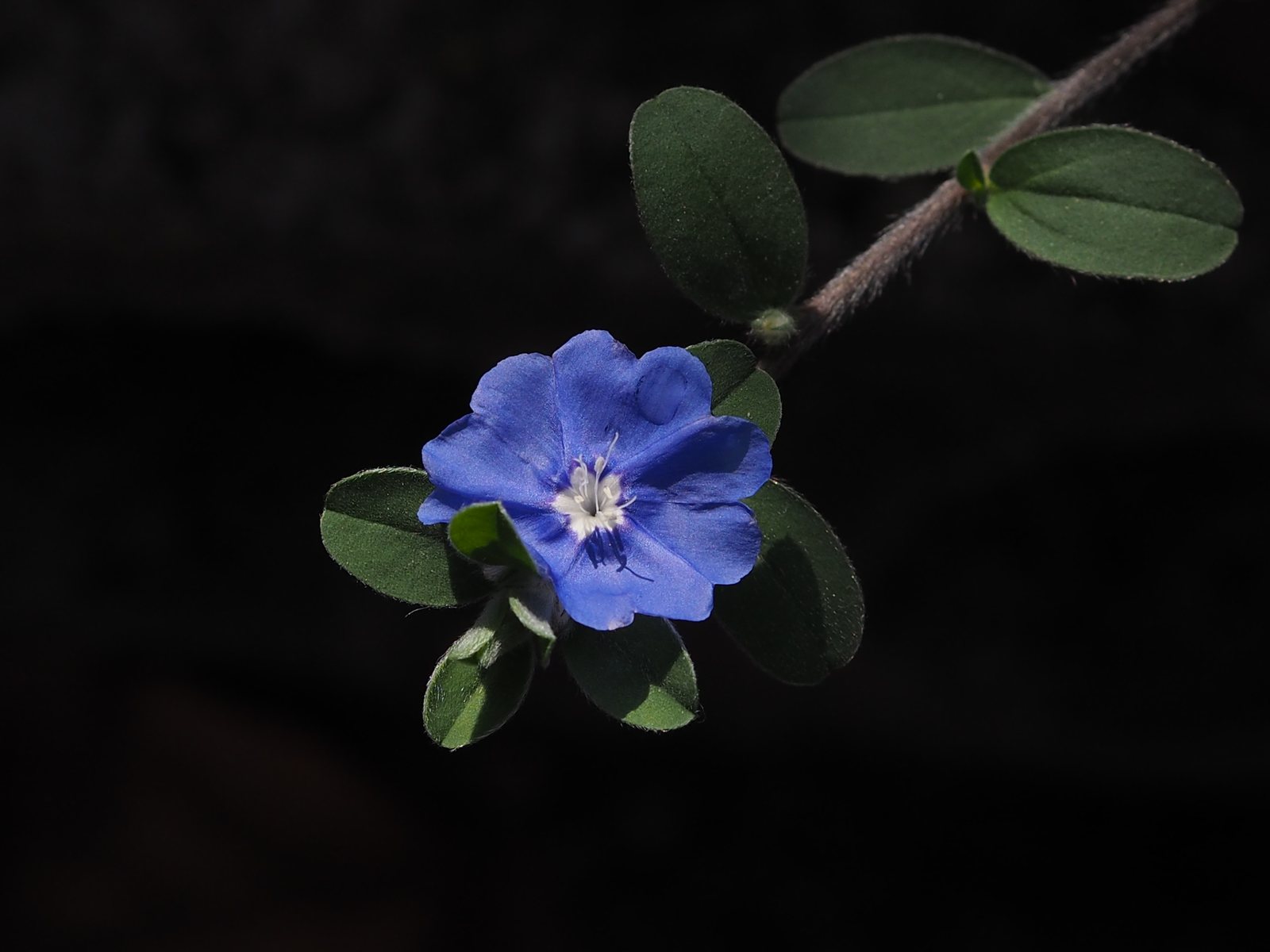
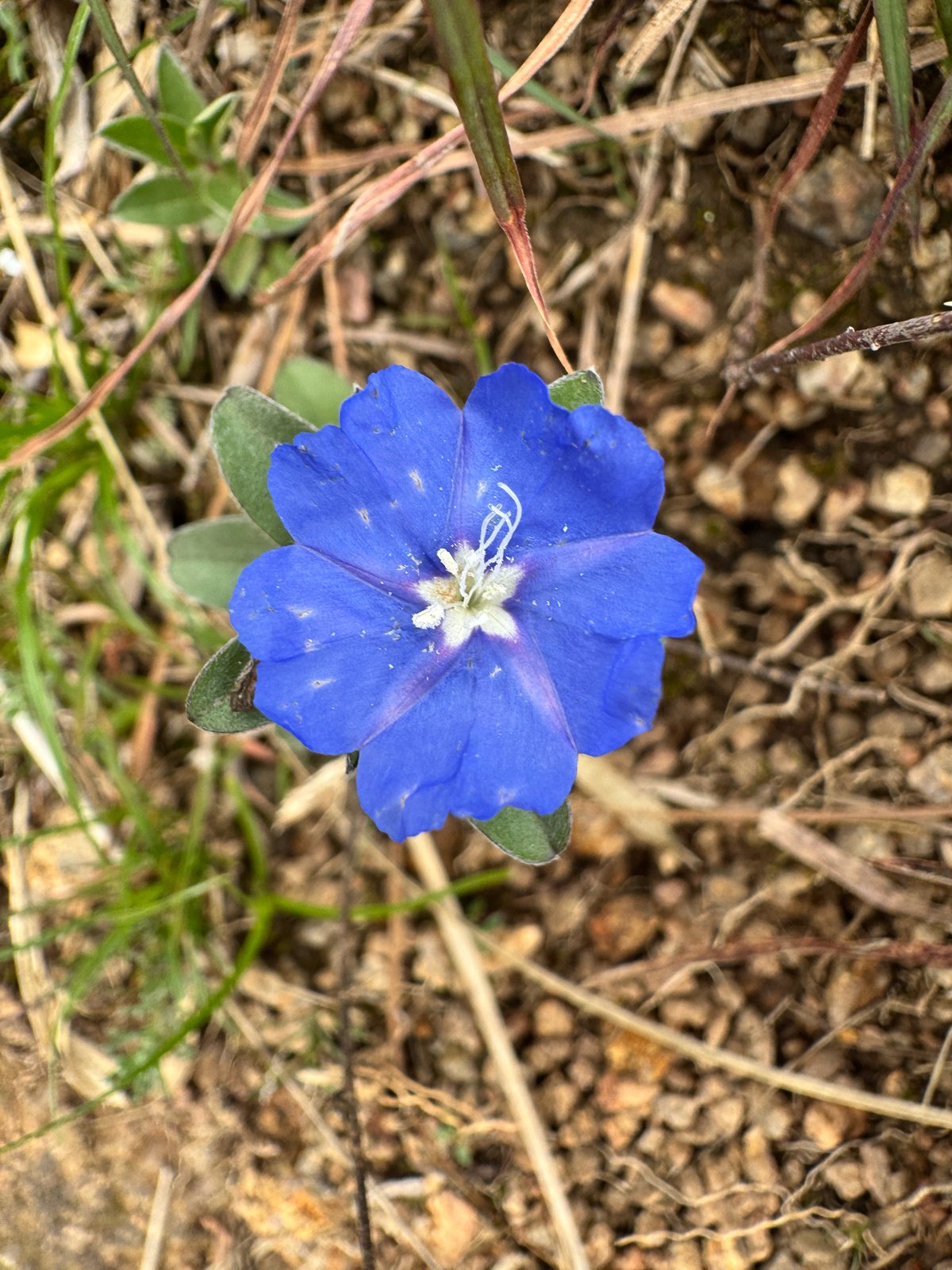
Blue Daze is a low, spreading, tender perennial with soft grey-green leaves and small, clear blue flowers. Gardeners grow it along sunny edges, as warm-climate groundcover and spilling from containers; it is grown as an annual where winters are cold. Flowers open in the morning and usually close by afternoon or in dull weather.
At a glance
- Sun
- Full sun for the most flowers; tolerates light afternoon shade in very hot climates.
- Water
- Water regularly while establishing, then let the soil surface dry between waterings. Established plants tolerate brief dry spells, but containers need more frequent watering.
- Soil
- Well-drained sandy or loamy soil; tolerates moderately poor soil but struggles in waterlogged clay. Use a freely draining potting mix in containers.
- Height
- 0.5-1 ft (0.15-0.3 m)
- Spread
- 1-3 ft (0.3-0.9 m)
- Flowers
- Clear blue flowers with pale centres from late spring through autumn; flowering can continue much of the year in frost-free climates.
- Foliage
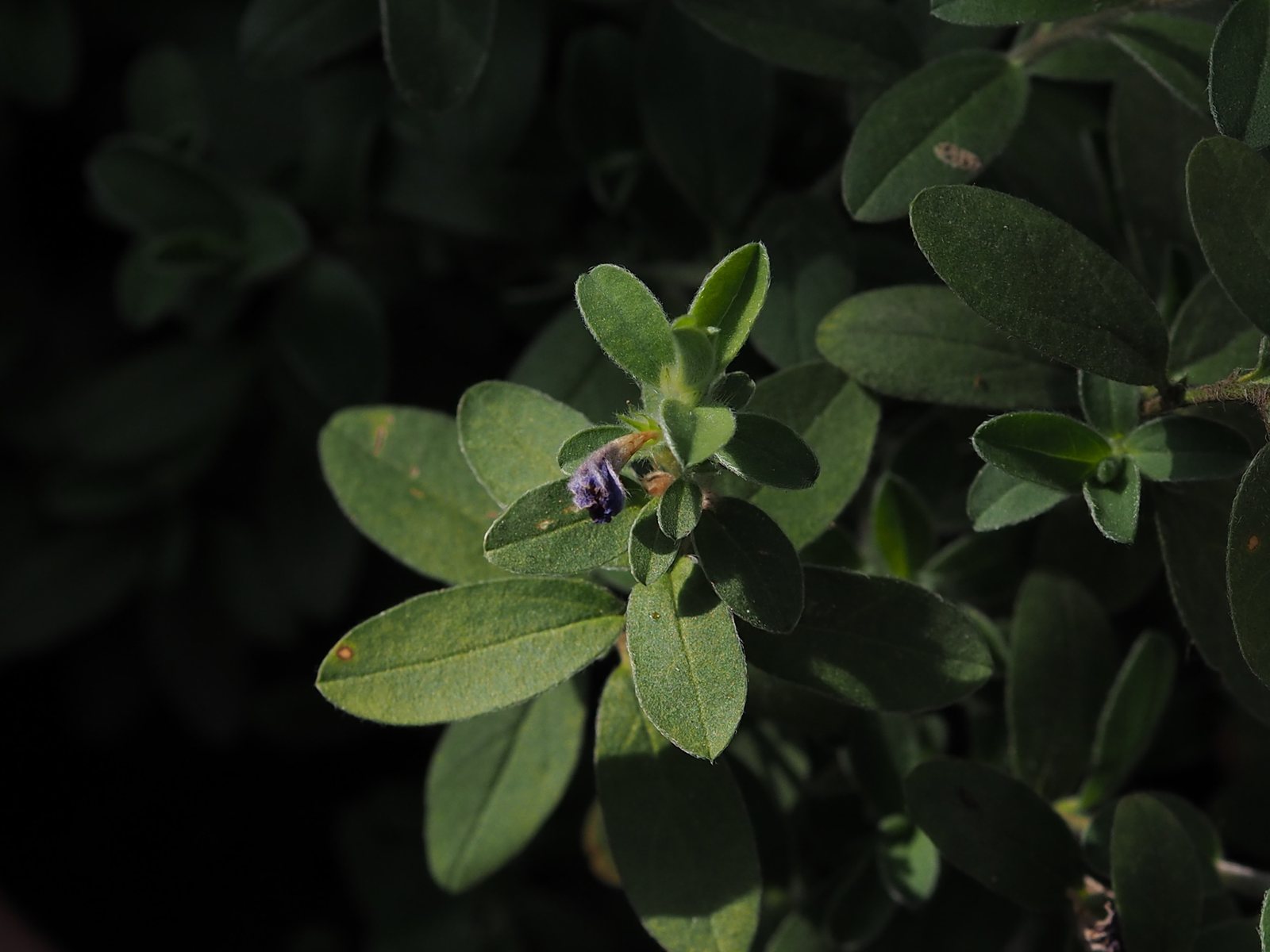
- Evergreen. Small, oval, softly hairy grey-green leaves on branching, trailing stems.
- Growth
- Moderate to fast in warm weather.
- Care needed
- Low
The year at a glance
- Pollinators
- Drought tolerant
- Heat tolerant
- Low allergen
| J | F | M | A | M | J | J | A | S | O | N | D | |
|---|---|---|---|---|---|---|---|---|---|---|---|---|
| Flowers | ||||||||||||
| Plant |
Northern hemisphere months. In Australia, shift them by six.
- Difficulty
- Easy
- Toughness
- Fairly tough
Will it suit your garden?
Pick your zone, country, light and whether you have pets.
Full sun is 6 or more hours of direct sun a day, part shade 3 to 6 hours, shade under 3.
How it grows
Planting day
0.7 ft (0.22 m)
full size
About 2 years to full size.
From a typical nursery size, at an average rate for this kind of plant. A rule of thumb, not a forecast.
Good to know
- Cats and dogs
- Safe
- Growth rate
- Fast
Care
Jobs through the year
- WaterMay, Sep–Oct, every 14 days
- Water established ground plants when the surface dries; new plants need more frequent watering.
- WaterJun–Aug, every 7 days
- Water established ground plants if the soil surface is dry; skip after sufficient rain.
- PruneMay
- Trim overwintered plants back to healthy growth before planting out after frost.
- PruneJun–Aug
- Pinch young shoots or lightly trim sparse, straggly growth; no deadheading is needed.
- ProtectSep–Oct
- Treat as seasonal bedding or pot up and move to bright, frost-free shelter before frost.
- Plant outdoors after frost danger has passed and the soil has warmed.
- Space plants about 1.5-2 ft (0.45-0.6 m) apart for groundcover.
- Water at soil level when the surface begins to dry; avoid keeping the root zone constantly wet.
- Feed container plants lightly with a balanced fertiliser according to the label; garden plants usually need little feeding.
- Keep mulch away from the crown and bring containers under cover before frost if you want to keep them.
Pruning. Pinch young shoots to encourage branching, and trim straggly stems lightly during the growing season. In warm climates, remove frost-damaged growth in spring once the risk of further frost has passed; deadheading is unnecessary.
Through the year
- Spring
- Trim overwintered plants back to healthy growth after frost danger has passed.
- Late spring
- Plant outside in a sunny, well-drained position once nights are reliably mild.
- Early summer
- Pinch long shoots to thicken young plants and begin light feeding of containers.
- Summer
- Check pots regularly for dryness and trim trailing growth if it becomes sparse.
- Late summer
- Take tip cuttings if you want small plants to overwinter indoors.
- Autumn
- Before the first frost, move plants you want to keep into a bright, frost-free place.
- Winter
- Keep sheltered plants in strong light and water sparingly without letting the root ball dry completely.
In the garden
- Trail it over the edges of sunny pots or hanging baskets beneath upright flowering plants.
- Use repeated patches along a path to create a low blue-flowered border.
- Plant as a small-scale groundcover in frost-free gardens, away from foot traffic.
- Pair its grey-green leaves and blue flowers with white angelonia or yellow lantana for a clear summer colour contrast.
Garden styles it suits: Coastal, Mediterranean, Tropical, Modern courtyard, Small-space and Florida subtropical.
Plant it with: Angelonia, Pentas, Lantana, Moss rose, Society garlic and Ornamental sweet potato vine.
Wildlife: The flowers attract small bees and other flower-visiting insects. It is not a substitute for locally native plants that support specialist wildlife.
Problems to watch for
- Root rot in wet soil: improve drainage, empty standing water from saucers and let the surface dry between waterings.
- Sparse flowering and stretched growth in shade: move the plant to a sunnier position.
- Spider mites during hot, dry weather: look for stippled leaves and fine webbing, rinse leaf undersides and use insecticidal soap if needed, following the label.
- Frost damage: protect containers before frost; plants may regrow after light frost in mild climates, but repeated or hard freezes can kill them.
Safety
Not known to be toxic to people, cats, dogs or horses. Information on ingestion is limited, and no particular toxic part is established; treat it as an ornamental rather than a food plant.
Easily confused with
Ground morning glory (Convolvulus sabatius)
Also trails and bears blue funnel-shaped flowers, but its flowers are generally larger and more lavender-blue, and its leaves are greener and less softly fuzzy.
Cape plumbago (Plumbago auriculata)
Has clusters of pale blue, five-petalled flowers on a much larger woody shrub, rather than small funnel-shaped flowers on a low, soft-leaved mat.
The name
Evolvulus comes from Latin meaning 'unrolled', referring to its non-twining stems, unlike those of many other members of the morning glory family.
Propagation. Take softwood tip cuttings in spring or summer and root them in a moist, freely draining propagation mix in bright, indirect light. Cuttings preserve the cultivar; seedlings may not come true.
Checked against open data
- Accepted botanical name
- Evolvulus glomeratus
- In the US and Canada
- Introduced in the lower 48 states.
- Native range
- Argentina Northeast, Bolivia, Brazil North, Brazil Northeast, Brazil South, Brazil Southeast, Brazil West-Central, French Guiana, Guyana, Paraguay, Suriname and Uruguay.
Sources: GBIF (CC BY 4.0), USDA PLANTS and Trefle (CC BY 4.0). The care and design notes are LandscapeGPT's own.
See it in your own yard.
Upload a photo of your yard and see it redesigned with plants that suit your climate, each checked against your zone.