Blue-eyed grass
Sisyrinchium angustifolium. Family Iridaceae. Perennial.
Also called Narrow-leaved blue-eyed grass, Stout blue-eyed grass.
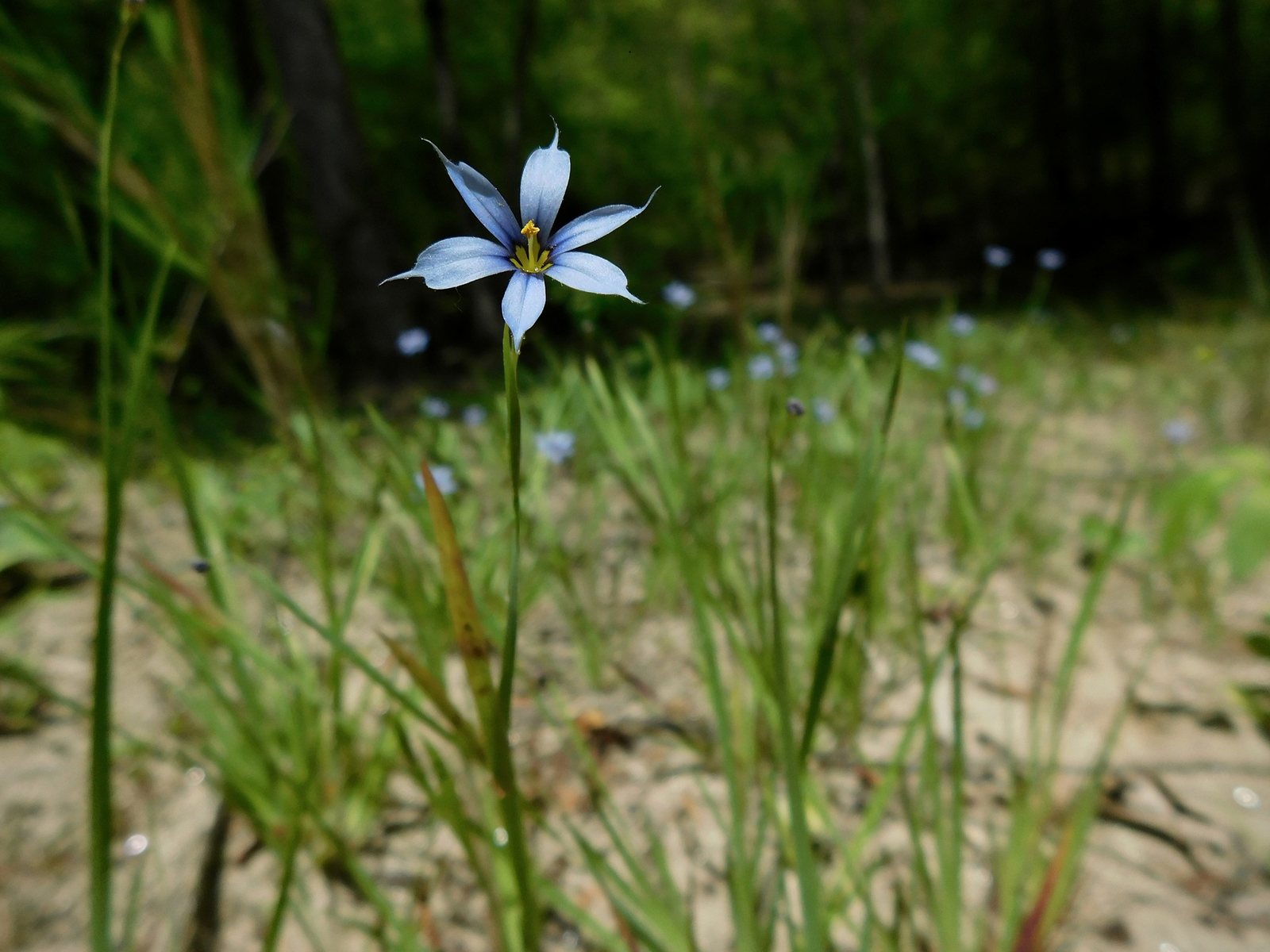
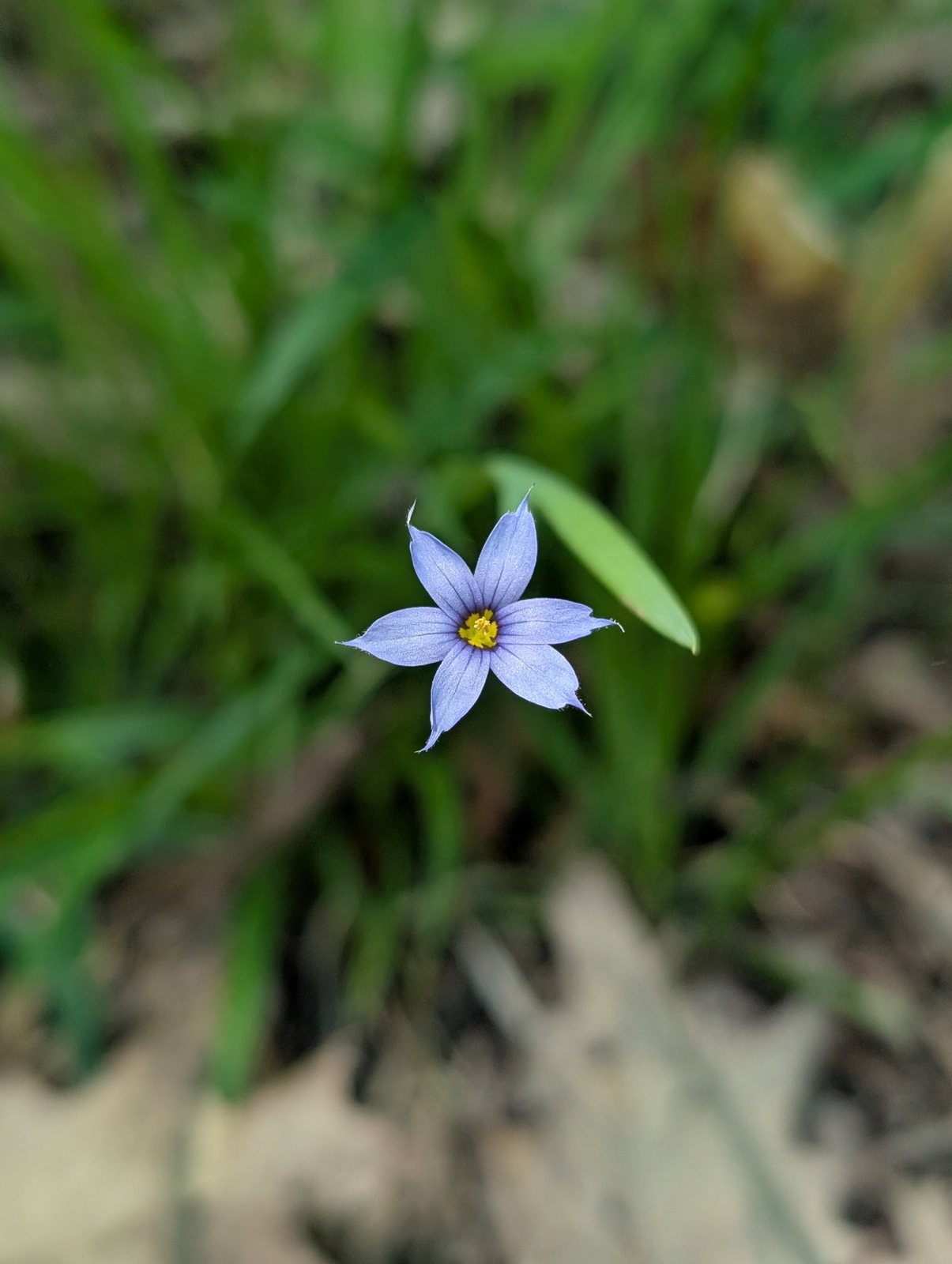
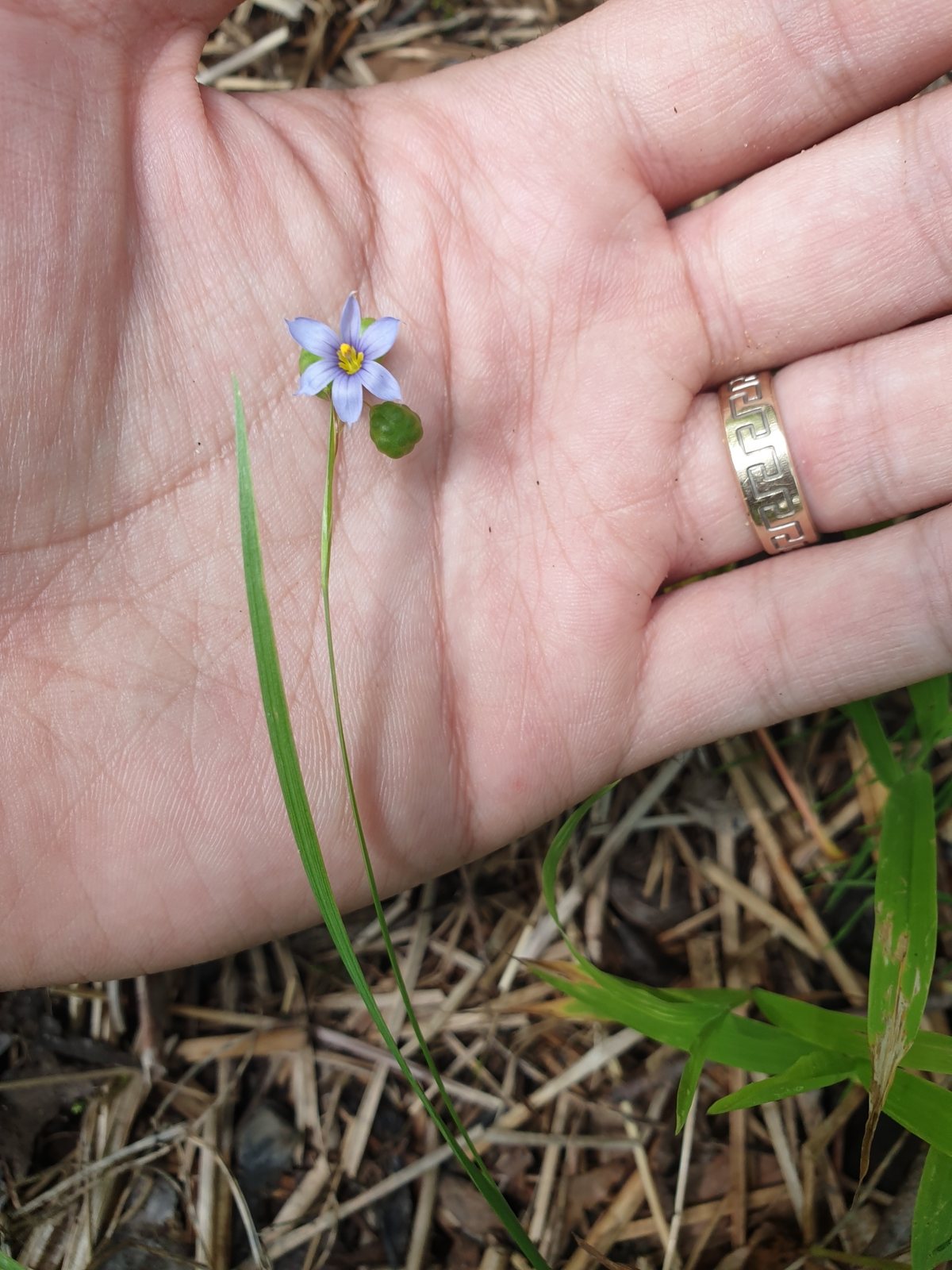
Blue-eyed grass is a small, clump-forming perennial in the iris family, not a true grass. Native to eastern North America, it produces blue-violet, yellow-centred flowers above narrow leaves in late spring and early summer. Grow it along sunny border edges or among other small meadow plants where taller neighbours will not overwhelm it.
At a glance
- Sun
- Full sun to light partial shade; flowering is best in sun.
- Water
- Moderate; prefers evenly moist soil but tolerates brief dry spells once established.
- Soil
- Average to humus-rich, well-drained soil that retains some moisture; avoid persistently waterlogged ground.
- Height
- 1-2 ft (0.3-0.6 m)
- Spread
- 0.5-1 ft (0.15-0.3 m)
- Flowers
- Late spring to early summer; small blue to violet-blue flowers with yellow centres, opening mainly in sunshine.
- Foliage
- Narrow, upright, green, grass-like leaves in small tufts; usually dies back in cold winters but may remain partly green in mild climates.
- Growth
- Moderate
- Care needed
- Low
The year at a glance
- Pollinators
- Deer resistant
- Cold hardy
- Low allergen
| J | F | M | A | M | J | J | A | S | O | N | D | |
|---|---|---|---|---|---|---|---|---|---|---|---|---|
| Flowers | ||||||||||||
| Fruit | ||||||||||||
| Plant |
Northern hemisphere months. In Australia, shift them by six.
- Difficulty
- Easy
- Toughness
- Fairly tough
Will it suit your garden?
Pick your zone, country, light and whether you have pets.
Full sun is 6 or more hours of direct sun a day, part shade 3 to 6 hours, shade under 3.
How it grows
Planting day
1 ft (0.3 m)
After 1 year
1.1 ft (0.35 m)
After 2 years
1.3 ft (0.4 m)
After 3 years
1.5 ft (0.45 m)
full size
About 3 years to full size.
From a typical nursery size, at an average rate for this kind of plant. A rule of thumb, not a forecast.
Good to know
- Cats and dogs
- Safe
- Native to
- the US and Canada
- Growth rate
- Moderate
Care
Jobs through the year
- WaterApr–May, Sep, every 14 days
- Check established clumps and water if soil is drying; water new plants more often.
- WaterJun–Aug, every 7 days
- Water deeply during dry weather, keeping soil lightly moist but never waterlogged.
- FeedMar–Apr
- On poor soil only, apply a thin dressing of compost; avoid heavy feeding.
- PruneFeb–Mar
- Trim dead leaves without cutting fresh green growth.
- DivideMar–Apr
- Divide crowded clumps every two or three years and water in thoroughly.
- DeadheadJun–Jul
- Remove finished flower stems before capsules ripen to limit self-seeding.
- ProtectOct–Nov
- Clear heavy fallen leaves from crowns and check drainage before winter.
- Water during establishment and prolonged dry weather; do not leave the roots standing in water.
- Apply a thin layer of compost in spring on poor soil; avoid heavy feeding.
- Keep mulch away from the crown to reduce the risk of rot.
- Divide crowded clumps every two or three years to maintain vigour.
- Remove seed capsules before they ripen if you want to limit self-seeding.
Pruning. Remove spent flower stems after flowering unless you want seed. In late winter or early spring, trim away dead leaves without cutting into fresh green growth.
Through the year
- Early spring
- Remove dead foliage and check that neighbouring plants have not crowded the clumps.
- Spring
- Plant or divide established clumps, then water them thoroughly.
- Late spring
- Keep the soil lightly moist while flowers and new growth develop.
- Early summer
- Cut off finished flower stems to prevent unwanted seedlings, or leave a few capsules for seed.
- Summer
- Water during extended dry spells rather than giving frequent light sprinklings.
- Autumn
- Remove heavy fallen leaves from the crowns and check drainage before winter.
In the garden
- Repeat small groups along a sunny path or border edge for a low, informal rhythm.
- Mix with low-growing meadow flowers and sedges in a small native planting within its North American range.
- Place among stones in a moisture-retentive rock garden, rather than a very dry scree bed.
- Use at the front of a mixed border where its fine leaves contrast with broader foliage.
Garden styles it suits: Cottage garden, Native meadow, Wildlife garden, Pollinator garden, New perennial (prairie) and Small-space.
Plant it with: Prairie smoke, Wild columbine, Lanceleaf coreopsis, Prairie dropseed, Foxglove beardtongue and Butterfly weed.
Wildlife: The flowers provide pollen for small native bees and other pollen-collecting insects. Its value is greatest when planted with other locally appropriate flowering species that extend the season.
Problems to watch for
- Crown or root rot in waterlogged soil: improve drainage or move the plant to a slightly raised position.
- Poor flowering in shade: move to a sunnier position and avoid nitrogen-rich fertiliser.
- Thin or declining clumps: divide healthy outer sections in spring and replant in fresh soil.
- Unwanted seedlings: remove seed capsules before they dry and pull surplus seedlings while small.
Safety
Toxicity to cats, dogs, horses and people is not well documented for this species, and no plant part should be assumed edible. Species-specific safety information is limited; discourage children and pets from eating it and do not use it as livestock forage.
Easily confused with
Yellow-eyed grass (Sisyrinchium californicum)
Has similar narrow leaves and small iris-like flowers, but the flowers are yellow rather than blue-violet.
Pale yellow-eyed grass (Sisyrinchium striatum)
Forms a much larger clump with broader, grey-green leaves and tall stems carrying tiers of pale cream-yellow flowers.
The name
The common name describes its grass-like leaves and blue flowers, while angustifolium means narrow-leaved.
Propagation. Divide clumps in spring, keeping roots and several healthy shoots on each division. Alternatively, sow fresh seed outdoors in autumn; winter chilling can help germination, which may be uneven.
Checked against open data
- Accepted botanical name
- Sisyrinchium angustifolium
- In the US and Canada
- Native in Canada and the lower 48 states.
- Native range
- Alabama, Arkansas, Colorado, Connecticut, Delaware, District of Columbia, Florida, Georgia, Illinois, Indiana, Iowa and Kansas.
- Measured
- Soil pH 5 to 7.
Sources: GBIF (CC BY 4.0), USDA PLANTS and Trefle (CC BY 4.0). The care and design notes are LandscapeGPT's own.
See it in your own yard.
Upload a photo of your yard and see it redesigned with plants that suit your climate, each checked against your zone.