Blueberry ash
Elaeocarpus reticulatus. Family Elaeocarpaceae. Tree.
Also called Blue olive berry, Fairy petticoats.
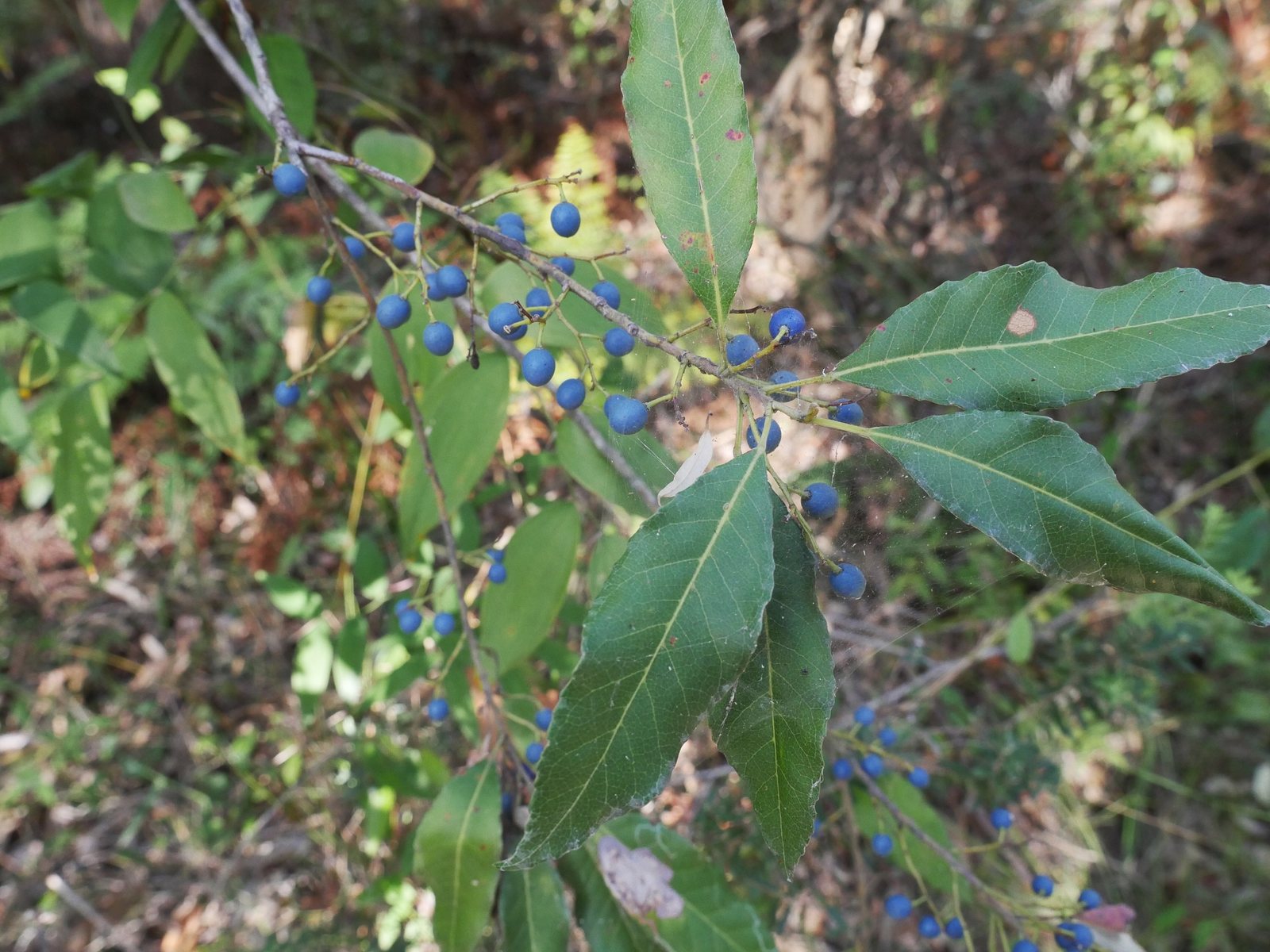
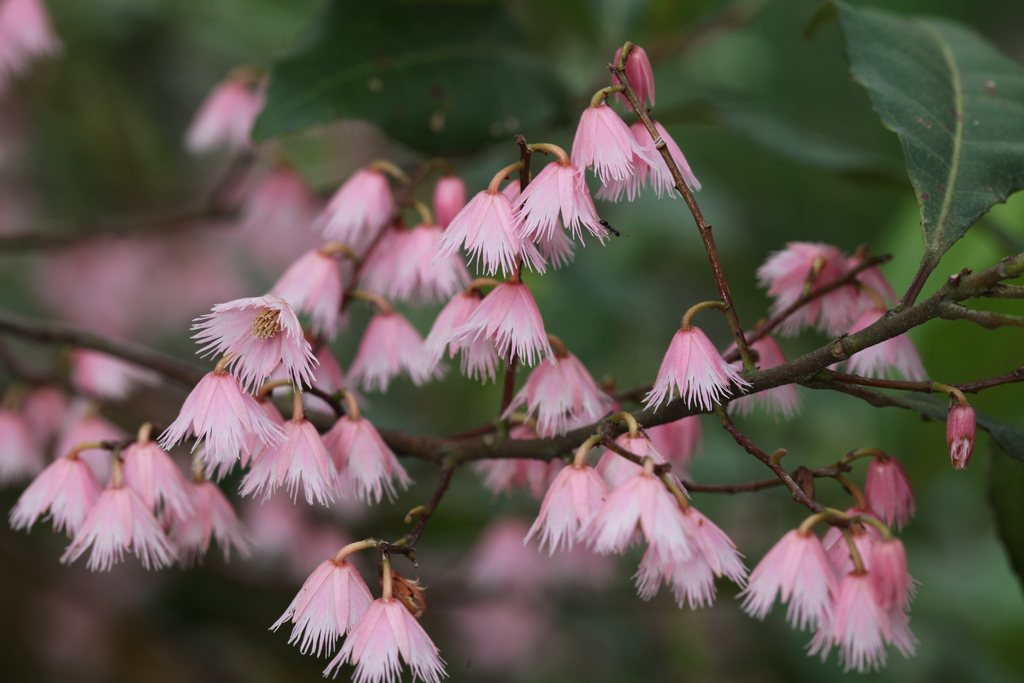
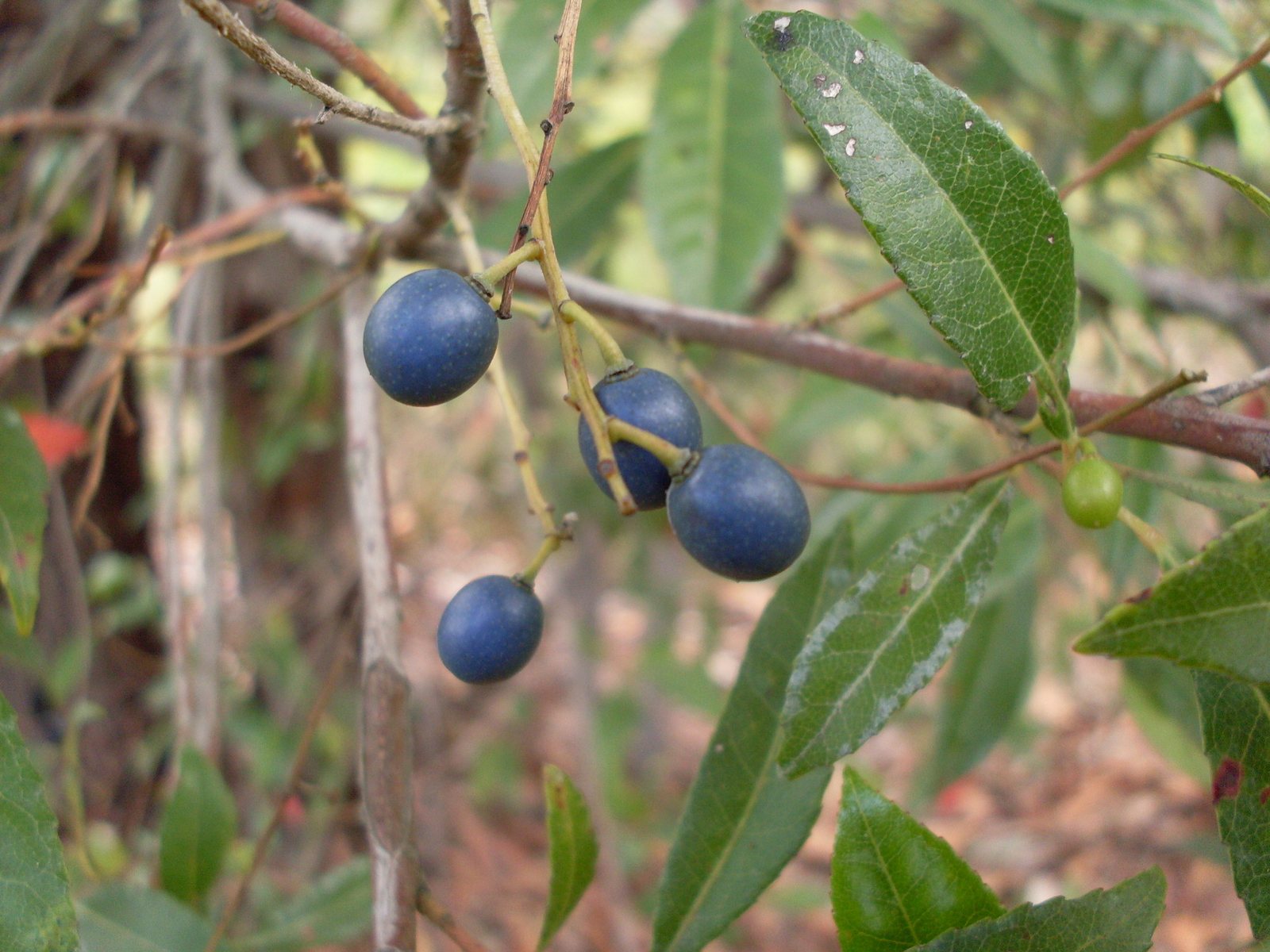
Blueberry ash is an evergreen small tree from eastern Australia, grown for its fringed, bell-shaped flowers, glossy leaves and bright blue fruit. Its relatively narrow crown makes it useful for screening and sheltered gardens, but it needs a mild climate and protection from hard frost.
At a glance
- Sun
- Full sun to partial shade; shelter from cold, drying winds.
- Water
- Water regularly while establishing. Once established, it tolerates short dry spells, but grows and flowers better with water during prolonged dry weather.
- Soil
- Moist but well-drained, humus-rich soil, preferably acidic to neutral. Avoid waterlogged ground and strongly alkaline soil.
- Height
- 15-30 ft (4.5-9 m) in gardens; occasionally taller in favourable conditions
- Spread
- 10-15 ft (3-4.5 m)
- Flowers
- Spring to early summer; small, hanging white or pale pink flowers with finely fringed petals.
- Foliage
- Evergreen. Glossy, leathery, dark green leaves with finely toothed edges; scattered older leaves turn red before falling.
- Growth
- Moderate
- Care needed
- Low
The year at a glance
- Pollinators
- Heat tolerant
- Wildlife
- Low allergen
- Fragrant
| J | F | M | A | M | J | J | A | S | O | N | D | |
|---|---|---|---|---|---|---|---|---|---|---|---|---|
| Flowers | ||||||||||||
| Fruit | ||||||||||||
| Plant |
Northern hemisphere months. In Australia, shift them by six.
- Difficulty
- Hard
- Toughness
- Fairly tough
Will it suit your garden?
Pick your zone, country, light and whether you have pets.
Full sun is 6 or more hours of direct sun a day, part shade 3 to 6 hours, shade under 3.
How it grows
Planting day
7 ft (2 m)
After 1 year
7 ft (2.2 m)
After 2 years
8 ft (2.5 m)
After 3 years
9 ft (2.7 m)
After 5 years
10 ft (3.2 m)
About 20 years to full size.
From a typical nursery size, at an average rate for this kind of plant. A rule of thumb, not a forecast.
Good to know
- Cats and dogs
- Safe
- Native to
- Australia
- Growth rate
- Moderate
Care
Jobs through the year
- WaterApr–May, Sep–Oct, every 14 days
- Deep-water established ground plants if soil is drying; water young trees and containers more often.
- WaterJun–Aug, every 7 days
- Water established ground plants deeply during dry weather; allow the surface to begin drying.
- WaterJan–Mar, Nov–Dec, every 14 days
- Check overwintered pots and water only when the surface begins drying; avoid saturation.
- FeedApr
- Apply a light slow-release feed only if growth is weak; check soil pH if leaves yellow.
- MulchApr–May
- Refresh organic mulch over the roots, keeping it clear of the trunk.
- PruneJun–Jul
- Shape lightly after flowering only if needed; cutting flowered shoots reduces the berry crop.
- ProtectJan–Apr, Oct–Dec
- Not reliably hardy in zone 6–7 or most UK gardens; overwinter in a bright frost-free conservatory.
- Water deeply through the first two growing seasons, allowing the surface soil to begin drying between waterings.
- Spread organic mulch over the root area, keeping it clear of the trunk.
- Apply a light dressing of slow-release fertiliser in spring if growth is weak; avoid heavy feeding.
- Protect young trees from frost with horticultural fleece during cold nights.
- Stake only if the root ball moves in wind, and remove ties once the tree is secure.
Pruning. Prune lightly after flowering to shape the crown or maintain a screen, noting that this removes some developing fruit. Remove dead, damaged or crossing branches as needed, and avoid routine hard cutting.
Through the year
- Spring
- Plant after the risk of hard frost has passed, and water the root ball thoroughly.
- Spring
- Refresh mulch and feed lightly if growth is weak.
- Early summer
- After flowering, shorten only shoots that need shaping.
- Summer
- Water young trees deeply during dry spells and check sheltered foliage for scale insects.
- Autumn
- Check stakes and ties, and leave blue fruit for visiting birds.
- Winter
- Protect young trees during frost and make sure the root area is not waterlogged.
In the garden
- Use as a narrow evergreen screen along a sheltered boundary, allowing room for its mature width.
- Plant as a small specimen tree where the hanging flowers and blue fruit can be seen from a path.
- Combine with ferns, native violets and other shade-tolerant plants in a woodland-style garden.
- Use with other eastern Australian plants to provide year-round cover and seasonal food for birds.
Garden styles it suits: Australian native, Woodland, Wildlife garden, Coastal, Modern courtyard and Low-maintenance.
Plant it with: Soft tree fern, Native violet, Mat rush, Flax lily, Bird's nest fern and Sweet pittosporum.
Wildlife: Flowers attract bees and other insects. The blue fruits are eaten by birds, which can disperse the seeds; dense foliage also provides shelter.
Problems to watch for
- Yellow leaves with green veins can indicate unsuitable alkaline soil; test the soil and address the cause rather than repeatedly adding fertiliser.
- Scale insects can cause sticky honeydew and sooty mould; remove small infestations by hand or use horticultural oil according to the label.
- Wilting or dieback in wet ground can indicate root damage or root rot; improve drainage and avoid frequent shallow watering.
- Frost can scorch leaves and kill young shoots; shelter young trees and wait until spring growth starts before removing damaged wood.
Safety
Not known to be toxic to people, cats, dogs or horses, although reliable species-specific information for pets and livestock is limited. The fruit has a thin edible flesh around a hard stone, but the stones should not be swallowed and are a choking hazard.
Easily confused with
Blue quandong (Elaeocarpus angustifolius)
A much larger rainforest tree with larger leaves and fruit; mature trees often develop conspicuous buttress roots.
Sweet pittosporum (Pittosporum undulatum)
Has wavy rather than finely toothed leaf margins, unfringed cream flowers and orange capsules that split to expose sticky seeds.
The name
Elaeocarpus comes from Greek words meaning olive and fruit, reticulatus refers to the net-like leaf veins, and blueberry ash describes the blue fruit and superficial resemblance to an ash.
Propagation. Raise from cleaned seed, but expect slow and irregular germination because of the hard stone. Semi-ripe cuttings taken in summer with rooting hormone and gentle bottom heat are another option, though rooting can be variable.
Checked against open data
- Accepted botanical name
- Elaeocarpus reticulatus
- Native range
- New South Wales, Queensland, Tasmania and Victoria.
- Measured
- Average height 1190 cm.
Sources: GBIF (CC BY 4.0) and Trefle (CC BY 4.0). The care and design notes are LandscapeGPT's own.
See it in your own yard.
Upload a photo of your yard and see it redesigned with plants that suit your climate, each checked against your zone.