Cabbage-tree palm
Livistona australis. Family Arecaceae. Tree.
Also called Australian cabbage palm, Cabbage fan palm.
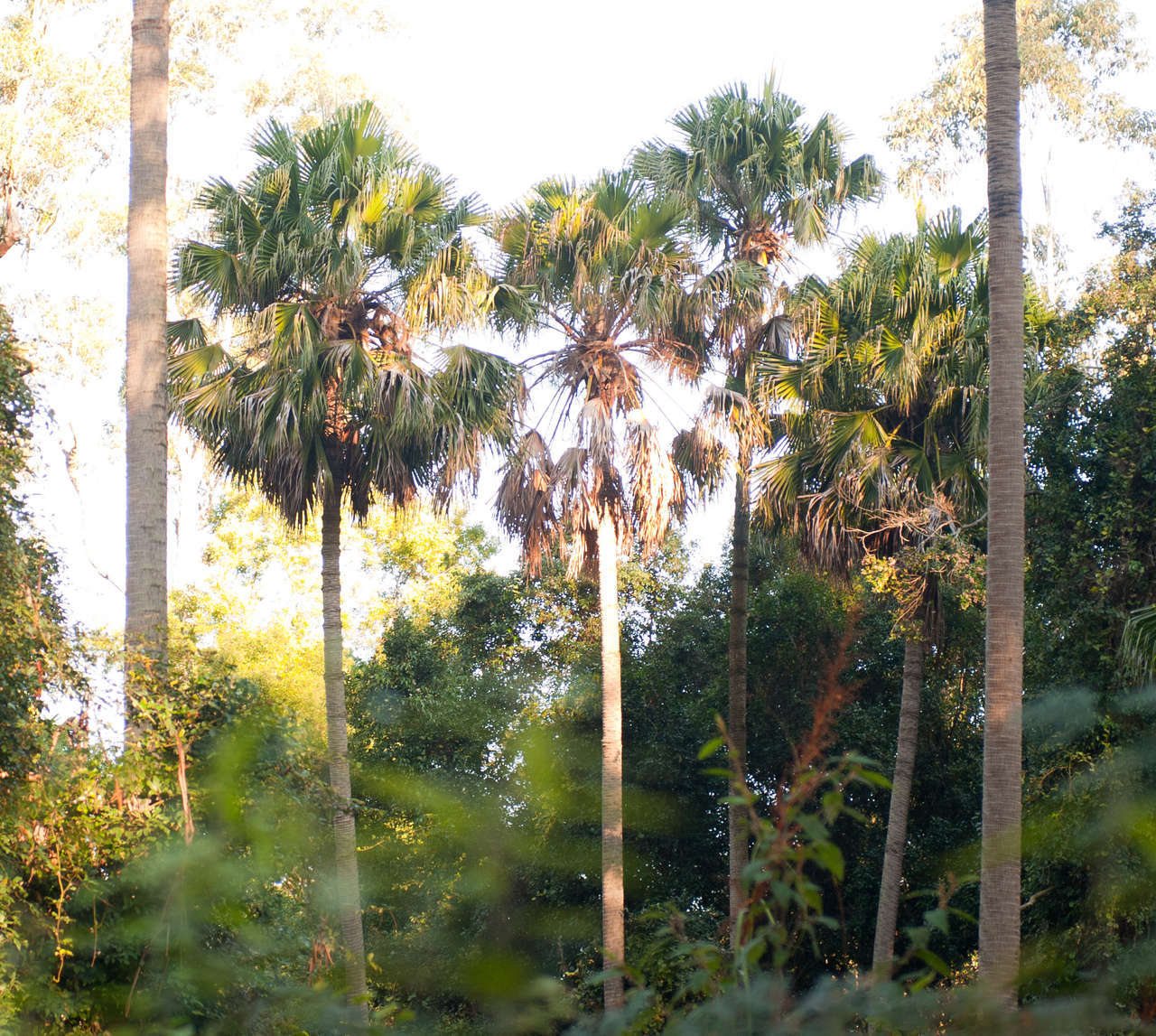
An Australian evergreen palm with a tall, usually solitary trunk and a rounded crown of large fan-shaped leaves. Gardeners grow it for height, shade and a strong tropical outline; allow room for its mature crown and keep its sharply toothed leaf stalks away from paths. Outdoor growing is mainly practical in warm parts of the United States and Australia; most UK and Canadian gardens require a container and frost-free winter shelter.
At a glance
- Sun
- Full sun to partial shade; young plants appreciate shelter from intense afternoon sun and drying winds.
- Water
- Keep the root zone evenly moist while establishing. Established palms tolerate short dry spells, but grow better with deep watering during prolonged dry weather.
- Soil
- Deep, moisture-retentive soil with good drainage; tolerates clay if it does not remain waterlogged.
- Height
- 40-80 ft (12-24 m)
- Spread
- 10-20 ft (3-6 m)
- Flowers
- Branched sprays of small cream flowers in spring and summer on mature palms, followed by small dark fruits.
- Foliage
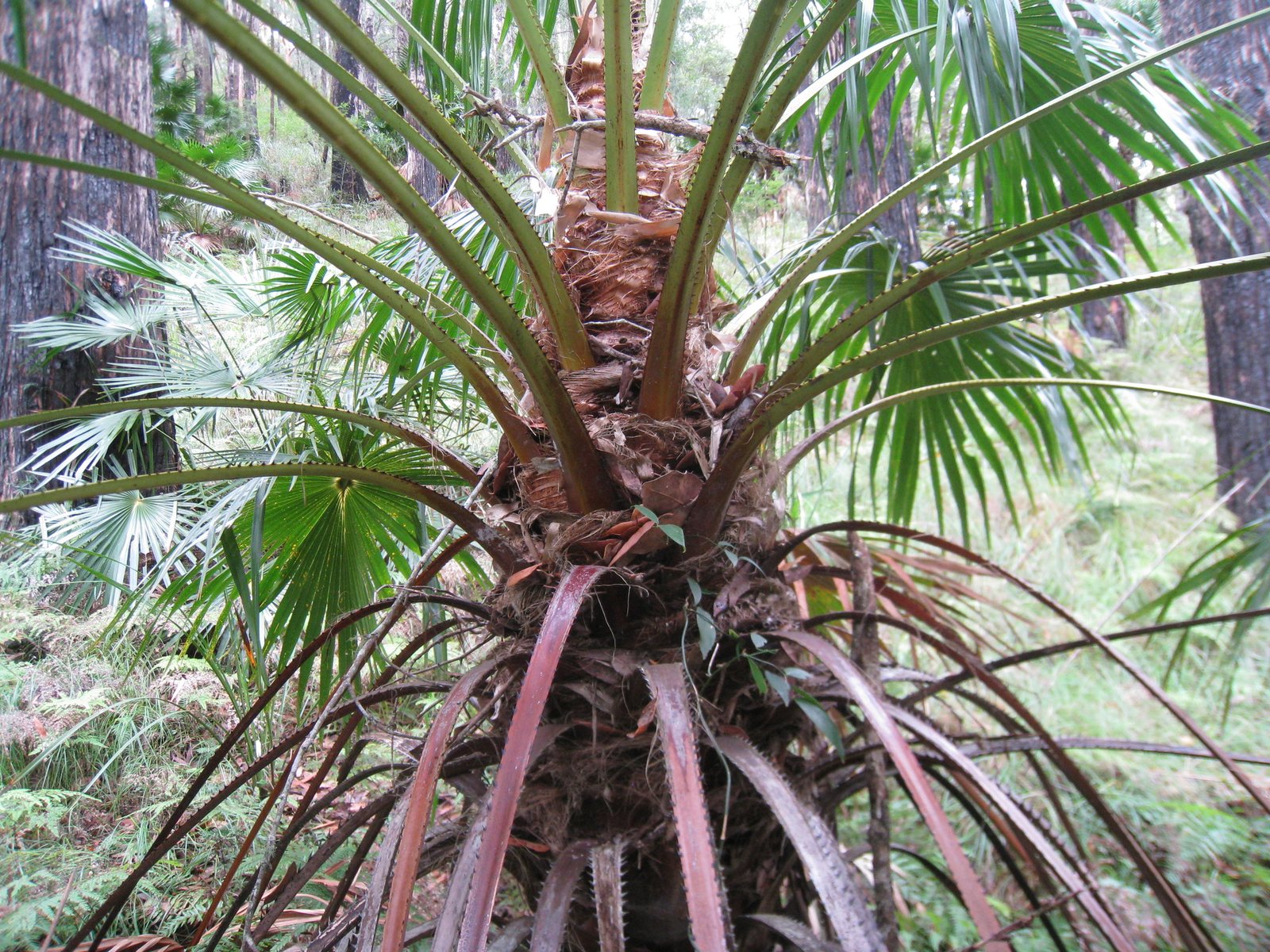
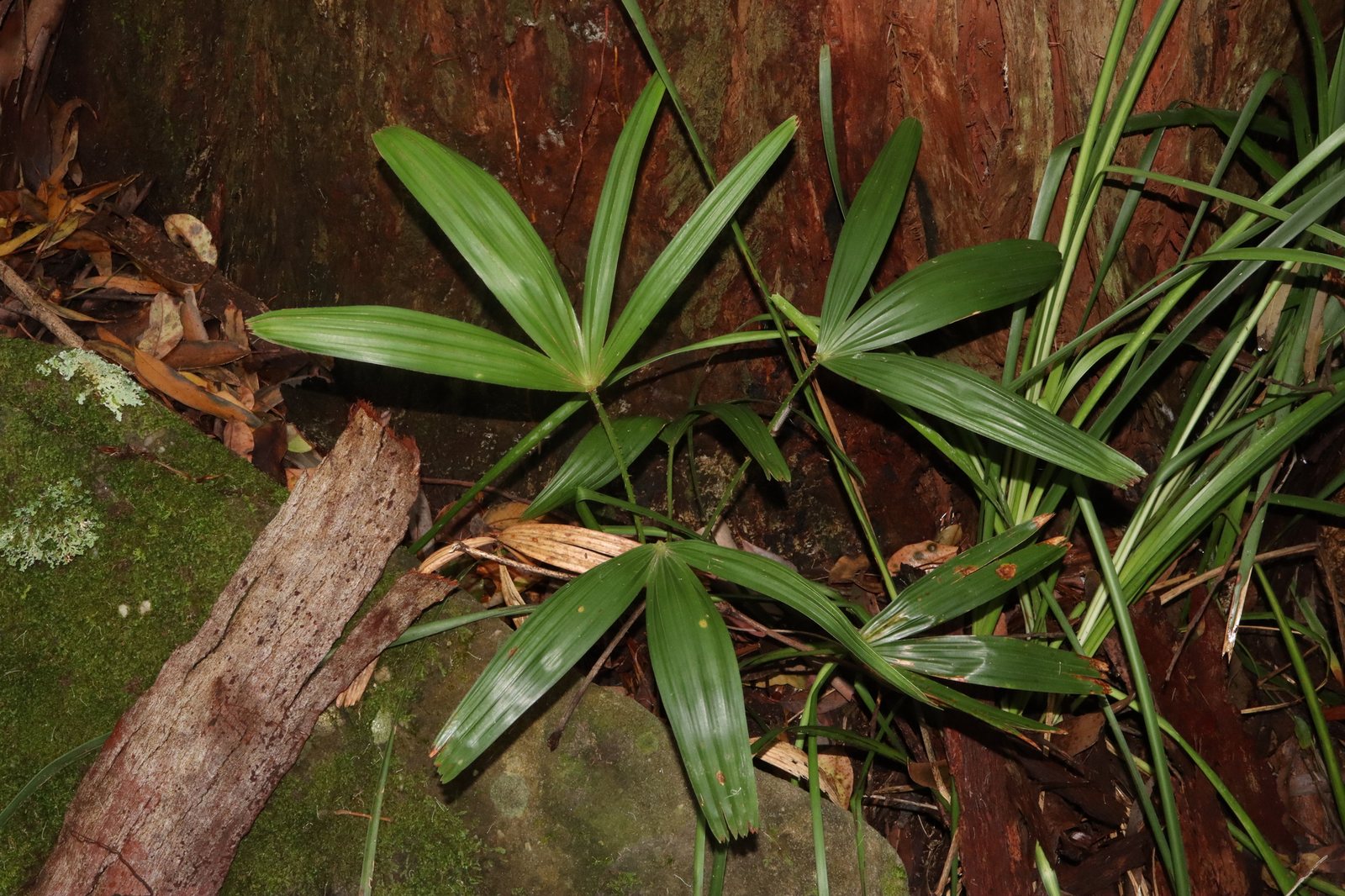
- Evergreen. Large, glossy green, fan-shaped leaves divided into narrow segments with drooping tips; leaf stalks have sharp teeth.
- Growth
- Slow to moderate, especially slow before a visible trunk develops.
- Care needed
- Medium
The year at a glance
- Pollinators
- Heat tolerant
- Wildlife
| J | F | M | A | M | J | J | A | S | O | N | D | |
|---|---|---|---|---|---|---|---|---|---|---|---|---|
| Flowers | ||||||||||||
| Fruit | ||||||||||||
| Plant |
Northern hemisphere months. In Australia, shift them by six.
- Difficulty
- Hard
- Toughness
- Fairly tough
Will it suit your garden?
Pick your zone, country, light and whether you have pets.
Full sun is 6 or more hours of direct sun a day, part shade 3 to 6 hours, shade under 3.
How it grows
Planting day
7 ft (2.2 m)
After 1 year
9 ft (2.8 m)
After 2 years
11 ft (3.4 m)
After 3 years
13 ft (4 m)
After 5 years
17 ft (5.2 m)
About 26 years to full size.
From a typical nursery size, at an average rate for this kind of plant. A rule of thumb, not a forecast.
Good to know
- Cats and dogs
- Safe
- Native to
- Australia
- Growth rate
- Slow
Care
Jobs through the year
- WaterApr–May, Sep–Oct, every 14 days
- Water established ground plants during dry weather; young plants and pots need closer checks.
- WaterJun–Aug, every 7 days
- Water deeply during dry spells; keep establishing plants evenly moist without waterlogging.
- WaterJan–Mar, Nov–Dec, every 21 days
- In frost-free shelter, water sparingly without letting the root ball dry completely.
- FeedMay
- Apply slow-release palm fertilizer with micronutrients at the label rate.
- MulchMay
- Renew organic mulch over the root zone without piling it against the trunk.
- PruneJun–Aug
- Remove only fully brown fronds within safe reach; wear eye protection and gloves for toothed stalks.
- ProtectJan–Apr, Sep–Dec
- Not reliably hardy locally; overwinter container plants in bright, frost-free shelter.
- Plant in spring after frost risk has passed, keeping the top of the root ball level with the surrounding soil.
- Water deeply during establishment, allowing excess water to drain rather than leaving the roots saturated.
- Apply a slow-release palm fertiliser with micronutrients in spring, following the label rate.
- Spread organic mulch over the root zone, keeping it clear of the trunk.
- Protect young palms from frost and cold winds; move container plants into bright, frost-free shelter before winter.
- Use gloves and eye protection when handling the sharply toothed leaf stalks.
Pruning. Remove fully brown fronds as needed during warm weather, cutting their stalks without damaging the trunk. Leave green fronds and the central growing spear intact, and use a qualified arborist once the crown is beyond safe reach.
Through the year
- Spring
- Plant or repot once frost risk has passed and the soil is warming.
- Spring
- Apply palm fertiliser and renew mulch without piling it against the trunk.
- Summer
- Water deeply during dry spells, especially for young and container-grown palms.
- Summer
- Check leaf undersides for scale insects and spider mites; remove fully dead fronds if safely accessible.
- Autumn
- Prepare frost protection and move container plants under cover before freezing weather.
- Winter
- Water sheltered container plants sparingly but do not let the root ball dry out completely.
In the garden
- Use as a tall focal point in a spacious lawn or courtyard, allowing clearance for the mature crown.
- Plant in loose groups with other palms and broad-leaved plants for a layered tropical canopy.
- Combine with Australian native understorey plants for a sheltered native garden.
- Use a young specimen in a large container on a warm terrace, with a plan for winter shelter and eventual size.
Garden styles it suits: Architectural minimal, Modern tropical, Tropical, Australian native, Luxury resort and Coastal.
Plant it with: Mat-rush, Flax lily, Bird's nest fern, Clivia, Cast-iron plant and Bangalow palm.
Wildlife: Flowers provide food for insects, and the ripe fruits are eaten by birds. Mature crowns can offer shelter and nesting sites.
Problems to watch for
- Frost damage: young leaves may scorch or collapse after freezing weather. Protect young plants and leave damaged foliage until spring, when new growth shows what has survived.
- Scale insects: inspect fronds and stalks for fixed bumps and sticky honeydew. Treat accessible infestations with horticultural oil according to the label.
- Spider mites: fine speckling and webbing are most likely on sheltered container plants. Rinse leaf undersides regularly and use a labelled mite treatment if needed.
- Crown or root rot: prolonged saturation can cause yellowing, collapse or a loose central spear. Improve drainage, stop overwatering and seek professional advice if the growing point is affected.
Safety
Not known to be toxic to people, cats, dogs or horses, although species-specific safety information is limited. The sharp teeth on the leaf stalks can cause significant cuts or punctures; do not treat the fruits or other parts as garden food.
Easily confused with
Chinese fan palm (Livistona chinensis)
Usually has more conspicuously pendulous leaf-segment tips and blue-green fruits, rather than the dark fruits of cabbage-tree palm.
Mexican fan palm (Washingtonia robusta)
Often has conspicuous thread-like fibres along the leaf margins and a hanging skirt of dead leaves when unpruned.
Cabbage tree (Cordyline australis)
Has long, narrow, strap-shaped leaves rather than fan-shaped leaves, and commonly develops branching trunks.
The name
Livistona honours Patrick Murray of Livingston, a Scottish plant collector, while australis means southern and the common name refers to the cabbage-like edible growing heart, whose removal kills the palm.
Propagation. Grow from fresh seed after removing the fruit pulp. Sow in a moist, free-draining medium and keep warm; germination can take several months. It does not divide or produce routine offsets.
Checked against open data
- Accepted botanical name
- Livistona australis
- Native range
- New South Wales, Queensland and Victoria.
- Measured
- Average height 2350 cm.
Sources: GBIF (CC BY 4.0) and Trefle (CC BY 4.0). The care and design notes are LandscapeGPT's own.
See it in your own yard.
Upload a photo of your yard and see it redesigned with plants that suit your climate, each checked against your zone.