Caesar's Brother Siberian iris
Iris sibirica 'Caesar's Brother'. Family Iridaceae. Perennial.
Also called Iris sibirica 'Caesar's Brother'.
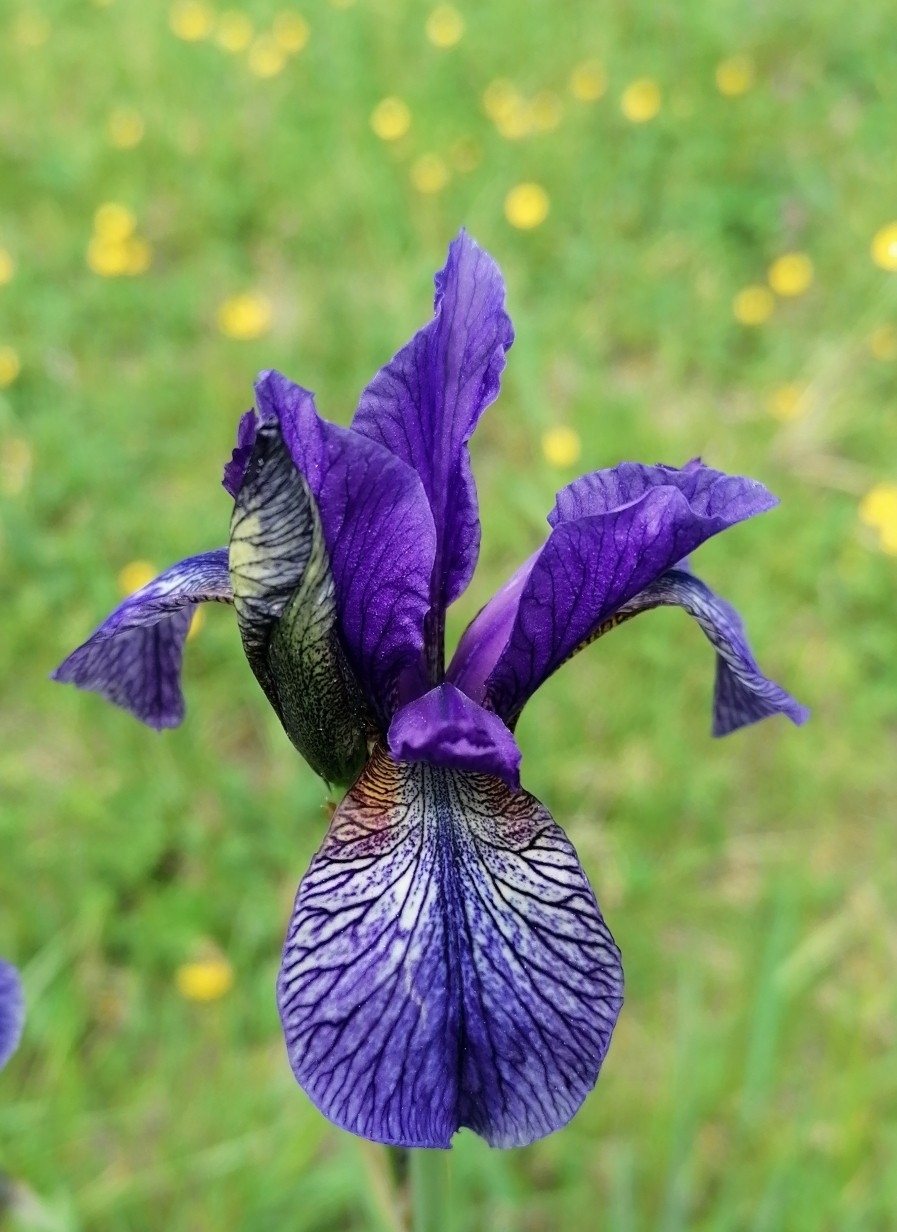
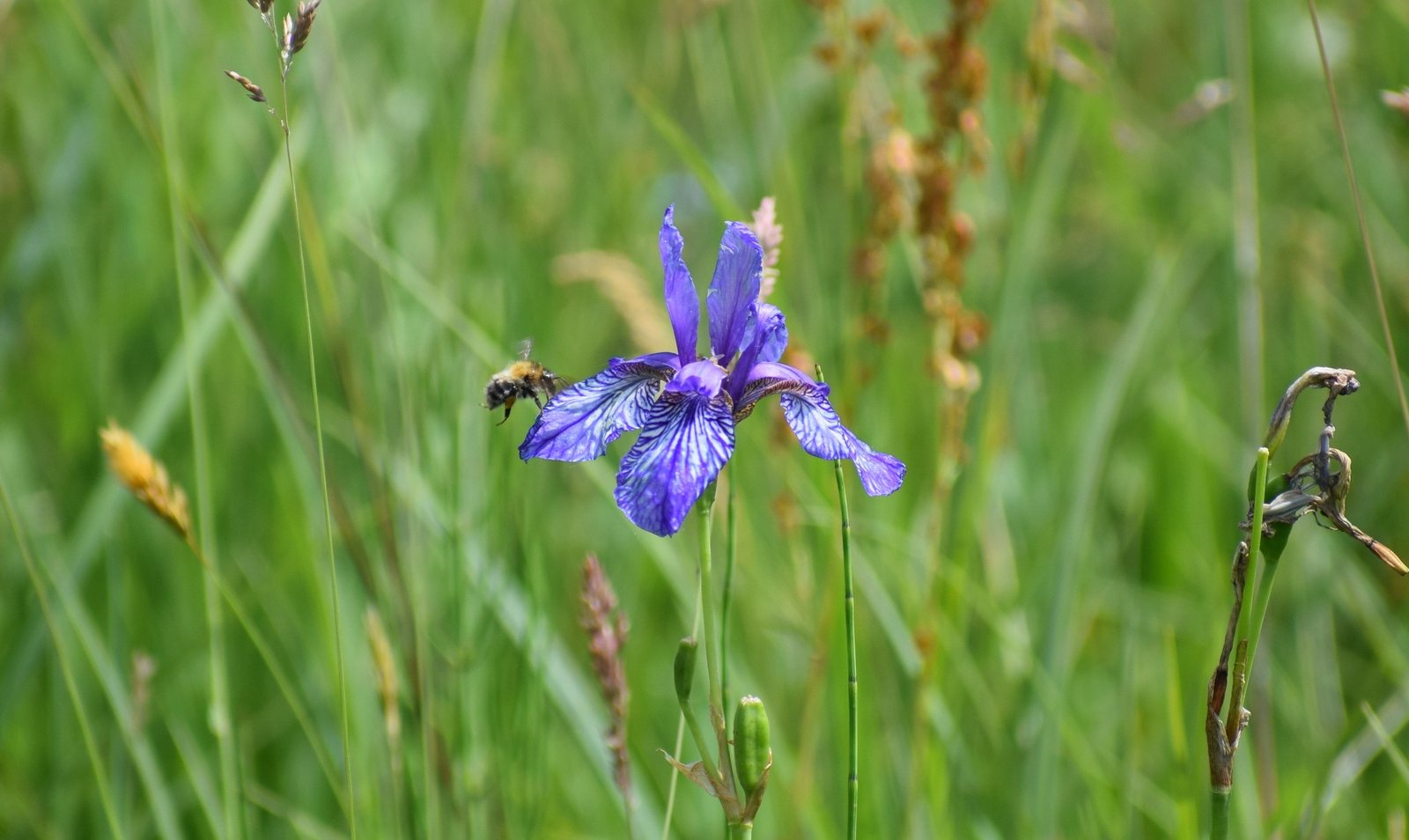
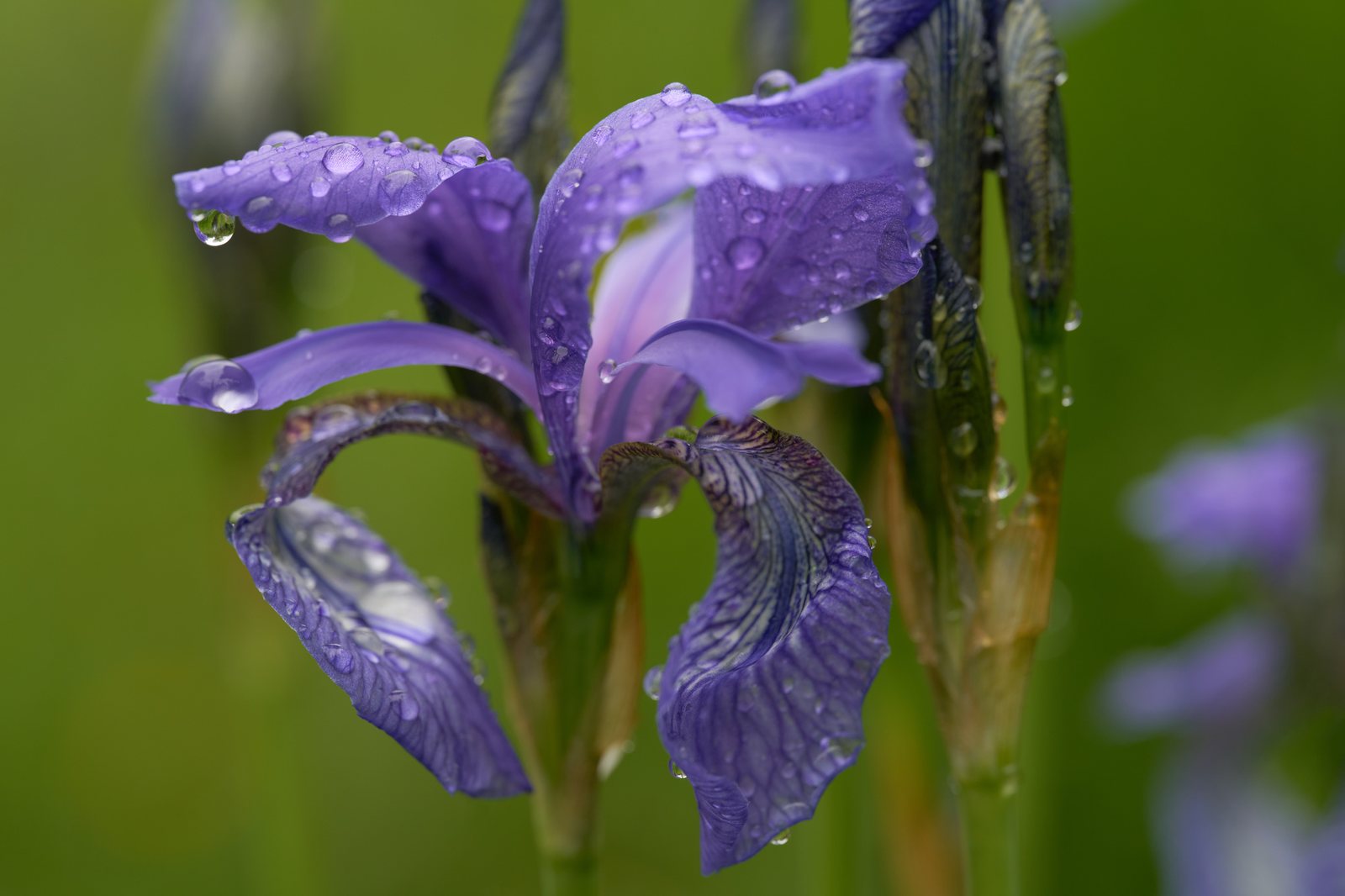
A clump-forming perennial with narrow, upright leaves and deep violet-purple, beardless flowers held above the foliage. Gardeners grow it for its late-spring flowers and the grassy structure its leaves provide through summer; it performs best where the soil stays moist.
At a glance
- Sun
- Full sun to light partial shade; some afternoon shade helps in hot climates, but heavy shade reduces flowering.
- Water
- Keep evenly moist during active growth, especially in spring and early summer. Established clumps tolerate brief dry spells, but prolonged drought reduces flowering and browns the leaves.
- Soil
- Humus-rich, moisture-retentive soil with drainage; slightly acidic to neutral soil is ideal. Tolerates clay if it is not persistently stagnant or waterlogged.
- Height
- 3-4 ft (0.9-1.2 m)
- Spread
- 1.5-2.5 ft (0.45-0.75 m)
- Flowers
- Late spring to early summer; deep violet-purple flowers with small pale markings and yellow signals at the bases of the falls.
- Foliage
- Narrow, upright to arching, grass-like green leaves; usually turns yellow or brown in autumn before dying back.
- Growth
- Moderate; forms a substantial clump over several years.
- Care needed
- Low
The year at a glance
- Pollinators
- Deer resistant
- Cold hardy
- Low allergen
| J | F | M | A | M | J | J | A | S | O | N | D | |
|---|---|---|---|---|---|---|---|---|---|---|---|---|
| Flowers | ||||||||||||
| Fruit | ||||||||||||
| Plant |
Northern hemisphere months. In Australia, shift them by six.
- Difficulty
- Easy
- Toughness
- Fairly tough
Will it suit your garden?
Pick your zone, country, light and whether you have pets.
Full sun is 6 or more hours of direct sun a day, part shade 3 to 6 hours, shade under 3.
How it grows
Planting day
1 ft (0.3 m)
After 1 year
1.8 ft (0.55 m)
After 2 years
2.6 ft (0.8 m)
After 3 years
3 ft (1.1 m)
full size
About 3 years to full size.
From a typical nursery size, at an average rate for this kind of plant. A rule of thumb, not a forecast.
Good to know
- Cats and dogs
- Toxic
- Growth rate
- Moderate
Care
Jobs through the year
- WaterMar–Apr, Sep–Oct, every 7 days
- Water established plants if soil begins drying; keep new plants and divisions evenly moist.
- WaterMay–Aug, every 5 days
- Check moisture and water deeply as needed, especially during bud development and flowering.
- FeedMar–Apr
- Apply compost; add a light balanced fertiliser only on poor soil.
- MulchMar–Apr
- Refresh a light organic mulch, leaving the crown clear.
- DeadheadJun–Jul
- Cut spent flower stems to the base unless ornamental seedpods are wanted.
- DivideMar, Aug–Sep
- Divide crowded clumps every 3–5 years and keep divisions moist; spring suits colder sites.
- PruneNov–Dec
- Cut fully dead leaves close to ground level and remove debris to reduce overwintering pests.
- Plant with the rhizomes about 1-2 in (2.5-5 cm) below the soil surface; do not leave them exposed as you would with bearded irises.
- Water deeply during dry weather while leaves and flower stems are growing.
- Apply compost and a light mulch in spring, keeping mulch clear of the crown.
- Use a light application of balanced fertiliser in spring on poor soil; avoid heavy nitrogen feeding.
- Divide crowded clumps when flowering declines, usually every 3-5 years, and keep divisions well watered while they establish.
Pruning. Cut spent flower stems to the base after flowering unless you want seedpods. Leave healthy green leaves intact, then cut them close to ground level once they have died back in late autumn or winter.
Through the year
- Early spring
- Remove remaining dead foliage before new shoots lengthen; apply compost and refresh mulch.
- Spring
- Plant container-grown plants and water regularly while roots establish.
- Late spring
- Keep soil moist as buds develop and flowers open.
- Early summer
- Remove finished flower stems, leaving the leaves untouched.
- Late summer
- Divide congested clumps after flowering if you can keep divisions moist; in very cold regions, divide in early spring instead.
- Late autumn
- Cut back dead leaves and remove debris, especially where iris borers occur.
In the garden
- Repeat clumps through a mixed border to provide upright foliage and a consistent early-season flower colour.
- Plant beside a pond or stream on moist ground above the standing-water level.
- Combine with lady's mantle and hardy geraniums for contrasting leaf shapes and a soft border edge.
- Use in generous drifts with moisture-loving perennials for a meadow-like effect.
Garden styles it suits: English country, Cottage garden, New perennial (prairie), Blues and silvers, Japanese and Bog garden.
Plant it with: Lady's mantle, Hardy geranium, Astilbe, Daylily, Globeflower and Meadowsweet.
Wildlife: Flowers can attract bees and other visiting insects. Deer and rabbits usually leave established plants alone, though browsing is still possible.
Problems to watch for
- Poor flowering: commonly caused by shade, drought or overcrowding; provide more sun, maintain spring moisture and divide congested clumps.
- Slugs and snails: may damage emerging shoots; remove hiding places and use barriers or labelled iron-phosphate bait where needed.
- Iris borer: a problem in parts of eastern North America; remove dead foliage before spring and cut out and discard infested rhizomes.
- Rhizome or crown rot: avoid stagnant, waterlogged soil; lift affected plants, discard rotten tissue and replant healthy divisions in better-drained ground.
Safety
Toxic to cats, dogs, horses and people if eaten, especially the rhizomes. Ingestion can cause drooling, vomiting, abdominal pain and diarrhoea; sap may irritate skin. Serious poisoning is uncommon, but seek medical or veterinary advice after ingestion.
Easily confused with
Bearded iris (Iris germanica hybrids)
Bearded irises have a fuzzy beard on each drooping flower segment, broader sword-shaped leaves and thick rhizomes normally grown partly exposed.
Japanese iris (Iris ensata)
Usually flowers later, with much larger, flatter flowers and broader leaves with a prominent midrib.
Northern blue flag (Iris versicolor)
Typically has broader leaves and paler violet-blue flowers with conspicuous veining and yellow-and-white markings on the falls.
The name
Iris comes from the Greek word for rainbow, referring to the many flower colours in the genus, while sibirica means Siberian.
Propagation. Divide established clumps in early spring or after flowering in late summer, retaining several healthy shoots and roots per division. Division preserves the cultivar; seedlings will not reliably resemble 'Caesar's Brother'.
Checked against open data
- Accepted botanical name
- Iris sibirica
- In the US and Canada
- Introduced in Canada and the lower 48 states.
- Native range
- Altay, Austria, Baltic States, Belarus, Bulgaria, Central European Rus, Czechoslovakia, East European Russia, France, Germany, Hungary and Italy.
- Measured
- Soil pH 7 to 7.5. Average height 65 cm.
Sources: GBIF (CC BY 4.0), USDA PLANTS and Trefle (CC BY 4.0). The care and design notes are LandscapeGPT's own.
See it in your own yard.
Upload a photo of your yard and see it redesigned with plants that suit your climate, each checked against your zone.