California flannelbush
Fremontodendron californicum. Family Malvaceae. Shrub.
Also called California fremontia, Flannel bush.
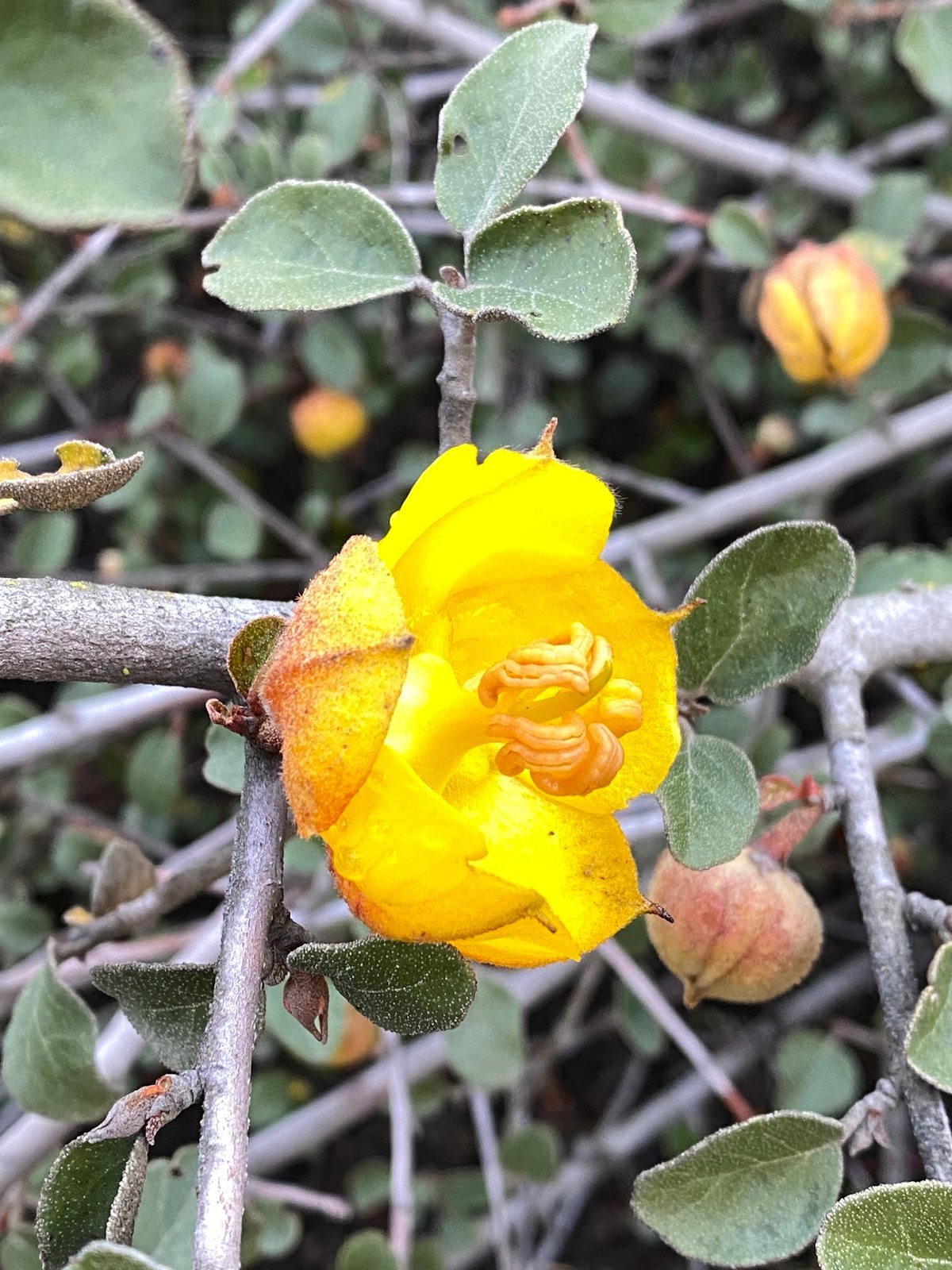
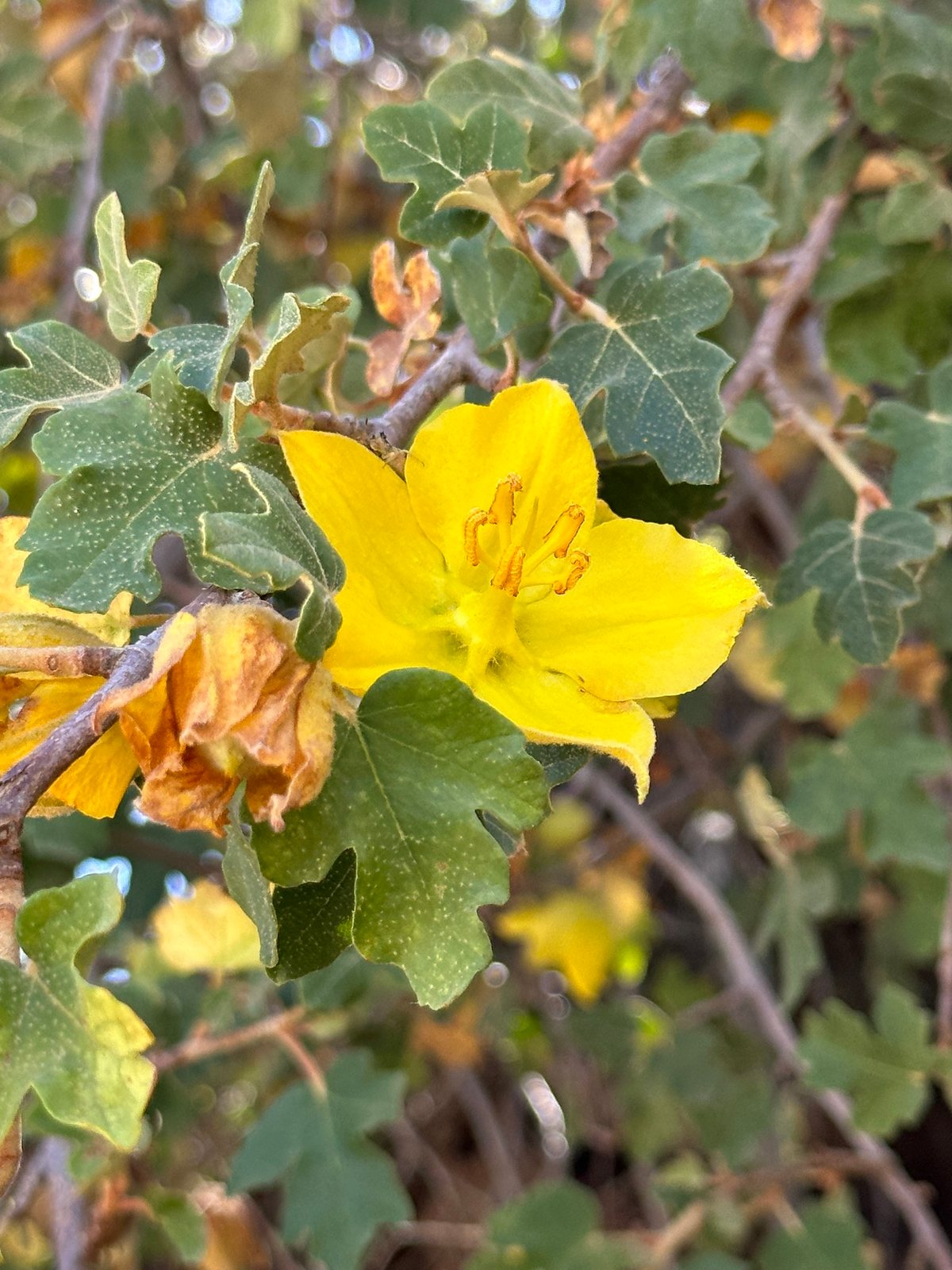
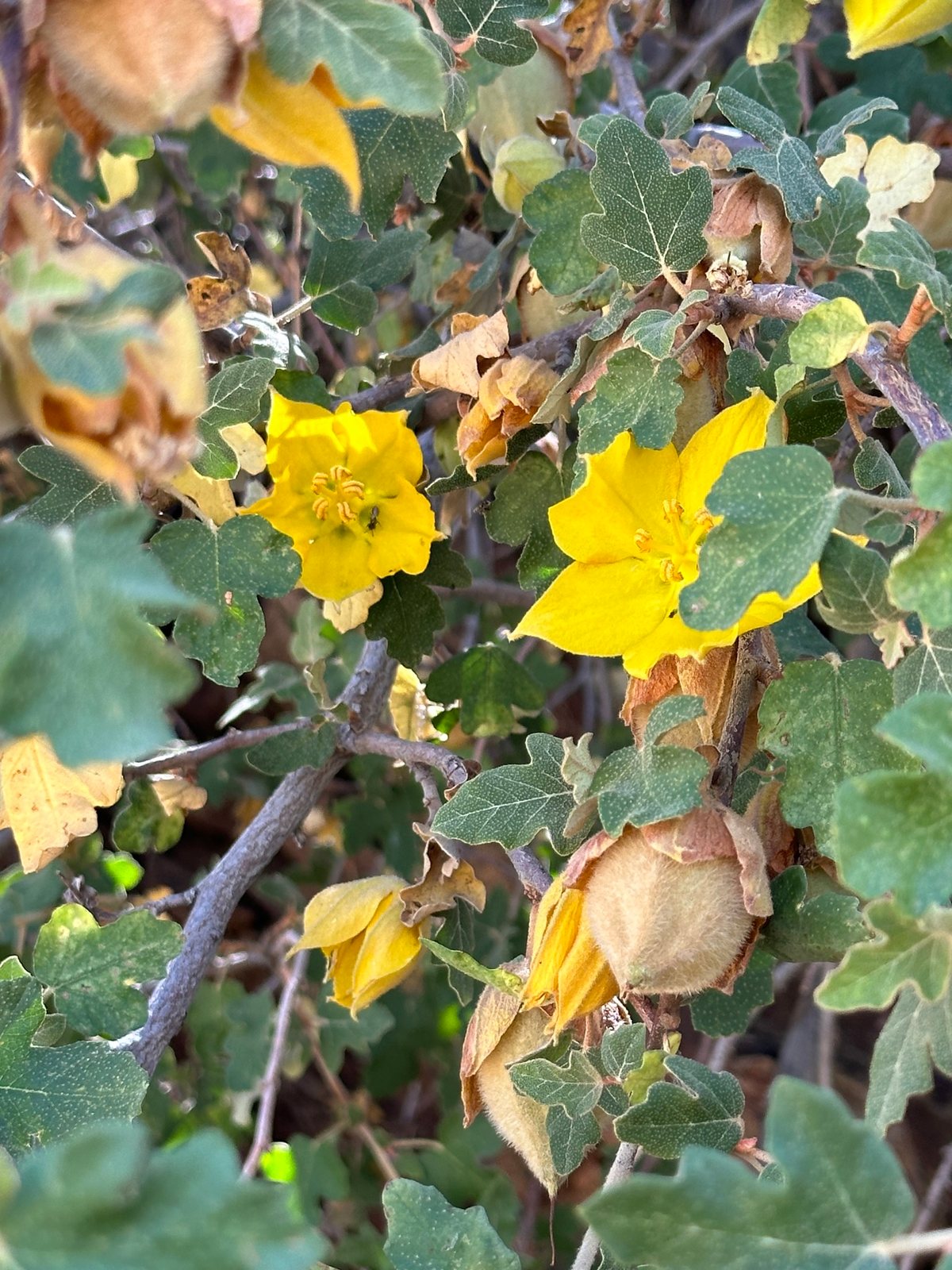
California flannelbush is a large evergreen shrub or small tree grown for its open shape and abundant golden-yellow flowers. Native to California and nearby parts of the southwestern United States and Mexico, it suits dry-summer gardens with excellent drainage. Its irritating hairs and dislike of regular summer watering make placement important.
At a glance
- Sun
- Full sun; shelter from cold, drying winds in cooler regions.
- Water
- Low once established. Water young plants carefully during establishment, then keep established plants mostly dry in summer.
- Soil
- Very well-drained sandy, gravelly or rocky soil; tolerates poor soil and a range of pH levels. Avoid heavy, wet ground.
- Height
- 10-20 ft (3-6 m)
- Spread
- 8-15 ft (2.4-4.6 m)
- Flowers
- Large golden-yellow flowers in spring and early summer, sometimes followed by scattered later flowers.
- Foliage
- Evergreen. Leathery, rounded to shallowly lobed dark-green leaves with densely hairy, pale undersides; leaves and young stems carry irritating hairs.
- Growth
- Fast in suitable conditions.
- Care needed
- Medium
The year at a glance
- Pollinators
- Deer resistant
- Drought tolerant
- Heat tolerant
- Wildlife
| J | F | M | A | M | J | J | A | S | O | N | D | |
|---|---|---|---|---|---|---|---|---|---|---|---|---|
| Flowers | ||||||||||||
| Plant |
Northern hemisphere months. In Australia, shift them by six.
- Difficulty
- Hard
- Toughness
- Needs looking after
Will it suit your garden?
Pick your zone, country, light and whether you have pets.
Full sun is 6 or more hours of direct sun a day, part shade 3 to 6 hours, shade under 3.
How it grows
Planting day
1.8 ft (0.54 m)
After 1 year
6 ft (1.8 m)
After 2 years
10 ft (3 m)
After 3 years
14 ft (4.2 m)
After 5 years
15 ft (4.5 m)
full size
About 3 years to full size.
From a typical nursery size, at an average rate for this kind of plant. A rule of thumb, not a forecast.
Good to know
- Cats and dogs
- Mildly toxic: may upset a stomach
- Native to
- the US
- Growth rate
- Fast
Care
Jobs through the year
- WaterApr–May, Sep, every 28 days
- Water established plants only if very dry; check young plants more often and allow drying between soakings.
- WaterJun–Aug, every 28 days
- Keep established plants mostly dry; water only in exceptional drought and never on a routine lawn schedule.
- PruneJun–Jul
- After the main flowering flush, lightly shorten leafy shoots; wear gloves, sleeves and eye protection.
- ProtectJan–Apr, Oct–Dec
- Not reliably hardy in zones 6–7; use a movable container with bright, frost-free winter shelter.
- ProtectOct–Nov
- Clear fallen leaves from the stem base and ensure winter rain drains freely.
- Plant while small in a sunny, freely draining position; avoid moving established plants.
- Water deeply but infrequently during establishment, allowing the soil to dry between waterings.
- Keep established plants away from lawn sprinklers and regularly irrigated borders, especially in summer.
- Do not routinely feed; rich soil and heavy feeding encourage soft growth.
- Keep the stem base clear of mulch and use a light gravel mulch if needed.
- Wear gloves, long sleeves and eye protection when handling or pruning.
Pruning. Prune lightly just after the main flowering flush to shorten wayward shoots and develop a balanced framework. Avoid hard cuts into old, bare wood, which may not regrow reliably.
Through the year
- Spring
- Plant in colder parts of its range once severe frost has passed, keeping the root ball intact.
- Late spring
- Check young plants for dry soil and water only when needed; avoid keeping the root zone continually moist.
- Early summer
- After the main flowering flush, lightly shorten stray shoots while wearing protective clothing.
- Summer
- Keep established plants largely dry and redirect nearby irrigation away from their roots.
- Late summer
- Take semi-ripe cuttings if you want to try propagating a particularly good plant.
- Autumn
- Plant in mild, dry-summer climates where winter soil drains freely; clear fallen leaves from the stem base.
- Winter
- Check for standing water around the roots and protect young plants during unusually severe cold.
In the garden
- Use as a specimen on a sunny, dry bank where its spreading branches have room.
- Train against a sunny, sheltered wall in cooler gardens, keeping branches clear of windows and paths.
- Combine with manzanitas and California lilacs in a dry California-native shrub planting.
- Place behind low silver-leaved shrubs in a gravel garden for a strong spring display.
Garden styles it suits: California native, Mediterranean, Desert / xeriscape, Dry gravel garden, Wildlife garden and Modern Mediterranean.
Plant it with: Manzanita, California lilac, Cleveland sage, California buckwheat, Rockrose and Lavender.
Wildlife: Flowers provide pollen for bees, including native bees. The branching canopy offers cover for small birds.
Problems to watch for
- Root and crown rot: often follows poor drainage or regular summer irrigation; improve drainage before planting and keep established plants away from sprinklers.
- Frost injury: young shoots may die back in severe cold; choose a sheltered site and wait until spring growth reveals the damage before pruning.
- Wind damage: fast-growing branches can split or break; provide shelter and develop a balanced framework with light formative pruning.
- Skin and eye irritation: hairs shed during handling and pruning; wear protective clothing and keep the plant away from seating areas and narrow paths.
Safety
Not known to be poisonous to people, cats, dogs or horses, although species-specific ingestion information is limited. Hairs on leaves, stems and seed capsules can cause substantial skin and eye irritation and may irritate the mouth if chewed; do not treat any part as edible.
Easily confused with
Mexican flannelbush (Fremontodendron mexicanum)
Typically has larger, more deeply lobed leaves and larger, more orange-yellow flowers. Garden hybrids between the two species can be difficult to identify by appearance alone.
The name
Fremontodendron honours the American explorer John C. Frémont, californicum refers to California, and flannelbush describes the soft-looking hairs covering its leaves and stems.
Propagation. Grow from seed after scarifying the hard seed coat, following a reliable seed supplier's treatment instructions. Semi-ripe cuttings taken in late summer are another option, but rooting can be difficult; avoid disturbing roots when potting on.
Checked against open data
- Accepted botanical name
- Fremontodendron californicum
- In the US and Canada
- Native in the lower 48 states.
- Native range
- California and Mexico Northwest.
- Measured
- Soil pH 7 to 7.5. Average height 305 cm.
Sources: GBIF (CC BY 4.0), USDA PLANTS and Trefle (CC BY 4.0). The care and design notes are LandscapeGPT's own.
See it in your own yard.
Upload a photo of your yard and see it redesigned with plants that suit your climate, each checked against your zone.