Cantaloupe (melon)
Cucumis melo. Family Cucurbitaceae. Annual.
Also called Muskmelon, Rockmelon, Sweet melon.
Cantaloupe is a frost-tender trailing vine grown as an annual for its sweet, aromatic fruit, usually with orange flesh. North American cantaloupes generally have netted skins, while traditional European types have more distinctly ribbed fruit. It needs a long, warm growing season; in cool parts of the UK and Canada, a greenhouse or tunnel gives more reliable crops.
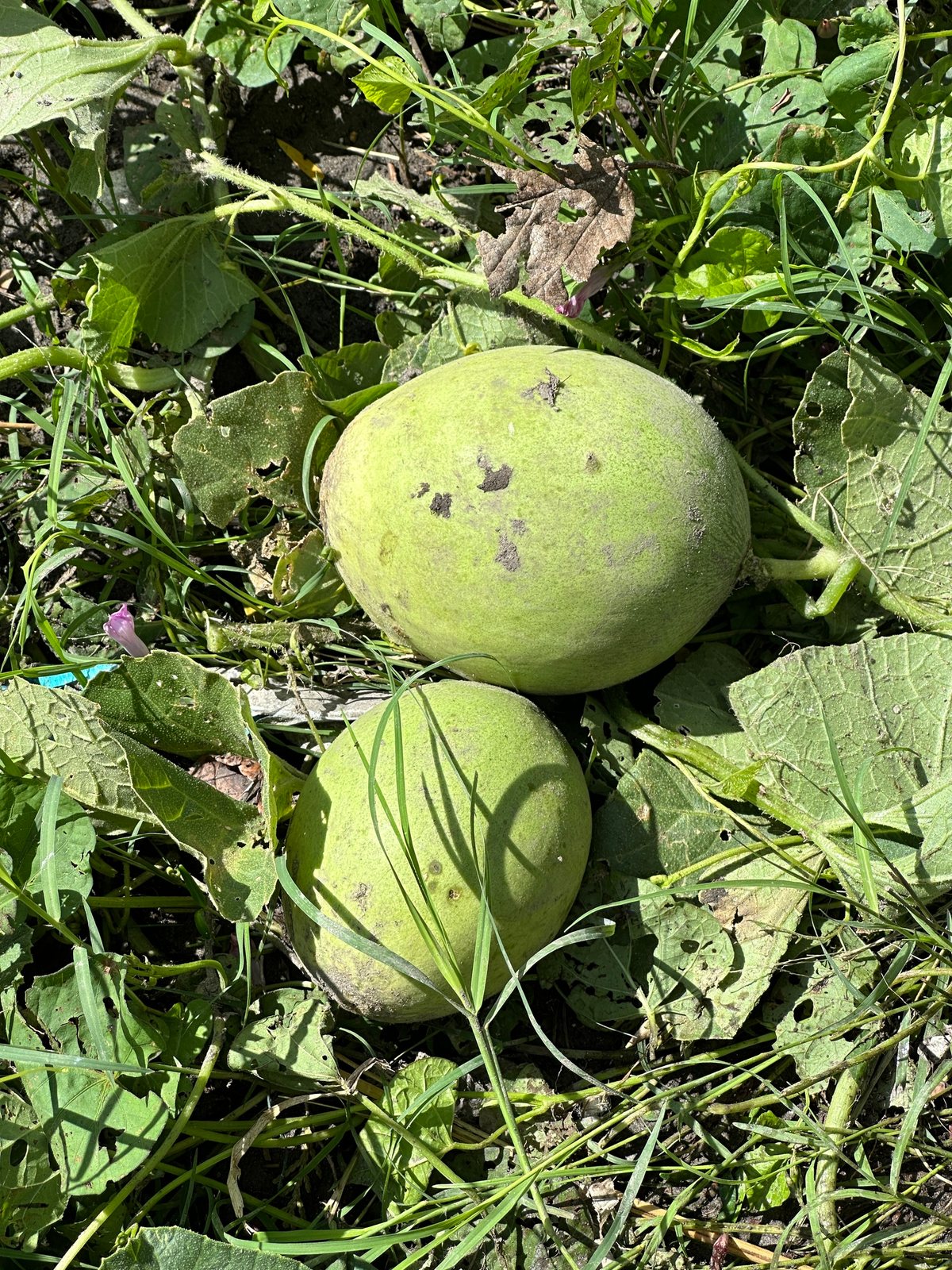
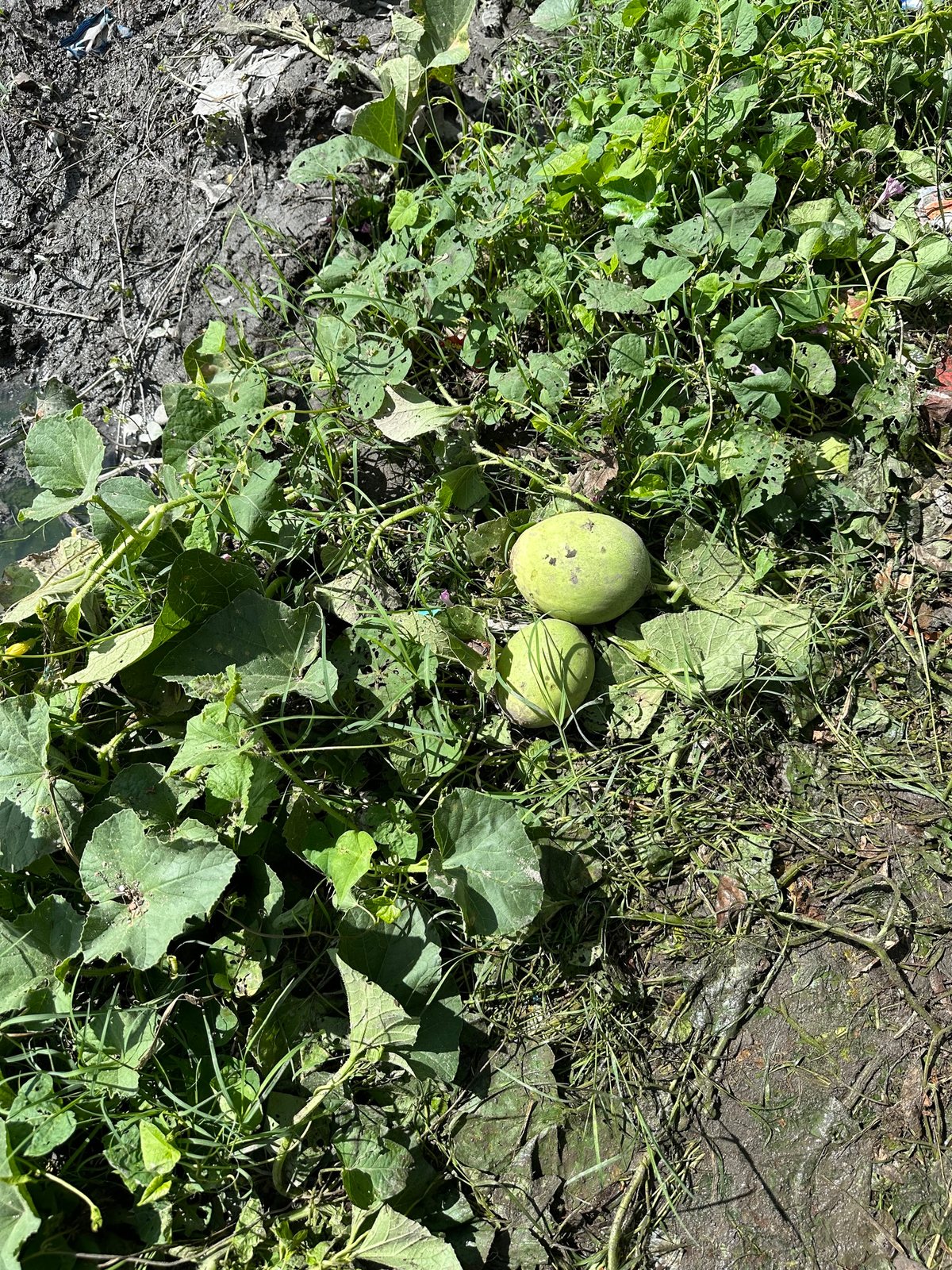
At a glance
- Sun
- Full sun, with at least 6-8 hours of direct light daily; choose a warm position sheltered from strong winds.
- Water
- Water deeply and regularly, keeping the root zone evenly moist but not waterlogged. Water the soil rather than the leaves, and avoid sudden heavy watering as fruit ripens.
- Soil
- Fertile, well-drained soil enriched with compost, ideally pH 6.0-7.0. Raised beds help where soil stays cold or wet.
- Height
- 1-2 ft (0.3-0.6 m) unsupported; 5-7 ft (1.5-2.1 m) on a trellis
- Spread
- 5-10 ft (1.5-3 m)
- Flowers
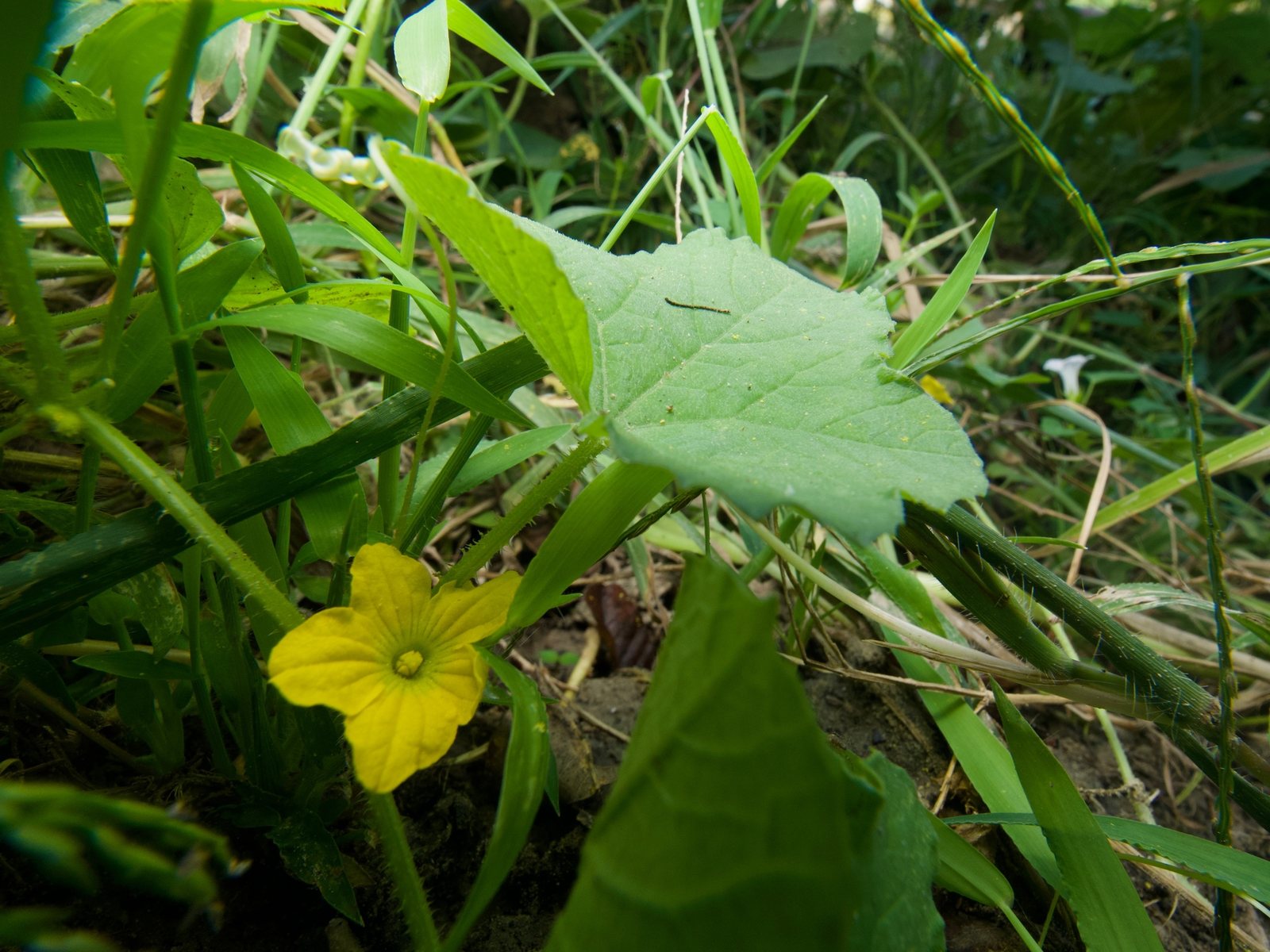
- Yellow flowers from summer into early autumn; male flowers usually appear before fruit-bearing flowers.
- Foliage
- Broad, rough, green leaves with shallow lobes, carried on hairy stems with curling tendrils.
- Growth
- Fast in warm weather.
- Care needed
- Medium
The year at a glance
- Pollinators
- Heat tolerant
- Low allergen
- Edible
| J | F | M | A | M | J | J | A | S | O | N | D | |
|---|---|---|---|---|---|---|---|---|---|---|---|---|
| Flowers | ||||||||||||
| Fruit | ||||||||||||
| Plant |
Northern hemisphere months. In Australia, shift them by six.
- Difficulty
- Moderate
- Toughness
- Needs looking after
Will it suit your garden?
Pick your zone, country, light and whether you have pets.
Full sun is 6 or more hours of direct sun a day, part shade 3 to 6 hours, shade under 3.
How it grows
Planting day
0.5 ft (0.15 m)
After 1 year
1.5 ft (0.45 m)
full size
Full size in one season.
From a typical nursery size, at an average rate for this kind of plant. A rule of thumb, not a forecast.
Good to know
- Cats and dogs
- Safe
- Native to
- Australia
- Growth rate
- Fast
Care
Jobs through the year
- WaterMay–Jun, every 3 days
- Water in-ground plants deeply when the root zone starts drying; keep new transplants evenly moist.
- WaterJul–Aug, every 2 days
- Maintain even root-zone moisture during fruit growth, adjusting for rainfall and avoiding wet leaves.
- WaterSep, every 4 days
- Water if soil is drying; avoid sudden heavy soaking as fruit ripens.
- FeedJun–Aug, every 28 days
- Feed moderately with vegetable fertilizer at the label rate; avoid excess nitrogen.
- MulchJun
- Mulch once soil is warm, keeping material clear of stem bases.
- ProtectMay–Jun
- Use fleece or a ventilated cloche during cool spells; uncover flowers for pollinators.
- ProtectJul–Aug
- Rest ground-grown fruit on clean tiles or boards; support trellised fruit in slings.
- HarvestAug–Sep
- Check for the variety's ripe colour, scent and stem-release signs; harvest before frost.
- Plant out only after frost danger has passed and the soil has warmed to at least 65°F (18°C).
- Allow roughly 2-3 ft (0.6-0.9 m) between plants, with ample room for spreading vines.
- Mulch after the soil warms to conserve moisture and suppress weeds; keep mulch away from stem bases.
- Feed moderately with a balanced vegetable fertilizer, following the label; avoid excess nitrogen, which encourages leaves rather than fruit.
- Train vines onto a strong trellis if space is limited, supporting developing fruit in soft slings.
- In a greenhouse, provide insect access during flowering or hand-pollinate fruit-bearing flowers with pollen from a male flower.
Pruning. Outdoor trailing plants usually need little pruning beyond removing damaged or diseased growth. For trellis-grown plants, guide a few main shoots onto the support and shorten overcrowded side growth without stripping leaves that shade developing fruit.
Harvest
Pick ripe melons in summer or early autumn, commonly about 70-100 days after transplanting, depending on variety and warmth. Most netted muskmelons develop a creamy background colour, a sweet scent and a stem that separates readily with gentle pressure; some European and long-storage types do not slip and should be cut when their variety-specific ripeness signs appear.
Through the year
- Early spring
- Choose an early-ripening variety for short summers and prepare a sunny bed or greenhouse border with compost.
- Mid spring
- Sow indoors in individual pots about 3-4 weeks before the expected planting-out date; keep warm for germination.
- Late spring
- Harden off plants and transplant after frost when the soil is warm; in warm climates, direct-sow instead.
- Early summer
- Mulch, establish a steady watering routine and train vines onto supports if required.
- Summer
- Check pollination, feed as needed and place ground-grown fruit on clean boards or tiles to reduce soil contact.
- Late summer to early autumn
- Check fruit frequently for ripeness and harvest before frost.
- Autumn
- Remove spent vines; dispose of badly diseased material and rotate away from other cucurbits next season.
In the garden
- Let vines trail through a sunny kitchen-garden bed, leaving paths clear.
- Train small-fruited varieties up a strong trellis to add seasonal height to a compact edible garden.
- Grow in greenhouse borders or large containers where extra warmth improves ripening.
- Combine with nearby flowering herbs and annuals to bring pollinating insects into the vegetable garden.
Garden styles it suits: Potager (kitchen garden), Edible landscape, Homestead, Farmhouse, Family-friendly and Small-space.
Plant it with: Sweet alyssum, Calendula, Borage, Dill and Basil.
Wildlife: Flowers provide pollen and nectar for bees, which are important for fruit set. Ripening fruit may attract rodents and other wildlife; use secure barriers where needed.
Problems to watch for
- Powdery mildew: white patches develop on leaves, often late in the season. Space plants well, maintain steady watering and choose resistant varieties where available.
- Aphids: colonies distort young growth and may spread viruses. Check shoot tips, rinse off small colonies and encourage predators; remove plants showing persistent mosaic-patterned, distorted growth.
- Cucumber beetles, particularly in North America: beetles chew plants and can spread bacterial wilt. Protect young plants with insect mesh, removing it for pollination, and remove wilt-infected plants.
- Poor fruit set or failure to ripen: cold weather, insufficient pollination or a short season are common causes. Choose early varieties, provide protected warmth and hand-pollinate under cover when necessary.
Safety
Cucumis melo is not known to be toxic to people, cats, dogs or horses. Rind and large pieces of fruit can cause choking or digestive upset in pets. Discard unusually bitter fruit rather than eating it, as abnormal bitterness in cucurbits can indicate harmful cucurbitacins.
Easily confused with
Honeydew melon (Cucumis melo)
It is another type of the same species, typically with smooth pale skin and green or white flesh rather than the netted skin and orange flesh of most cantaloupes.
Cucumber (Cucumis sativus)
The vines look similar, but cucumbers usually produce elongated fruit harvested green and immature, without a ripe melon's sweet aroma.
Watermelon (Citrullus lanatus)
Watermelon usually has much more deeply divided leaves and smooth, thick-rinded fruit, often with red or pink flesh.
The name
Cantaloupe takes its name from Cantalupo in Italy, associated with the melon’s cultivation, while Cucumis melo uses Latin names for cucumber and melon.
Propagation. Grow from seed, sowing about 0.5-1 in (1-2.5 cm) deep at 70-85°F (21-29°C). Use individual pots to limit root disturbance. Saved seed may not come true, especially from hybrids or plants grown near other Cucumis melo varieties.
Checked against open data
- Accepted botanical name
- Cucumis melo
- In the US and Canada
- Introduced in the lower 48 states, Pacific Basin and Puerto Rico.
- Native range
- Afghanistan, Angola, Chad, Eritrea, Ethiopia, Gulf States, India, Iran, Iraq, Kenya, Lebanon-Syria and Malawi.
- Measured
- Average height 225 cm.
Sources: GBIF (CC BY 4.0), USDA PLANTS and Trefle (CC BY 4.0). The care and design notes are LandscapeGPT's own.
See it in your own yard.
Upload a photo of your yard and see it redesigned with plants that suit your climate, each checked against your zone.