Carolina rose
Rosa carolina. Family Rosaceae. Shrub.
Also called Pasture rose, Low rose.
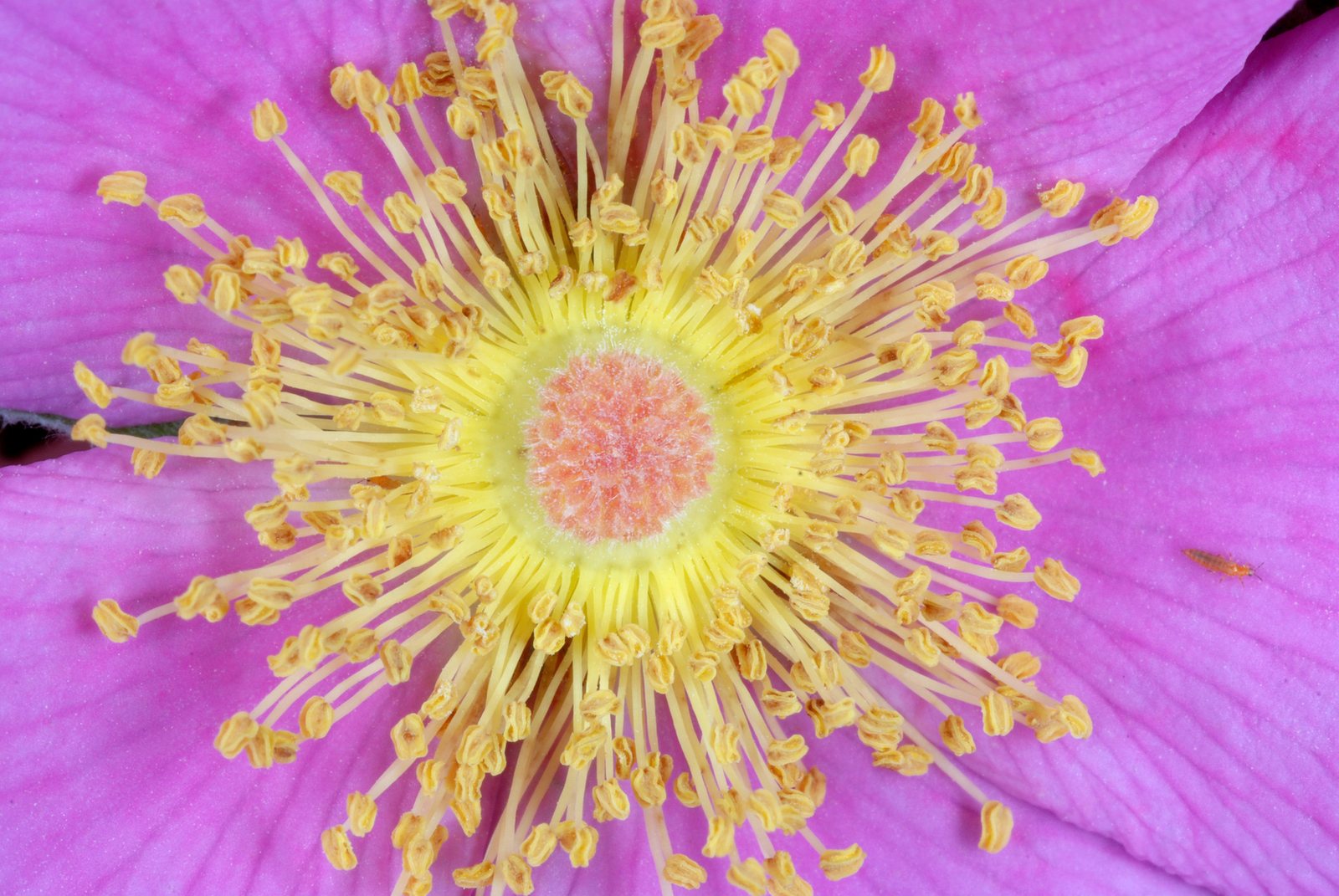
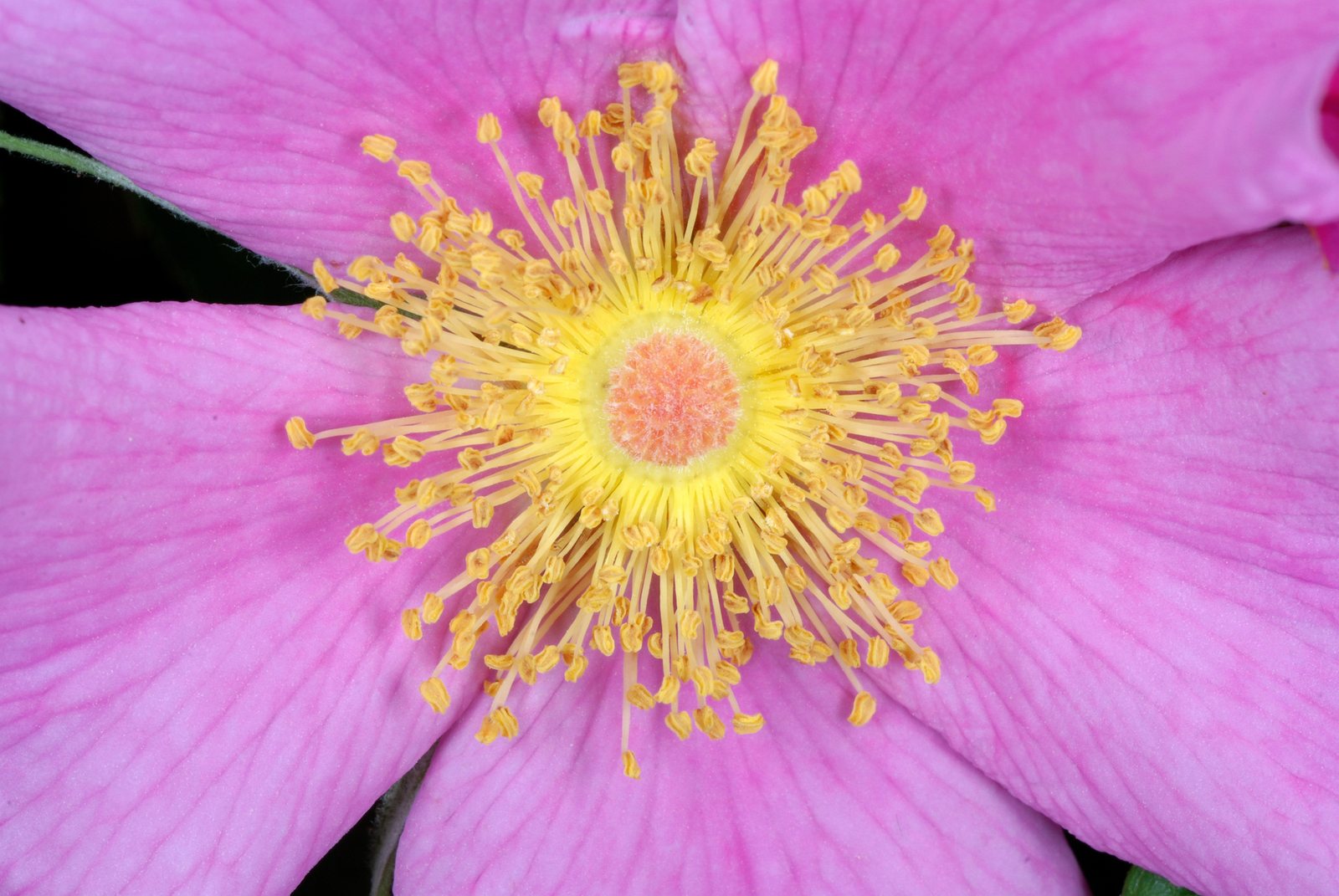
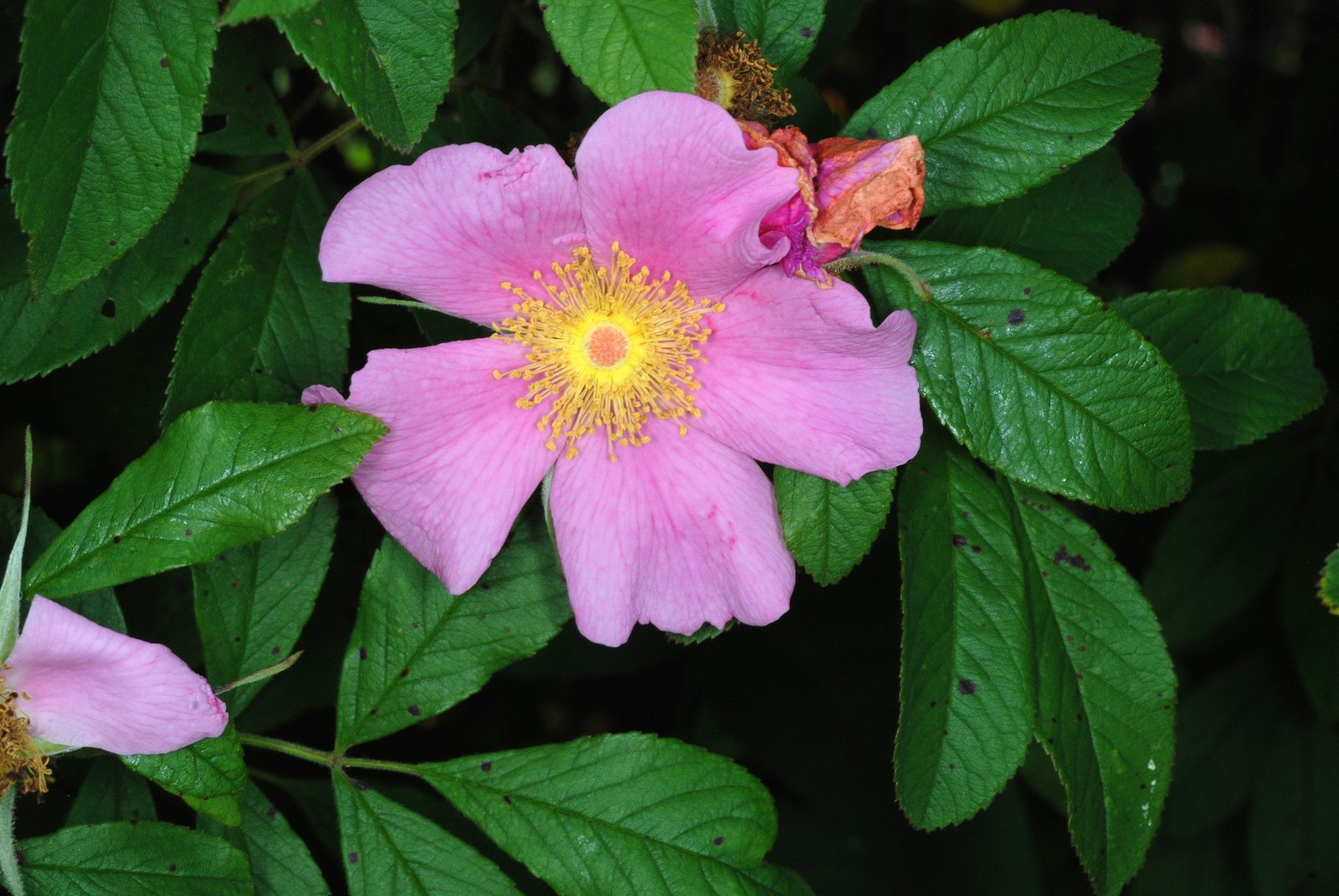
Carolina rose is a low, deciduous rose native to eastern and central North America, with fragrant, single pink flowers followed by red hips. Gardeners grow it for pollinators, autumn colour and informal planting, but its suckering roots need room to form a colony.
At a glance
- Sun
- Full sun to light partial shade; flowering is best in full sun.
- Water
- Moderate while establishing; tolerates some drought once established, but flowers best with occasional deep watering during prolonged dry spells.
- Soil
- Well-drained sandy, loamy or clay soil; tolerates lean ground and a range of soil pH, but not prolonged waterlogging.
- Height
- 1-3 ft (0.3-0.9 m), occasionally taller
- Spread
- 3-6 ft (0.9-1.8 m), eventually wider through suckering
- Flowers
- Late spring to early summer; fragrant, five-petalled pink flowers with yellow stamens, usually in one main flush.
- Foliage
- Pinnate leaves with usually 5-7 toothed green leaflets; often yellow, orange or reddish in autumn.
- Growth
- Moderate; established plants gradually form spreading colonies.
- Care needed
- Low
The year at a glance
- Pollinators
- Drought tolerant
- Cold hardy
- Heat tolerant
- Wildlife
- Low allergen
- Fragrant
| J | F | M | A | M | J | J | A | S | O | N | D | |
|---|---|---|---|---|---|---|---|---|---|---|---|---|
| Flowers | ||||||||||||
| Fruit | ||||||||||||
| Plant |
Northern hemisphere months. In Australia, shift them by six.
- Difficulty
- Easy
- Toughness
- Very tough
Will it suit your garden?
Pick your zone, country, light and whether you have pets.
Full sun is 6 or more hours of direct sun a day, part shade 3 to 6 hours, shade under 3.
How it grows
Planting day
1.6 ft (0.5 m)
After 1 year
1.7 ft (0.52 m)
After 2 years
1.8 ft (0.54 m)
After 3 years
1.8 ft (0.56 m)
After 5 years
2 ft (0.6 m)
full size
About 5 years to full size.
From a typical nursery size, at an average rate for this kind of plant. A rule of thumb, not a forecast.
Good to know
- Cats and dogs
- Mildly toxic: may upset a stomach
- Native to
- the US and Canada
- In the garden
- Spreads vigorously: plan to contain it.
- Growth rate
- Moderate
Care
Jobs through the year
- WaterApr–May, Sep–Oct, every 14 days
- Water established shrubs only when soil is dry; water new shrubs more frequently during establishment.
- WaterJun–Aug, every 14 days
- Give established shrubs a deep soak during prolonged drought, watering soil rather than leaves.
- FeedMar–Apr
- Apply a light compost dressing rather than heavy fertilizer.
- MulchApr
- Apply 5–8 cm of organic mulch, keeping it clear of stems.
- PruneFeb–Mar
- Remove dead, damaged and crossing stems; thin a few oldest canes if crowded.
- PruneJun–Jul
- Shape lightly just after flowering, leaving most spent flowers to form hips.
- PruneApr–Sep, every 30 days
- Remove unwanted suckers at their origin with attached spreading roots; wear sturdy gloves.
- ProtectMay–Jun, every 7 days
- Inspect for sawfly larvae and aphids; hand-pick larvae or dislodge pests with water.
- Water deeply during the first growing season whenever the root zone begins to dry.
- Apply 2-3 in (5-8 cm) of organic mulch, keeping it clear of the stems.
- In ordinary garden soil, use a light spring dressing of compost rather than heavy feeding.
- Remove unwanted suckers at their point of origin to keep the colony within bounds.
- Leave spent flowers if you want autumn hips; wear sturdy gloves when handling the prickly stems.
Pruning. In late winter or early spring, remove dead, damaged and crossing stems, cutting a few of the oldest canes to ground level if the clump is crowded. If shaping is needed, do it just after flowering rather than hard-pruning all stems before bloom.
Through the year
- Late winter
- Remove dead wood and thin crowded, older canes before new growth begins.
- Spring
- Plant container-grown shrubs, water thoroughly and mulch the root area.
- Late spring
- Check new shoots for aphids and inspect leaves for sawfly feeding.
- Early summer
- After flowering, lightly shorten awkward stems if needed; leave most spent flowers to develop hips.
- Summer
- Water during prolonged drought and remove suckers spreading into paths or neighbouring plants.
- Autumn
- Leave hips for birds and lift rooted suckers for propagation once the plant is dormant.
In the garden
- Plant in a sunny meadow edge with little bluestem and black-eyed Susan for a loose, seasonal planting.
- Use as a low, informal hedge where a suckering colony can fill out naturally.
- Place along a sunny woodland margin with asters and goldenrods for flowers, hips and autumn colour.
- Mass on a well-drained bank to cover the ground and help hold soil once established.
Garden styles it suits: Native meadow, Wildlife garden, Pollinator garden, Native hedgerow, Cottage garden and Rewilded.
Plant it with: Little bluestem, Butterfly weed, Black-eyed Susan, Wild bergamot, Aromatic aster and Ohio spiderwort.
Wildlife: Open flowers provide accessible pollen for native bees and other insects. Birds and small mammals eat the hips, and dense colonies provide shelter; the foliage also supports several moth caterpillars.
Problems to watch for
- Black spot or powdery mildew: allow good airflow, water the soil rather than the leaves, and clear heavily infected fallen foliage.
- Rose sawfly larvae: inspect leaf undersides when leaves become skeletonised, then hand-pick larvae or dislodge them with water.
- Aphids on soft shoots: wash off small colonies with a firm spray of water and encourage predatory insects.
- Unwanted suckering: remove shoots with their attached spreading roots, or give the plant a dedicated area where it can form a colony.
Safety
Not known to be toxic to people, cats, dogs or horses. Prickles can injure skin, mouths and eyes; the fine hairs surrounding the seeds inside the hips can irritate the mouth and digestive tract.
Easily confused with
Virginia rose (Rosa virginiana)
Usually taller, with noticeably glossy leaflets and stronger, often curved prickles; Carolina rose generally has duller leaves and slender, straighter prickles.
Multiflora rose (Rosa multiflora)
Produces large clusters of small white flowers on long arching canes and has fringed stipules at the leaf bases.
The name
The botanical epithet carolina refers to the Carolinas, part of this rose's native range.
Propagation. Lift rooted suckers in autumn or early spring and replant promptly. Softwood cuttings can be taken in early summer; seed needs a period of warmth followed by cold stratification and may germinate slowly.
Checked against open data
- Accepted botanical name
- Rosa carolina
- In the US and Canada
- Native in Canada and the lower 48 states.
- Native range
- Alabama, Arkansas, Connecticut, Delaware, District of Columbia, Florida, Georgia, Illinois, Indiana, Iowa, Kansas and Kentucky.
- Measured
- Soil pH 4 to 7. Average height 55 cm.
Sources: GBIF (CC BY 4.0), USDA PLANTS and Trefle (CC BY 4.0). The care and design notes are LandscapeGPT's own.
See it in your own yard.
Upload a photo of your yard and see it redesigned with plants that suit your climate, each checked against your zone.