Celandine poppy
Stylophorum diphyllum. Family Papaveraceae. Perennial.
Also called Wood poppy, Yellow wood poppy.
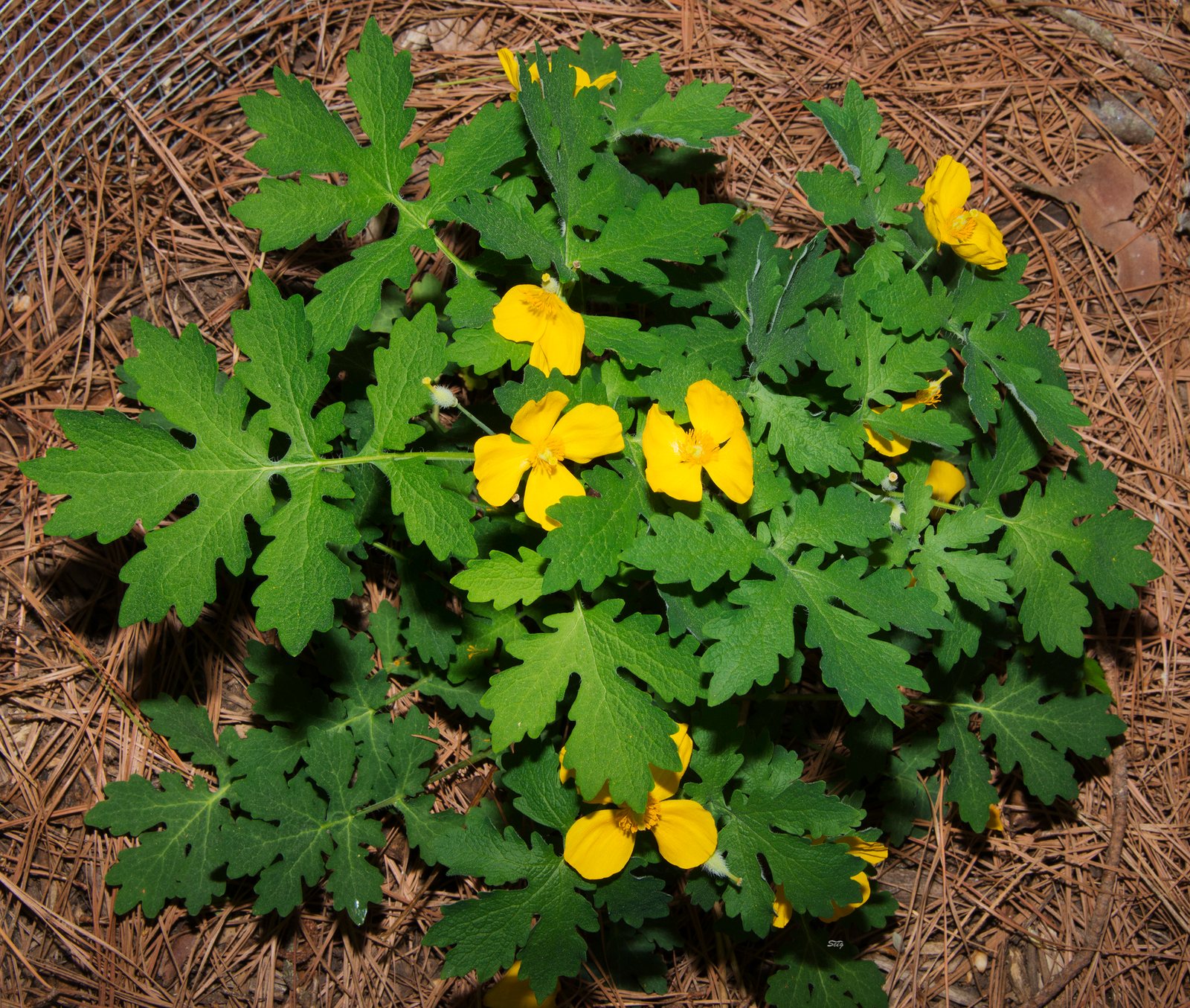
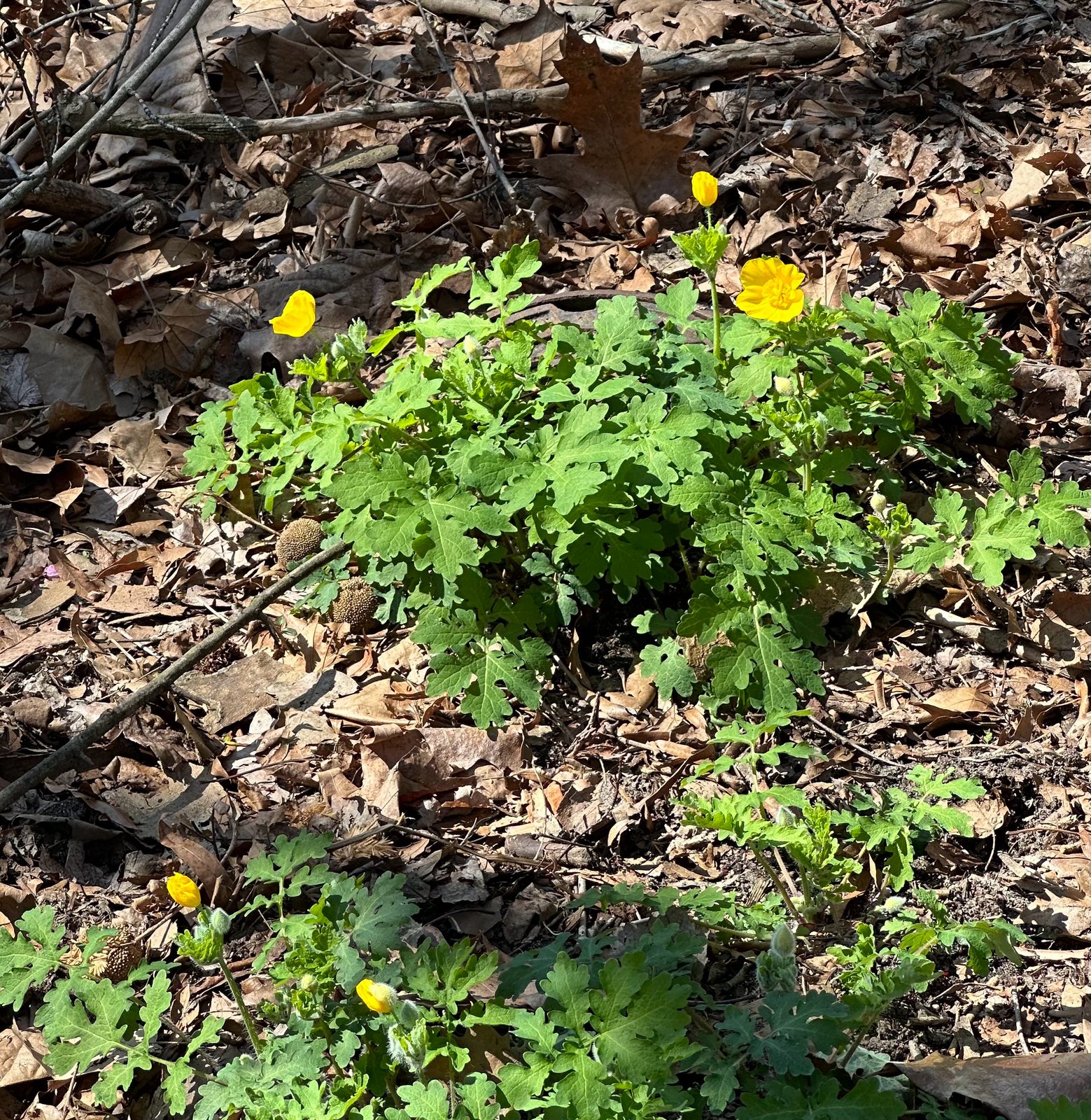
Celandine poppy is a woodland perennial native to eastern North America, grown for its clear yellow flowers and deeply lobed leaves. It suits moist, shaded gardens, where it can seed into loose colonies; the foliage may die back in summer if the soil dries out.
At a glance
- Sun
- Partial to full shade; morning sun is suitable where the soil stays moist.
- Water
- Keep evenly moist during active growth. Established plants tolerate some summer dryness by becoming dormant, but prolonged drought reduces their display.
- Soil
- Humus-rich, well-drained soil, preferably with plenty of leaf mould; avoid waterlogged ground.
- Height
- 1-1.5 ft (0.3-0.45 m)
- Spread
- 0.75-1 ft (0.23-0.3 m) per clump; seedlings can form wider colonies.
- Flowers
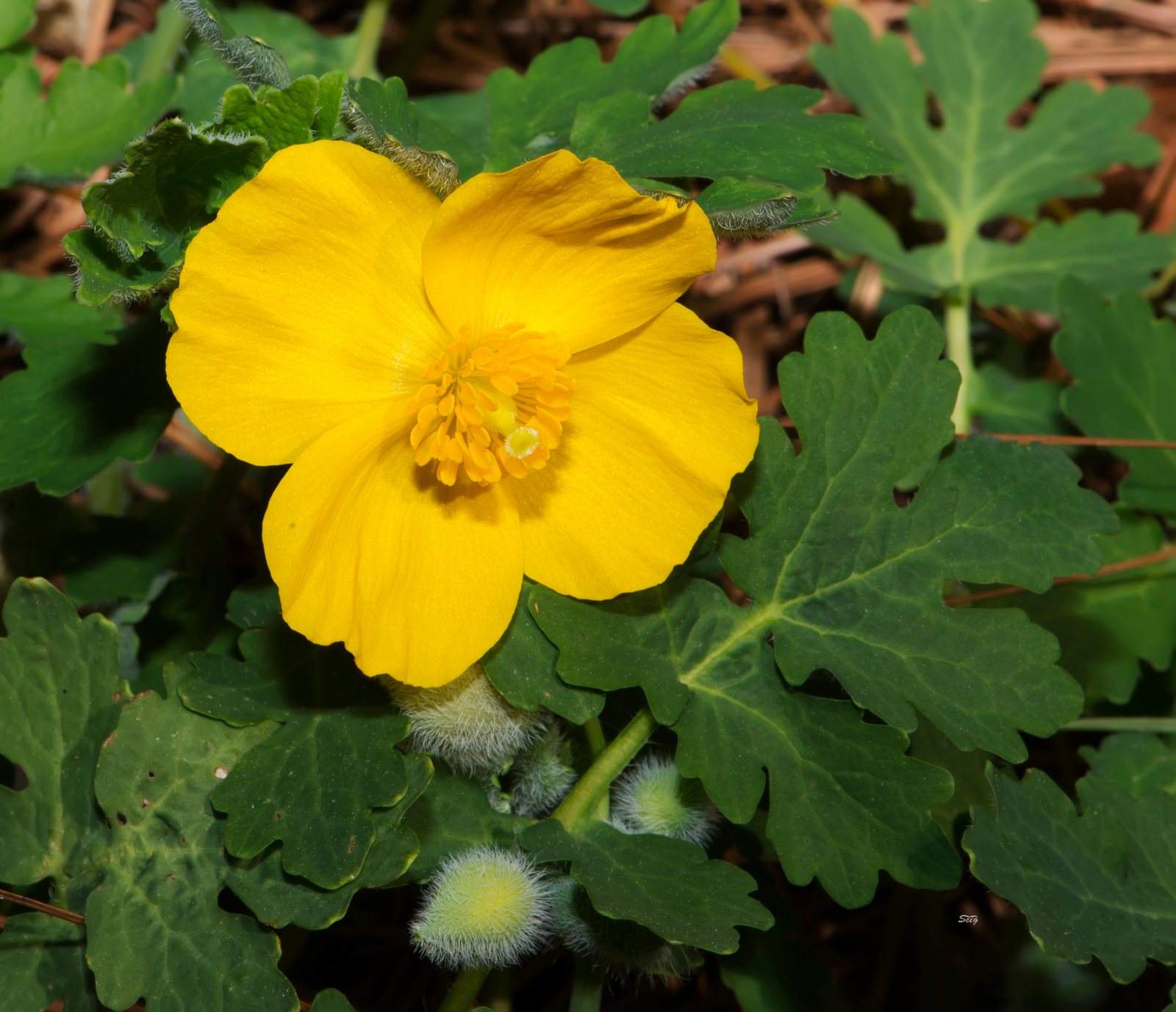
- Bright yellow, four-petalled flowers in spring to early summer, sometimes with scattered later flowers if moisture is plentiful.
- Foliage
- Deciduous, deeply lobed green leaves with paler undersides; foliage may disappear early in dry summers.
- Growth
- Moderate; colonies expand through self-seeding in suitable conditions.
- Care needed
- Low
The year at a glance
- Pollinators
- Deer resistant
- Cold hardy
- Heat tolerant
- Low allergen
| J | F | M | A | M | J | J | A | S | O | N | D | |
|---|---|---|---|---|---|---|---|---|---|---|---|---|
| Flowers | ||||||||||||
| Fruit | ||||||||||||
| Plant |
Northern hemisphere months. In Australia, shift them by six.
- Difficulty
- Easy
- Toughness
- Fairly tough
Will it suit your garden?
Pick your zone, country, light and whether you have pets.
Full sun is 6 or more hours of direct sun a day, part shade 3 to 6 hours, shade under 3.
How it grows
Planting day
1 ft (0.3 m)
After 1 year
1.1 ft (0.32 m)
After 2 years
1.1 ft (0.35 m)
After 3 years
1.2 ft (0.38 m)
full size
About 3 years to full size.
From a typical nursery size, at an average rate for this kind of plant. A rule of thumb, not a forecast.
Good to know
- Cats and dogs
- Toxic
- Native to
- the US and Canada
- Growth rate
- Moderate
Care
Jobs through the year
- WaterMar–May, every 7 days
- Water established clumps during dry weather to keep active roots moist; new plants need closer checks.
- WaterJun–Aug, every 7 days
- Water during dry spells only while foliage remains active; do not force dormant plants into growth.
- WaterSep–Oct, every 14 days
- Water if soil is dry and plants are actively growing; keep autumn plantings moist.
- MulchMar–Apr
- Add a thin layer of leaf mould or compost, keeping crowns clear.
- DivideMar–Apr
- Divide established clumps only if propagation is wanted, as new growth begins.
- DeadheadMay–Jul, every 7 days
- Remove developing seed capsules before they split if self-seeding is unwanted.
- PruneJul–Oct
- Remove foliage only after it yellows and collapses; wear gloves against irritating sap.
- ProtectJul–Aug
- Mark summer-dormant clumps to avoid disturbing their roots.
- Water during dry spring weather so the root zone stays moist, not saturated.
- Apply a thin mulch of leaf mould or compost in spring, keeping it away from the crown.
- Avoid routine heavy feeding; an annual compost top-dressing is usually enough.
- Remove seed capsules before they open if you do not want seedlings.
- Mark dormant clumps so you do not disturb them during summer planting.
Pruning. No shaping is needed. Remove unwanted seed capsules after flowering, and cut away foliage once it has yellowed and collapsed; wear gloves to avoid contact with the sap.
Through the year
- Early spring
- Plant or divide clumps as growth begins, and water them in thoroughly.
- Spring
- Add leaf mould or compost and water during dry spells.
- Late spring
- Remove developing seed capsules where self-seeding is unwanted.
- Early summer
- If propagating, collect ripe seed before the capsules split and sow it promptly.
- Summer
- Allow drought-dormant foliage to yellow naturally, then remove it.
- Autumn
- Plant nursery-grown plants while the soil is moist and retain a light covering of fallen leaves.
In the garden
- Plant in loose groups beneath deciduous trees for spring colour before the canopy closes.
- Combine with ferns and hostas, whose later foliage can cover gaps left by summer dormancy.
- Use beside shaded paths where the yellow flowers stand out against dark soil and foliage.
- Allow small colonies in a moist woodland garden alongside native spring wildflowers.
Garden styles it suits: Woodland, Cottage garden, Wildlife garden, Secret garden and Low-maintenance.
Plant it with: Virginia bluebells, Wild blue phlox, Foamflower, Wild ginger, Christmas fern and Hostas.
Wildlife: Flowers provide pollen for bees. Ants help disperse the seeds by carrying away their fleshy seed appendages.
Problems to watch for
- Slugs and snails may chew young growth; hand-pick them and use iron-phosphate bait according to the label if needed.
- Dry soil can cause early yellowing and summer dormancy; mulch and water during active growth if you want foliage to last longer.
- Waterlogged soil can cause root or crown rot; improve drainage or move plants to a better-drained site.
- Unwanted seedlings can crowd nearby plants; remove seed capsules before they split and pull seedlings while small.
Safety
Treat all parts, including roots and yellow-orange sap, as poisonous if eaten. Keep away from children and prevent cats, dogs and horses from browsing it; species-specific poisoning information for these animals is limited, so the likely severity is uncertain. Sap may irritate skin and eyes.
Easily confused with
Greater celandine (Chelidonium majus)
Has smaller yellow flowers in branching clusters and long, slender seed pods. Celandine poppy has larger flowers and plump, hairy capsules.
Lesser celandine (Ficaria verna)
Forms a low carpet of glossy, heart-shaped leaves and flowers with numerous narrow yellow petals. Celandine poppy is taller, with lobed leaves and four-petalled flowers.
The name
Stylophorum means 'style-bearing', referring to the flower's conspicuous style, and diphyllum means 'two-leaved', referring to its paired stem leaves.
Propagation. Sow fresh seed promptly and leave the pots outdoors in a sheltered place; natural winter chilling helps germination, which may be slow or uneven. Divide established clumps carefully in early spring and replant immediately.
Checked against open data
- Accepted botanical name
- Stylophorum diphyllum
- In the US and Canada
- Native in Canada and the lower 48 states.
Sources: GBIF (CC BY 4.0) and USDA PLANTS. The care and design notes are LandscapeGPT's own.
See it in your own yard.
Upload a photo of your yard and see it redesigned with plants that suit your climate, each checked against your zone.