Chervil
Anthriscus cerefolium. Family Apiaceae. Annual.
Also called French parsley, Garden chervil.
Chervil (Anthriscus cerefolium) is a cool-season culinary herb grown as an annual for its delicate, parsley-like leaves and mild anise flavour. It suits herb beds and containers in light shade, but quickly flowers and stops producing useful leaves in hot, dry weather.
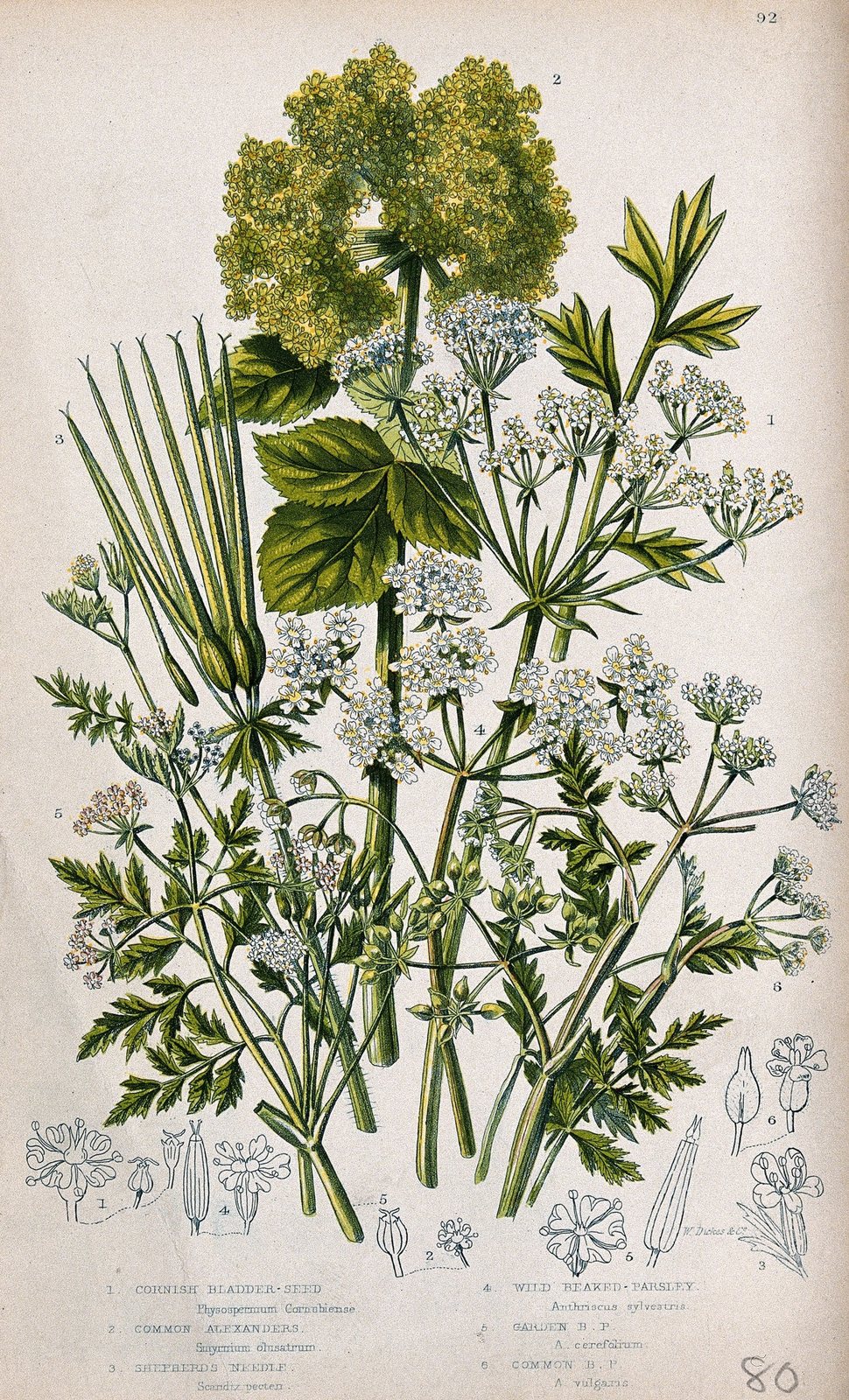
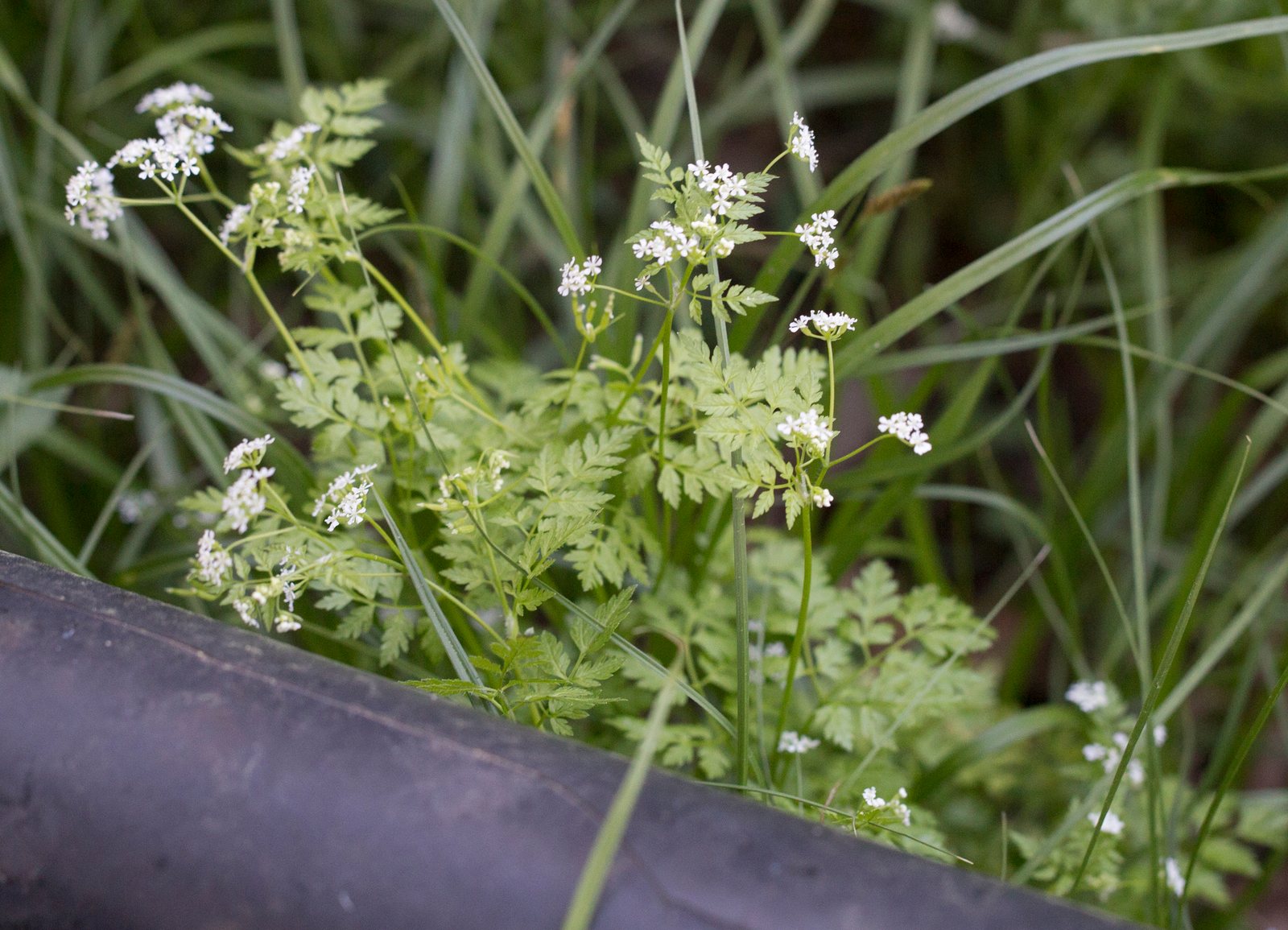
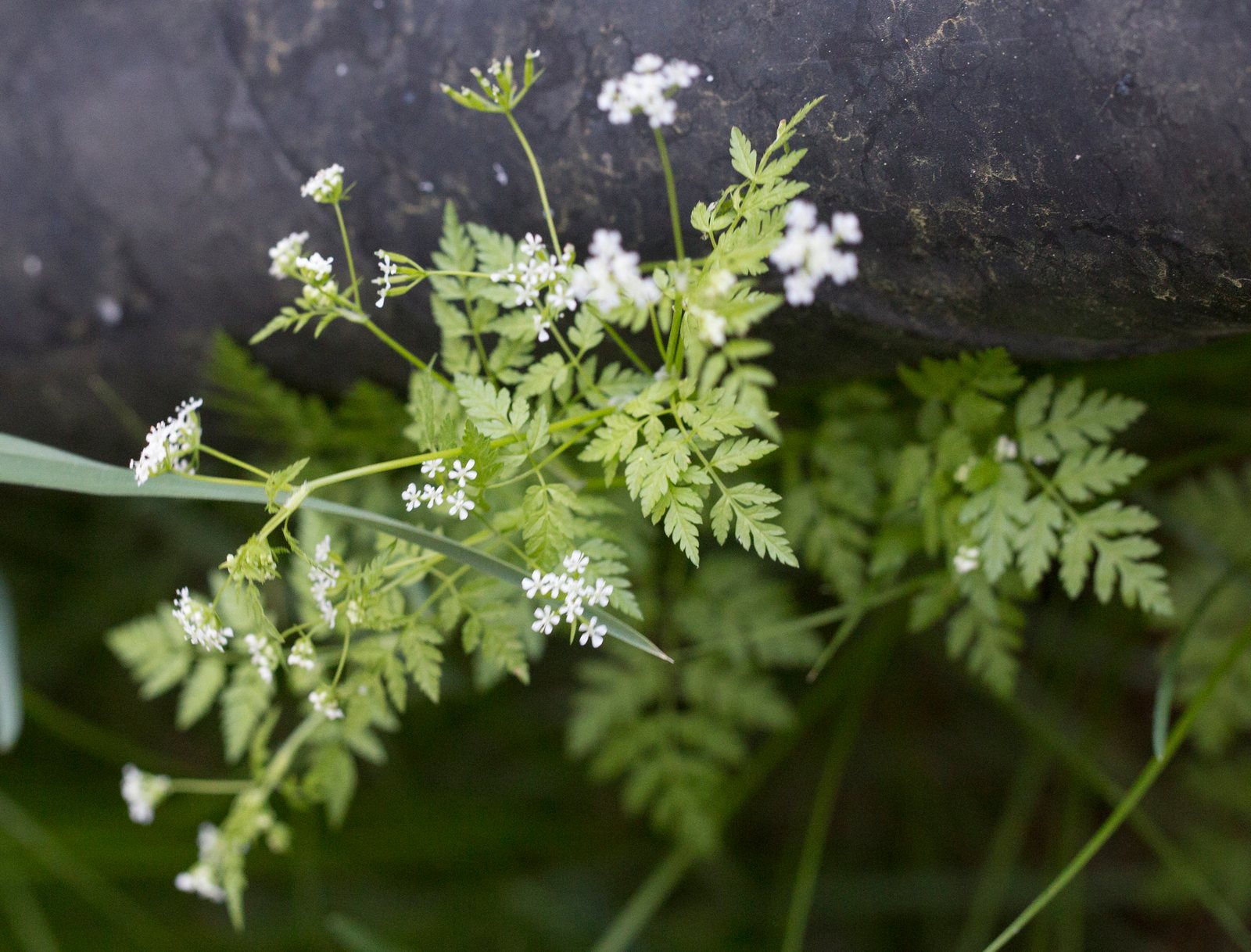
At a glance
- Sun
- Partial shade, especially afternoon shade in warm climates; full sun is suitable in cool weather.
- Water
- Keep the root zone evenly moist but not waterlogged; drought quickly encourages flowering.
- Soil
- Fertile, moisture-retentive but well-drained soil; avoid ground that dries out rapidly.
- Height
- 1-2 ft (0.3-0.6 m)
- Spread
- 0.5-1 ft (0.15-0.3 m)
- Flowers
- Small white flowers in loose umbels in late spring and summer, or earlier if stressed by heat or drought.
- Foliage
- Soft, bright green, finely divided leaves with a mild anise scent when crushed.
- Growth
- Fast in cool, moist conditions.
- Care needed
- Low
The year at a glance
- Pollinators
- Low allergen
- Fragrant
- Edible
| J | F | M | A | M | J | J | A | S | O | N | D | |
|---|---|---|---|---|---|---|---|---|---|---|---|---|
| Flowers | ||||||||||||
| Fruit | ||||||||||||
| Plant |
Northern hemisphere months. In Australia, shift them by six.
- Difficulty
- Easy
- Toughness
- Needs looking after
Will it suit your garden?
Pick your zone, country, light and whether you have pets.
Full sun is 6 or more hours of direct sun a day, part shade 3 to 6 hours, shade under 3.
How it grows
Planting day
0.5 ft (0.15 m)
After 1 year
1.5 ft (0.45 m)
full size
Full size in one season.
From a typical nursery size, at an average rate for this kind of plant. A rule of thumb, not a forecast.
Good to know
- Cats and dogs
- Safe
- Growth rate
- Fast
Care
Jobs through the year
- WaterMar–May, Sep–Nov, every 4 days
- Keep ground-grown crops evenly moist if rain is insufficient; seedbeds need more frequent checks.
- WaterJun–Aug, every 2 days
- Water surviving summer crops before soil dries and provide afternoon shade.
- MulchApr–May, Sep
- Apply a thin mulch around established plants to conserve moisture and cool roots.
- DeadheadMay–Jul, every 7 days
- Remove emerging flower stems to prolong leaf picking; replace strongly bolting plants.
- ProtectMar–Apr, Aug–Sep
- Protect seedlings from slugs using evening checks and wildlife-conscious controls.
- ProtectOct–Nov
- Use a cloche to extend autumn leaf harvests during cold weather.
- HarvestApr–Jun, Sep–Nov, every 7 days
- Snip outer leaves from plants 10–15 cm tall, leaving the central growing point intact.
- Water before the soil dries out, directing water to the base of the plants.
- Thin seedlings to about 6 in (15 cm) apart so leaves have room to develop.
- Mix a little mature compost into the soil before sowing; routine feeding is rarely needed.
- Apply a thin mulch around established plants to keep roots cool and conserve moisture.
- Provide afternoon shade as the weather warms.
Pruning. Snip outer leaves regularly while plants are young, leaving the central growing point intact. Remove emerging flower stems to extend leaf picking briefly, but replace plants once they bolt strongly.
Harvest
Begin picking when plants are about 4-6 in (10-15 cm) tall, usually six to eight weeks after sowing in suitable weather. Snip fresh outer leaves before flowering, taking only part of each plant at a time. Use promptly and add near the end of cooking to preserve the flavour.
Through the year
- Early spring
- Direct-sow seed as soon as the soil is workable, covering it lightly and keeping the seedbed moist.
- Mid-spring
- Thin seedlings and begin small repeat sowings every two to three weeks for a steady supply.
- Late spring
- Harvest outer leaves regularly and remove the first flower stems.
- Summer
- Keep remaining plants shaded and watered; pause sowing during hot weather.
- Late summer
- Resume sowing as temperatures cool for an autumn crop.
- Autumn
- In mild climates, sow for cool-season harvesting; in colder areas, protect existing plants with a cloche to extend picking.
In the garden
- Edge cool-season vegetable beds with its fine-textured edible foliage.
- Grow in containers near the kitchen where there is morning sun and afternoon shade.
- Use between lettuces and other leafy crops in a partly shaded potager.
- Let a few plants flower among herbs to add small white umbels and attract beneficial insects.
Garden styles it suits: Potager (kitchen garden), Herb parterre, Cottage garden, Edible landscape, Small-space and Sensory garden.
Plant it with: Lettuce, Spinach, Radishes, Parsley, Chives and Coriander.
Wildlife: The small flowers provide accessible nectar and pollen for hoverflies, small bees and other insects. Hoverfly larvae can help reduce aphids.
Problems to watch for
- Premature flowering: heat, drought and long days shorten the harvest; sow in cool weather, provide afternoon shade and keep soil moist.
- Slugs and snails: protect young seedlings with barriers or wildlife-conscious controls and remove nearby hiding places.
- Aphids: wash colonies off tender shoots with water and encourage predators by allowing some nearby herbs to flower.
- Poor germination: use fresh seed, sow directly and keep the surface moist; germination becomes unreliable in hot soil.
Safety
Culinary chervil is not known to be toxic to people, cats, dogs or horses; its leaves are edible. Do not collect wild plants on appearance alone, because highly poisonous members of the carrot family can look similar.
Easily confused with
Flat-leaf parsley (Petroselinum crispum)
Parsley has broader, coarser leaf segments and a stronger parsley scent; chervil has finer, softer foliage with a mild anise scent.
Cow parsley (Anthriscus sylvestris)
Cow parsley becomes much taller and coarser, with larger fern-like leaves and broad sprays of white flowers. Young plants can be difficult to distinguish, so do not harvest uncertain wild seedlings.
Poison hemlock (Conium maculatum)
Mature poison hemlock is much taller, with smooth hollow stems commonly marked by purple blotches. Young plants may lack obvious markings;
The name
The name chervil came through Old English and Latin cerefolium, ultimately from the Greek name chairephyllon.
Propagation. Grow from seed sown directly where it will mature; its taproot makes transplanting unreliable. Use fresh seed, cover lightly and keep moist. It may self-seed if allowed to flower and ripen seed.
Checked against open data
- Accepted botanical name
- Anthriscus cerefolium
- In the US and Canada
- Introduced in Canada, Greenland and the lower 48 states.
- Native range
- Albania, Austria, Baleares, Bulgaria, Greece, Hungary, Iran, Iraq, Krym, North Caucasus, Poland and Romania.
- Measured
- Soil pH 7 to 7.5. Average height 40 cm.
Sources: GBIF (CC BY 4.0), USDA PLANTS and Trefle (CC BY 4.0). The care and design notes are LandscapeGPT's own.
See it in your own yard.
Upload a photo of your yard and see it redesigned with plants that suit your climate, each checked against your zone.