Cobweb houseleek
Sempervivum arachnoideum. Family Crassulaceae. Succulent.
Also called Cobweb hens and chicks, Cobweb sempervivum.
Cobweb houseleek is a small, evergreen alpine succulent with tight rosettes linked by fine white threads. Gardeners grow it for its patterned foliage and spreading cushions in rock gardens, troughs and shallow containers. It tolerates cold and drought but needs excellent drainage, especially in winter.
At a glance
- Sun
- Full sun; light afternoon shade can help in hot inland gardens. Avoid humid, poorly ventilated sites.
- Water
- Low once established. Water new plants lightly while they root; thereafter let the soil dry between waterings. Containers may need occasional watering during prolonged dry weather.
- Soil
- Lean, gritty, sharply drained soil. Suitable for rocky crevices and containers with drainage holes; avoid heavy clay and moisture-retentive compost.
- Height
- 0.1-0.25 ft (0.03-0.08 m) in leaf; flower stems reach about 0.3-0.7 ft (0.1-0.2 m)
- Spread
- 0.5-1 ft (0.15-0.3 m), gradually extending farther through offsets
- Flowers
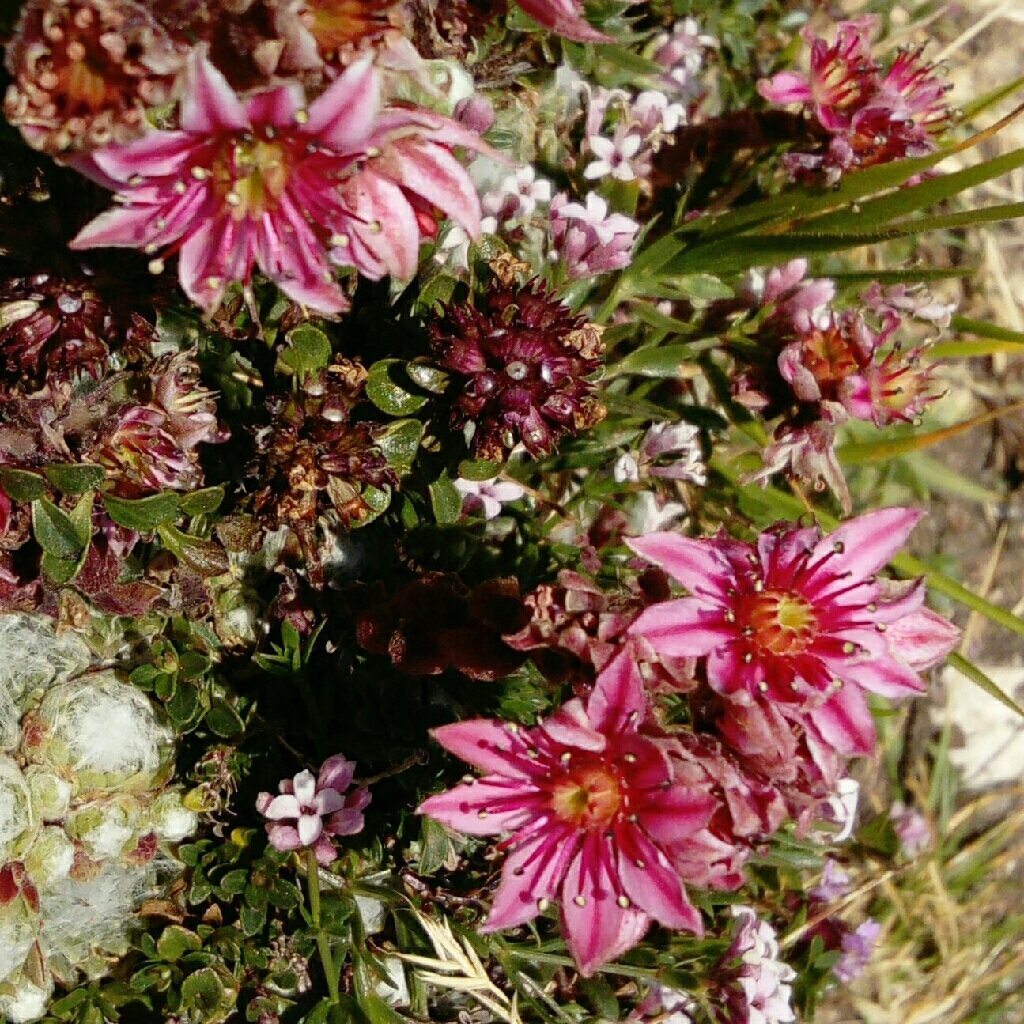
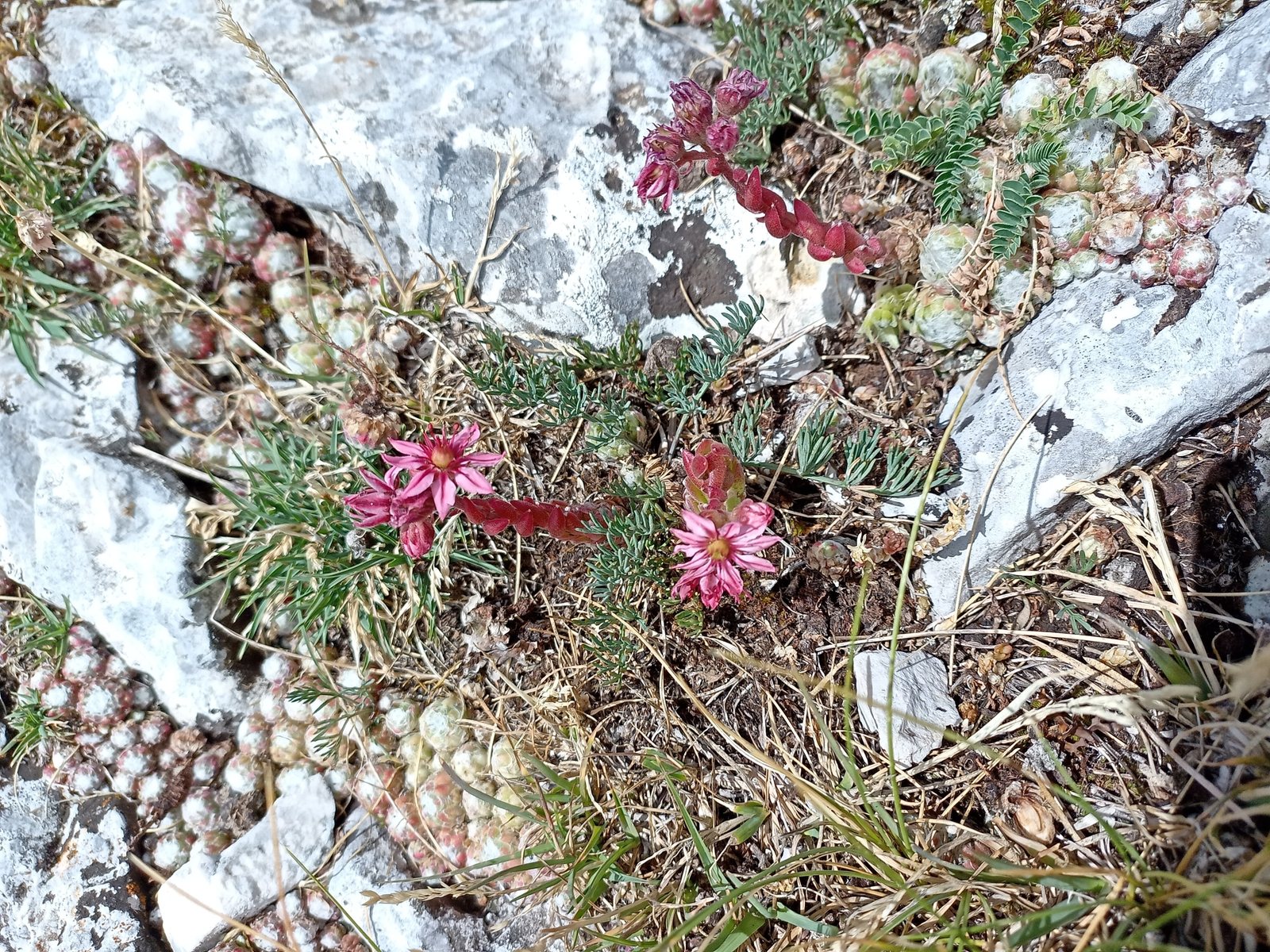
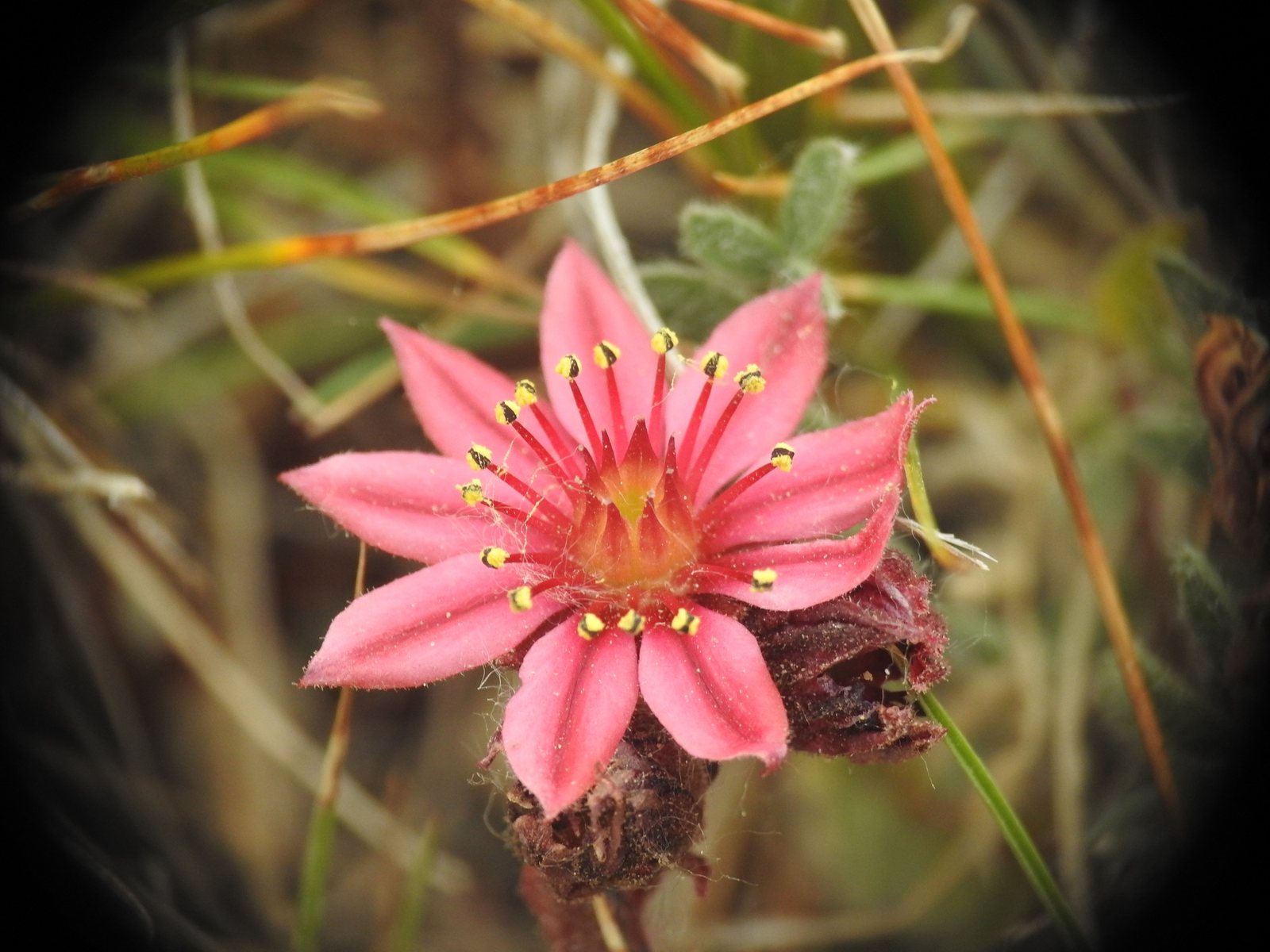
- Pink to rose-red, star-shaped flowers on upright stems in summer. Each flowering rosette dies afterward, leaving its offsets.
- Foliage
- Evergreen. Small, fleshy, pointed leaves form compact green rosettes, often flushed red. Fine white hairs stretch between the leaf tips like cobwebs.
- Growth
- Slow to moderate; forms a spreading cushion of small rosettes
- Care needed
- Low
The year at a glance
- Pollinators
- Deer resistant
- Drought tolerant
- Low allergen
| J | F | M | A | M | J | J | A | S | O | N | D | |
|---|---|---|---|---|---|---|---|---|---|---|---|---|
| Flowers | ||||||||||||
| Plant |
Northern hemisphere months. In Australia, shift them by six.
- Difficulty
- Easy
- Toughness
- Very tough
Will it suit your garden?
Pick your zone, country, light and whether you have pets.
Full sun is 6 or more hours of direct sun a day, part shade 3 to 6 hours, shade under 3.
How it grows
Planting day
0.2 ft (0.06 m)
full size
About 8 years to full size.
From a typical nursery size, at an average rate for this kind of plant. A rule of thumb, not a forecast.
Good to know
- Cats and dogs
- Safe
- Growth rate
- Slow
Care
Jobs through the year
- WaterApr–May, Sep, every 21 days
- Established ground plants need water only in prolonged drought; water new offsets lightly until rooted.
- WaterJun–Aug, every 14 days
- During prolonged drought only, water soil around established ground plants and let it dry fully.
- MulchApr
- Apply a thin gravel dressing beneath leaves without burying rosette bases.
- PruneMar–Apr
- Gently remove loose dead leaves and any soft, rotten rosettes.
- DivideApr–Jun
- Detach well-developed offsets only if crowded and replant with their bases above soil level.
- PruneJul–Sep
- Remove spent flower stems and dead flowering rosettes, leaving healthy offsets intact.
- ProtectJan–Feb, Oct–Dec
- Clear fallen leaves and prevent standing water; shelter pots from persistent rain if needed.
- Plant with the base of each rosette above the soil surface, not buried.
- Water the soil rather than repeatedly soaking the rosettes, and let it dry between waterings.
- Use a thin gravel mulch to keep lower leaves away from damp soil; avoid bark mulch around the crowns.
- Do not feed plants in the ground routinely; give container plants only an occasional weak feed in spring if growth is poor.
- Keep pots freely draining and shelter them from persistent winter rain where necessary.
- Detach and replant offsets in spring or early summer if cushions become crowded.
Pruning. No routine pruning is needed. After flowering, remove the spent stem and dead parent rosette without disturbing the surrounding offsets; gently remove loose dead leaves when dry.
Through the year
- Spring
- Remove loose dead leaves and check that winter moisture has not softened the crowns.
- Spring
- Plant or repot into a gritty mix, keeping rosette bases above the soil.
- Early summer
- Detach well-developed offsets and root them in small pots of gritty compost.
- Summer
- Water containers only when the mix has dried; check beneath rosettes for mealybugs.
- Late summer
- Remove spent flower stems and dead flowering rosettes, leaving healthy offsets.
- Autumn
- Clear fallen leaves and check drainage before wet weather arrives.
- Winter
- Keep containers out of standing water and protect them from prolonged rain if the mix stays wet.
In the garden
- Tuck into sunny rock-garden crevices, where the small rosettes follow the contours of stone.
- Plant in shallow troughs with other hardy houseleeks for contrasting rosette colours and textures.
- Use along the front of a sunny gravel bed with low stonecrops and dwarf pinks.
- Grow in small terracotta containers beside steps or seating, where the cobwebbed foliage can be seen closely.
Garden styles it suits: Alpine rock garden, Dry gravel garden, Desert / xeriscape, Low-maintenance, Small-space and Contemporary minimal.
Plant it with: Common houseleek, White stonecrop, Goldmoss stonecrop, Maiden pink and Creeping thyme.
Wildlife: Open summer flowers provide nectar and pollen for visiting bees and other insects. The foliage is not a significant wildlife food source.
Problems to watch for
- Crown or root rot: rosettes become soft or collapse in wet soil. Remove affected plants, improve drainage and replant healthy offsets in fresh gritty mix.
- Mealybugs: white cottony clusters hide between leaves or around roots. Isolate affected pots, remove visible insects and use a treatment labelled for mealybugs on ornamental succulents if needed.
- Vine weevil larvae in containers: root damage leaves rosettes loose or wilted. Inspect the root ball, remove larvae and use an appropriate biological control when conditions suit it.
- Open, stretched rosettes: insufficient light weakens the compact shape. Move plants gradually into a sunnier position.
Safety
Not known to be toxic to people, cats, dogs or horses. No part is recognised as poisonous, but it is not a food plant; eating it may cause stomach upset, and information specific to horses is limited.
Easily confused with
Common houseleek (Sempervivum tectorum)
Usually has larger rosettes with broader leaves and lacks the conspicuous web of white threads stretched between leaf tips.
Mexican snowball (Echeveria elegans)
Has broader, spoon-shaped, pale blue-green leaves with a powdery coating rather than cobweb threads. It is also much less cold-hardy.
The name
Sempervivum means 'always living', referring to its persistent evergreen rosettes, while arachnoideum means 'spider-like', describing the cobweb of hairs across the leaves.
Propagation. Detach offsets in spring or early summer, preferably once they have small roots, and set them on gritty compost with their bases just touching the surface. Water sparingly while they establish. Seed is possible, but seedlings may vary, especially where other houseleeks grow nearby.
Checked against open data
- Accepted botanical name
- Sempervivum arachnoideum
- Native range
- Austria, Corse, France, Germany, Italy, Spain and Switzerland.
- Measured
- Average height 14 cm.
Sources: GBIF (CC BY 4.0) and Trefle (CC BY 4.0). The care and design notes are LandscapeGPT's own.
See it in your own yard.
Upload a photo of your yard and see it redesigned with plants that suit your climate, each checked against your zone.