Common broom (Scotch broom)
Cytisus scoparius. Family Fabaceae. Shrub.
Also called Scotch broom, Scots broom, European broom.
Common broom is a deciduous shrub with upright green stems and masses of yellow, pea-shaped flowers in late spring. Gardeners grow it for bright seasonal colour on sunny, well-drained sites, but it is a serious invasive weed in many regions outside its native European range; check local restrictions before planting.
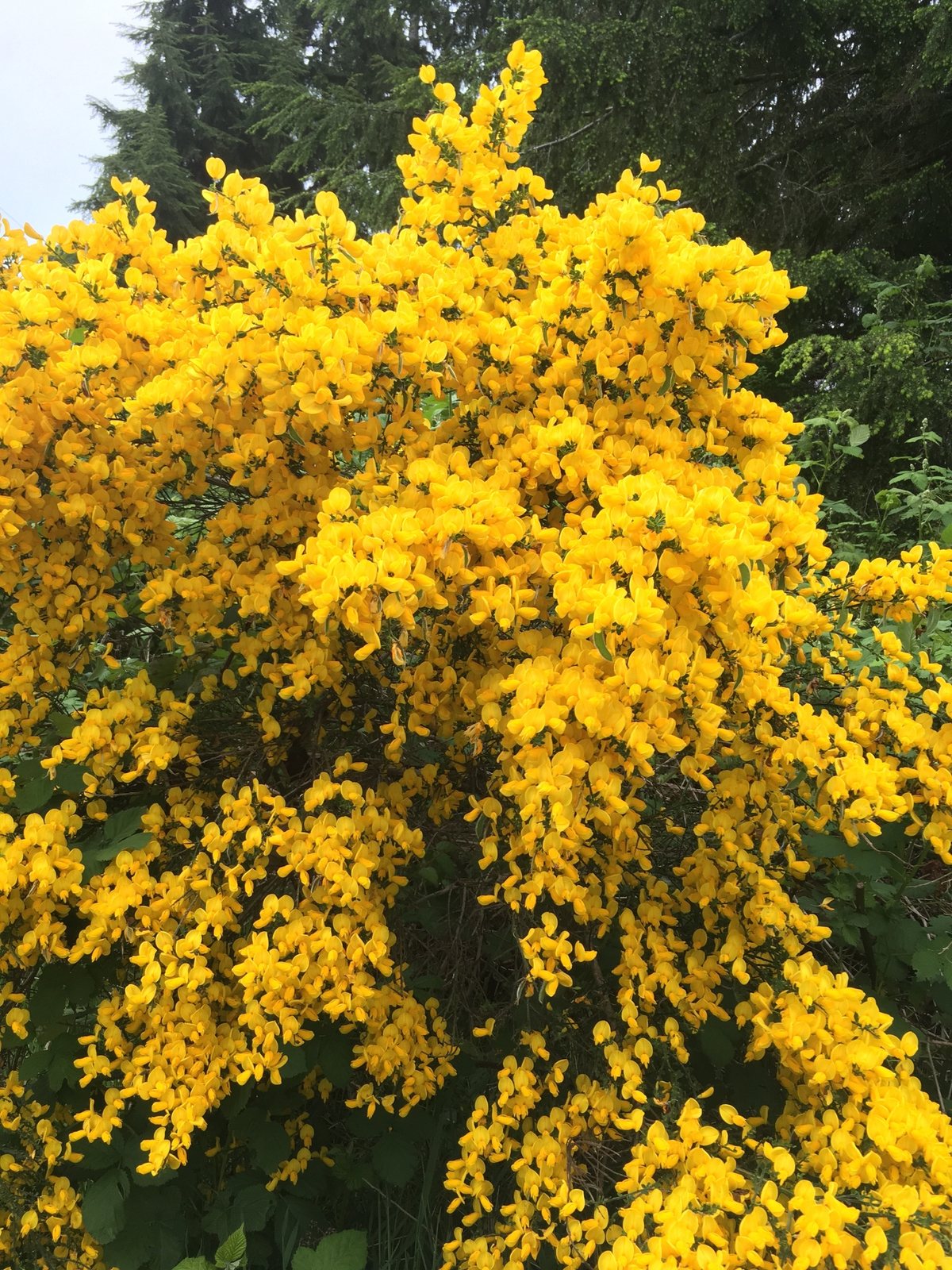
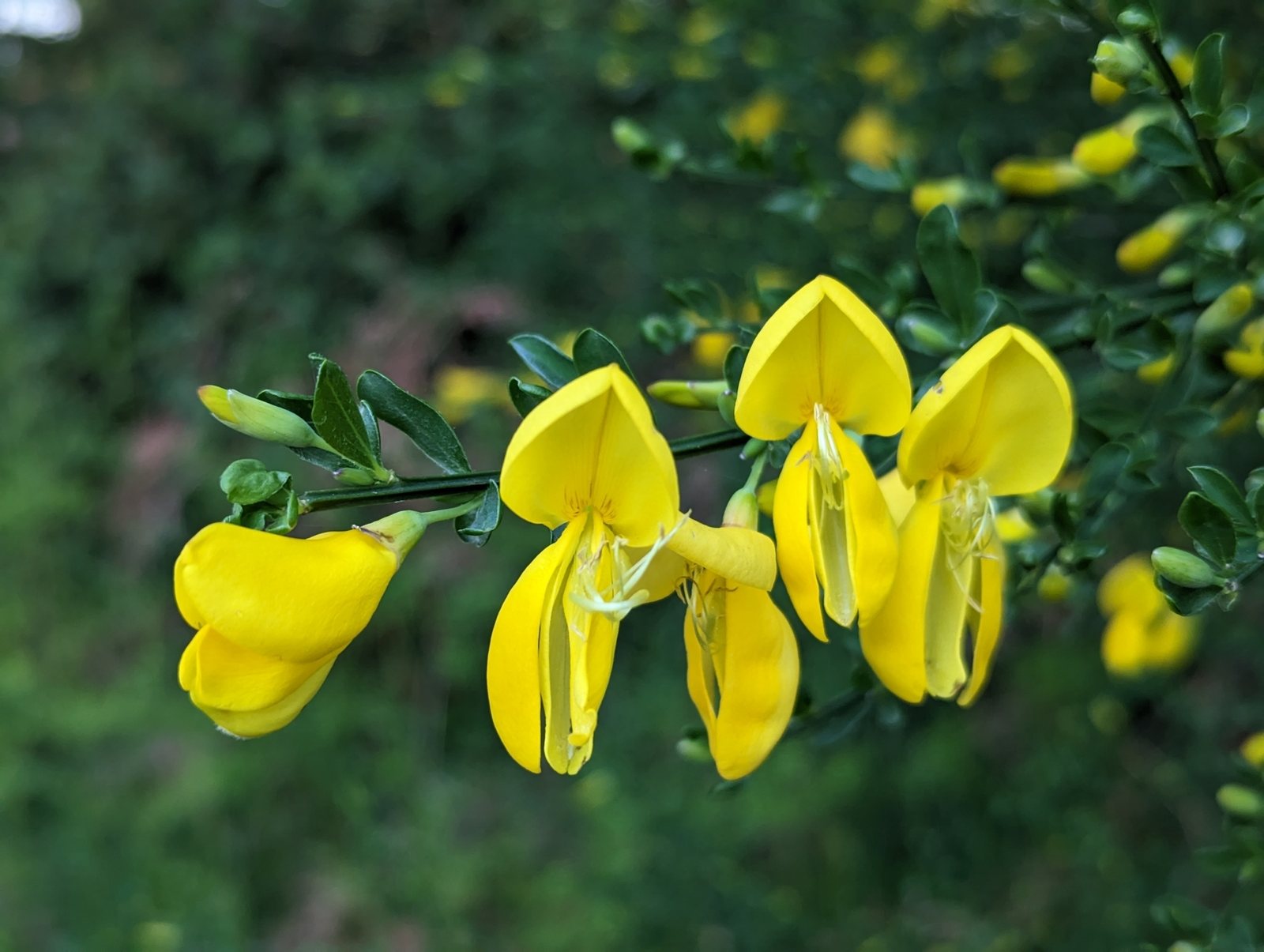
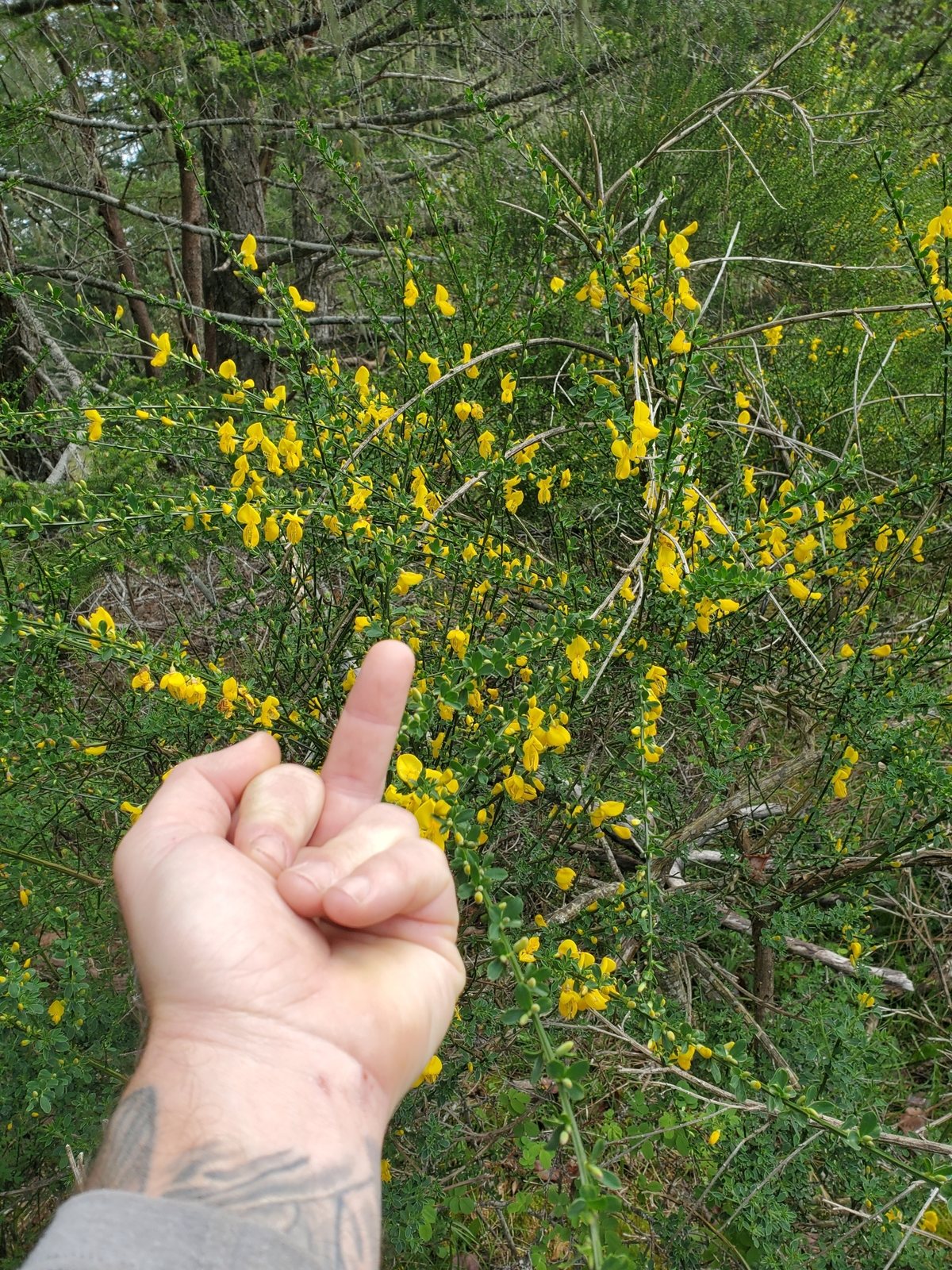
At a glance
- Sun
- Full sun; flowering is reduced in shade.
- Water
- Water during establishment, then only during prolonged drought. Avoid persistently wet soil.
- Soil
- Well-drained, preferably sandy or gravelly soil, usually acidic to neutral. Tolerates poor soil but dislikes waterlogging and strongly alkaline conditions.
- Height
- 5-10 ft (1.5-3 m)
- Spread
- 5-6 ft (1.5-1.8 m)
- Flowers
- Bright yellow, pea-shaped flowers in late spring to early summer; named cultivars may have cream, pink, red or bicoloured flowers.
- Foliage
- Small green leaves, often with three leaflets on lower shoots and single leaves above. Leaves may drop early in dry weather, leaving prominently ridged green stems.
- Growth
- Fast
- Care needed
- Medium
The year at a glance
- Pollinators
- Deer resistant
- Drought tolerant
- Low allergen
| J | F | M | A | M | J | J | A | S | O | N | D | |
|---|---|---|---|---|---|---|---|---|---|---|---|---|
| Flowers | ||||||||||||
| Fruit | ||||||||||||
| Plant |
Northern hemisphere months. In Australia, shift them by six.
- Difficulty
- Moderate
- Toughness
- Very tough
Will it suit your garden?
Pick your zone, country, light and whether you have pets.
Full sun is 6 or more hours of direct sun a day, part shade 3 to 6 hours, shade under 3.
How it grows
Planting day
1.6 ft (0.5 m)
After 1 year
3 ft (1 m)
After 2 years
5 ft (1.6 m)
After 3 years
7 ft (2.1 m)
After 5 years
7 ft (2.3 m)
full size
About 3 years to full size.
From a typical nursery size, at an average rate for this kind of plant. A rule of thumb, not a forecast.
Good to know
- Cats and dogs
- Toxic
- Native to
- the UK
- Invasive in
- the US, Canada and Australia
- In the garden
- Spreads vigorously: plan to contain it.
- Growth rate
- Fast
Care
Jobs through the year
- WaterApr–May, Sep, every 21 days
- Established shrubs need water only during prolonged drought; water young plants whenever the soil dries.
- WaterJun–Aug, every 14 days
- Water established shrubs deeply only in prolonged drought; young plants need more frequent watering.
- PruneJun
- After flowering, shorten shoots within leafy growth and remove developing pods; never cut into bare old wood.
- ProtectMar–Oct, every 30 days
- Check invasive-plant rules before planting; where permitted, pull seedlings promptly to protect nearby habitats.
- Check local invasive-plant rules before buying; choose an alternative where broom threatens nearby habitats.
- Plant small, container-grown plants in their permanent position; established shrubs resent root disturbance.
- Water through the first growing season when the soil becomes dry; reduce watering once established.
- Do not routinely fertilize: broom fixes nitrogen, and rich feeding encourages soft, sprawling growth.
- Remove developing seed pods and pull seedlings promptly wherever cultivation is permitted.
Pruning. Prune immediately after flowering, shortening flowered shoots while leaving green, leafy growth below each cut. Do not cut back into bare old wood, which usually fails to reshoot.
Through the year
- Spring
- Where planting is permitted, plant young container-grown shrubs once the ground is workable; water well.
- Late spring
- Check flowering stems for aphids and wash off small colonies with a firm jet of water.
- Early summer
- Prune as flowering finishes, before seed pods mature, keeping all cuts within green growth.
- Summer
- Water newly planted shrubs during dry spells and remove seedlings while they are small.
- Autumn
- Check surrounding beds and open ground for seedlings; remove them before their roots become established.
- Winter
- Inspect for storm damage and poor drainage; avoid hard renovation pruning.
In the garden
- Where non-invasive, use as a loose spring-flowering specimen in a sunny gravel garden.
- Combine with heathers and low-growing junipers on well-drained, acidic banks for contrasting textures.
- Place behind low spring perennials so its yellow flowers rise above a softer foreground.
- Use sparingly in informal shrub borders, allowing room for its arching mature shape.
Garden styles it suits: Cottage garden, English country, Dry gravel garden, Coastal and Traditional.
Plant it with: Heather, Bell heather, Common juniper, Creeping phlox and Rockrose.
Wildlife: Flowers provide pollen for bees, especially bumblebees. Outside its native range, dense stands displace native vegetation and can reduce habitat quality; this outweighs its value as a garden pollinator plant.
Problems to watch for
- Heavy self-seeding: remove pods before they ripen and pull young seedlings; seeds can remain viable in soil for decades.
- Root rot and dieback in wet soil: improve drainage before planting or choose a drier site; badly affected plants usually need replacing.
- Aphids on young shoots: wash off with water and encourage natural predators rather than spraying routinely.
- Bare, woody growth after severe pruning: avoid cutting into old wood; replace shrubs that have become badly leggy.
Safety
Toxic to people, cats, dogs and horses if eaten. All parts contain poisonous alkaloids, with seeds and pods a particular concern; ingestion can cause vomiting, weakness and potentially serious heart or nervous-system effects. Seek medical or veterinary advice promptly after suspected ingestion.
Where it spreads. A major invasive shrub in western North America, especially California, Oregon, Washington and coastal British Columbia, including Vancouver Island; it is also invasive or regulated in parts of the eastern United States. In Australia it is a Weed of National Significance, with serious infestations in southeastern states and Tasmania. It is also highly invasive in New Zealand.
Easily confused with
Common gorse (Ulex europaeus)
Gorse has conspicuous, rigid spines and usually flowers earlier or over a longer season; common broom has flexible, unarmed green stems.
Spanish broom (Spartium junceum)
Spanish broom has smooth, rounded, rush-like stems, very few leaves and strongly fragrant yellow flowers, usually later in summer; common broom has sharply ridged stems.
French broom (Genista monspessulana)
French broom retains abundant three-part leaves with hairy undersides and bears flowers in clusters at shoot tips; common broom is more sparsely leafy, with flowers mainly along the shoots.
The name
The epithet scoparius means 'broom-like' or 'used for sweeping', referring to the traditional use of its twiggy stems for making brooms.
Propagation. Where cultivation is legal and ecologically appropriate, propagate named cultivars from semi-ripe cuttings in summer. The species also grows readily from seed, but avoid seed propagation near vulnerable habitats; seedlings may not resemble named cultivars.
Checked against open data
- Accepted botanical name
- Cytisus scoparius
- In the US and Canada
- Introduced in Alaska, Canada, Hawaii and the lower 48 states.
- Native range
- Austria, Baltic States, Belarus, Belgium, Bulgaria, Central European Rus, Corse, Czechoslovakia, Denmark, France, Germany and Great Britain.
- Measured
- Soil pH 5.5 to 7. Average height 116 cm.
Sources: GBIF (CC BY 4.0), USDA PLANTS and Trefle (CC BY 4.0). The care and design notes are LandscapeGPT's own.
See it in your own yard.
Upload a photo of your yard and see it redesigned with plants that suit your climate, each checked against your zone.