Cowslip
Primula veris. Family Primulaceae. Perennial.
Also called Common cowslip, English cowslip, Paigle.
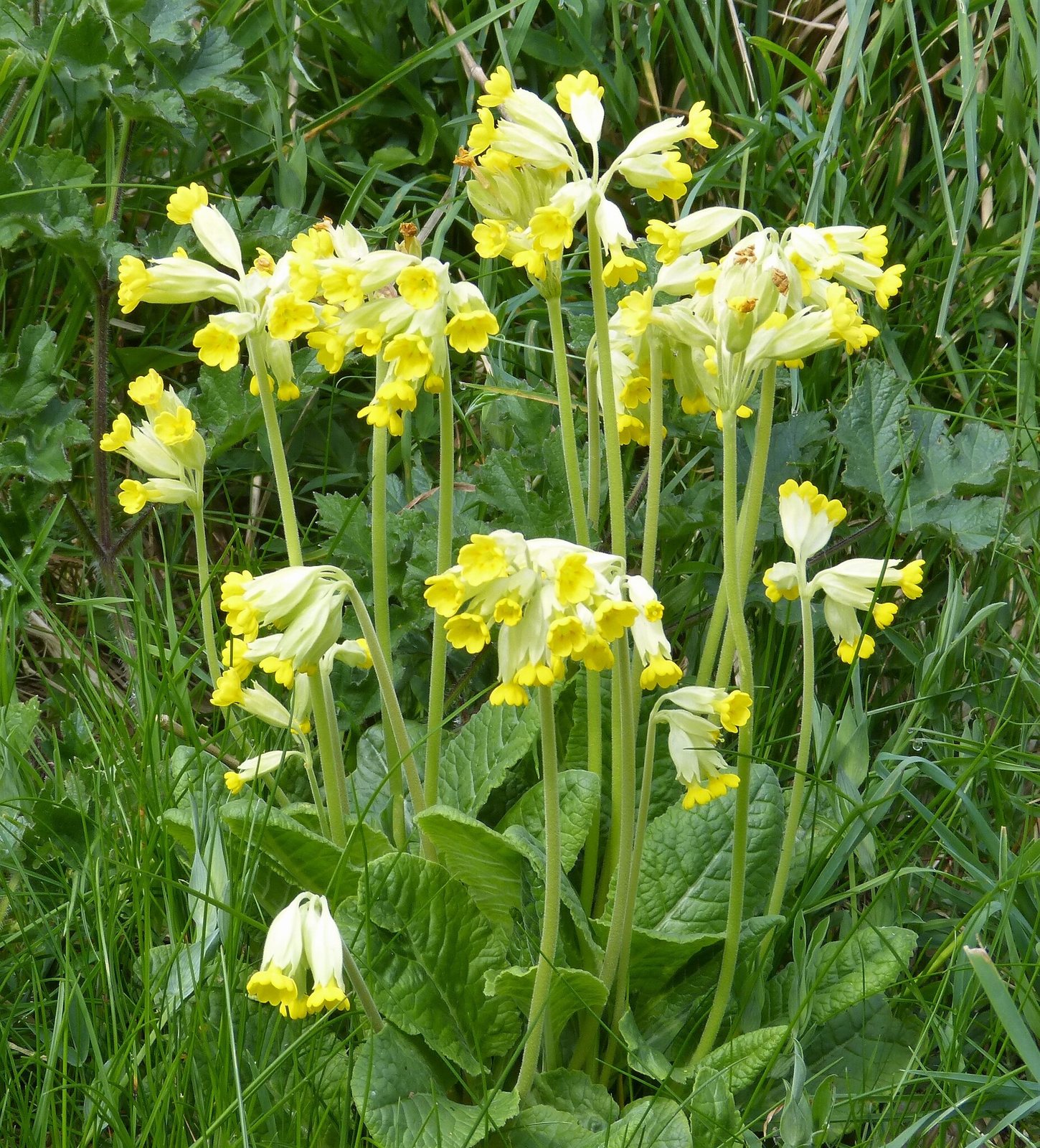
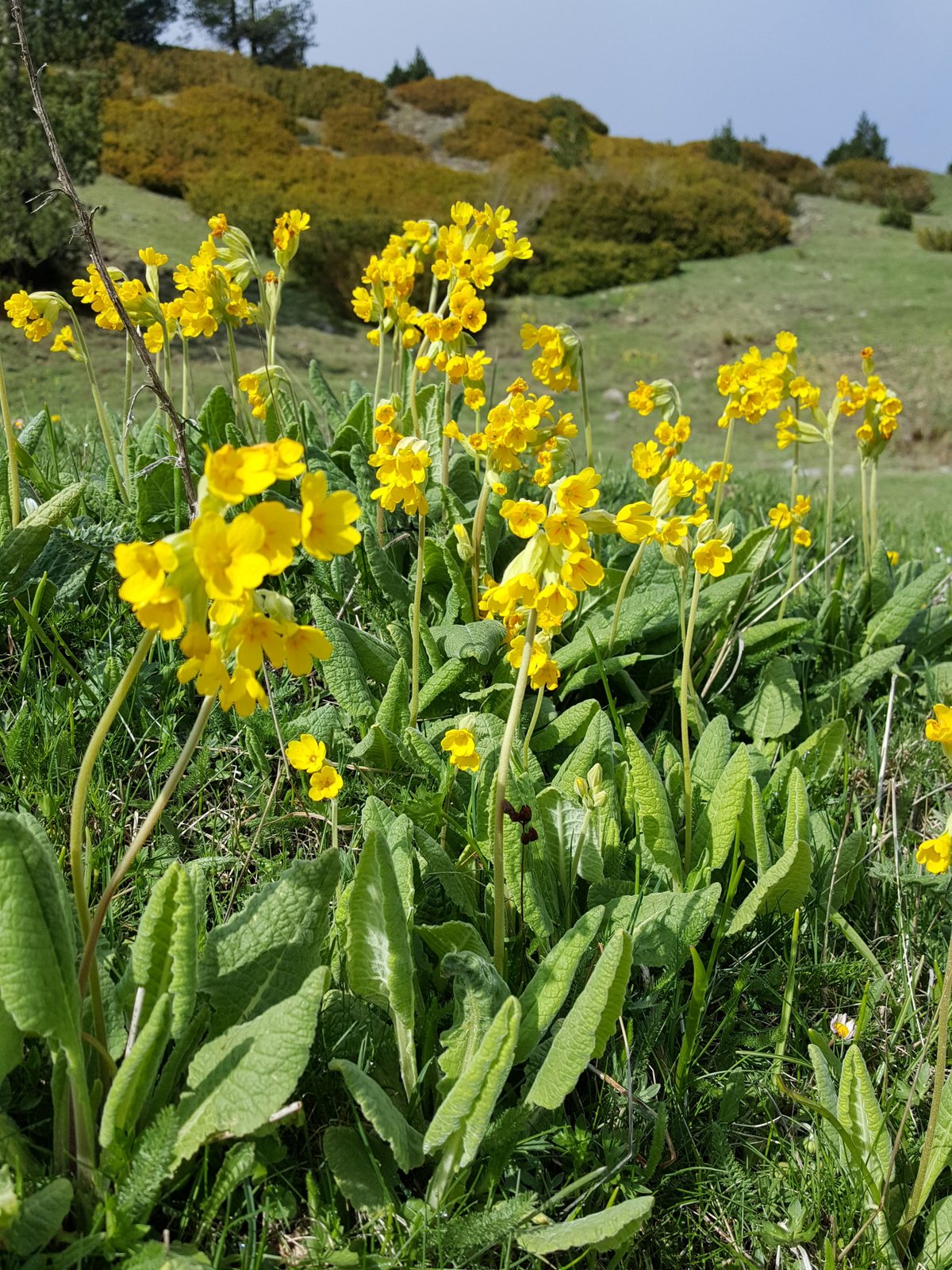
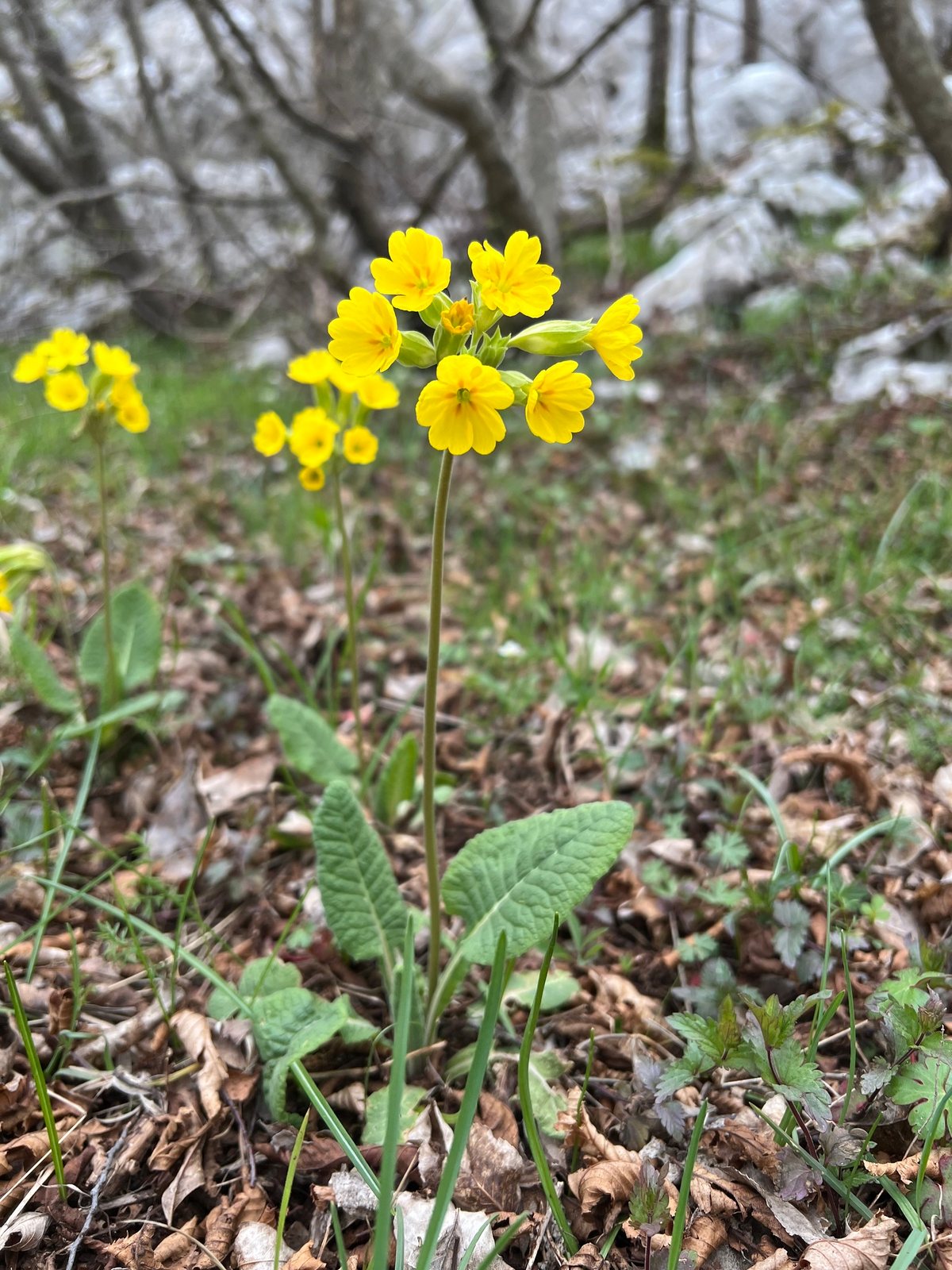
Cowslip is a small, clump-forming perennial with nodding, fragrant yellow flowers held above rosettes of crinkled leaves. Grow it in short meadow grass, cottage borders or sunny woodland edges for spring colour and early pollinator food. It does best where summers are not excessively hot.
At a glance
- Sun
- Full sun in cool climates; light afternoon shade where summers are warmer. Avoid deep shade.
- Water
- Keep the soil moderately moist during spring growth and flowering. Water during prolonged dry spells, but avoid persistently wet soil, especially in winter.
- Soil
- Well-drained loam, chalk or clay that does not become waterlogged. Prefers neutral to alkaline soil and tolerates relatively low fertility.
- Height
- 0.5-1 ft (0.15-0.3 m)
- Spread
- 0.5-0.75 ft (0.15-0.23 m)
- Flowers
- Spring, sometimes extending into early summer; clusters of nodding, deep yellow flowers with orange markings inside.
- Foliage
- Basal rosettes of wrinkled, softly hairy green leaves with rounded tips. Leaves may persist in mild winters but usually die back in colder conditions.
- Growth
- Moderate; forms small clumps and may gradually spread by seed.
- Care needed
- Low
The year at a glance
- Pollinators
- Cold hardy
- Wildlife
- Low allergen
- Fragrant
| J | F | M | A | M | J | J | A | S | O | N | D | |
|---|---|---|---|---|---|---|---|---|---|---|---|---|
| Flowers | ||||||||||||
| Fruit | ||||||||||||
| Plant |
Northern hemisphere months. In Australia, shift them by six.
- Difficulty
- Easy
- Toughness
- Fairly tough
Will it suit your garden?
Pick your zone, country, light and whether you have pets.
Full sun is 6 or more hours of direct sun a day, part shade 3 to 6 hours, shade under 3.
How it grows
Planting day
0.7 ft (0.22 m)
full size
About 3 years to full size.
From a typical nursery size, at an average rate for this kind of plant. A rule of thumb, not a forecast.
Good to know
- Cats and dogs
- Mildly toxic: may upset a stomach
- Native to
- the UK
- Growth rate
- Moderate
Care
Jobs through the year
- WaterMar–May, every 7 days
- Water established plants in dry weather to maintain moderate spring moisture; new plants need more.
- WaterJun–Aug, every 14 days
- Water during prolonged drought without saturating the soil; check new plants more often.
- WaterSep–Oct, every 14 days
- Water only if soil is dry, especially around newly planted rosettes.
- PruneFeb–Mar
- Gently remove dead leaves without cutting into the crown.
- DivideMay–Jun
- Divide crowded clumps after flowering and keep divisions watered until rooted.
- DeadheadMay–Jun
- Remove finished stalks only if seedlings are unwanted; otherwise let capsules ripen.
- ProtectMar–May
- Check young leaves and flowers for slugs and remove pests if necessary.
- ProtectJun–Jul
- In meadow grass, delay mowing until seed capsules have turned brown.
- ProtectJan–Feb, Oct–Dec
- Clear smothering fallen leaves and keep crowns free of saturated soil.
- Plant with the crown at soil level, leaving space around each rosette.
- Water new plants through their first growing season and established plants during prolonged spring drought.
- Avoid routine feeding; rich soil encourages competing grass and leafy growth.
- Keep heavy mulch away from the crown to reduce rot.
- Divide crowded clumps after flowering, watering the divisions until established.
- In meadow grass, delay mowing until the seed capsules have ripened.
Pruning. Remove faded flower stalks after flowering if you do not want seedlings; otherwise leave them until the seed capsules ripen. Remove dead leaves gently without cutting into the crown.
Through the year
- Early spring
- Clear dead leaves and nearby weeds so emerging rosettes receive light.
- Spring
- Plant container-grown cowslips and water them in; keep the soil moist while roots establish.
- Late spring
- After flowering, divide crowded clumps or remove flower stalks to limit self-seeding.
- Early summer
- Allow seed capsules to turn brown before collecting seed or mowing a cowslip meadow.
- Summer
- Sow freshly collected seed in pots outdoors and protect the surface from drying out.
- Autumn
- Plant established seedlings and remove fallen leaves that smother the rosettes.
- Winter
- Check that pots and planting sites drain freely; avoid leaving crowns in saturated soil.
In the garden
- Naturalise in short, lightly managed meadow grass for scattered spring colour.
- Plant along sunny woodland edges with lungwort and wild daffodils.
- Use repeated small groups at the front of cottage borders, where the nodding flowers can be seen closely.
- Grow in a cool, well-drained container near a path or doorway to enjoy the flowers and scent.
Garden styles it suits: English country, Cottage garden, Wildflower, Woodland, Wildlife garden and Pollinator garden.
Plant it with: Wild daffodil, Lungwort, Common quaking grass, Oxeye daisy, Meadow cranesbill and Field scabious.
Wildlife: Flowers provide spring nectar and pollen for bees and other insects. In parts of its native European range, it is also a larval food plant for the Duke of Burgundy butterfly.
Problems to watch for
- Slugs and snails can damage young leaves and flowers; inspect at dusk, remove them by hand and reduce nearby hiding places.
- Vine weevil larvae can eat roots, particularly in pots; check collapsing plants and treat affected containers with suitable biological nematodes when soil temperatures permit.
- Crown or root rot develops in waterlogged soil; improve drainage, keep crowns at soil level and discard badly rotted plants.
- Plants may decline in hot, dry summers; provide afternoon shade and water during prolonged drought without saturating the soil.
Safety
Treat as potentially harmful if eaten, particularly the roots, which contain saponins. Ingestion may cause stomach upset in people, cats and dogs; species-specific evidence for horses is limited, so keep it out of grazing areas. Sap may irritate sensitive skin. Serious poisoning from ordinary garden contact is not expected.
Easily confused with
Oxlip (Primula elatior)
Has larger, paler yellow flowers with a more open, flatter face, usually arranged toward one side of the stalk; cowslip flowers are deeper yellow and more cup-shaped.
Common primrose (Primula vulgaris)
Usually carries individual pale yellow flowers on separate stalks close to the leaves, rather than a cluster at the top of one taller stalk.
Marsh marigold (Caltha palustris)
Also called cowslip in parts of North America, but has glossy, rounded or kidney-shaped leaves and open, buttercup-like flowers; it grows in wet ground.
The name
Primula comes from the Latin for 'first', referring to early flowering, and veris means 'of spring'.
Propagation. Divide established clumps after flowering or in early autumn. Sow fresh seed outdoors when ripe; germination can be slow and uneven, and a period of winter cold may help. Seedlings commonly take two or more years to flower. Use nursery-grown plants rather than collecting from the wild.
Checked against open data
- Accepted botanical name
- Primula veris
- In the US and Canada
- Introduced in the lower 48 states.
- Native range
- Albania, Altay, Austria, Baltic States, Belarus, Belgium, Bulgaria, Buryatiya, Central European Rus, Czechoslovakia, Denmark and East European Russia.
- Measured
- Soil pH 7.5 to 8. Average height 10 cm.
Sources: GBIF (CC BY 4.0), USDA PLANTS and Trefle (CC BY 4.0). The care and design notes are LandscapeGPT's own.
See it in your own yard.
Upload a photo of your yard and see it redesigned with plants that suit your climate, each checked against your zone.