Coyote brush
Baccharis pilularis. Family Asteraceae. Shrub.
Also called Coyote bush, Chaparral broom, Dwarf chaparral broom.
Coyote brush is an evergreen shrub native to California and southwestern Oregon, grown for drought-tolerant cover, informal screening and valuable late-season insect habitat. Wild forms are often upright and substantial, while selected low-growing forms make spreading groundcovers; check the mature size before buying.
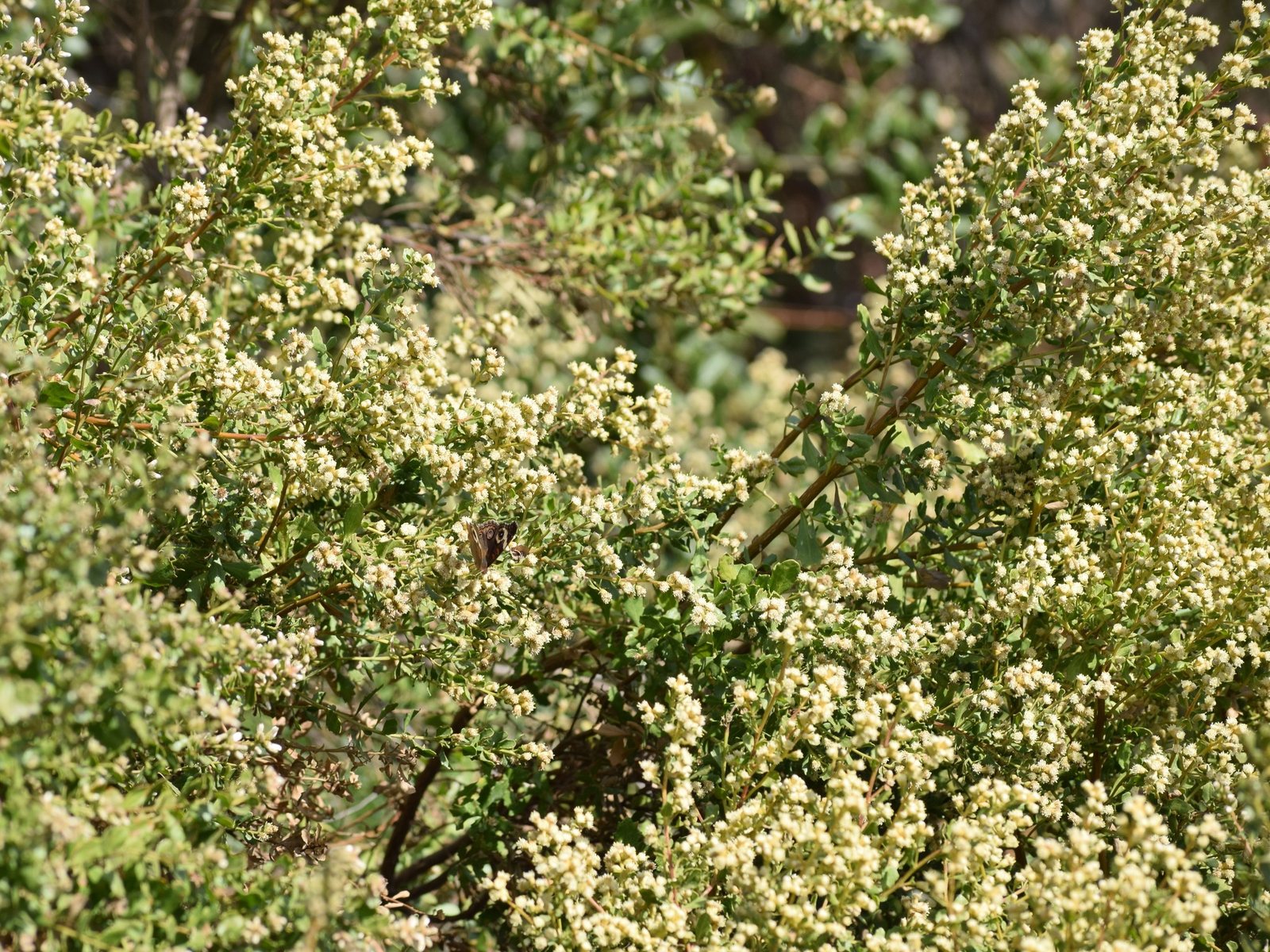
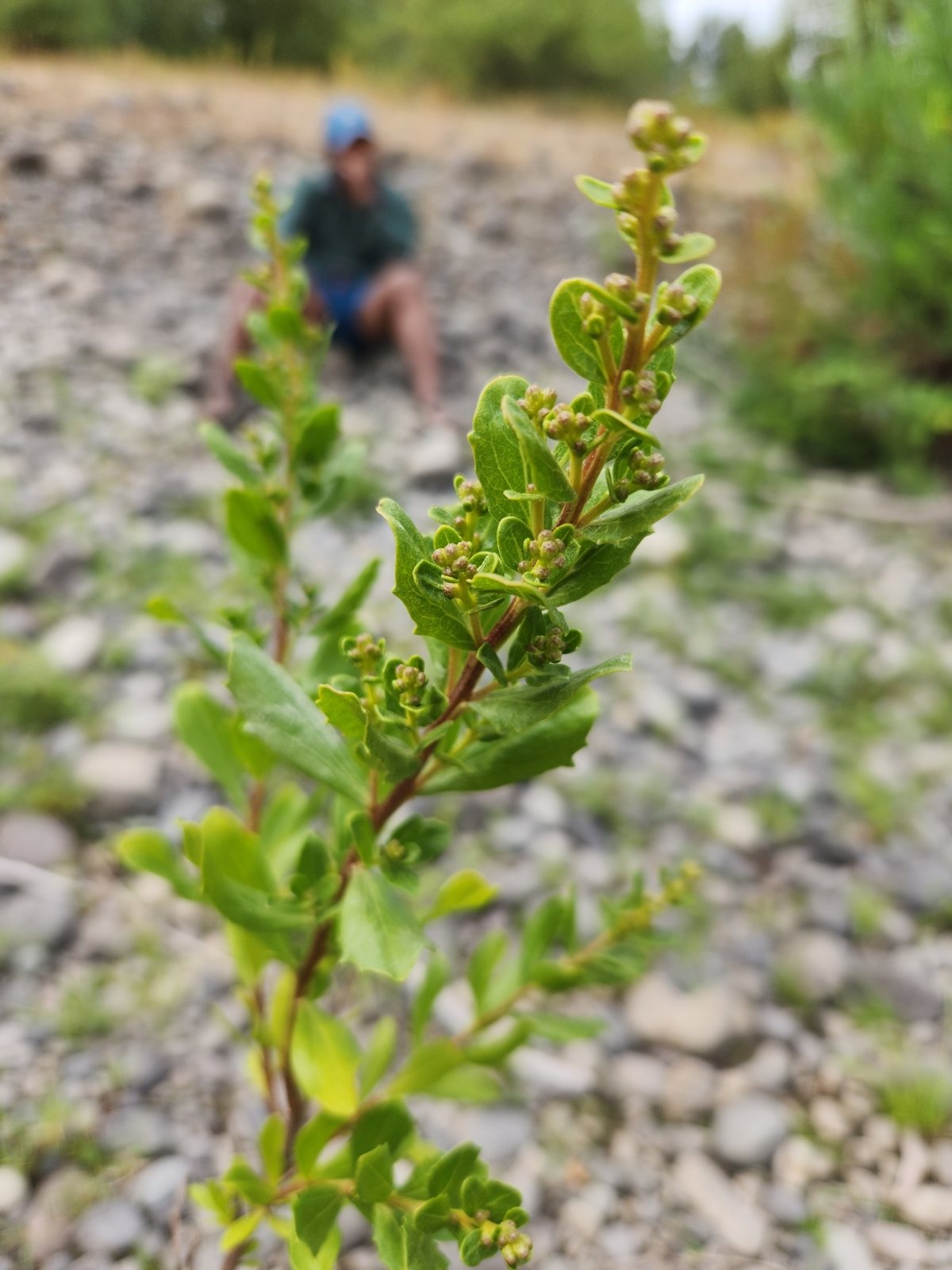
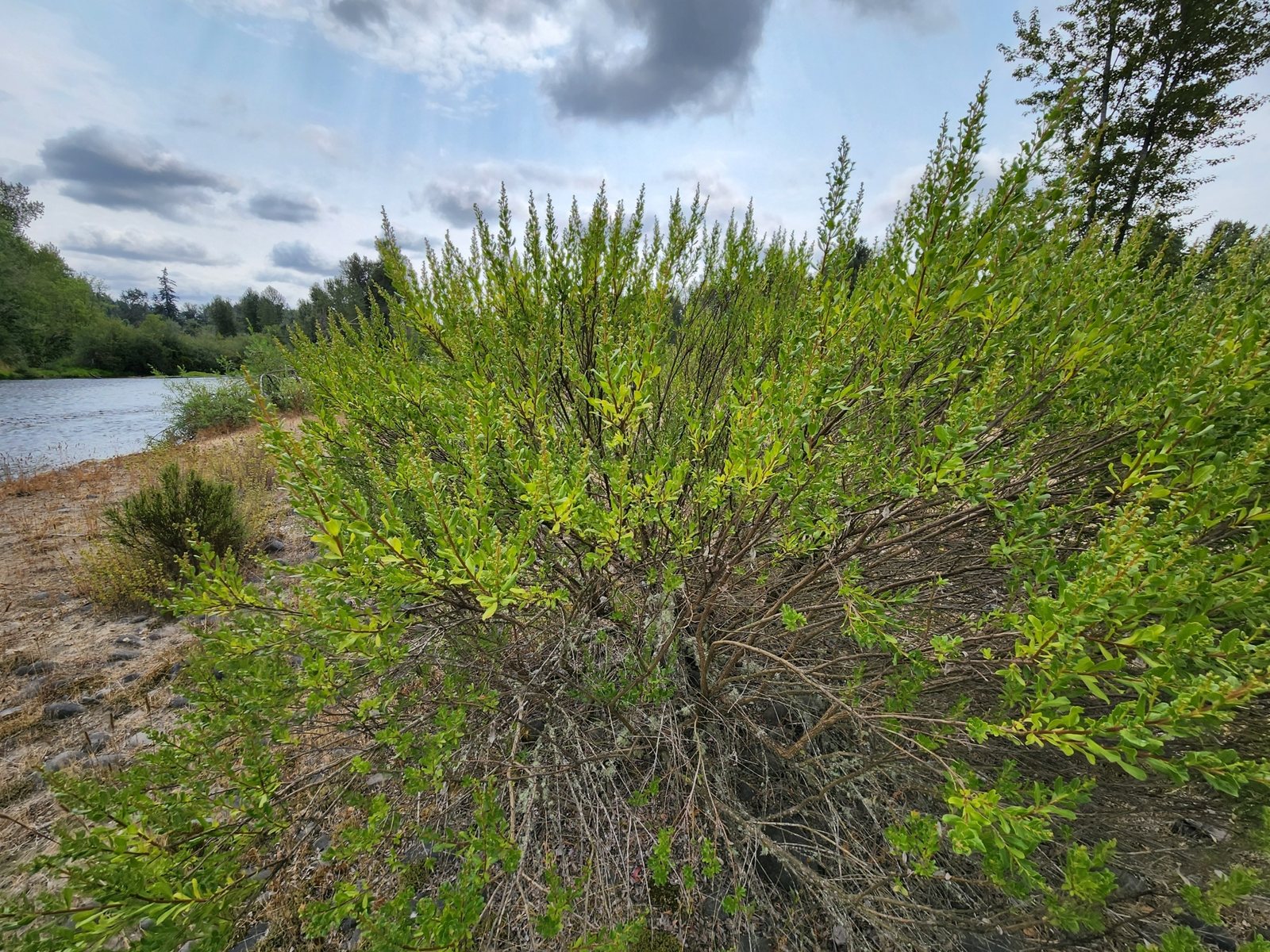
At a glance
- Sun
- Full sun is best; tolerates light shade but grows more loosely.
- Water
- Low once established. Water regularly through the first dry season, then only during prolonged drought if needed.
- Soil
- Tolerates sandy, loamy and clay soils provided drainage is adequate; avoid persistently wet ground.
- Height
- 3-12 ft (0.9-3.7 m); low-growing selections often stay 1-3 ft (0.3-0.9 m)
- Spread
- 6-12 ft (1.8-3.7 m), depending on form
- Flowers
- Late summer through autumn, sometimes into winter in mild climates; small yellowish male flowers and whitish female flowers occur on separate plants.
- Foliage
- Evergreen. Small, alternate, leathery green leaves, often with a few coarse teeth near the tips; dense foliage on many-branched stems.
- Growth
- Fast when young; slower in dry, nutrient-poor conditions.
- Care needed
- Low
The year at a glance
- Pollinators
- Deer resistant
- Drought tolerant
- Heat tolerant
- Wildlife
| J | F | M | A | M | J | J | A | S | O | N | D | |
|---|---|---|---|---|---|---|---|---|---|---|---|---|
| Flowers | ||||||||||||
| Fruit | ||||||||||||
| Plant |
Northern hemisphere months. In Australia, shift them by six.
- Difficulty
- Hard
- Toughness
- Needs looking after
Will it suit your garden?
Pick your zone, country, light and whether you have pets.
Full sun is 6 or more hours of direct sun a day, part shade 3 to 6 hours, shade under 3.
How it grows
Planting day
1.6 ft (0.5 m)
After 1 year
2.8 ft (0.86 m)
After 2 years
4 ft (1.2 m)
After 3 years
5 ft (1.6 m)
After 5 years
8 ft (2.3 m)
full size
About 5 years to full size.
From a typical nursery size, at an average rate for this kind of plant. A rule of thumb, not a forecast.
Good to know
- Cats and dogs
- Safe
- Native to
- the US
- In the garden
- Spreads vigorously: plan to contain it.
- Growth rate
- Moderate
Care
Jobs through the year
- WaterApr–May, Sep, every 28 days
- Water established plants only during prolonged dry weather; newly planted shrubs need more frequent water.
- WaterJun–Aug, every 21 days
- Water established shrubs deeply only in prolonged drought, allowing soil to dry between waterings.
- MulchApr
- Refresh a light mulch over the root area without covering stem bases.
- PruneMar
- Remove dead or crowded branches and shorten long shoots before strong spring growth.
- DeadheadNov
- Remove female seed heads before dispersal only where unwanted seedlings are a concern.
- ProtectJan–Mar, Oct–Dec
- Not reliably hardy in zones 6–7; grow in a movable container and overwinter in bright frost-free shelter.
- Plant with enough room for the selected form to reach its full width.
- Water deeply during establishment, allowing the soil to begin drying between waterings.
- Reduce irrigation once established; avoid frequent summer watering, especially in heavy soil.
- Apply a light mulch over the root area, keeping it clear of the stems.
- Do not routinely fertilize; rich feeding encourages excessive, loose growth.
- Remove unwanted seedlings while small, especially around female plants.
Pruning. Prune in late winter or early spring, after the main flowering period and before strong new growth. Shorten long shoots and remove dead or crowded branches; rejuvenate an overgrown shrub gradually rather than repeatedly shearing its surface.
Through the year
- Autumn
- Plant in mild climates where winter soil drains freely; allow space for mature spread.
- Late autumn
- Remove unwanted female flower heads before fluffy seeds disperse, if self-seeding is a concern.
- Late winter
- Remove dead growth and shorten overlong branches before the spring flush.
- Spring
- Plant in colder locations after severe frosts have passed; refresh mulch without covering the stem bases.
- Summer
- Water young plants deeply during dry spells; check that established plants are not receiving unnecessary lawn irrigation.
- Late summer
- Leave flowers for visiting insects and take semi-ripe cuttings of desirable plants.
In the garden
- Use upright forms as informal screens or wind-filtering hedges in mild coastal gardens.
- Plant low-growing selections across sunny banks for evergreen cover and erosion control.
- Combine with manzanitas, California lilacs and buckwheats in a dry California-native border.
- Use as a plain green backdrop to ornamental grasses and flowering perennials.
- Include in wildlife planting where its late flowers can support insects after many other shrubs finish.
Garden styles it suits: California native, Coastal, Wildlife garden, Pollinator garden, Desert / xeriscape and Low-maintenance.
Plant it with: California sagebrush, California lilac, Manzanita, Deer grass, California buckwheat and Yarrow.
Wildlife: Flowers provide late-season nectar and pollen for native bees, flies, wasps and butterflies. Dense branches offer shelter for small birds and other wildlife; female plants produce wind-dispersed, fluffy seeds.
Problems to watch for
- Root rot and dieback in wet soil: improve drainage, keep irrigation away from the crown and avoid frequent summer watering.
- Scale insects: inspect stems and leaf undersides; prune heavily infested shoots and use a labelled horticultural oil if needed.
- Aphids on soft shoots: wash off small colonies with water and avoid excessive nitrogen feeding.
- Sparse, woody growth in shade or neglected plants: provide more sun and thin or shorten branches gradually to encourage fresh growth.
Safety
Toxicity to people, cats, dogs and horses is not well established for this species, so no particular part or safe dose can be confidently identified. Do not treat it as edible or feed the foliage to livestock; some other Baccharis species are seriously poisonous, but that does not establish the same risk for coyote brush.
Where it spreads. Readily colonizes disturbed ground and unmanaged grassland within its native range in California and southwestern Oregon. Female plants can seed beyond garden boundaries, and low branches may root where they touch soil; remove seedlings where shrub cover is unwanted.
Easily confused with
Groundsel bush (Baccharis halimifolia)
Usually has larger, more obviously diamond-shaped leaves with prominent teeth on the upper half. It is a different species and a serious invasive weed in parts of Australia.
Mule fat (Baccharis salicifolia)
Has much longer, narrow, willow-like leaves and a more open, upright habit; it commonly grows near streams and other moist sites.
California sagebrush (Artemisia californica)
Has finely divided, grey-green, strongly aromatic leaves rather than the small, broad, leathery green leaves of coyote brush.
The name
The species name pilularis means 'little-ball-like', referring to the small, rounded flower heads.
Propagation. Take semi-ripe cuttings in late summer to preserve a particular growth habit and the sex of the parent plant. Seed can also be sown, but seedlings vary and will not reliably reproduce a named selection.
Checked against open data
- Accepted botanical name
- Baccharis pilularis
- In the US and Canada
- Native in the lower 48 states.
- Native range
- California, Mexico Northwest, New Mexico and Oregon.
- Measured
- Soil pH 5.5 to 7.2. Average height 39 cm.
Sources: GBIF (CC BY 4.0), USDA PLANTS and Trefle (CC BY 4.0). The care and design notes are LandscapeGPT's own.
See it in your own yard.
Upload a photo of your yard and see it redesigned with plants that suit your climate, each checked against your zone.