Creeping fig
Ficus pumila. Family Moraceae. Climber.
Also called Climbing fig.
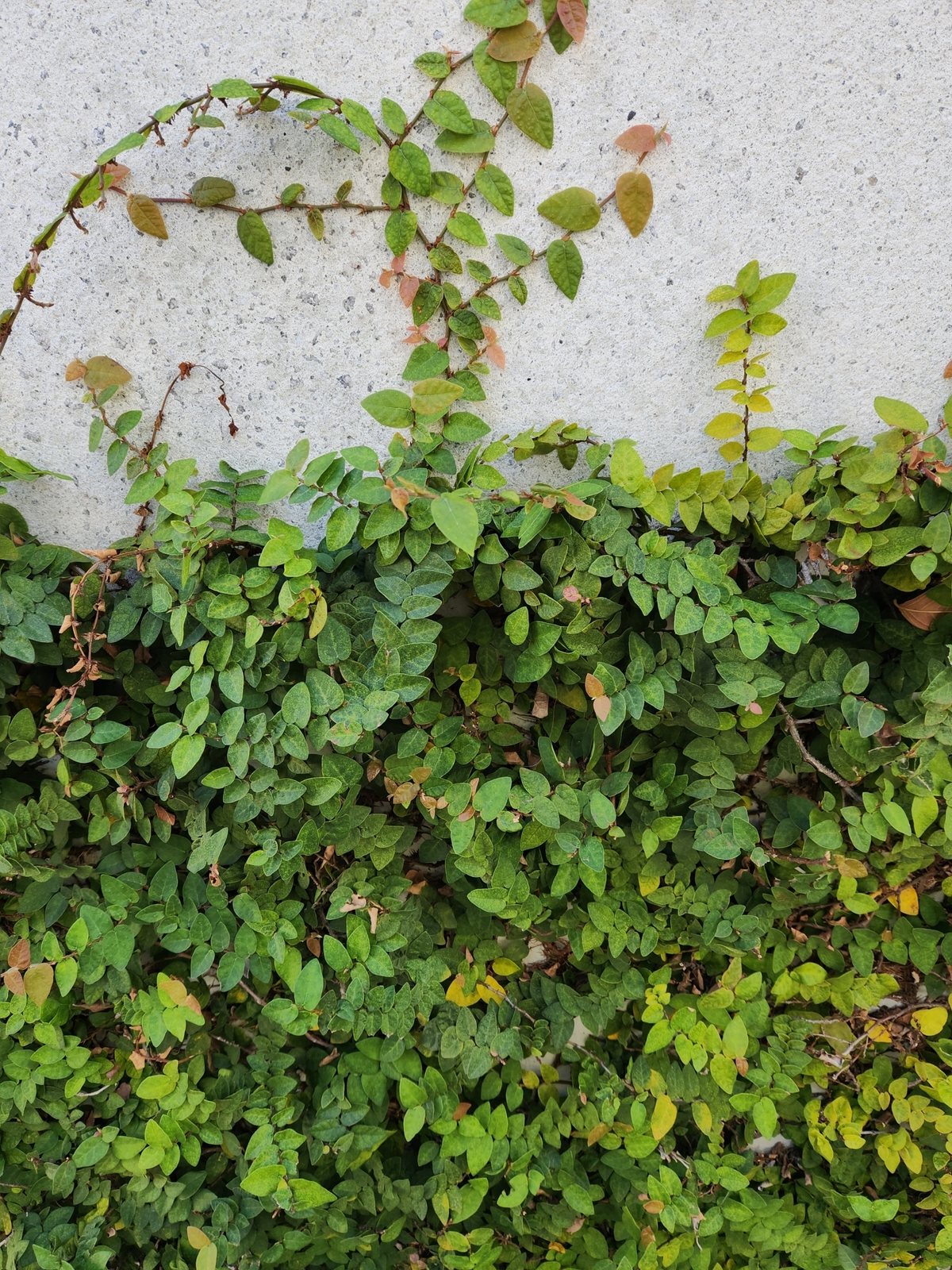
Creeping fig is an evergreen, self-clinging climber grown for the close carpet of small leaves it forms over walls and other surfaces. It suits warm, sheltered gardens but needs regular trimming: mature growth becomes woody, develops much larger leaves and can damage vulnerable structures. In colder regions, grow it in a container that can be moved indoors for winter.
At a glance
- Sun
- Partial shade is ideal; tolerates full shade and full sun where roots stay moist. Protect from hot afternoon sun in dry climates and from cold, drying winds.
- Water
- Keep soil evenly moist while establishing. Once established, water deeply during prolonged dry spells; containers need more frequent checks.
- Soil
- Moist, well-drained soil enriched with organic matter; tolerates a range of soil textures and pH levels.
- Height
- 10-30 ft (3-9 m), potentially higher on tall supports
- Spread
- 10-20 ft (3-6 m), potentially wider if unchecked
- Foliage
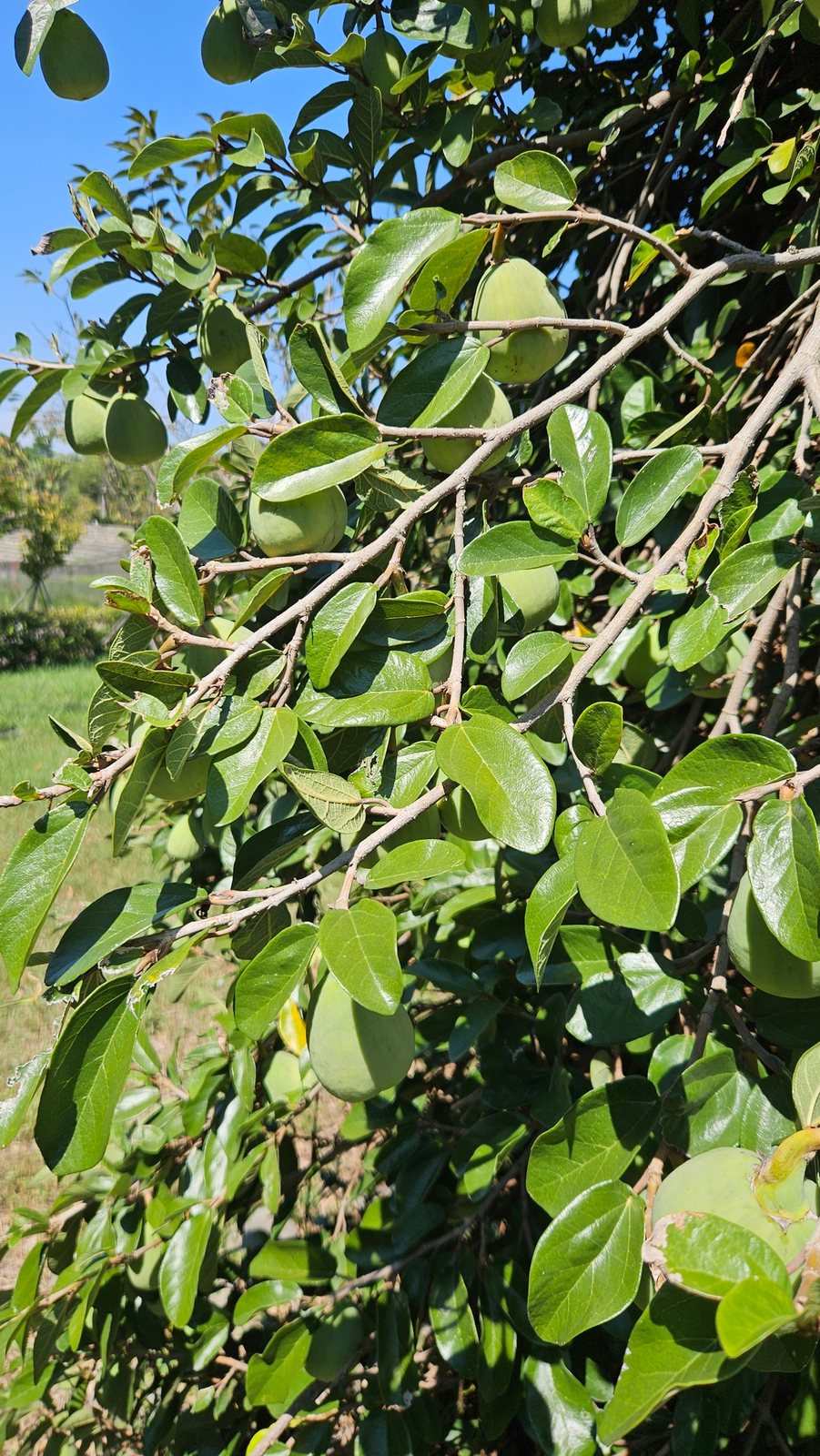
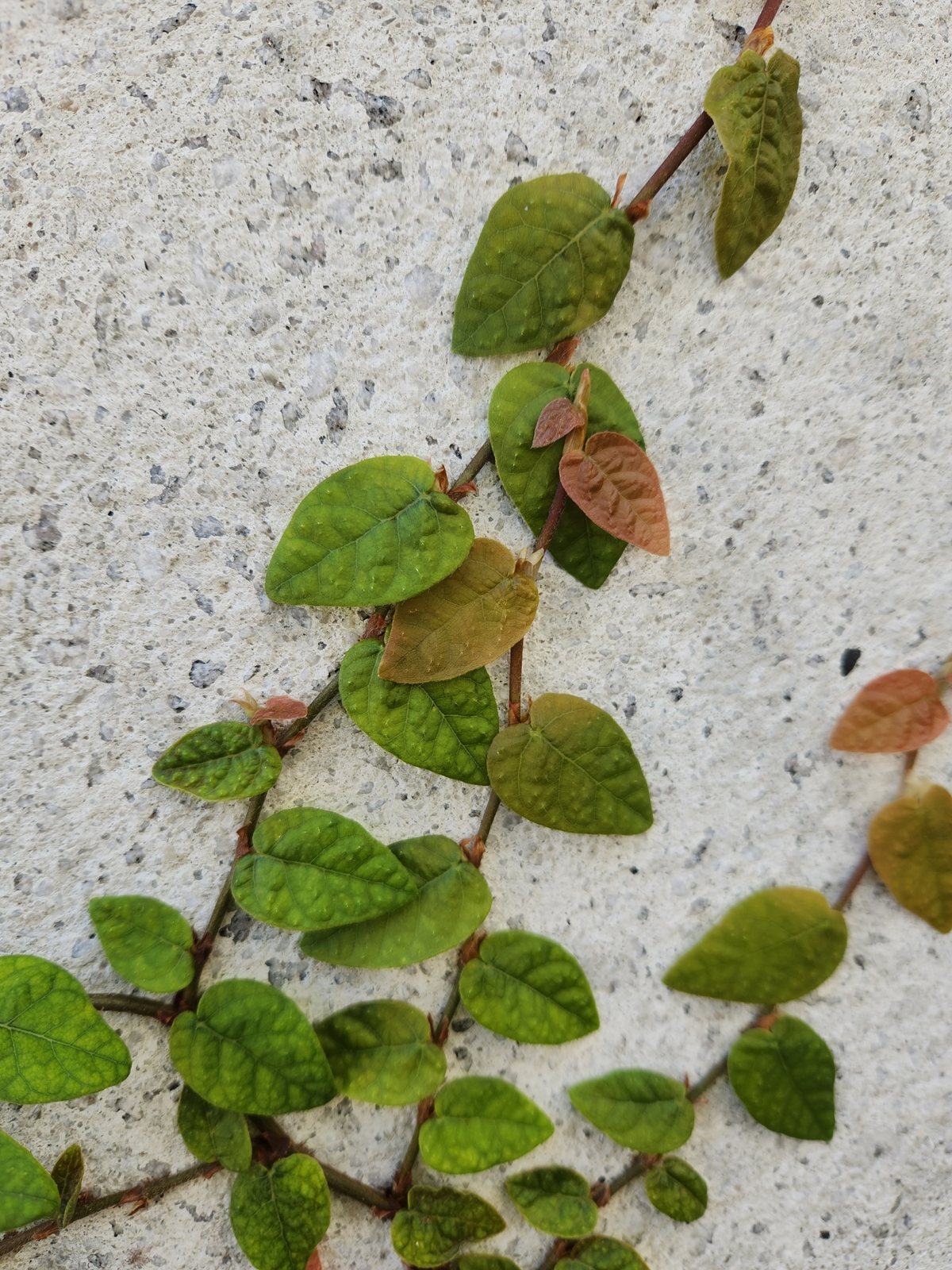
- Evergreen. Young climbing shoots carry small, heart-shaped green leaves pressed close to their support. Mature projecting branches have much larger, leathery, oval leaves and may bear inedible, fig-like fruits.
- Growth
- Fast once established in warm conditions
- Care needed
- High
The year at a glance
- Heat tolerant
- Wildlife
- Low allergen
| J | F | M | A | M | J | J | A | S | O | N | D | |
|---|---|---|---|---|---|---|---|---|---|---|---|---|
| Plant |
Northern hemisphere months. In Australia, shift them by six.
- Difficulty
- Moderate
- Toughness
- Fairly tough
Will it suit your garden?
Pick your zone, country, light and whether you have pets.
Full sun is 6 or more hours of direct sun a day, part shade 3 to 6 hours, shade under 3.
How it grows
Planting day
2 ft (0.6 m)
After 1 year
3 ft (1.1 m)
After 2 years
5 ft (1.5 m)
After 3 years
6 ft (1.8 m)
full size
About 3 years to full size.
From a typical nursery size, at an average rate for this kind of plant. A rule of thumb, not a forecast.
Good to know
- Cats and dogs
- Mildly toxic: may upset a stomach
- In the garden
- Spreads vigorously: plan to contain it.
- Growth rate
- Fast
Care
Jobs through the year
- WaterApr–May, Sep–Oct, every 14 days
- For established ground plants in mild climates, water in dry spells; keep first-year plants evenly moist.
- WaterJun–Aug, every 7 days
- Water deeply during dry weather; container plants need more frequent moisture checks.
- WaterJan–Mar, Nov–Dec, every 14 days
- Under winter cover, water when the surface dries without drying the root ball completely.
- MulchApr–May
- Mulch outdoor roots with organic material, keeping stems clear.
- FeedApr
- Feed container plants lightly; established plants in fertile ground rarely need feeding.
- PruneMay–Sep, every 28 days
- Trim wandering and thick projecting shoots; avoid active nests and wear gloves against irritating sap.
- ProtectSep–Oct
- In zones 6–7, move containers into frost-free shelter with bright, indirect light.
- ProtectMay–Oct, every 28 days
- Keep stems away from timber, damaged mortar, gutters and vents; use a dedicated support where possible.
- Plant against sound masonry or a dedicated support, away from timber siding, damaged mortar, gutters and vents.
- Water regularly through the first growing season, allowing excess water to drain away.
- Apply organic mulch over the root area, keeping it clear of the stems.
- Feed container plants lightly in spring; established plants in fertile garden soil rarely need feeding.
- Keep container plants frost-free in bright, indirect light over winter, watering less but not letting the root ball dry out.
Pruning. Trim several times from spring through summer to maintain a close covering and keep growth clear of roofs, windows and drains. Cut thick, projecting mature shoots back to younger growth; wear gloves because the milky sap can irritate skin.
Through the year
- Spring
- Plant after frost risk has passed, water thoroughly and guide young shoots towards their support.
- Spring
- Remove frost-damaged growth once new shoots show which stems are alive.
- Early summer
- Trim wandering shoots and remove thick branches that project away from the wall.
- Summer
- Check soil moisture during hot weather and take stem cuttings.
- Autumn
- Clear growth from gutters, vents and window frames before access becomes difficult.
- Late autumn
- Move containers under frost-free cover in cold climates.
In the garden
- Cover sound courtyard masonry with a fine-textured green surface, leaving doors and windows clear.
- Train over a freestanding masonry screen to soften hard boundaries without using a hedge.
- Grow on a sturdy topiary frame in a container, clipping regularly to retain the outline.
- Use as groundcover in a contained, shaded bed, keeping it away from trees and buildings it could climb.
Garden styles it suits: Modern courtyard, Modern tropical, Urban city garden, Topiary garden, Tropical and Green on green.
Plant it with: Cast-iron plant, Japanese aralia, Clivia, Lilyturf and Bird's nest fern.
Wildlife: Dense foliage can shelter small animals and nesting birds. Check for active nests before trimming; its concealed flowers offer little accessible food for typical garden pollinators.
Problems to watch for
- Attachment and structural damage: rootlets grip surfaces firmly and stems enter gaps; avoid vulnerable buildings and cut growth back before it reaches roofs or fittings.
- Scale insects or mealybugs: inspect stems and leaf undersides, remove small colonies by hand and use a labelled horticultural oil if needed.
- Spider mites in dry indoor air: look for stippled leaves and fine webbing; rinse foliage and use an appropriate labelled treatment if infestation persists.
- Leaf drop or browning: check for drought, waterlogged roots or cold exposure; correct watering and drainage and protect from frost.
Safety
The milky sap in stems and leaves can irritate human skin and eyes. Chewing the plant can irritate the mouth and stomach of people, cats and dogs, causing drooling, vomiting or diarrhoea; keep it away from children and pets that chew plants. Horse-specific toxicity information is limited, so keep it out of their reach. Do not eat the fruits.
Where it spreads. Can spread aggressively in frost-free gardens, including parts of Florida, Hawaii and coastal eastern Australia. Stems root where they touch soil and can climb trees or cover neighbouring planting; contain growth and do not dump cuttings in natural areas.
Easily confused with
English ivy (Hedera helix)
Juvenile ivy usually has distinctly lobed leaves; creeping fig has small, unlobed, heart-shaped juvenile leaves and releases milky sap when cut.
Climbing hydrangea (Hydrangea anomala subsp. petiolaris)
Climbing hydrangea has opposite, toothed leaves, loses its leaves in winter and produces broad clusters of white flowers; creeping fig has alternate leaves and no showy flowers.
The name
Ficus is the Latin name for fig, and pumila means dwarf, referring to the small leaves of its juvenile growth.
Propagation. Take leafy stem cuttings from young growth in late spring or summer and root them in a moist, free-draining medium under humid conditions. Rooted ground-level stems can also be separated and replanted.
Checked against open data
- Accepted botanical name
- Ficus pumila
- In the US and Canada
- Introduced in Hawaii, the lower 48 states and Puerto Rico.
Sources: GBIF (CC BY 4.0), USDA PLANTS and Trefle (CC BY 4.0). The care and design notes are LandscapeGPT's own.
See it in your own yard.
Upload a photo of your yard and see it redesigned with plants that suit your climate, each checked against your zone.