Creeping Jacob's ladder
Polemonium reptans. Family Polemoniaceae. Perennial.
Also called Spreading Jacob's ladder, Greek valerian.
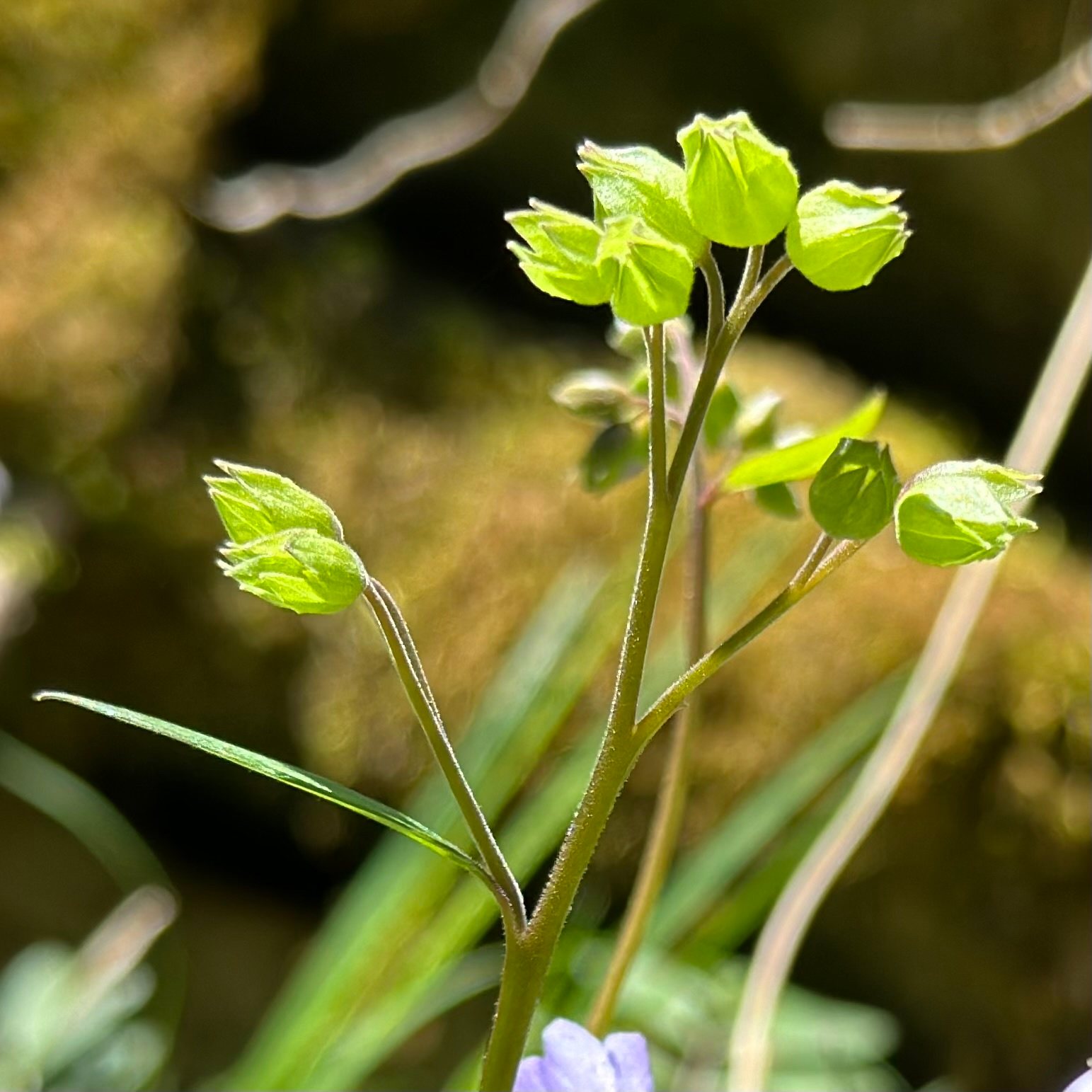
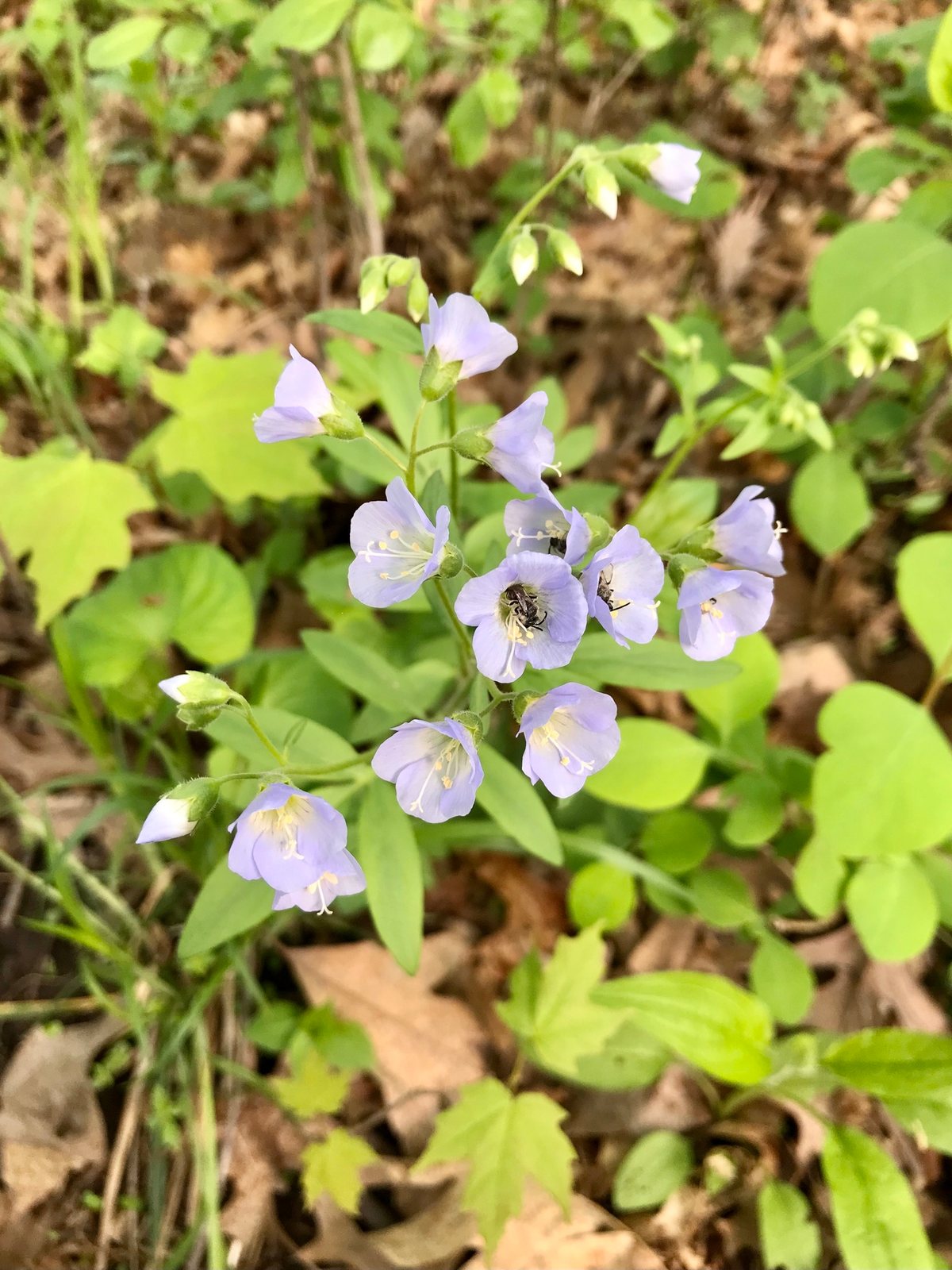
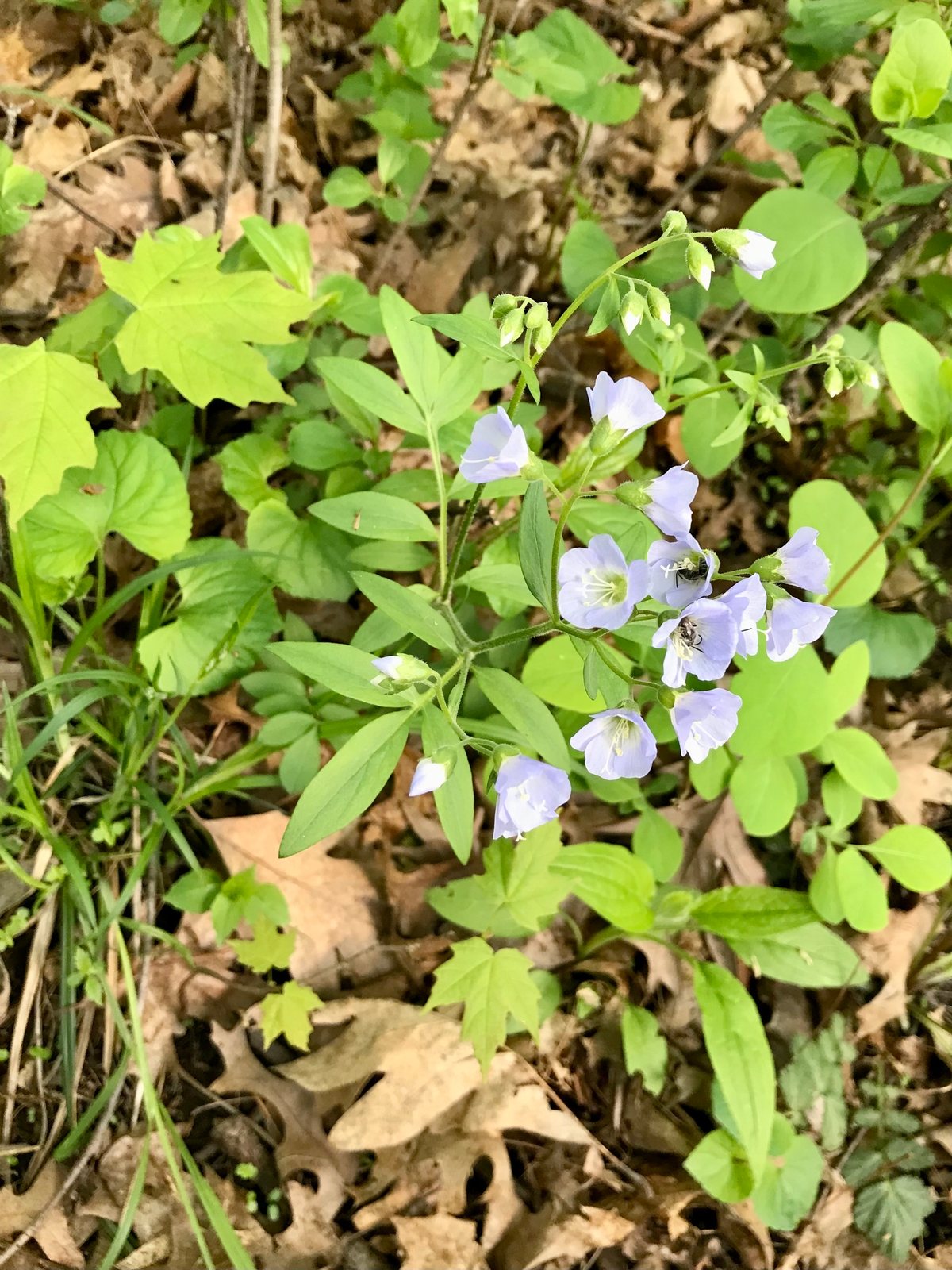
Creeping Jacob's ladder is a small woodland perennial native to eastern North America, grown for its loose clusters of pale blue flowers and finely divided leaves. It suits shaded borders and woodland gardens, forming loose clumps rather than a dense, creeping carpet. Foliage may die back during hot, dry summers.
At a glance
- Sun
- Partial shade or dappled shade; tolerates full sun in cool climates if the soil stays moist.
- Water
- Keep the soil evenly moist during spring growth and flowering, without leaving it waterlogged. Water during dry spells, especially in the first growing season.
- Soil
- Humus-rich, well-drained soil that holds moisture; tolerates clay if drainage is adequate.
- Height
- 1-1.5 ft (0.3-0.45 m)
- Spread
- 1-1.5 ft (0.3-0.45 m)
- Flowers
- Mid- to late spring, sometimes into early summer; pale blue to violet-blue, bell-shaped flowers with prominent stamens.
- Foliage
- Soft green, divided leaves with paired leaflets arranged like the rungs of a ladder; usually deciduous and sometimes summer-dormant.
- Growth
- Moderate; forms loose clumps and may self-seed in suitable soil.
- Care needed
- Low
The year at a glance
- Pollinators
- Cold hardy
- Low allergen
| J | F | M | A | M | J | J | A | S | O | N | D | |
|---|---|---|---|---|---|---|---|---|---|---|---|---|
| Flowers | ||||||||||||
| Plant |
Northern hemisphere months. In Australia, shift them by six.
- Difficulty
- Easy
- Toughness
- Fairly tough
Will it suit your garden?
Pick your zone, country, light and whether you have pets.
Full sun is 6 or more hours of direct sun a day, part shade 3 to 6 hours, shade under 3.
How it grows
Planting day
1 ft (0.3 m)
After 1 year
1.1 ft (0.32 m)
After 2 years
1.1 ft (0.35 m)
After 3 years
1.2 ft (0.38 m)
full size
About 3 years to full size.
From a typical nursery size, at an average rate for this kind of plant. A rule of thumb, not a forecast.
Good to know
- Cats and dogs
- Safe
- Native to
- the US and Canada
- Growth rate
- Moderate
Care
Jobs through the year
- WaterMar–May, Sep–Oct, every 7 days
- Water established clumps if rainfall fails to keep soil moist; water new plants more often.
- WaterJun–Aug, every 7 days
- Water deeply during dry spells; allow heat-stressed foliage to die back naturally.
- MulchMar–Apr
- Apply a thin compost dressing and light leaf mulch without covering crowns.
- DeadheadMay–Jun
- Cut faded flower stems to the leafy base unless seedlings are wanted.
- DivideMar–Apr, Sep–Oct
- Divide only crowded clumps, replant promptly and water thoroughly.
- PruneFeb–Mar
- Clear dead foliage carefully without damaging emerging shoots.
- Plant in partial shade, away from strong afternoon sun in warmer climates.
- Water at soil level during dry spells to keep the root zone moist.
- Apply a thin layer of compost in spring; rich soil usually needs no additional feeding.
- Mulch with leaf mould or shredded leaves, keeping mulch away from the crown.
- Divide crowded clumps in early spring or autumn, replanting promptly and watering well.
Pruning. Cut spent flower stems back to the leafy base after flowering if you want to limit seedlings. Remove yellowed or dead foliage as it declines, but leave healthy leaves to feed the plant.
Through the year
- Late winter
- Clear away dead foliage carefully, avoiding emerging shoots.
- Early spring
- Plant or divide clumps and water them in thoroughly.
- Spring
- Top-dress with compost and renew a light mulch.
- Late spring
- Remove faded flower stems unless you want seed to ripen.
- Summer
- Water during drought; allow heat-stressed foliage to die back naturally rather than feeding to force new growth.
- Autumn
- Plant new specimens while the soil is workable and moist; move unwanted seedlings.
In the garden
- Plant in loose groups beneath deciduous trees, where spring light supports flowering.
- Use along the front of a shaded border with ferns and hostas for contrasting leaf shapes.
- Combine with woodland phlox and foamflower for a soft spring display.
- Allow modest self-seeding through an informal woodland garden, without relying on it for year-round ground cover.
Garden styles it suits: Woodland, Wildlife garden, Cottage garden, Wildflower, Blues and silvers and Low-maintenance.
Plant it with: Woodland phlox, Foamflower, Wild ginger, Christmas fern, Hosta and Virginia bluebells.
Wildlife: Flowers provide spring pollen and nectar for bees, including bumblebees. It is a useful component of native woodland planting within its North American range.
Problems to watch for
- Powdery mildew can affect crowded or stressed plants: improve air circulation, maintain soil moisture and remove badly affected foliage.
- Slugs and snails may damage young leaves: hand-pick them and use wildlife-conscious controls where necessary.
- Leaf spots can develop in damp, crowded conditions: water at soil level and remove affected fallen leaves.
- Hot sun and dry soil can scorch leaves or trigger early dormancy: provide afternoon shade and mulch to conserve moisture.
Safety
Not known to be toxic to people, cats, dogs or horses, although species-specific safety information is limited. No part is recommended for eating.
Easily confused with
Jacob's ladder (Polemonium caeruleum)
Usually taller and more upright, with denser flower clusters; creeping Jacob's ladder has a lower, more open habit and looser, branching flower clusters.
Woodland phlox (Phlox divaricata)
Has simple, undivided leaves and flat-faced flowers with a narrow tube; creeping Jacob's ladder has divided, ladder-like leaves and more open, bell-shaped flowers.
The name
Jacob's ladder refers to the paired leaflets resembling ladder rungs, while the species name reptans means creeping.
Propagation. Divide established clumps in early spring or autumn. Sow fresh seed outdoors when ripe, or give stored seed a period of cold, moist conditions before spring germination; seedlings may not match named cultivars.
Checked against open data
- Accepted botanical name
- Polemonium reptans
- In the US and Canada
- Native in Canada and the lower 48 states.
- Native range
- Alabama, Arkansas, Connecticut, Delaware, District of Columbia, Georgia, Illinois, Indiana, Iowa, Kansas, Kentucky and Maryland.
Sources: GBIF (CC BY 4.0), USDA PLANTS and Trefle (CC BY 4.0). The care and design notes are LandscapeGPT's own.
See it in your own yard.
Upload a photo of your yard and see it redesigned with plants that suit your climate, each checked against your zone.