Cretan brake fern
Pteris cretica. Family Pteridaceae. Fern.
Also called Cretan brake, Ribbon fern.
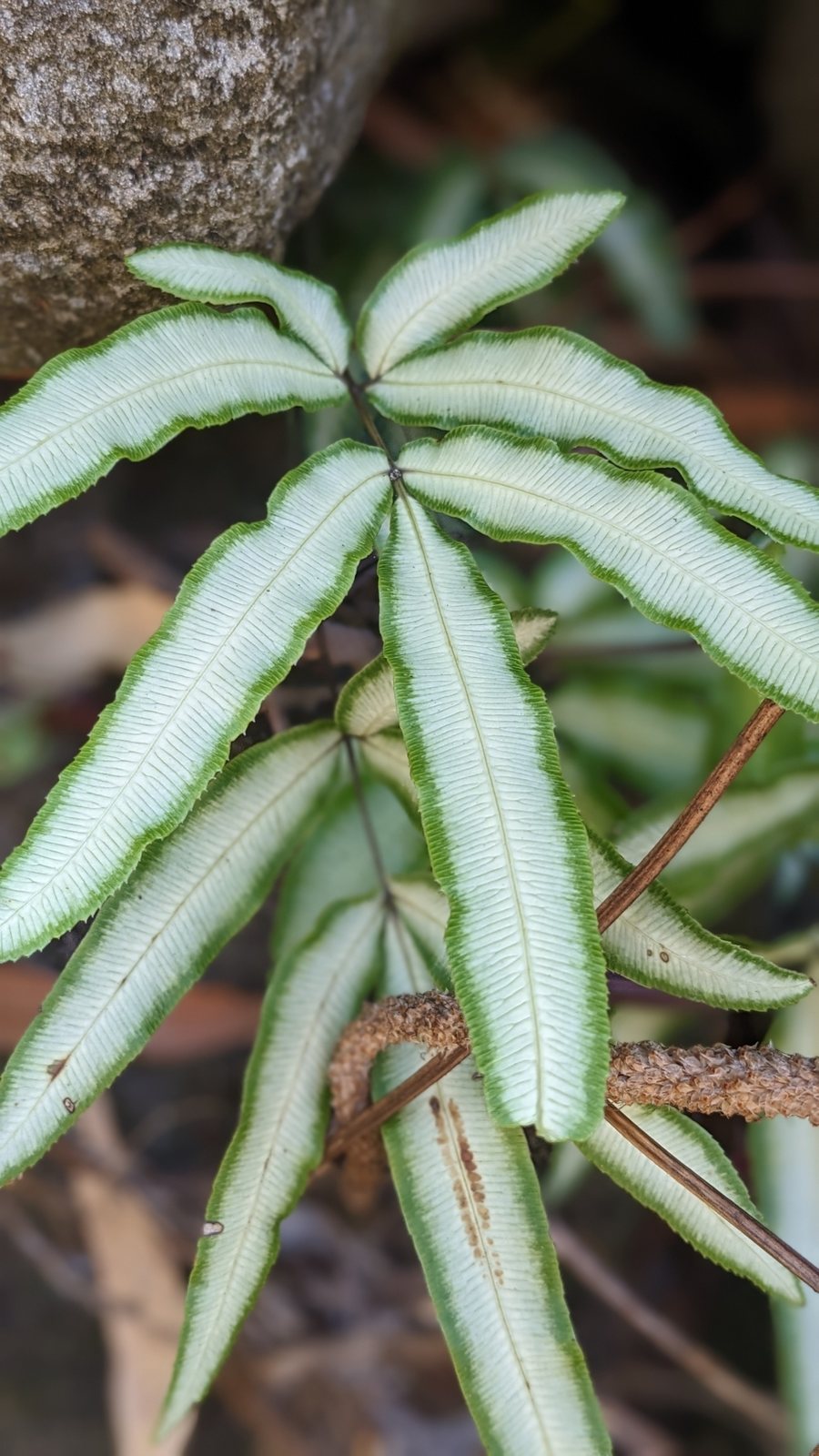
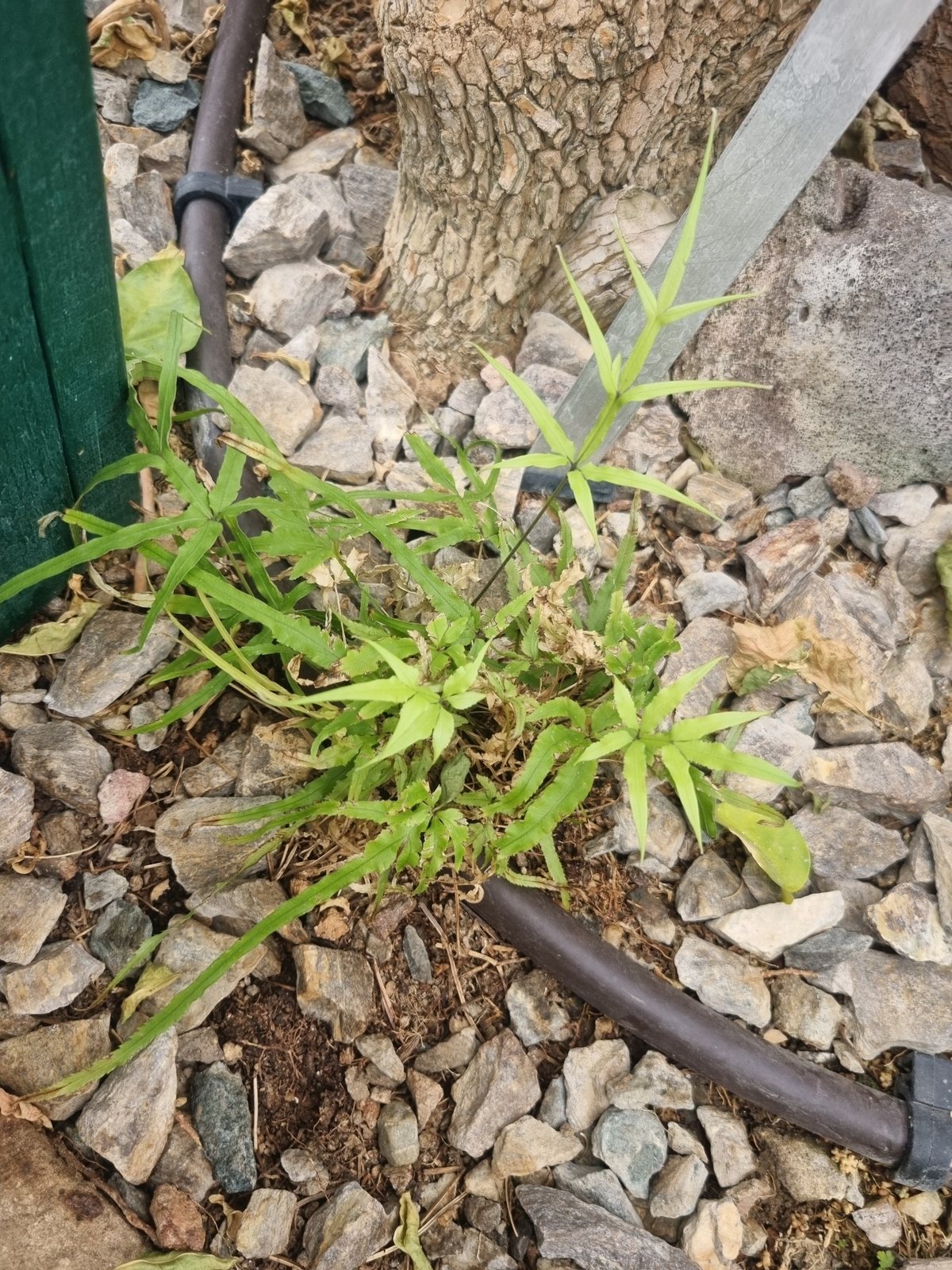
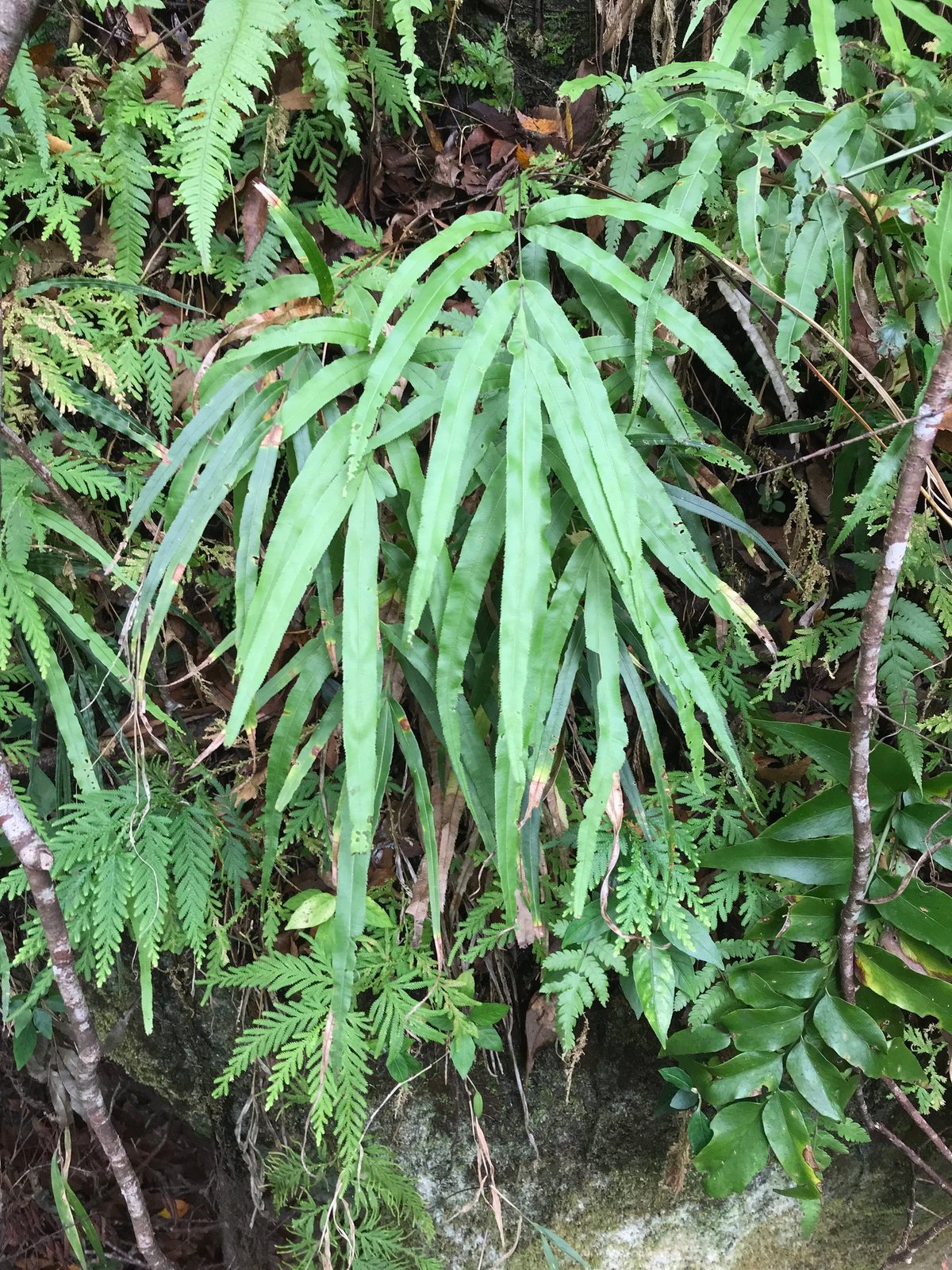
Cretan brake fern forms upright, arching clumps of fronds with long, narrow leaflets. Gardeners grow it for its foliage in sheltered, frost-free shade, or in containers brought indoors for winter; some cultivated forms have cream-striped leaves.
At a glance
- Sun
- Partial to full shade outdoors; bright, indirect light indoors. Protect from strong afternoon sun.
- Water
- Keep evenly moist but not waterlogged. Water less in winter, without letting the root ball dry out completely.
- Soil
- Humus-rich, moisture-retentive soil with good drainage. Tolerates neutral to alkaline conditions, including sheltered limestone crevices.
- Height
- 1-2.5 ft (0.3-0.75 m)
- Spread
- 1-2 ft (0.3-0.6 m)
- Foliage
- Evergreen. Green fronds divided into a few pairs of long, strap-shaped leaflets. Fertile fronds are taller and narrower, with spore-producing bands along the leaflet edges; some cultivated forms have cream or white central stripes.
- Growth
- Moderate
- Care needed
- Medium
The year at a glance
- Deer resistant
- Heat tolerant
- Wildlife
- Low allergen
| J | F | M | A | M | J | J | A | S | O | N | D | |
|---|---|---|---|---|---|---|---|---|---|---|---|---|
| Plant |
Northern hemisphere months. In Australia, shift them by six.
- Difficulty
- Moderate
- Toughness
- Needs looking after
Will it suit your garden?
Pick your zone, country, light and whether you have pets.
Full sun is 6 or more hours of direct sun a day, part shade 3 to 6 hours, shade under 3.
How it grows
Planting day
1 ft (0.3 m)
After 1 year
1.2 ft (0.37 m)
After 2 years
1.5 ft (0.45 m)
After 3 years
1.7 ft (0.53 m)
full size
About 3 years to full size.
From a typical nursery size, at an average rate for this kind of plant. A rule of thumb, not a forecast.
Good to know
- Cats and dogs
- Safe
- Growth rate
- Moderate
Care
Jobs through the year
- WaterApr–May, Sep, every 7 days
- For established summer ground plants, water as the surface dries; check new plants and pots more often.
- WaterJun–Aug, every 4 days
- Keep established summer ground plants evenly moist; check pots more often and empty saucers.
- WaterJan–Mar, Oct–Dec, every 10 days
- Under frost-free cover, water pots only as the surface starts drying; never let the root ball dry completely.
- FeedApr–Aug, every 30 days
- Feed container plants with half-strength balanced liquid fertiliser while actively growing.
- PruneMar–Apr
- Remove dead or badly damaged fronds at their bases, leaving healthy green fronds intact.
- MulchMay
- Apply a thin layer of leaf mould around outdoor plants, keeping it away from crowns.
- DivideMar–Apr
- Divide crowded clumps under frost-free cover as new growth begins.
- ProtectSep–Oct
- Not winter-hardy locally: move pots or lift summer bedding plants into bright frost-free shelter before frost.
- ProtectMay–Jun
- Move outdoors only after frost risk passes, acclimatising gradually in shade.
- ProtectJan–Mar, Nov–Dec
- Keep sheltered plants away from radiators, drying draughts and direct midday sun.
- Water when the soil surface begins to dry; empty standing water from pot saucers.
- Apply a thin layer of leaf mould around outdoor plants in spring, keeping it away from the crown.
- Feed container plants monthly in spring and summer with a balanced liquid fertiliser at half strength.
- Keep indoor plants away from radiators, drying draughts and direct midday sun.
- Bring containers into a bright, frost-free place before cold weather arrives.
Pruning. Remove dead or badly damaged fronds at their base in spring, or whenever they become unsightly. Leave healthy green fronds intact.
Through the year
- Early spring
- Remove dead fronds and check whether container plants need repotting.
- Spring
- Divide crowded clumps as new growth begins, and top-dress outdoor plants with leaf mould.
- Late spring
- Move overwintered pots outdoors only after frost risk has passed, gradually acclimatising them in shade.
- Summer
- Check moisture frequently and feed container plants monthly.
- Autumn
- Bring pots under cover before frost and inspect the undersides of fronds for pests.
- Winter
- Keep sheltered plants lightly moist and stop feeding while growth is slow.
In the garden
- Plant beneath shrubs in frost-free gardens, where its narrow leaflets contrast with broad evergreen leaves.
- Use in shaded courtyard containers with a simple, dark backdrop to show the frond shape.
- Combine with hostas and other ferns for layered foliage in a moist, sheltered border.
- Tuck into shaded rockwork or well-drained wall crevices in mild climates.
Garden styles it suits: Woodland, Modern courtyard, Japanese, Tropical, Green on green and Small-space.
Plant it with: Hostas, Cast-iron plant, Mondo grass, Japanese aralia and Bird's nest fern.
Wildlife: Provides small-scale shelter for invertebrates but produces no flowers, nectar or fruit.
Problems to watch for
- Brown, crisp leaflet edges usually indicate dry compost, hot sun or drying indoor air; restore even moisture and move to a cooler, sheltered position.
- Yellowing fronds and a soft crown can follow waterlogging; improve drainage, empty saucers and remove rotten material.
- Scale insects or mealybugs may infest sheltered plants; isolate affected pots, wipe off small infestations and use a labelled treatment if needed.
- Spider mites can cause pale, stippled foliage in warm, dry rooms; rinse fronds thoroughly, improve growing conditions and use a suitable labelled treatment if they persist.
Safety
Not known to be toxic to cats, dogs, horses or people. No part is recognised as poisonous, but it is an ornamental fern, not a food plant; eating foliage may still cause stomach upset.
Where it spreads. Can escape cultivation by wind-blown spores and is naturalised in places including Florida, Hawaii and parts of Australia. Naturalisation does not necessarily mean aggressive spread; check local weed guidance before planting near moist native habitats.
Easily confused with
Chinese brake fern (Pteris vittata)
Usually has many more pairs of narrow leaflets along a long frond; Cretan brake generally has fewer, broader leaflets, with the lowest pair often forked.
Spider brake fern (Pteris multifida)
Has finer, narrower frond divisions and conspicuous leafy wings along much of the central frond stalk.
The name
Pteris comes from the Greek word for a fern, related to a word meaning wing or feather, while cretica means 'of Crete'.
Propagation. Divide established clumps in spring, keeping roots and several healthy growing points on each division. It can also be raised from spores sown on a moist, clean growing medium under cover; this is slower, and seedlings may not retain a named form's foliage pattern.
Checked against open data
- Accepted botanical name
- Pteris cretica
- In the US and Canada
- Introduced in Hawaii and the lower 48 states.
- Native range
- Afghanistan, Algeria, Angola, Ascension, Assam, Bangladesh, Burundi, Cambodia, Canary Is., Cape Provinces, China North-Central and China South-Central.
Sources: GBIF (CC BY 4.0), USDA PLANTS and Trefle (CC BY 4.0). The care and design notes are LandscapeGPT's own.
See it in your own yard.
Upload a photo of your yard and see it redesigned with plants that suit your climate, each checked against your zone.