Croton Petra
Codiaeum variegatum 'Petra'. Family Euphorbiaceae. Shrub.
Also called Petra croton, Garden croton, Variegated croton.
Croton Petra (Codiaeum variegatum 'Petra') is a tropical evergreen shrub grown for its leathery leaves patterned in green, yellow, orange and red. It makes a colourful hedge or specimen in frost-free gardens; in colder regions, grow it as a houseplant or a summer container plant brought indoors before cool weather.
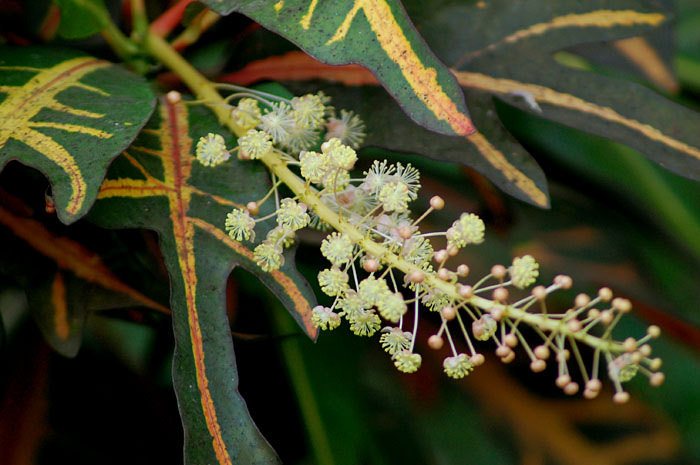
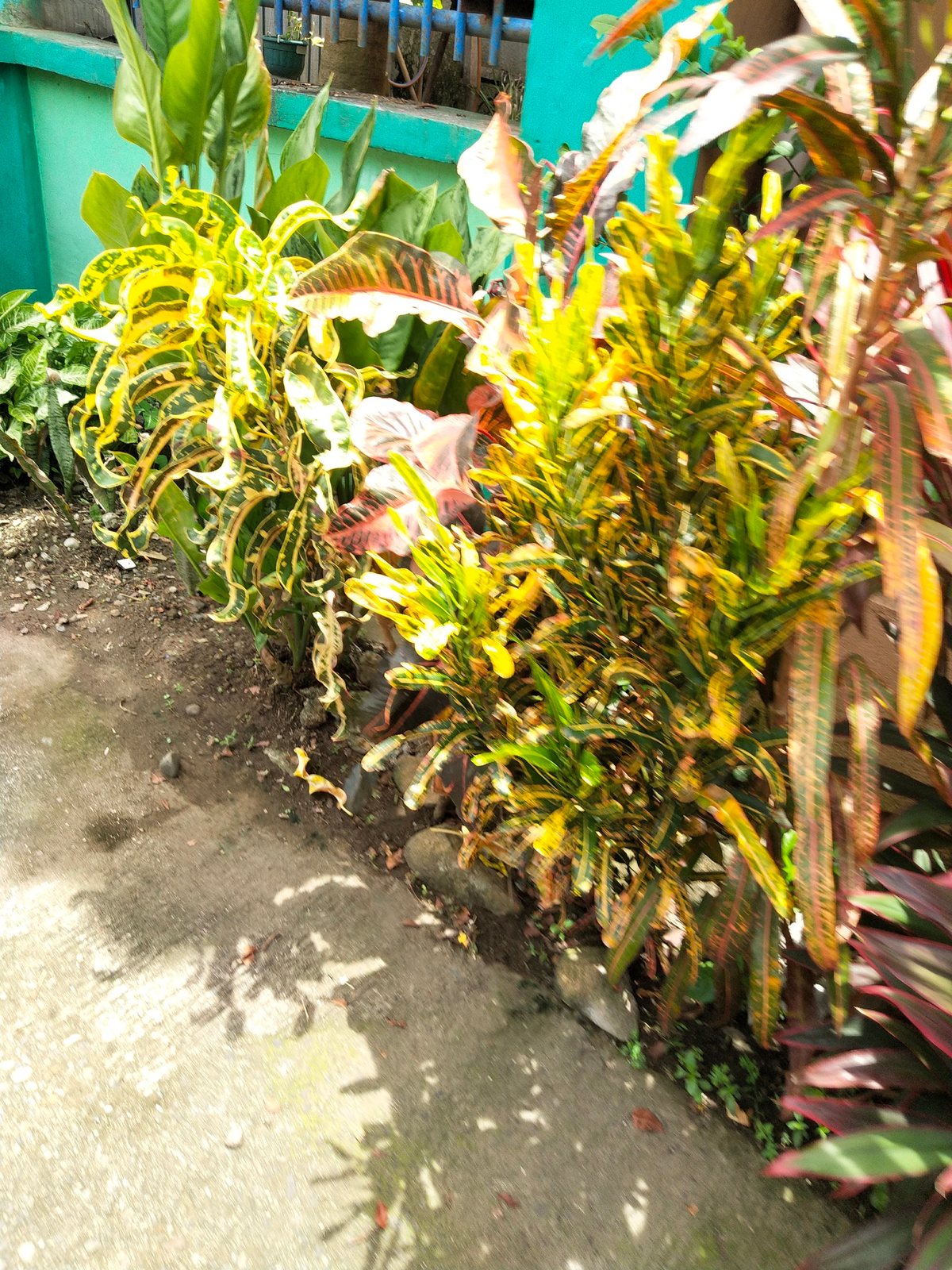
At a glance
- Sun
- Bright filtered light or morning sun with afternoon shade. Acclimatise gradually to stronger sun; deep shade reduces leaf colour.
- Water
- Keep evenly moist during active growth, allowing the surface to dry slightly between waterings. Water less in winter, but do not let the root ball dry out completely.
- Soil
- Fertile, moisture-retentive soil with good drainage; use a free-draining houseplant potting mix in containers.
- Height
- 6-10 ft (1.8-3 m) outdoors in tropical conditions; usually 2-4 ft (0.6-1.2 m) indoors
- Spread
- 3-6 ft (0.9-1.8 m) outdoors; usually narrower in containers
- Foliage
- Evergreen. Broad, oval, leathery leaves with prominent yellow veins and irregular green, yellow, orange and red markings. Colours change as leaves mature and vary with light levels.
- Growth
- Moderate in warmth and good light; slow in cool or low-light conditions.
- Care needed
- Medium
The year at a glance
- Heat tolerant
| J | F | M | A | M | J | J | A | S | O | N | D | |
|---|---|---|---|---|---|---|---|---|---|---|---|---|
| Plant |
Northern hemisphere months. In Australia, shift them by six.
- Difficulty
- Moderate
- Toughness
- Needs looking after
Will it suit your garden?
Pick your zone, country, light and whether you have pets.
Full sun is 6 or more hours of direct sun a day, part shade 3 to 6 hours, shade under 3.
How it grows
Planting day
1.6 ft (0.5 m)
After 1 year
2.6 ft (0.79 m)
After 2 years
4 ft (1.1 m)
After 3 years
5 ft (1.4 m)
After 5 years
6 ft (2 m)
About 7 years to full size.
From a typical nursery size, at an average rate for this kind of plant. A rule of thumb, not a forecast.
Good to know
- Cats and dogs
- Toxic
- Native to
- Australia
- Growth rate
- Slow
Care
Jobs through the year
- WaterJun–Aug, every 3 days
- In this climate grow in a pot; check moisture and water when the surface starts drying, then drain.
- WaterMar–May, Sep–Oct, every 7 days
- Check sheltered pots; water as the surface dries without drying the whole root ball.
- WaterJan–Feb, Nov–Dec, every 10 days
- Check indoor pots; water only as needed, never leaving standing water.
- FeedApr–Aug, every 30 days
- Apply balanced liquid fertiliser at the label rate during active growth.
- PruneMar–Apr
- Shorten leggy stems above a node; wear gloves and protect eyes from sap.
- ProtectJan–May, Sep–Dec
- Keep indoors above 15°C, away from draughts, cold glass and heating vents.
- ProtectJun–Jul
- Move outside only with nights above 15°C; acclimatise gradually in sheltered shade.
- Water thoroughly when the surface begins to dry, then empty saucers and decorative outer pots.
- Feed container plants monthly in spring and summer with a balanced liquid fertiliser at the label rate.
- Keep indoor plants away from cold windows, draughts and heating vents; aim for temperatures above 15°C (59°F).
- Move plants between indoors and outdoors gradually, and bring summer containers inside before nights fall below 15°C (59°F).
- Repot in spring only when roots fill the container, using a pot one size larger.
Pruning. In spring, shorten leggy stems just above a leaf node to encourage branching; remove dead growth whenever noticed. Wear gloves and protect your eyes from the irritating milky sap.
Through the year
- Spring
- Prune leggy growth and check whether container plants need repotting.
- Late spring
- Begin feeding as growth resumes; move plants outdoors only when nights remain above 15°C (59°F), starting in sheltered shade.
- Summer
- Check soil moisture frequently and inspect leaf undersides for mites and scale.
- Early autumn
- Inspect summer containers for pests and bring them indoors before nights become cool.
- Winter
- Provide the brightest suitable indoor position, reduce watering and stop feeding if growth slows.
In the garden
- Use as a colourful specimen in a sheltered courtyard container.
- Plant as a low hedge or foliage screen in frost-free tropical gardens.
- Combine with green-leaved palms and ferns so its patterned leaves stand out.
- Use in a seasonal container display with coleus and begonias, then overwinter indoors.
Garden styles it suits: Tropical, Modern tropical, Luxury resort, Modern courtyard, Caribbean and Balinese.
Plant it with: Cordyline, Bromeliads, Bird's nest fern, Coleus, Wax begonias and Lady palm.
Wildlife: Small flowers may attract visiting insects in tropical gardens, but this is primarily a foliage plant rather than a dependable wildlife planting.
Problems to watch for
- Spider mites cause fine stippling and webbing, especially indoors in dry air. Rinse leaf undersides and use a labelled insecticidal soap if needed, testing a small area first.
- Scale insects and mealybugs leave bumps, cottony deposits or sticky honeydew. Isolate affected pots, remove visible pests and repeat a labelled treatment as directed.
- Sudden leaf drop often follows cold draughts, relocation or erratic watering. Restore stable warmth, light and moisture; avoid repeatedly moving the plant.
- Root rot develops in waterlogged soil and may cause wilting despite wet compost. Improve drainage, empty standing water and repot if roots are damaged.
Safety
All parts contain irritating compounds and milky sap. Toxic to cats and dogs if chewed, causing mouth irritation, drooling, vomiting or diarrhoea; ingestion can also upset the stomach in people, and sap may irritate skin and eyes. Horse-specific toxicity information is limited, so keep it out of grazing areas and do not feed clippings. Seek medical or veterinary advice after ingestion or significant eye exposure.
Easily confused with
Other garden crotons (Codiaeum variegatum)
Petra has broad, oval leaves with conspicuous coloured veins. Other cultivars may have narrow, twisted, lobed or differently patterned leaves; colour alone is not a reliable cultivar identifier.
Copperleaf (Acalypha wilkesiana)
Copperleaf usually has thinner leaves with noticeably toothed edges, rather than Petra's thick, smooth-edged leaves and bold vein pattern.
Ti plant (Cordyline fruticosa)
Ti plants have longer, strap-shaped leaves clustered around upright canes, rather than broad oval leaves on a branching shrub.
The name
The species name variegatum means variegated, referring to the multicoloured foliage.
Propagation. Take leafy stem-tip cuttings in late spring or summer and root them in a moist, free-draining medium with steady warmth and high humidity. Air layering is another option for established stems; wear gloves when handling cut surfaces.
Checked against open data
- Accepted botanical name
- Codiaeum variegatum
- In the US and Canada
- Introduced in Pacific Basin and Puerto Rico.
- Native range
- Bismarck Archipelago, Borneo, Fiji, Jawa, Lesser Sunda Is., Maluku, New Guinea, Philippines, Queensland, Santa Cruz Is., Solomon Is. and Sulawesi.
Sources: GBIF (CC BY 4.0), USDA PLANTS and Trefle (CC BY 4.0). The care and design notes are LandscapeGPT's own.
See it in your own yard.
Upload a photo of your yard and see it redesigned with plants that suit your climate, each checked against your zone.