Culantro
Eryngium foetidum. Family Apiaceae. Perennial.
Also called Sawtooth coriander, Long coriander, Recao, Chadon beni.
Culantro (Eryngium foetidum) is a frost-tender, short-lived tropical perennial grown for its strongly coriander-scented leaves. It is grown as an annual in climates with frost and does best with steady warmth, moist soil and some shade.
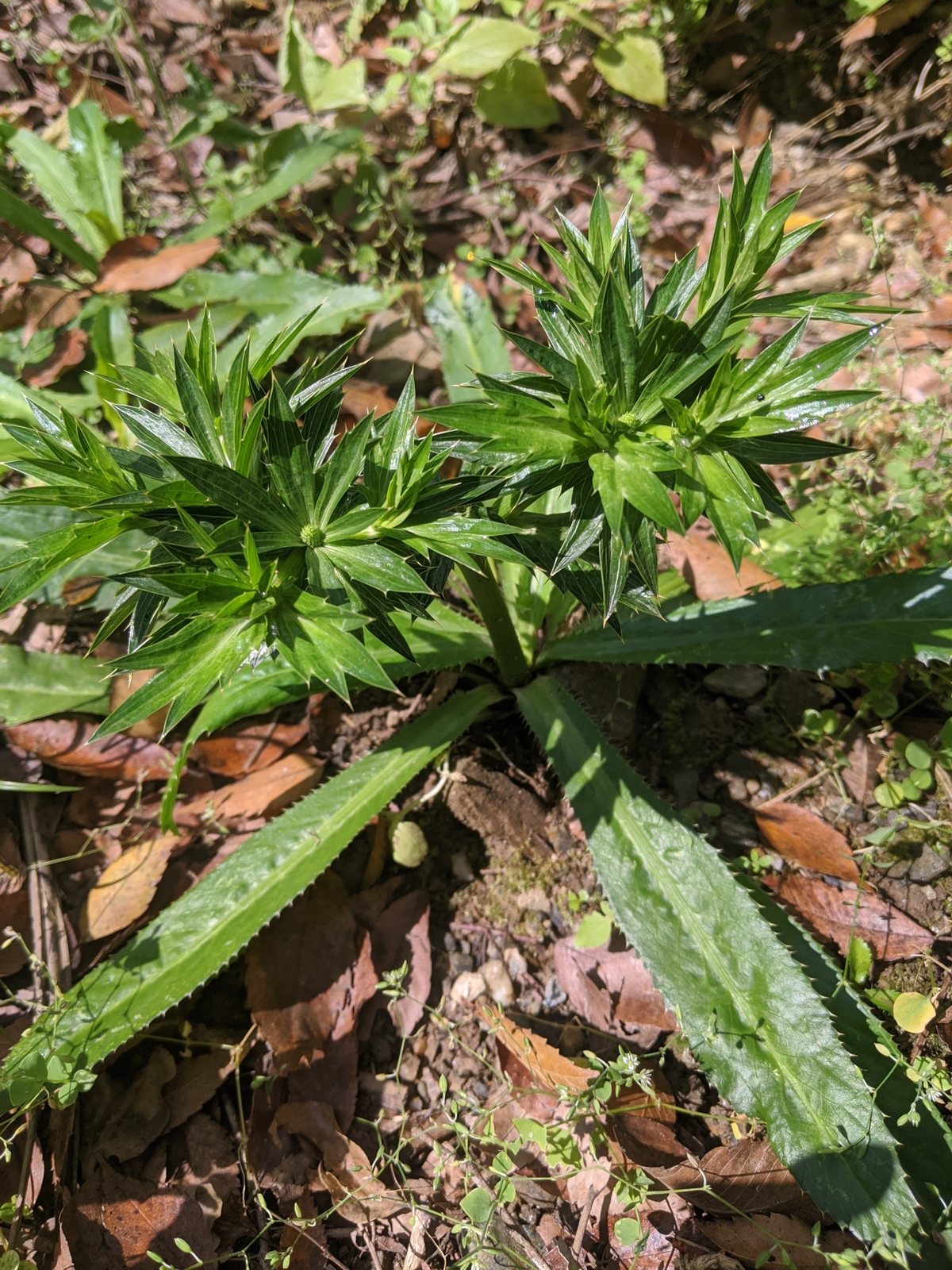
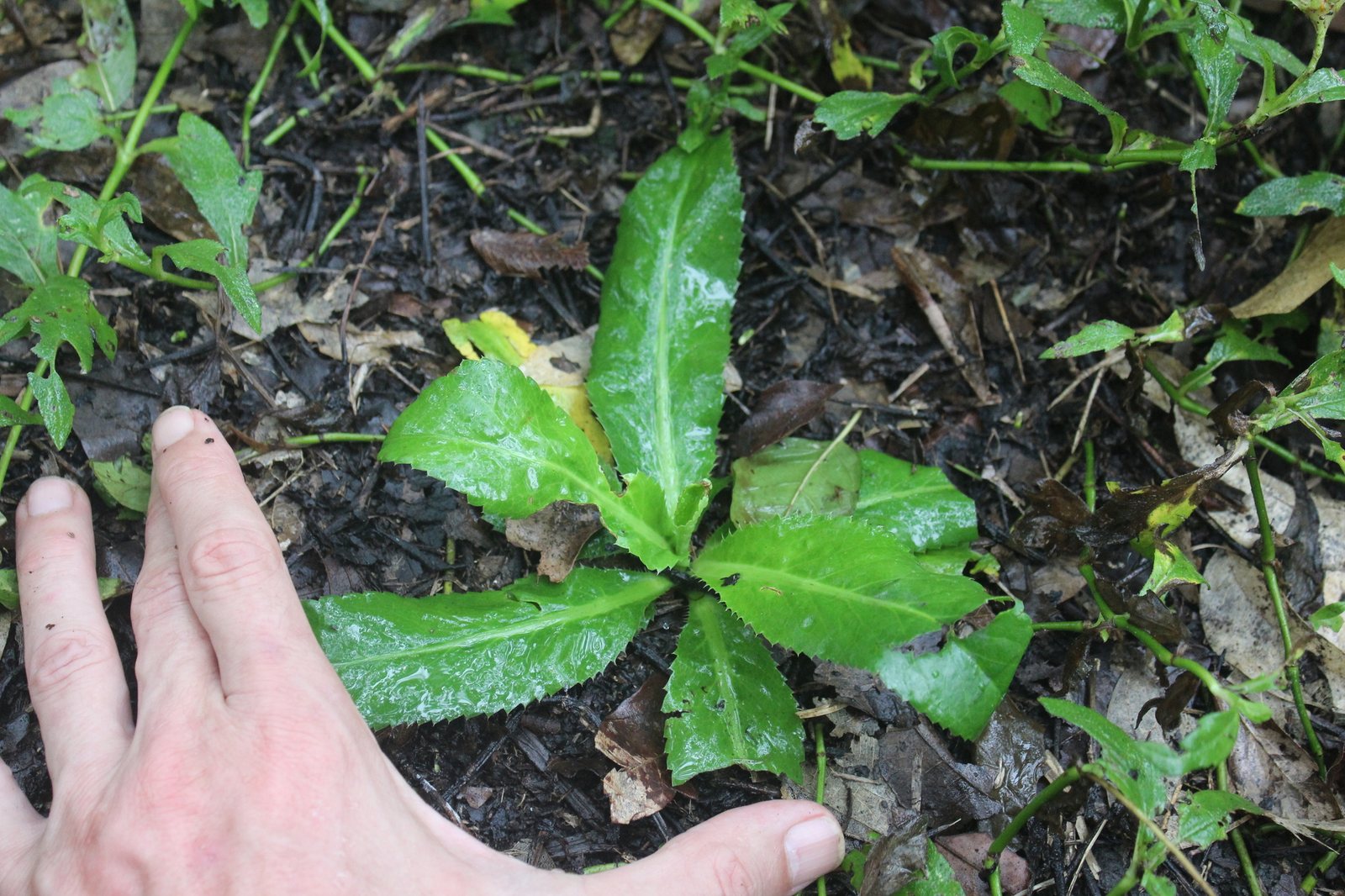
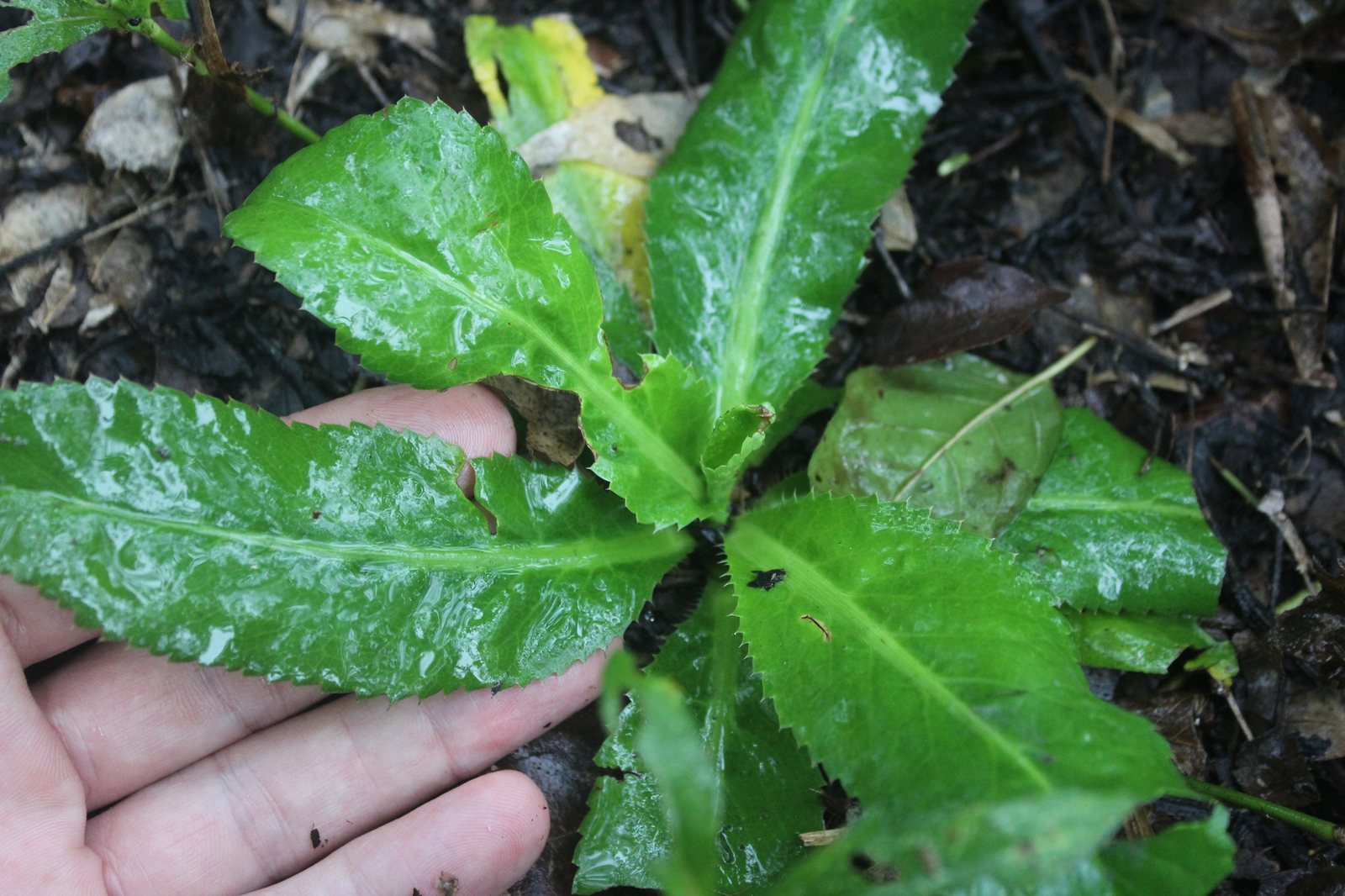
At a glance
- Sun
- Partial shade; morning sun and afternoon shade are ideal, especially in hot climates.
- Water
- Keep the root zone evenly moist but not waterlogged; water before the soil dries out completely.
- Soil
- Fertile, moisture-retentive soil with good drainage; improve poor soil with compost.
- Height
- 1-2 ft (0.3-0.6 m), including flower stems
- Spread
- 0.75-1 ft (0.23-0.3 m)
- Flowers
- Small greenish-white flower heads surrounded by stiff, spiny bracts, usually in summer or during warm-season growth.
- Foliage
- Evergreen. A low rosette of long, dark green leaves with sharply toothed margins and a strong coriander-like scent when crushed.
- Growth
- Moderate in warm weather; slow in cool conditions
- Care needed
- Medium
The year at a glance
- Pollinators
- Heat tolerant
- Low allergen
- Edible
| J | F | M | A | M | J | J | A | S | O | N | D | |
|---|---|---|---|---|---|---|---|---|---|---|---|---|
| Flowers | ||||||||||||
| Fruit | ||||||||||||
| Plant |
Northern hemisphere months. In Australia, shift them by six.
- Difficulty
- Moderate
- Toughness
- Needs looking after
Will it suit your garden?
Pick your zone, country, light and whether you have pets.
Full sun is 6 or more hours of direct sun a day, part shade 3 to 6 hours, shade under 3.
How it grows
Planting day
1 ft (0.3 m)
After 1 year
1.1 ft (0.34 m)
After 2 years
1.2 ft (0.38 m)
After 3 years
1.4 ft (0.42 m)
After 5 years
1.5 ft (0.45 m)
full size
About 4 years to full size.
From a typical nursery size, at an average rate for this kind of plant. A rule of thumb, not a forecast.
Good to know
- Cats and dogs
- Mildly toxic: may upset a stomach
- Growth rate
- Slow
Care
Jobs through the year
- WaterJun, Sep, every 5 days
- Keep established ground plants evenly moist; young plants and containers need more frequent watering.
- WaterJul–Aug, every 3 days
- Water at soil level before the root zone dries, allowing for rainfall.
- WaterJan–May, Oct–Dec, every 10 days
- Only for plants overwintered indoors: water when the surface starts drying, without saturating roots.
- MulchJun
- Apply a thin moisture-conserving mulch, leaving the crown uncovered.
- FeedJun–Aug, every 30 days
- Feed container plants lightly with balanced liquid fertilizer.
- PruneJun–Sep, every 7 days
- Remove emerging flower stalks and damaged leaves without harming the central growing point.
- HarvestJun–Sep, every 7 days
- Once rosettes are established, snip outer leaves near their bases and retain the central leaves.
- ProtectSep
- Normally grown as an annual here; move pots indoors before cold nights to retain evergreen plants.
- Plant outside only after frost risk has passed and nights are consistently warm.
- Space plants about 1 ft (0.3 m) apart in partial shade.
- Water regularly at soil level, keeping the soil moist without leaving pots standing in water.
- Apply a thin mulch around plants, keeping it clear of the crown.
- Feed container plants lightly with a balanced liquid fertilizer during active growth.
- Bring pots into a warm, bright, frost-free place before autumn temperatures fall.
Pruning. Cut flower stalks off at their base as soon as they appear to encourage continued leaf production. Remove yellow or damaged leaves without cutting into the central growing point.
Harvest
Pick outer leaves once the plant has a well-established rosette and leaves are large enough to use, often about 10-12 weeks after sowing in warm conditions. Snip individual leaves near their bases, leaving the central young leaves to grow; young leaves are generally more tender than older ones.
Through the year
- Early spring
- Surface-sow seed in moist seed compost indoors with gentle warmth; germination can be slow and uneven.
- Late spring
- Harden off young plants and plant out after frost, once nights are consistently warm.
- Summer
- Maintain even moisture, provide afternoon shade and harvest outer leaves regularly.
- Summer
- Remove emerging flower stalks unless you want to collect seed.
- Early autumn
- Move container plants indoors before cold nights, or make a final harvest from plants grown as annuals.
- Winter
- Keep overwintered plants warm and bright; reduce watering as growth slows but do not let the root ball dry completely.
In the garden
- Edge a partially shaded kitchen-garden bed with low rosettes of useful foliage.
- Grow in containers near the kitchen, where leaves are easy to pick and plants can be moved indoors.
- Use beneath taller edible plants that provide light shade without crowding its roots.
- Combine with leafy tropical edibles for contrasting leaf shapes in a sheltered courtyard.
Garden styles it suits: Potager (kitchen garden), Edible landscape, Tropical, Caribbean, Sensory garden and Small-space.
Plant it with: Ginger, Turmeric, Chives, Lettuce and Swiss chard.
Wildlife: Flowers can attract small insects, including pollinators. Allow a few plants to flower if seed production and insect visits matter more than continued leaf harvest.
Problems to watch for
- Early flowering reduces leaf production: provide partial shade, avoid drought stress and remove flower stalks promptly.
- Slugs and snails chew young leaves: check plants after dark, remove hiding places and use suitable barriers or labelled iron-phosphate bait.
- Root or crown rot develops in saturated soil: improve drainage, empty pot saucers and keep mulch away from the crown.
- Cold damage causes stalled growth or plant collapse: delay planting until warm weather and protect plants from frost.
Safety
Leaves are a culinary herb and are not known to be toxic to people in normal food quantities. Toxicity to cats, dogs and horses is not well documented; no established poisoning risk is known, but do not treat it as pet food or livestock forage. Toothed leaves and spiny flower bracts can scratch skin or irritate the mouth.
Easily confused with
Coriander or cilantro (Coriandrum sativum)
Coriander has rounded, lobed lower leaves and finely divided upper leaves on branching stems; culantro has long, toothed leaves in a basal rosette. Their scents are similar, but culantro is usually stronger.
Sea holly (Eryngium maritimum)
Sea holly has stiff, broad, lobed, blue-grey leaves and blue flower heads. Culantro has narrow green leaves and small greenish-white heads; do not substitute ornamental sea hollies in cooking.
The name
The species name foetidum means foul-smelling, referring to the plant's strong scent.
Propagation. Grow from fresh seed, pressed onto the surface of moist seed compost and barely covered. Keep warm and consistently moist; seedlings may emerge over several weeks. In frost-free climates, plants may self-seed if flower heads are left to mature.
Checked against open data
- Accepted botanical name
- Eryngium foetidum
- In the US and Canada
- Introduced in Hawaii, the lower 48 states, Puerto Rico and US Virgin Islands.
- Native range
- Belize, Bolivia, Brazil North, Brazil Northeast, Brazil South, Brazil Southeast, Brazil West-Central, Colombia, Costa Rica, Cuba, Dominican Republic and Ecuador.
Sources: GBIF (CC BY 4.0), USDA PLANTS and Trefle (CC BY 4.0). The care and design notes are LandscapeGPT's own.
See it in your own yard.
Upload a photo of your yard and see it redesigned with plants that suit your climate, each checked against your zone.