Delta maidenhair fern
Adiantum raddianum. Family Pteridaceae. Fern.
Also called Maidenhair fern, Delta maidenhair.
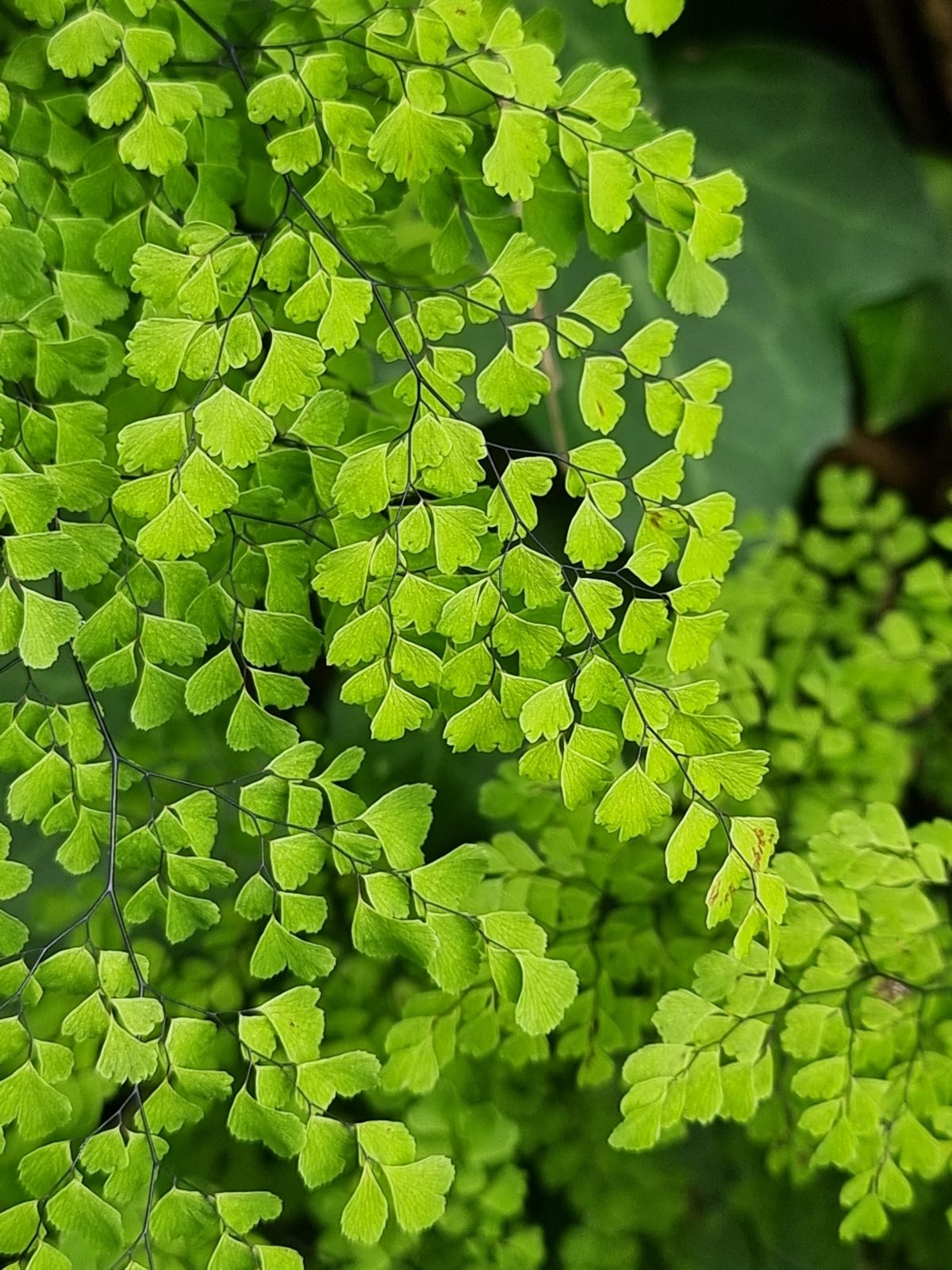
Delta maidenhair fern has fine black stems carrying soft, fan-shaped leaflets, giving it a light, layered appearance. Gardeners grow it in shaded containers, humid indoor rooms and sheltered tropical gardens. It needs steady moisture and warmth; in colder regions, keep it indoors for winter.
At a glance
- Sun
- Bright, indirect light indoors; sheltered partial to full shade outdoors. Avoid strong midday and afternoon sun.
- Water
- Keep the root ball consistently moist but not waterlogged. Water thoroughly when the surface just begins to lose moisture, and empty standing water from saucers.
- Soil
- Humus-rich, moisture-retentive soil with good drainage; use an airy, peat-free houseplant compost in containers.
- Height
- 1-2 ft (0.3-0.6 m)
- Spread
- 1-2 ft (0.3-0.6 m)
- Foliage
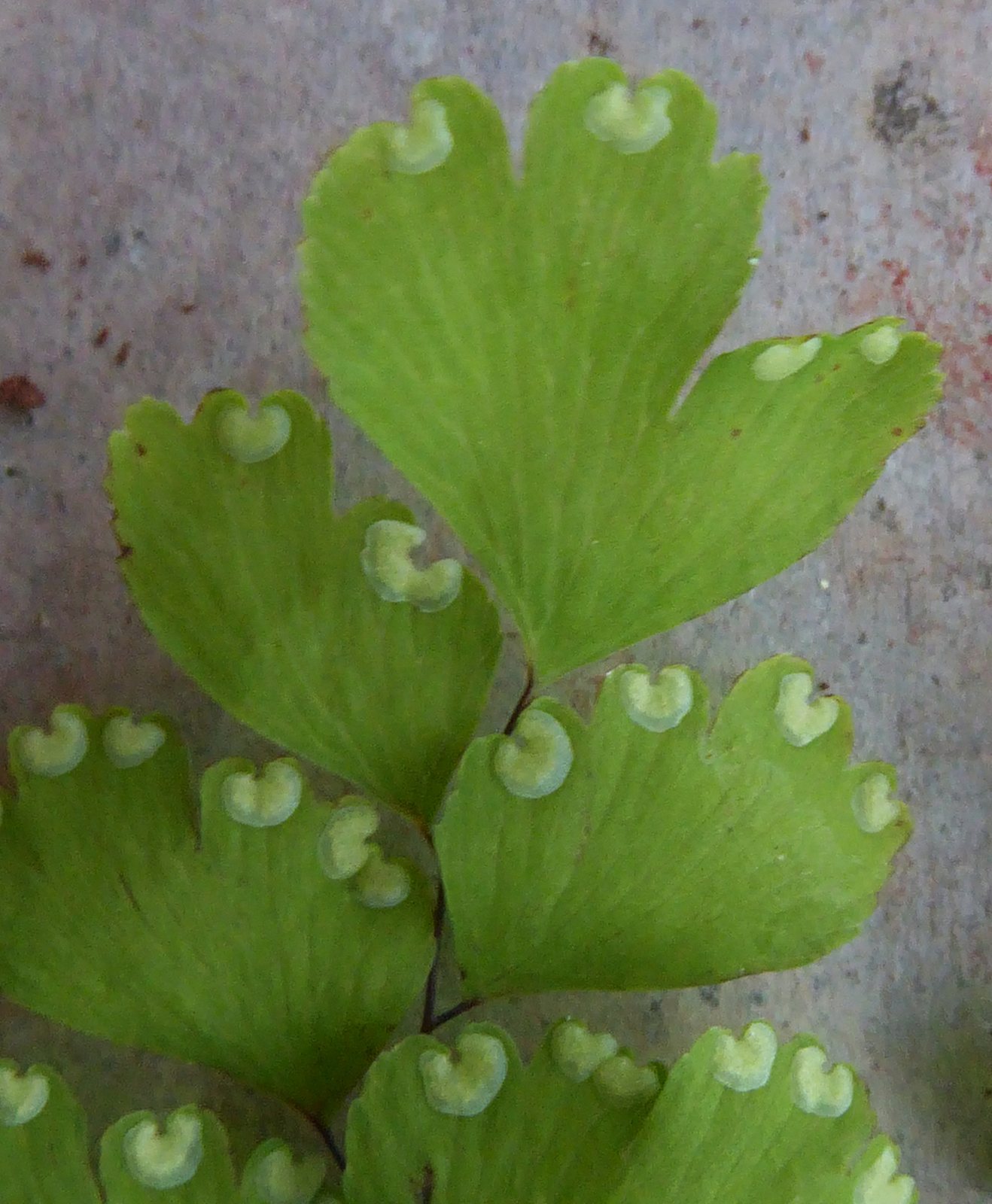
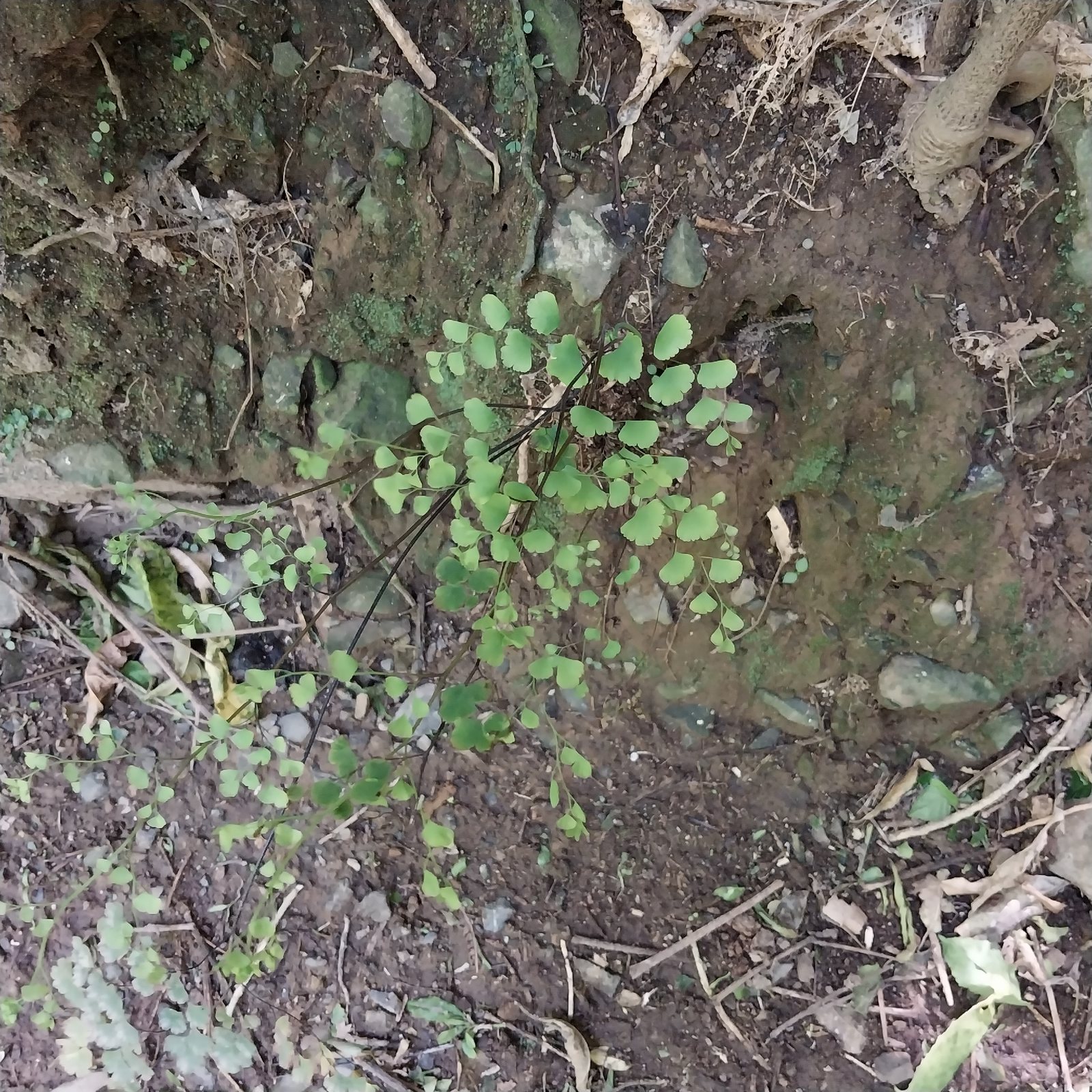
- Evergreen. Arching, triangular fronds with small, bright green, fan-shaped leaflets on slender, glossy black stalks. Spores form beneath folded leaflet margins.
- Growth
- Moderate in warm, moist conditions
- Care needed
- High
The year at a glance
- Deer resistant
- Heat tolerant
- Low allergen
| J | F | M | A | M | J | J | A | S | O | N | D | |
|---|---|---|---|---|---|---|---|---|---|---|---|---|
| Plant |
Northern hemisphere months. In Australia, shift them by six.
- Difficulty
- Hard
- Toughness
- Needs looking after
Will it suit your garden?
Pick your zone, country, light and whether you have pets.
Full sun is 6 or more hours of direct sun a day, part shade 3 to 6 hours, shade under 3.
How it grows
Planting day
1 ft (0.3 m)
After 1 year
1.1 ft (0.35 m)
After 2 years
1.3 ft (0.4 m)
After 3 years
1.5 ft (0.45 m)
full size
About 3 years to full size.
From a typical nursery size, at an average rate for this kind of plant. A rule of thumb, not a forecast.
Good to know
- Cats and dogs
- Mildly toxic: may upset a stomach
- Invasive in
- the US
- Growth rate
- Moderate
Care
Jobs through the year
- WaterMar–May, Sep–Oct, every 3 days
- Grow in a movable container in this climate; water as the surface starts losing moisture and empty saucers.
- WaterJun–Aug, every 2 days
- For summer outdoor pots, check moisture daily and water sooner if needed; never let the root ball dry.
- WaterJan–Feb, Nov–Dec, every 5 days
- Indoors, water when the surface begins losing moisture; adjust for room warmth without allowing drying out.
- FeedMar–Aug, every 30 days
- Feed actively growing container plants with balanced liquid fertilizer at half strength.
- PruneJan–Dec
- Cut brown or damaged fronds at their bases whenever needed.
- DivideMar–Apr
- Divide only crowded, healthy plants if desired, keeping each division moist.
- ProtectMay–Jun
- Move pots outside only when nights stay above 10°C, acclimating them in sheltered shade.
- ProtectSep–Oct
- Inspect for pests and bring indoors before nights fall below 10°C.
- ProtectJan–Mar, Nov–Dec
- Keep indoors in humid, bright indirect light, away from heaters and drying drafts.
- Check container moisture frequently; even a brief drying-out can turn the fronds brown.
- Provide humid air and keep away from heating vents, air conditioners and drying winds.
- Feed monthly at half the labelled strength during active spring and summer growth.
- Keep containers freely draining; never leave the pot standing in water.
- Repot in spring when roots fill the pot, moving up only one pot size.
- Bring outdoor pots inside before nights fall below 50°F (10°C).
Pruning. Cut brown or damaged fronds back to their bases whenever needed, using clean scissors. If the foliage dries out completely, remove dead fronds and maintain gentle moisture; a living rhizome may produce new growth.
Through the year
- Early spring
- Remove dead fronds and check whether crowded plants need repotting or division.
- Spring
- Begin dilute monthly feeding as fresh fronds develop.
- Late spring
- Move pots outdoors only after nights stay above 50°F (10°C), acclimating them in deep, sheltered shade.
- Summer
- Check moisture daily during hot weather and protect plants from sun and drying wind.
- Autumn
- Bring summer outdoor plants indoors before cool nights; inspect them for pests first.
- Winter
- Keep in bright, indirect light away from heaters; reduce watering frequency if growth slows, but never let the root ball dry out.
In the garden
- Use in shaded courtyard containers where its fine foliage softens hard paving and walls.
- Plant beneath broad-leaved tropical plants for a contrast in leaf size and texture.
- Display in a bright, humid bathroom away from direct sun and cold draughts.
- Group with other moisture-loving houseplants to create a layered indoor planting.
- Use beside shaded paths in frost-free gardens where its delicate fronds can be seen close up.
Garden styles it suits: Woodland, Tropical, Modern courtyard, Victorian, Green on green and Small-space.
Plant it with: Bird's nest fern, Cast iron plant, Peace lily, Parlour palm and Rex begonia.
Wildlife: Provides small-scale shelter for invertebrates in suitable outdoor gardens. It produces neither flowers nor nectar.
Problems to watch for
- Crisp, brown fronds usually follow dry compost, dry air or hot sun. Restore even moisture, increase humidity and move into gentler light.
- Yellowing fronds and collapsing growth can indicate waterlogged roots. Empty saucers, check drainage and repot if the compost remains saturated.
- Spider mites cause pale stippling and fine webbing in dry conditions. Isolate the plant, rinse foliage gently and use a product labelled for mites and suitable for ferns if needed.
- Scale insects and mealybugs collect on stems and leaflet undersides. Isolate the plant, remove visible pests and repeat treatment with a product labelled as safe for ferns.
Safety
Not known to be toxic to cats, dogs, horses or people. No part is recognised as poisonous, though eating foliage may cause mild stomach upset and it is not a food plant.
Where it spreads. Can escape into damp, shaded habitats. It is regarded as invasive in Hawaii and parts of New Zealand, and is naturalised in parts of eastern Australia. Check local guidance before planting outdoors in these regions.
Easily confused with
Southern maidenhair fern (Adiantum capillus-veneris)
Its fertile leaflet edges usually carry elongated spore-bearing flaps rather than the more rounded flaps of delta maidenhair. The foliage is otherwise very similar.
Northern maidenhair fern (Adiantum pedatum)
Its fronds branch into a distinctive horseshoe-shaped or hand-like arrangement, unlike the roughly triangular fronds of delta maidenhair.
Large-leaf maidenhair fern (Adiantum macrophyllum)
Has much larger, elongated leaflets, often pink or reddish when young, rather than numerous small green fans.
The name
Adiantum comes from Greek for 'unwetted', referring to the water-shedding foliage, while raddianum honours the Italian botanist Giuseppe Raddi.
Propagation. Divide an established clump in spring, keeping roots, rhizome and several healthy fronds on each section. Spores can also be sown on a clean, moist growing medium under humid conditions, but development is slow and requires careful hygiene.
Checked against open data
- Accepted botanical name
- Adiantum raddianum
- In the US and Canada
- Introduced in Hawaii.
- Native range
- Argentina Northeast, Argentina Northwest, Bolivia, Brazil Northeast, Brazil South, Brazil Southeast, Brazil West-Central, Colombia, Costa Rica, Ecuador, Guatemala and Haiti.
Sources: GBIF (CC BY 4.0), USDA PLANTS and Trefle (CC BY 4.0). The care and design notes are LandscapeGPT's own.
See it in your own yard.
Upload a photo of your yard and see it redesigned with plants that suit your climate, each checked against your zone.