Parlour palm
Chamaedorea elegans. Family Arecaceae. Tree.
Also called Parlor palm, Neanthe bella palm.
Parlour palm is a small, slow-growing evergreen palm from the shaded forests of Mexico and Central America, grown for its soft, finely divided fronds. It makes a dependable houseplant and suits sheltered, shady gardens in frost-free climates; elsewhere, grow it in a container and bring it indoors before cold weather.
At a glance
- Sun
- Bright, indirect light indoors; partial to full shade outdoors. Protect from strong midday and afternoon sun.
- Water
- Water when the top 1 in (2.5 cm) of potting mix feels dry, then let excess water drain away. Water less in winter, but do not let the root ball dry out completely.
- Soil
- A loose, well-drained potting mix that retains some moisture; outdoors, humus-rich soil that drains freely.
- Height
- 2-6 ft (0.6-1.8 m) indoors; up to 12 ft (3.7 m) outdoors in suitable conditions
- Spread
- 2-3 ft (0.6-0.9 m)
- Foliage
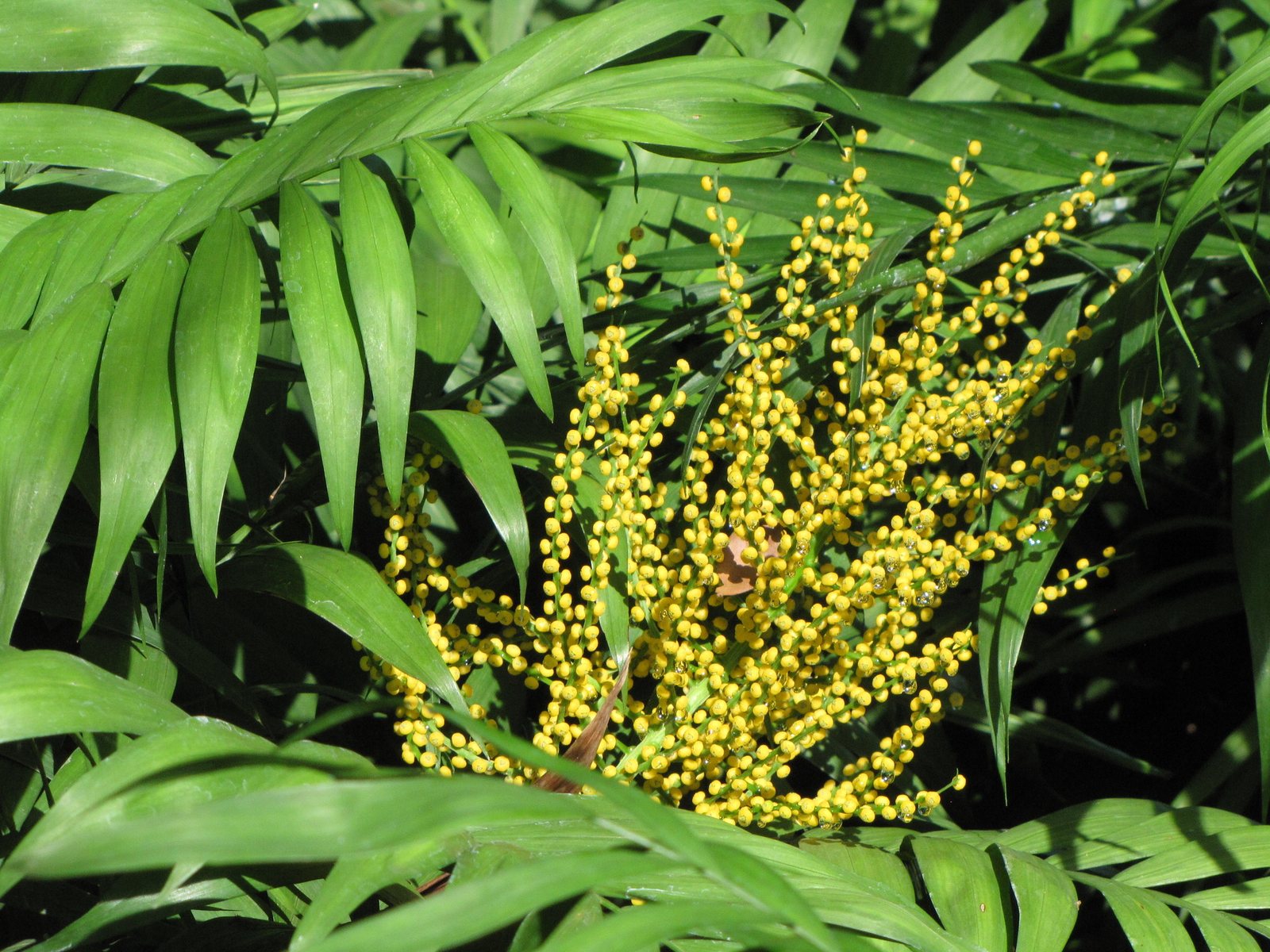
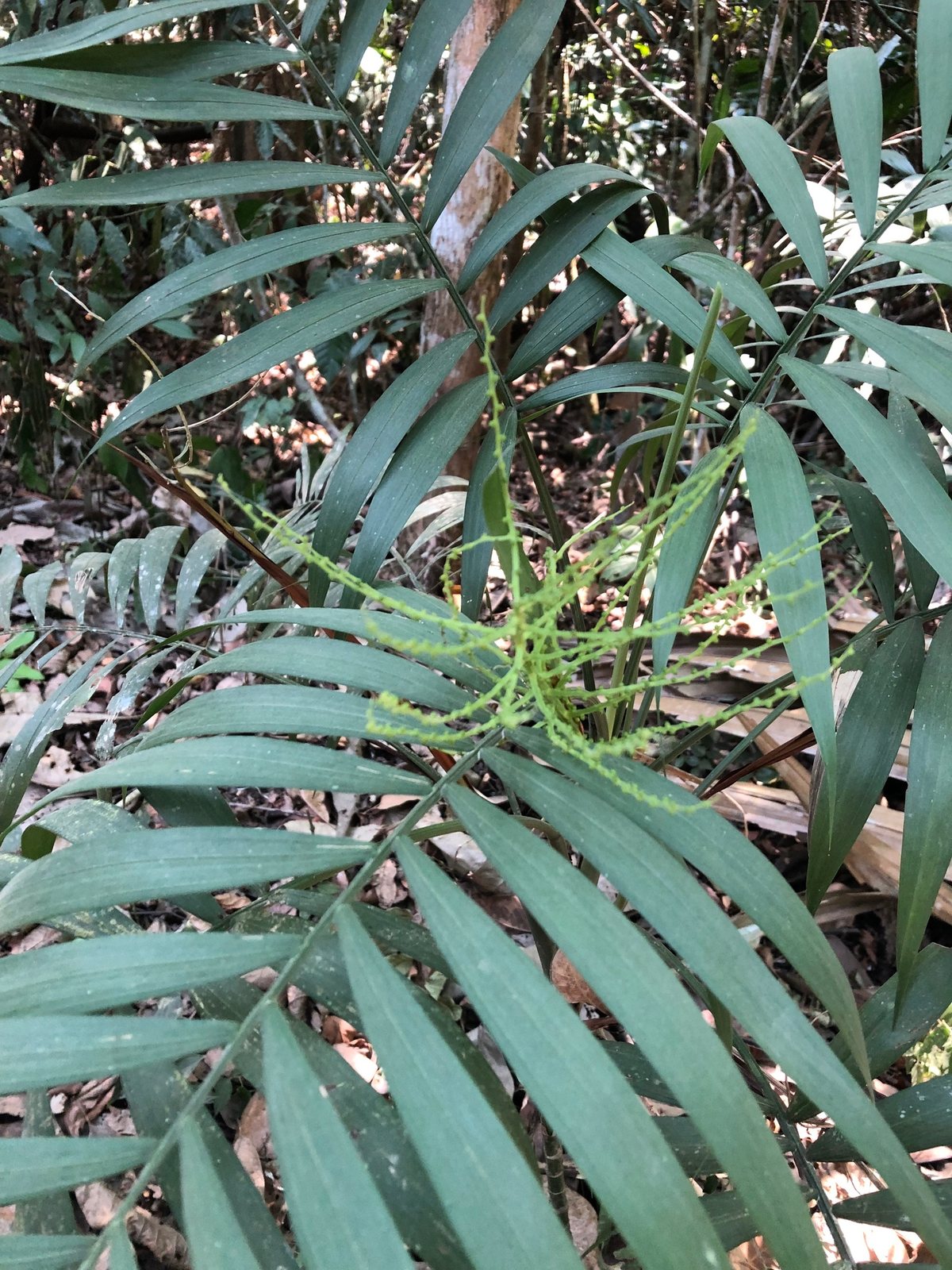
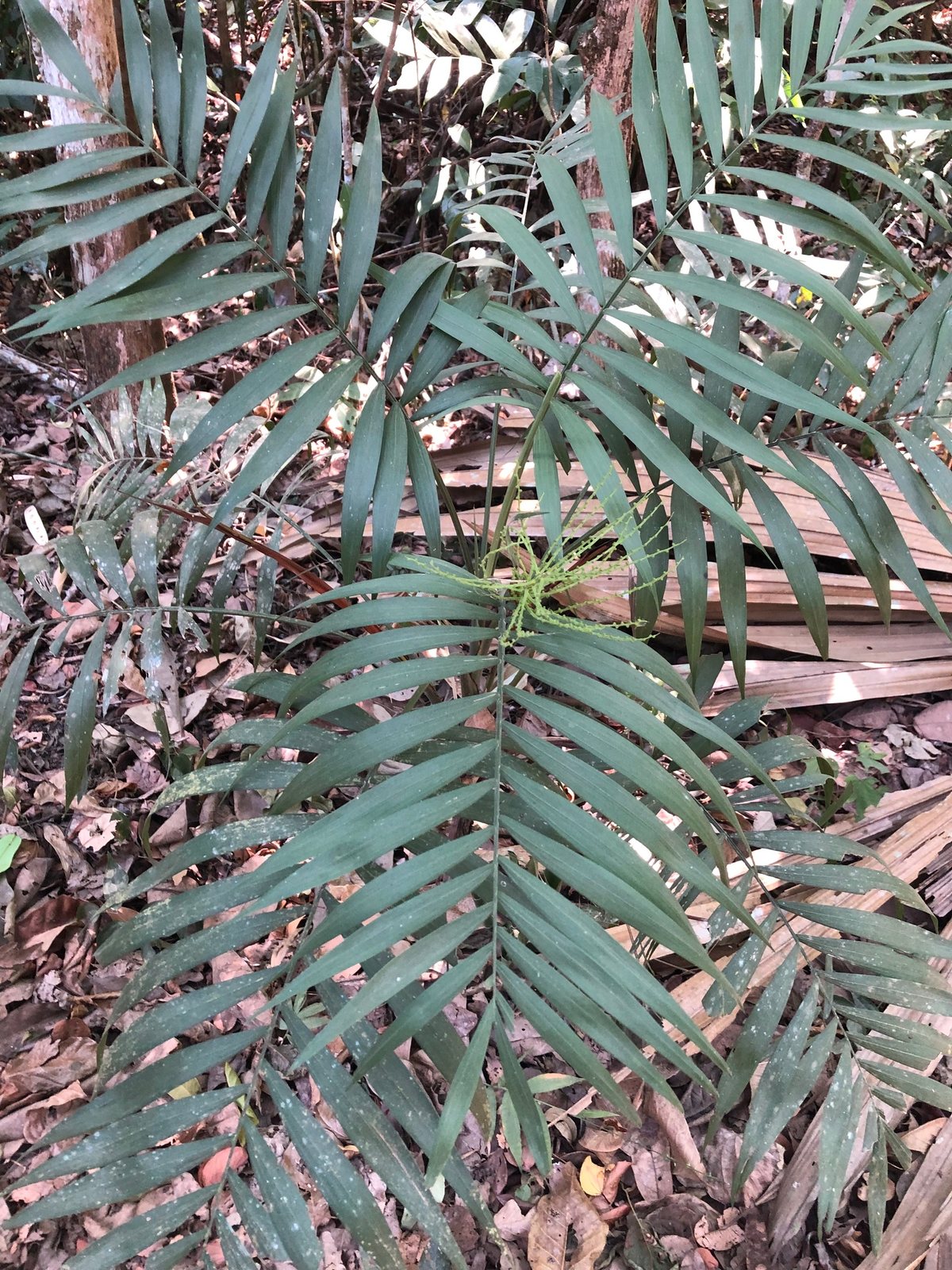
- Evergreen. Arching, feather-like green fronds with narrow leaflets on slender, ringed stems. Pots usually contain several separate seedlings rather than one branching plant.
- Growth
- Slow
- Care needed
- Low
The year at a glance
- Heat tolerant
| J | F | M | A | M | J | J | A | S | O | N | D | |
|---|---|---|---|---|---|---|---|---|---|---|---|---|
| Plant |
Northern hemisphere months. In Australia, shift them by six.
- Difficulty
- Easy
- Toughness
- Fairly tough
Will it suit your garden?
Pick your zone, country, light and whether you have pets.
Full sun is 6 or more hours of direct sun a day, part shade 3 to 6 hours, shade under 3.
How it grows
Planting day
4 ft (1.2 m)
full size
About 32 years to full size.
From a typical nursery size, at an average rate for this kind of plant. A rule of thumb, not a forecast.
Good to know
- Cats and dogs
- Safe
- Growth rate
- Slow
Care
Jobs through the year
- WaterJun–Aug, every 7 days
- Grow in a pot in this climate; check weekly and water only when the top 2.5 cm is dry, draining fully.
- WaterMar–May, Sep–Oct, every 10 days
- Check pot moisture before watering; let the surface dry but never the entire root ball.
- WaterJan–Feb, Nov–Dec, every 14 days
- Check indoor pots fortnightly; water sooner if needed and empty saucers.
- FeedMar–Aug, every 30 days
- Apply balanced houseplant fertiliser at half strength; stop during winter.
- PruneJan–Dec
- Remove only fully brown fronds at their bases; never cut the growing tip.
- ProtectJan–May, Sep–Dec
- Keep indoors above 10°C, away from cold draughts and heating vents.
- ProtectJun–Aug
- If summering outdoors, acclimatise gradually to sheltered shade and avoid direct midday sun.
- Keep indoors above 50°F (10°C), away from cold draughts and heating vents.
- Check the potting mix before watering and empty standing water from saucers or decorative pots.
- Feed monthly in spring and summer with a balanced houseplant fertiliser at half the label strength; stop in winter.
- Repot in spring only when roots fill the pot, using a container just one size larger with drainage holes.
- Wipe or gently rinse dusty fronds, and move outdoor summer containers into shade gradually.
Pruning. Remove fully brown fronds at their base whenever needed, leaving green fronds intact. Never cut the growing tip or shorten a stem: that stem cannot regrow its crown.
Through the year
- Spring
- Check whether roots have filled the container and repot only if necessary.
- Spring
- Resume light feeding as new growth develops.
- Summer
- Check moisture more often and protect outdoor plants from direct afternoon sun.
- Early autumn
- In cooler climates, bring summer containers indoors before nights fall below 50°F (10°C); inspect for pests first.
- Winter
- Stop feeding and allow the surface of the mix to dry between waterings.
- Year-round
- Inspect leaflet undersides for mites and scale, and clean dusty foliage.
In the garden
- Use a container-grown plant in a bright, shaded room to add fine-textured foliage without taking much floor space.
- Group with broad-leaved houseplants such as cast-iron plant for contrasting leaf shapes.
- Plant beneath taller trees in frost-free gardens for a low, layered tropical understorey.
- Place containers in sheltered, shaded courtyards or on summer patios for soft screening at seating height.
Garden styles it suits: Victorian, Tropical, Modern tropical, Urban city garden, Small-space and Green on green.
Plant it with: Cast-iron plant, Bird's nest fern, Boston fern, Prayer plant and Peperomia.
Wildlife: Offers little wildlife value indoors. In its native habitat, its small flowers and fruits contribute to forest food webs.
Problems to watch for
- Spider mites cause pale stippling and fine webbing, especially in dry rooms. Rinse foliage thoroughly and treat persistent infestations with insecticidal soap labelled for indoor plants.
- Scale insects and mealybugs leave bumps, cottony deposits or sticky residue. Isolate the plant, wipe off visible pests and repeat an appropriate labelled treatment.
- Yellowing fronds and soft roots can indicate waterlogging. Empty saucers, improve drainage and let the surface dry before watering again.
- Brown tips or scorched patches can follow drying out, fertiliser salt buildup or direct sun. Check moisture, flush the mix occasionally and move the plant out of strong sunlight.
Safety
Not known to be toxic to cats, dogs, horses or people. No part is recognised as poisonous, although chewing foliage can still cause mild digestive upset; it is not a food plant.
Easily confused with
Bamboo palm (Chamaedorea seifrizii)
Usually taller, with more conspicuous bamboo-like canes and new shoots arising from the base to form a true clump.
Areca palm (Dypsis lutescens)
Has larger, fuller fronds and clustering yellow-green canes; mature plants are much larger.
Kentia palm (Howea forsteriana)
Has larger, more widely spaced, drooping leaflets and develops a much taller, single trunk.
The name
The common name recalls its popularity in Victorian parlours, while the Latin species name elegans means elegant.
Propagation. Grow from fresh seed in a warm, consistently moist propagating mix; germination can take several months. It does not root from stem cuttings or produce a naturally dividing clump, so do not cut apart the stems expecting them to resprout.
Checked against open data
- Accepted botanical name
- Chamaedorea elegans
- Native range
- Belize, Guatemala, Honduras, Mexico Central, Mexico Gulf, Mexico Northeast, Mexico Southeast and Mexico Southwest.
Sources: GBIF (CC BY 4.0) and Trefle (CC BY 4.0). The care and design notes are LandscapeGPT's own.
See it in your own yard.
Upload a photo of your yard and see it redesigned with plants that suit your climate, each checked against your zone.