Desert bluebells
Phacelia campanularia. Family Hydrophyllaceae. Annual.
Also called California bluebells, Desert bells.
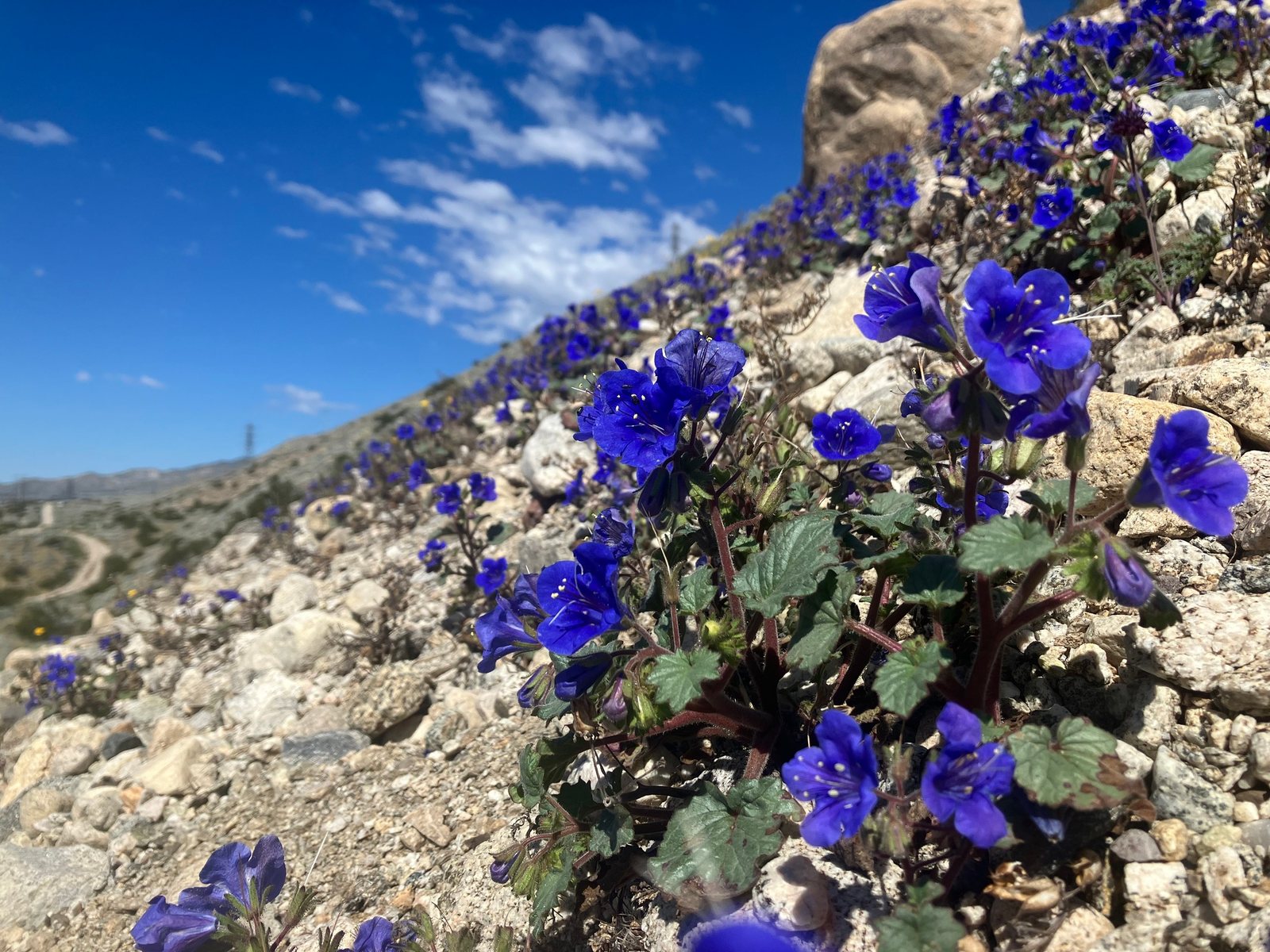
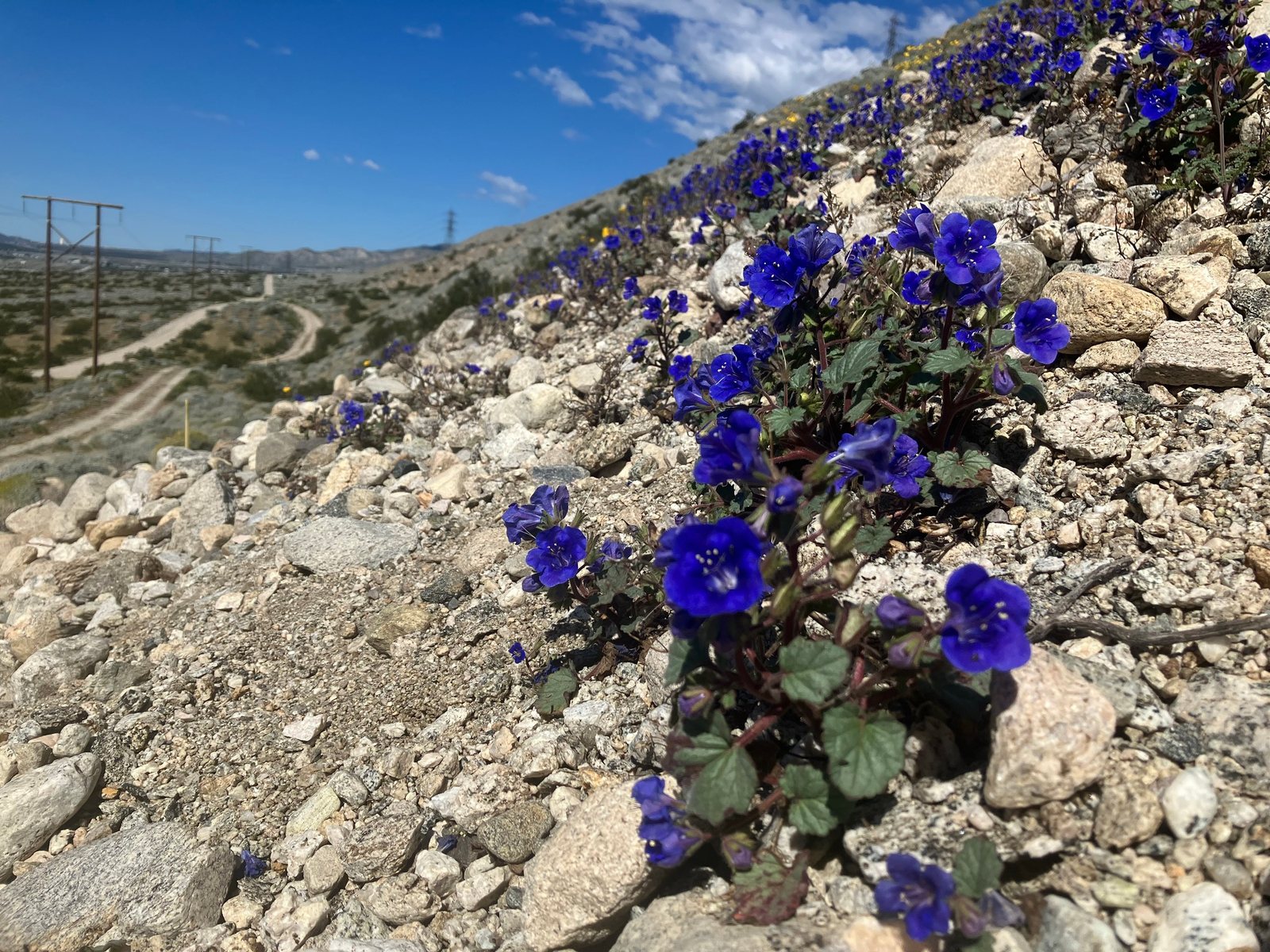
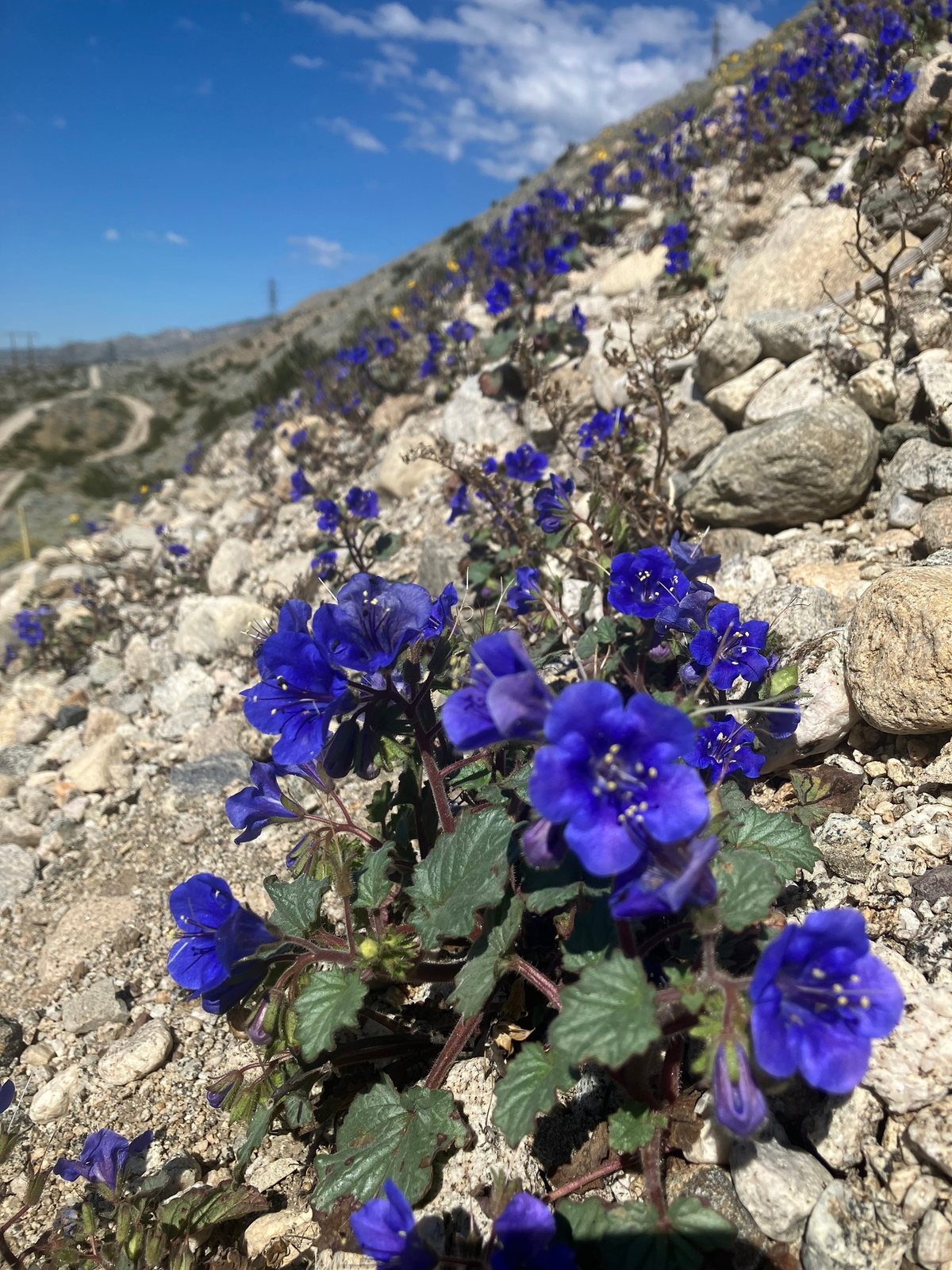
Desert bluebells is a small wildflower from the deserts of southern California, grown as an annual for its vivid blue, bell-shaped flowers. It suits sunny borders, gravel gardens and containers, flowering best during cool weather rather than prolonged summer heat.
At a glance
- Sun
- Full sun; light afternoon shade can help in hot climates.
- Water
- Keep the seedbed moist until seedlings establish, then water sparingly. Established plants tolerate short dry spells but flower less if allowed to become severely dry.
- Soil
- Well-drained sandy or gravelly soil of low to moderate fertility. Avoid heavy, waterlogged ground.
- Height
- 0.5-1.5 ft (0.15-0.45 m)
- Spread
- 0.5-1 ft (0.15-0.3 m)
- Flowers
- Spring to early summer, depending on sowing time and climate; deep cobalt-blue bells with pale bases and conspicuous pale anthers.
- Foliage
- Hairy, broadly oval, toothed green to grey-green leaves, often with reddish margins; stems may also be reddish.
- Growth
- Fast; completes its life cycle in one growing season.
- Care needed
- Low
The year at a glance
- Pollinators
- Drought tolerant
- Low allergen
| J | F | M | A | M | J | J | A | S | O | N | D | |
|---|---|---|---|---|---|---|---|---|---|---|---|---|
| Flowers | ||||||||||||
| Fruit | ||||||||||||
| Plant |
Northern hemisphere months. In Australia, shift them by six.
- Difficulty
- Easy
- Toughness
- Fairly tough
Will it suit your garden?
Pick your zone, country, light and whether you have pets.
Full sun is 6 or more hours of direct sun a day, part shade 3 to 6 hours, shade under 3.
How it grows
Planting day
0.5 ft (0.15 m)
After 1 year
1 ft (0.3 m)
full size
Full size in one season.
From a typical nursery size, at an average rate for this kind of plant. A rule of thumb, not a forecast.
Good to know
- Cats and dogs
- Safe
- Native to
- the US
- Growth rate
- Fast
Care
Jobs through the year
- WaterMar–May, every 10 days
- Water established ground plants when the surface dries; keep newly sown seedbeds gently moist.
- WaterJun–Jul, every 7 days
- Water established ground plants during dry weather, allowing the surface to dry between soakings.
- DeadheadMay–Jul, every 7 days
- Remove faded clusters while plants remain vigorous; leave some capsules for self-seeding.
- ProtectMar–May
- Protect seedlings from slugs and snails; avoid saturated seedbeds.
- PruneJul–Aug
- Pull out exhausted plants after selected seed capsules have ripened.
- Sow directly where plants will flower; they dislike root disturbance.
- Thin seedlings to about 0.5-0.75 ft (0.15-0.23 m) apart.
- Water seedlings gently and regularly, then let the soil surface dry between waterings.
- Avoid routine feeding; rich soil encourages leafy growth rather than a compact display.
- Keep thick mulch away from seedlings and leave some bare soil if you want plants to self-seed.
Pruning. Remove faded flower clusters to keep plants tidy and encourage further flowering while conditions remain cool. Leave a few seed capsules to ripen if you want seedlings next season, then pull out plants when they die.
Through the year
- Early spring
- In cold-winter regions, direct-sow once the soil is workable and severe freezes are past; cover seed lightly with soil.
- Spring
- Thin crowded seedlings and water during dry spells while roots establish.
- Late spring
- Remove faded flowers, or leave selected plants to set seed.
- Summer
- Collect dry seed capsules before they shed, and remove plants once heat has ended their display.
- Autumn
- In mild-winter regions, including suitable parts of Australia and the southwestern United States, sow for a spring display.
- Winter
- Keep autumn-sown plants free of waterlogging; protect container-grown seedlings from severe frost.
In the garden
- Sow in small drifts along the front of a sunny border for a short-season blue display.
- Combine with California poppies in gravel gardens for a strong blue-and-orange contrast.
- Use in shallow containers with excellent drainage for spring colour on sunny patios.
- Scatter through open, dry wildflower plantings to provide early flowers for bees.
Garden styles it suits: California native, Dry gravel garden, Wildflower, Pollinator garden, Desert / xeriscape and Cottage garden.
Plant it with: California poppy, Tidy tips, Baby blue eyes, Desert marigold and Sweet alyssum.
Wildlife: Flowers provide nectar and pollen for bees, including native bees. Leaving some plants to set seed can support a recurring seasonal patch without resowing.
Problems to watch for
- Poor germination or seedling collapse in wet soil: sow shallowly in a freely draining seedbed and avoid keeping it saturated.
- Slugs and snails eating seedlings: inspect after dark, remove pests and use wildlife-conscious control where needed.
- Aphids on soft shoots: rinse small colonies off with water and encourage natural predators.
- Short flowering season in hot weather: sow early in cold-winter climates or in autumn where winters are mild; do not try to prolong exhausted plants with heavy feeding.
Safety
Not known to be poisonous to cats, dogs, horses or people, but species-specific safety information is limited and it is not an edible plant. Its hairy leaves and stems may irritate sensitive skin; wear gloves if you develop a reaction.
Easily confused with
Baby blue eyes (Nemophila menziesii)
Usually has paler, flatter, bowl-shaped flowers and deeply lobed leaves; desert bluebells has deeper blue bells and broad, toothed leaves.
Canterbury bells (Campanula medium)
A much taller, usually biennial plant with large bells arranged along upright flowering stems, rather than a small, branching desert annual.
Lacy phacelia (Phacelia tanacetifolia)
Has finely divided leaves and crowded, coiled clusters of small lavender flowers with long projecting stamens, rather than broad leaves and large blue bells.
The name
The epithet campanularia refers to the bell-shaped flowers, while desert bluebells describes both their shape and the plant's native habitat.
Propagation. Grow from seed, preferably sown directly into its final position. Cover lightly, about 0.125 in (3 mm) deep, and keep moist until germination; it may self-seed in open, well-drained soil.
Checked against open data
- Accepted botanical name
- Phacelia campanularia
- In the US and Canada
- Native in the lower 48 states. Introduced in Canada.
- Native range
- Arizona and California.
Sources: GBIF (CC BY 4.0), USDA PLANTS and Trefle (CC BY 4.0). The care and design notes are LandscapeGPT's own.
See it in your own yard.
Upload a photo of your yard and see it redesigned with plants that suit your climate, each checked against your zone.