Fireweed
Chamaenerion angustifolium. Family Onagraceae. Perennial.
Also called Rosebay willowherb, Great willowherb, Bombweed, Chamerion angustifolium.
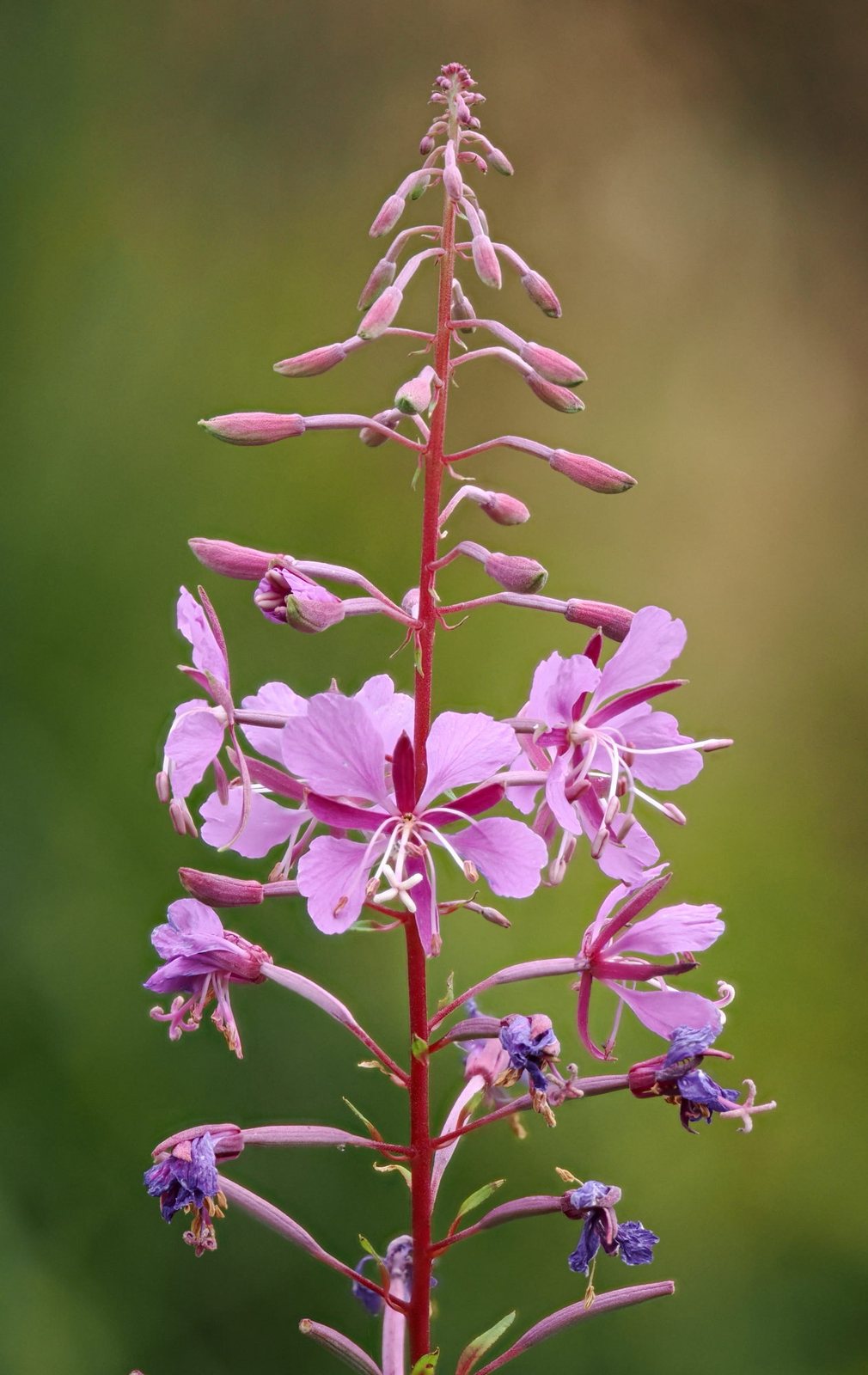
Fireweed is a tall, deciduous perennial native across much of the temperate and cold Northern Hemisphere, grown for its long spires of pink flowers and value to pollinators. It suits large, informal plantings in cool climates, but spreading roots and windblown seed make it a poor choice for small borders.
At a glance
- Sun
- Full sun to light partial shade; flowering is best in sun.
- Water
- Moderate; keep new plants evenly moist. Established plants tolerate short dry spells, but prolonged drought can brown the lower leaves.
- Soil
- Well-drained soil with some moisture retention; tolerates sandy, stony and disturbed ground. Avoid permanently waterlogged soil.
- Height
- 3-6 ft (0.9-1.8 m)
- Spread
- 1-3 ft (0.3-0.9 m) initially; spreading roots can form colonies much wider than this.
- Flowers
- Summer into early autumn; pink to purplish-pink flowers open progressively up tall spikes.
- Foliage
- Narrow, alternate, lance-shaped green leaves, often turning yellow or reddish before dying back in autumn.
- Growth
- Fast
- Care needed
- Medium
The year at a glance
- Pollinators
- Cold hardy
- Wildlife
- Low allergen
| J | F | M | A | M | J | J | A | S | O | N | D | |
|---|---|---|---|---|---|---|---|---|---|---|---|---|
| Flowers | ||||||||||||
| Fruit | ||||||||||||
| Plant |
Northern hemisphere months. In Australia, shift them by six.
- Difficulty
- Moderate
- Toughness
- Very tough
Will it suit your garden?
Pick your zone, country, light and whether you have pets.
Full sun is 6 or more hours of direct sun a day, part shade 3 to 6 hours, shade under 3.
How it grows
Planting day
1 ft (0.3 m)
After 1 year
2.8 ft (0.84 m)
After 2 years
4 ft (1.4 m)
full size
About 2 years to full size.
From a typical nursery size, at an average rate for this kind of plant. A rule of thumb, not a forecast.
Good to know
- Cats and dogs
- Safe
- Native to
- the US and Canada
- In the garden
- Spreads vigorously: plan to contain it.
- Growth rate
- Fast
Care
Jobs through the year
- WaterApr–May, Sep, every 14 days
- Water established plants during extended dry weather; keep new plants evenly moist.
- WaterJun–Aug, every 7 days
- During prolonged drought, water deeply to limit lower-leaf browning.
- MulchMar–Apr
- Apply a thin organic mulch, keeping emerging shoots clear.
- PruneFeb–Mar
- Cut last year's dead stems to ground level before new growth.
- PruneApr–Sep, every 21 days
- Remove unwanted shoots with their spreading roots while still small.
- DivideMar–Apr
- Divide congested clumps as spring growth begins.
- ProtectMay–Jun
- Install discreet supports on exposed sites before flowering stems become tall.
- DeadheadJul–Sep, every 7 days
- Cut spikes before pods open if seedlings are unwanted; lower pods can ripen while tips still flower.
- Water regularly during the first growing season and during prolonged dry weather.
- Avoid routine feeding; rich soil and excess nitrogen encourage tall, floppy growth.
- Apply a thin organic mulch in spring to conserve moisture, keeping it away from emerging shoots.
- Remove unwanted shoots with their attached roots while they are small.
- Divide congested clumps in spring and stake exposed plants before flower stems become tall.
Pruning. Cut flower spikes off before the seed pods open if you want to limit seedlings. Cut dead stems to ground level in late winter or early spring, leaving them over winter where tidiness is not essential.
Through the year
- Late winter
- Cut down last year's dead stems before new growth develops.
- Spring
- Plant or divide clumps, water them in and remove spreading shoots outside the allotted area.
- Late spring
- Add discreet supports where tall stems are exposed to wind.
- Summer
- Water during extended drought and check surrounding beds for unwanted shoots.
- Late summer
- Remove spent flower spikes before the pods release their silky seeds.
- Autumn
- Sow seed outdoors in pots for natural winter chilling, keeping the fine seed at the surface.
In the garden
- Plant in broad drifts in a large wildlife garden where its spreading habit has room.
- Use behind meadow grasses and oxeye daisies for tall pink summer accents.
- Place along a sunny woodland edge with foxgloves and hardy geraniums.
- Use in naturalistic restoration plantings within its native range, rather than tightly managed mixed borders.
Garden styles it suits: Wildflower, Native meadow, Wildlife garden, Pollinator garden, Rewilded and Cottage garden.
Plant it with: Tufted hair grass, Oxeye daisy, Yarrow, Meadow cranesbill, Foxglove and Devil's-bit scabious.
Wildlife: Flowers provide nectar and pollen for bees and other insects. In Britain it is a food plant for elephant hawk-moth caterpillars; its value to other leaf-feeding insects varies by region.
Problems to watch for
- Unwanted colonies and seedlings: remove spreading roots promptly and cut flower spikes before seed pods open.
- Powdery mildew: improve airflow, avoid overcrowding and water the soil rather than repeatedly wetting the foliage.
- Aphids on young shoots: wash off heavy colonies with water and leave small infestations for natural predators.
- Flopping or scorched lower foliage: avoid rich feeding, provide support on windy sites and water during prolonged drought.
Safety
Chamaenerion angustifolium is not known to be toxic to people, cats, dogs or horses, although species-specific veterinary information is limited. No part is recognized as seriously poisonous. Do not confuse it with the unrelated, toxic Senecio plants also called fireweed in Australia.
Where it spreads. Spreads aggressively by creeping roots and windblown seed in suitable cool-climate gardens, including much of the United Kingdom, Canada and the northern United States. It is native across much of those regions, but can still overwhelm smaller plants and colonize disturbed ground.
Easily confused with
Great willowherb (Epilobium hirsutum)
Usually has conspicuously hairy stems and leaves, with lower leaves in opposite pairs. Fireweed has mostly alternate, narrower leaves and a more distinct elongated flower spike.
Purple loosestrife (Lythrum salicaria)
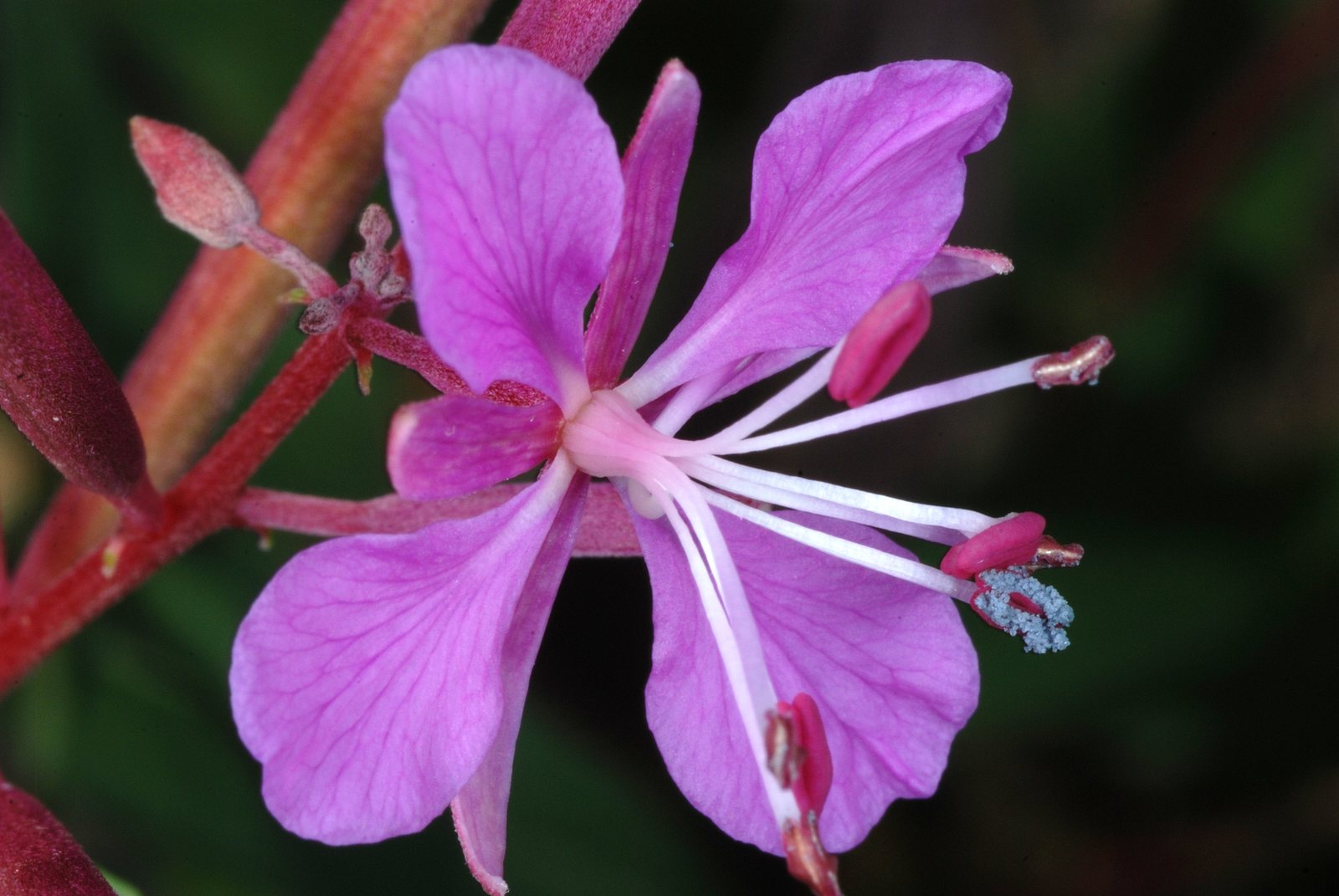
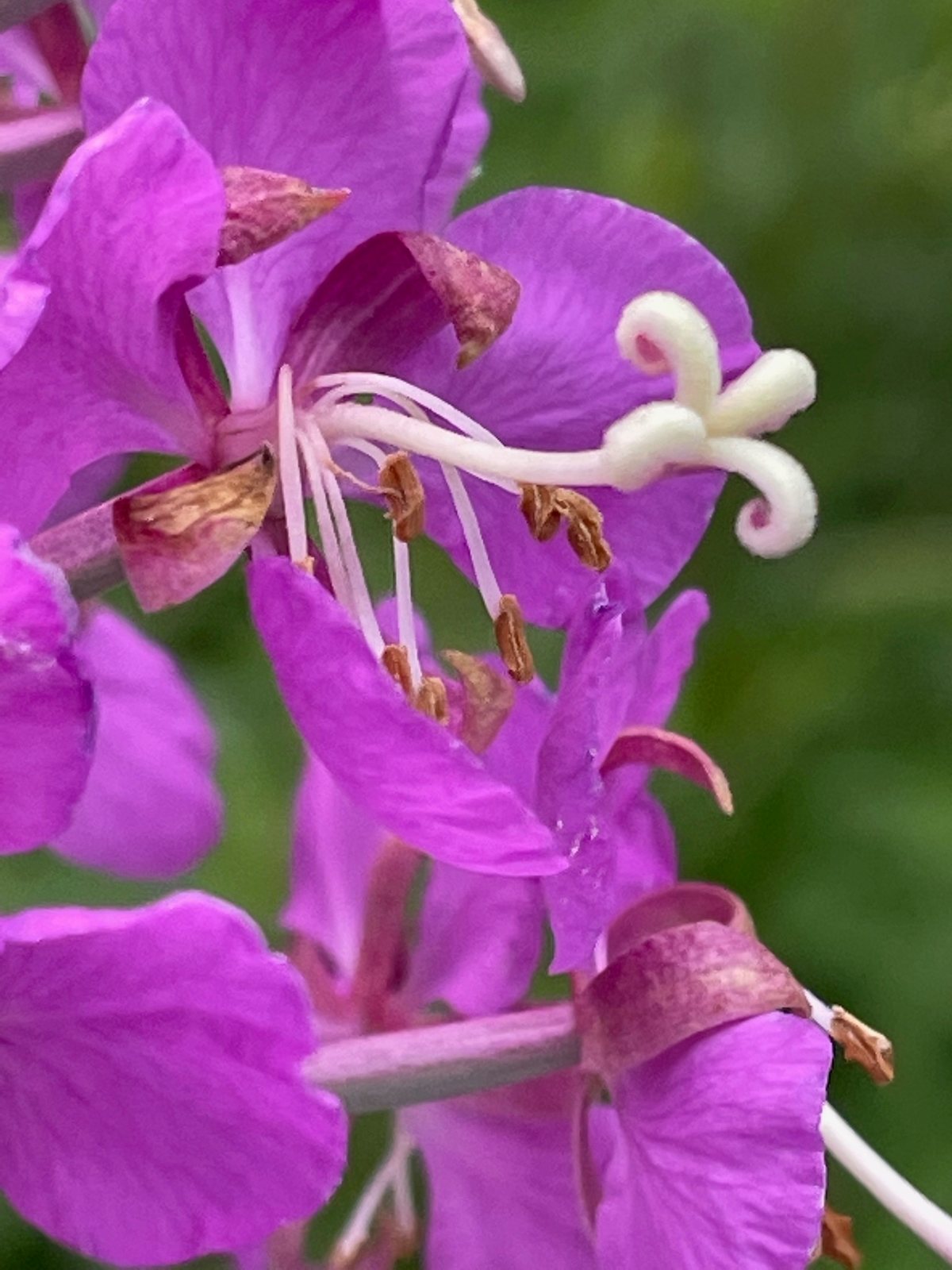
Has opposite or whorled leaves and flowers usually with six petals. Fireweed has alternate leaves and four-petalled flowers.
Fireweed (Senecio madagascariensis)
This unrelated Australian pasture weed has small yellow, daisy-like flowers rather than tall spikes of pink flowers. It is poisonous to livestock.
The name
The name fireweed refers to its rapid colonization of burned ground, where its windblown seeds establish readily.
Propagation. Divide rooted shoots in spring or autumn. Sow the fine seed on the surface of compost without burying it; outdoor autumn sowing provides natural cold exposure. Seedlings may not match named forms.
Checked against open data
- Accepted botanical name
- Chamaenerion angustifolium
- In the US and Canada
- Native in Alaska, Canada, Greenland and the lower 48 states.
Sources: GBIF (CC BY 4.0) and USDA PLANTS. The care and design notes are LandscapeGPT's own.
See it in your own yard.
Upload a photo of your yard and see it redesigned with plants that suit your climate, each checked against your zone.