Foothill penstemon
Penstemon heterophyllus. Family Plantaginaceae. Perennial.
Also called Foothill beardtongue, Bunchleaf penstemon.
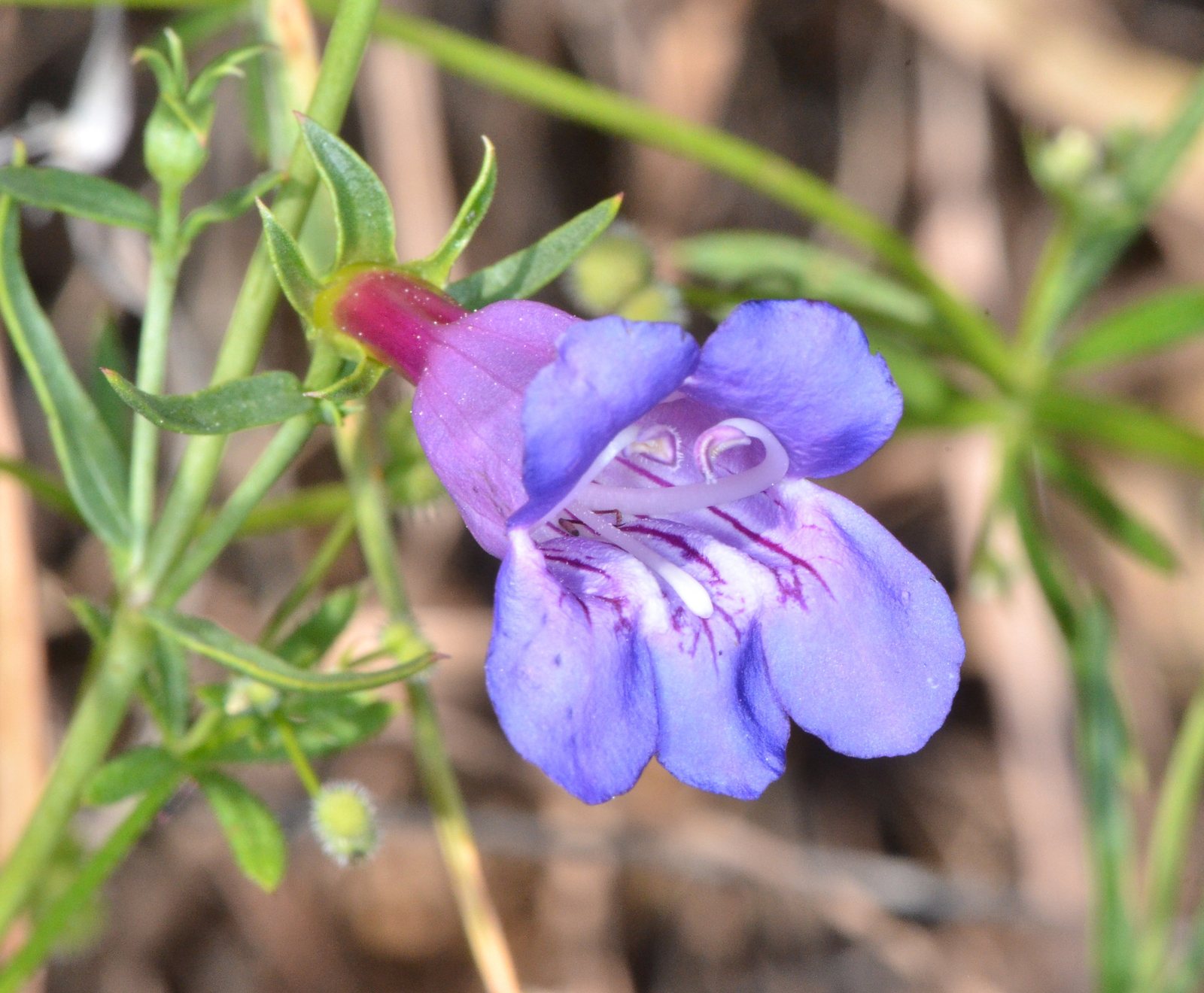
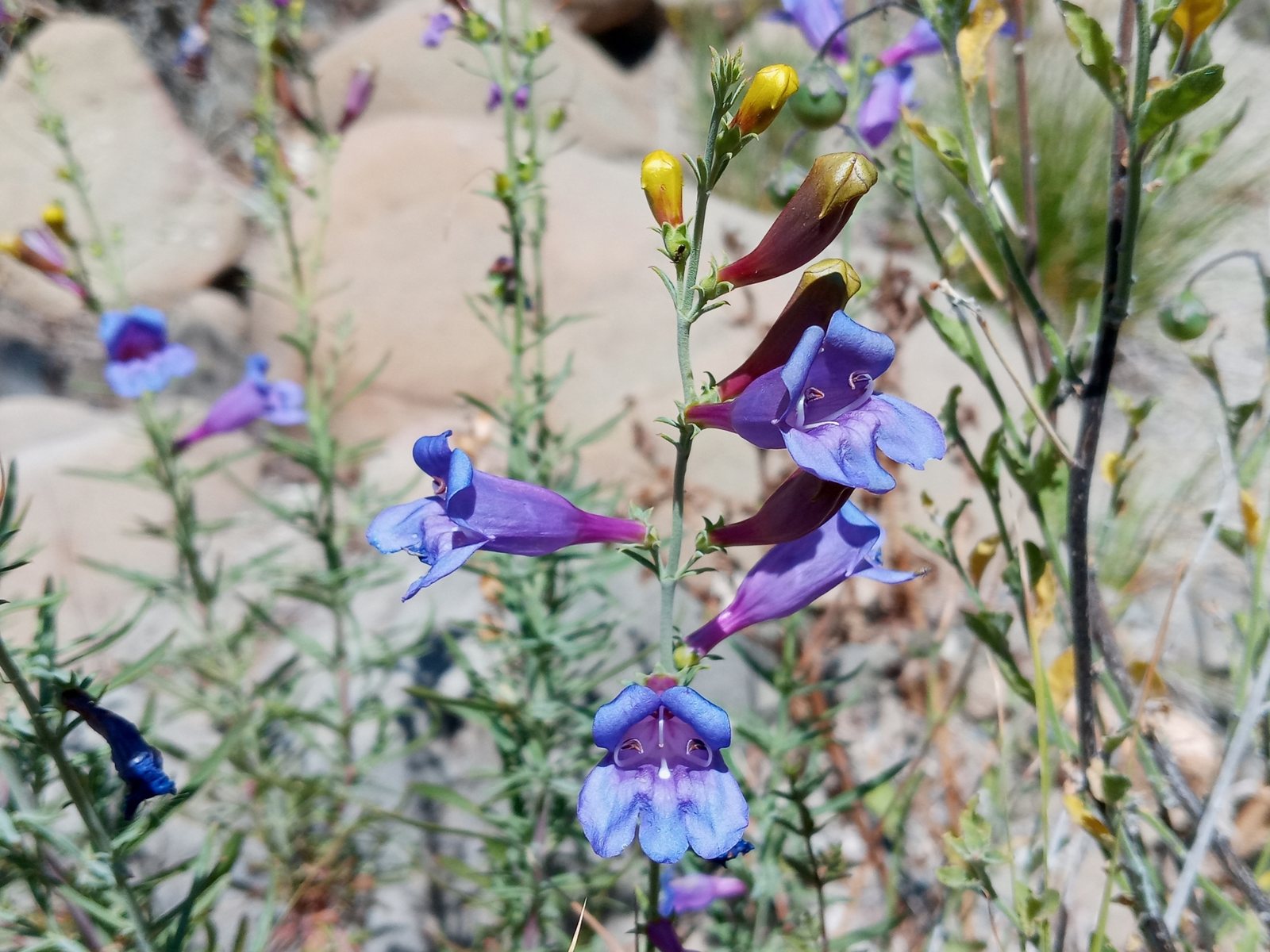
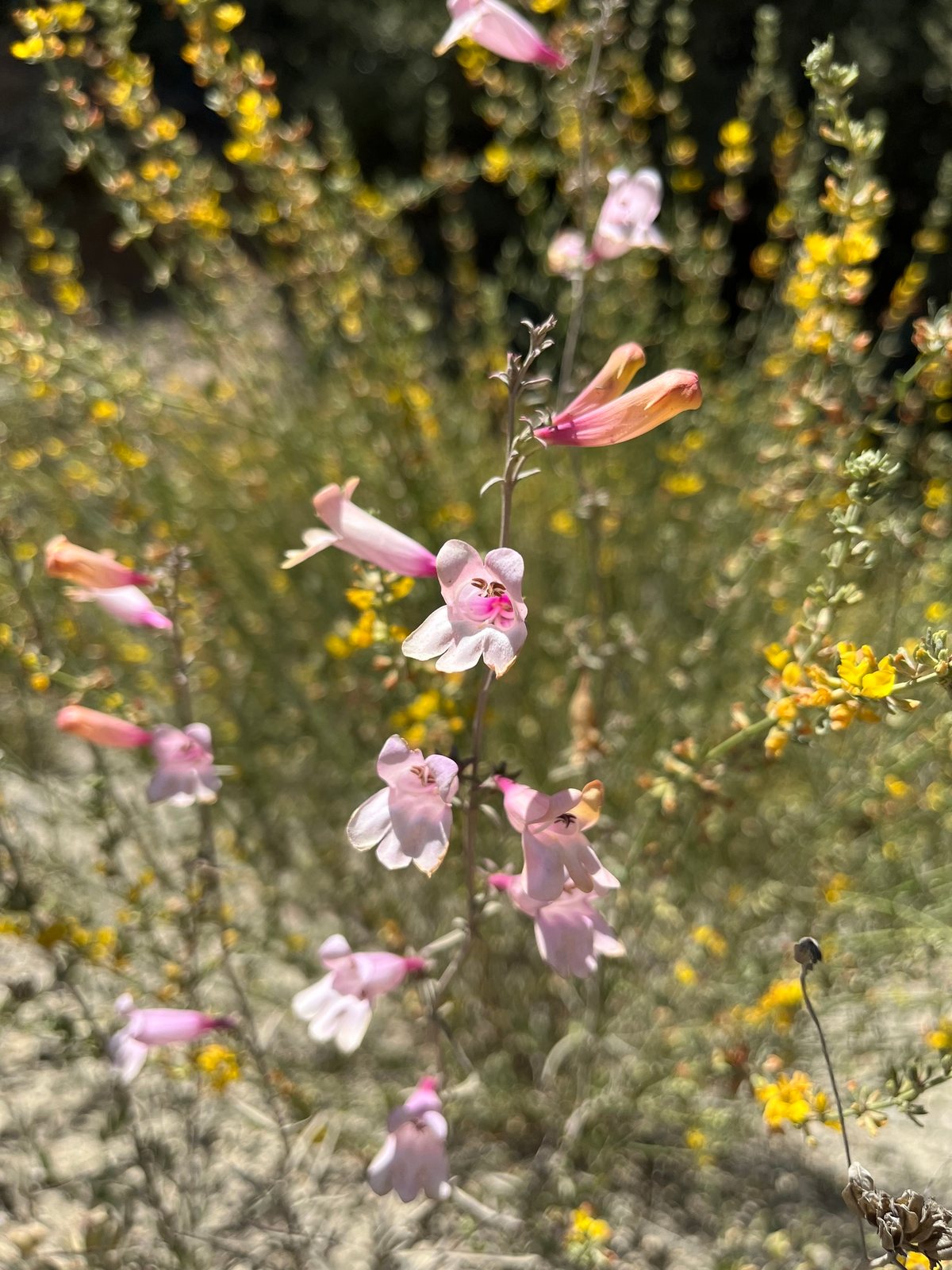
A California native perennial with a woody base, narrow leaves and sprays of blue to violet tubular flowers, often opening from pinkish buds. Gardeners grow it for late-spring colour in sunny, dry borders and gravel gardens; excellent drainage, especially in winter, matters more than rich soil.
At a glance
- Sun
- Full sun; light afternoon shade is useful in very hot inland gardens.
- Water
- Low once established. Water regularly during establishment, then deeply but infrequently during prolonged dry weather; avoid persistently damp soil.
- Soil
- Lean to moderately fertile, sharply drained sandy, gravelly or rocky soil. Avoid heavy, wet clay unless planting on a raised mound with effective drainage.
- Height
- 1-3 ft (0.3-0.9 m)
- Spread
- 1-2 ft (0.3-0.6 m)
- Flowers
- Late spring to early summer; blue to violet flowers, often with pinkish buds and pale throats. Occasional later flowers may follow deadheading.
- Foliage
- Narrow green to grey-green leaves on branching stems; lower leaves are generally broader than upper leaves. Evergreen in mild climates, but may lose foliage in cold winters.
- Growth
- Moderate
- Care needed
- Low
The year at a glance
- Pollinators
- Deer resistant
- Drought tolerant
- Heat tolerant
- Low allergen
| J | F | M | A | M | J | J | A | S | O | N | D | |
|---|---|---|---|---|---|---|---|---|---|---|---|---|
| Flowers | ||||||||||||
| Plant |
Northern hemisphere months. In Australia, shift them by six.
- Difficulty
- Moderate
- Toughness
- Fairly tough
Will it suit your garden?
Pick your zone, country, light and whether you have pets.
Full sun is 6 or more hours of direct sun a day, part shade 3 to 6 hours, shade under 3.
How it grows
Planting day
1 ft (0.3 m)
After 1 year
1.3 ft (0.4 m)
After 2 years
1.6 ft (0.5 m)
After 3 years
2 ft (0.6 m)
full size
About 3 years to full size.
From a typical nursery size, at an average rate for this kind of plant. A rule of thumb, not a forecast.
Good to know
- Cats and dogs
- Safe
- Native to
- the US
- Growth rate
- Moderate
Care
Jobs through the year
- WaterApr–May, Sep, every 21 days
- Water established plants only if soil is dry; water new plants more frequently while roots establish.
- WaterJun–Aug, every 14 days
- Water established plants deeply only during prolonged dry weather; allow soil to dry between waterings.
- MulchApr
- Use a thin gravel mulch around the crown rather than moisture-retaining organic material.
- PruneApr
- Once new growth appears, remove dead stems and lightly shorten straggly shoots without cutting into bare wood.
- DeadheadJun–Aug, every 14 days
- Remove faded flower stems above leafy growth to encourage occasional repeat flowers.
- ProtectOct–Nov
- Clear debris from the crown and provide sharply drained soil or a rain shelter against winter wet.
- Plant in spring in colder or wetter regions; autumn planting suits mild climates with dry summers.
- Water new plants when the root zone starts to dry, allowing the soil to drain between waterings.
- Keep established plants on the dry side rather than watering them with a thirsty lawn or border.
- Use gravel around the crown instead of moisture-holding organic mulch.
- Avoid routine feeding and rich manure, which encourage soft growth and can shorten the plant's life.
Pruning. Remove spent flower stems after the main display, leaving leafy growth below. In spring, once new growth is visible, remove dead stems and lightly shorten straggly shoots; avoid hard cutting into bare old wood.
Through the year
- Spring
- Plant after severe frost has passed, choosing a sunny position with excellent drainage.
- Mid-spring
- Check for new shoots, remove winter-damaged stems and lightly tidy the plant.
- Late spring
- Watch developing shoots for aphids and wash off small colonies with water.
- Summer
- Remove faded flower stems and water established plants only during prolonged drought.
- Late summer
- Take non-flowering shoot cuttings to keep replacement plants.
- Autumn
- Clear fallen debris from the crown and check that rainwater drains away freely.
In the garden
- Plant small groups near the front of a sunny border for blue flowers above a low, leafy framework.
- Combine with California poppies and buckwheats in a California-native planting with little summer irrigation.
- Use among rocks or in a gravel garden, where the open setting keeps the crown dry.
- Pair with compact lavender and small ornamental grasses for a loose, drought-tolerant border.
Garden styles it suits: California native, Dry gravel garden, Mediterranean, Desert / xeriscape, Pollinator garden and Cottage garden.
Plant it with: California poppy, Sulphur buckwheat, California buckwheat, Yarrow, English lavender and Blue grama.
Wildlife: Flowers attract bees and, within their range, hummingbirds. Leaving a few seed stems provides seed and structure, although removing most faded stems keeps plants tidier.
Problems to watch for
- Root or crown rot in wet soil: improve drainage, move plants out of winter-wet ground and keep mulch away from the crown.
- Aphids on soft shoots: dislodge with water; use insecticidal soap if infestations persist, avoiding open flowers.
- Slugs and snails eating young growth: inspect at dusk, remove hiding places and use wildlife-conscious controls where needed.
- Sparse flowering and floppy growth: provide more sun, stop high-nitrogen feeding and reduce unnecessary watering.
Safety
Not known to be toxic to people, cats, dogs or horses. Species-specific safety information is limited; it is not an edible plant, and pets or children should not be encouraged to eat any part.
Easily confused with
Rocky Mountain penstemon (Penstemon strictus)
Usually has taller, more upright flower spikes and a conspicuous basal clump of broader leaves. Foothill penstemon is generally lower and more branched, with narrower leaves along stems that become woody at the base.
The name
“Foothill” refers to its Californian foothill habitats, while heterophyllus means “different-leaved,” describing the variation between its lower and upper leaves.
Propagation. Sow seed in a freely draining seed mix; a period of cold, moist conditions can improve germination. Named cultivars are best propagated from non-flowering softwood or semi-ripe cuttings in summer, as seedlings may differ from the parent.
Checked against open data
- Accepted botanical name
- Penstemon heterophyllus
- In the US and Canada
- Native in the lower 48 states.
- Native range
- California.
Sources: GBIF (CC BY 4.0), USDA PLANTS and Trefle (CC BY 4.0). The care and design notes are LandscapeGPT's own.
See it in your own yard.
Upload a photo of your yard and see it redesigned with plants that suit your climate, each checked against your zone.