French Breakfast radish
Raphanus sativus 'French Breakfast'. Family Brassicaceae. Annual.
Also called French Breakfast.
French Breakfast is a quick-growing radish with elongated red roots, white tips and crisp, mildly peppery flesh. Grown as an annual, it suits cool-season vegetable beds and containers, often producing usable roots about a month after sowing.
At a glance
- Sun
- Full sun; light afternoon shade can help in warm weather.
- Water
- Keep the root zone evenly moist but not waterlogged; dry spells followed by heavy watering encourage splitting.
- Soil
- Loose, well-drained soil with modest fertility, ideally pH 6.0-7.0. Remove stones and break up compacted soil before sowing.
- Height
- 0.5-1 ft (0.15-0.3 m) in leaf; taller if allowed to flower
- Spread
- 0.25-0.5 ft (0.08-0.15 m)
- Flowers
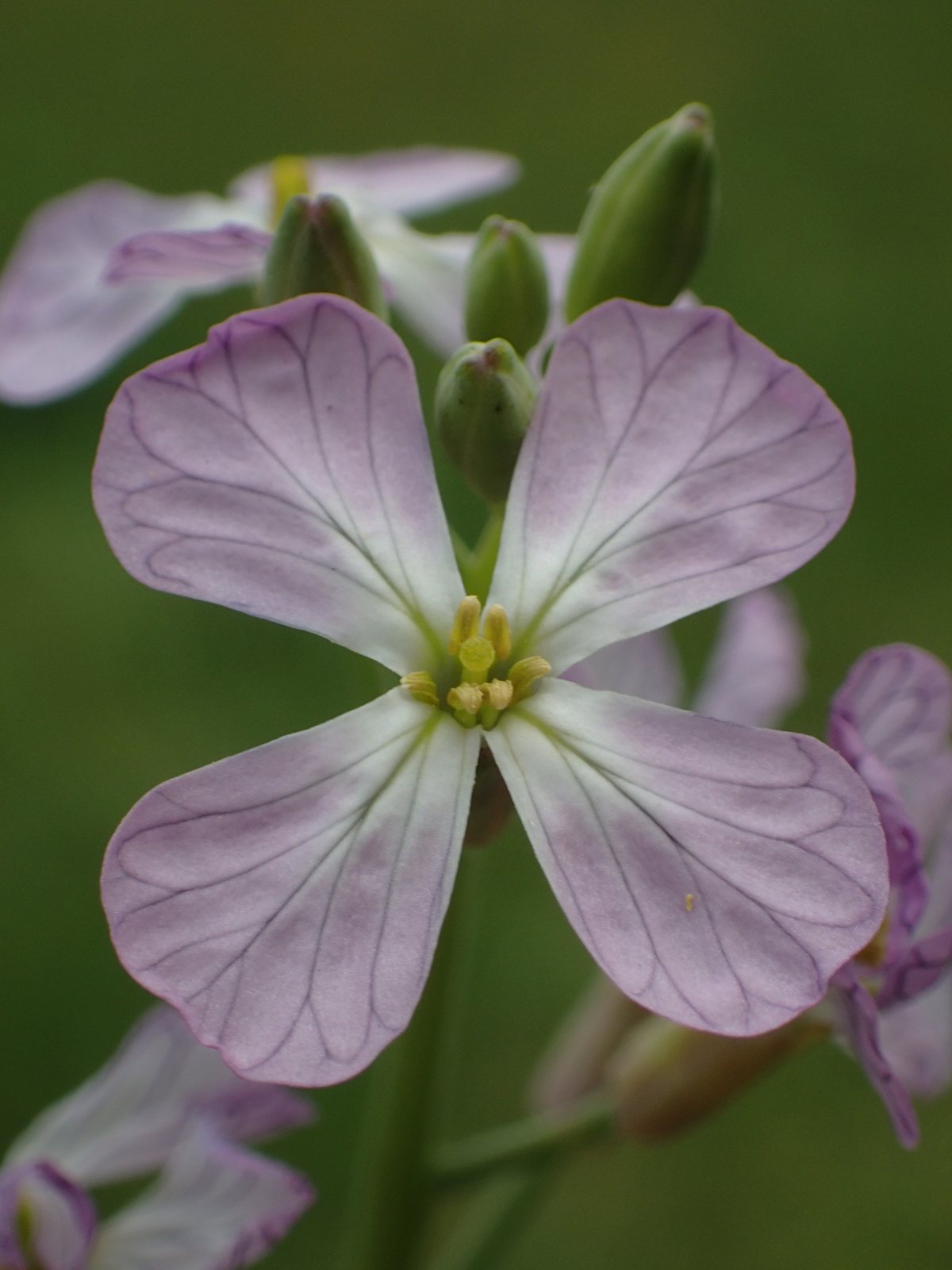
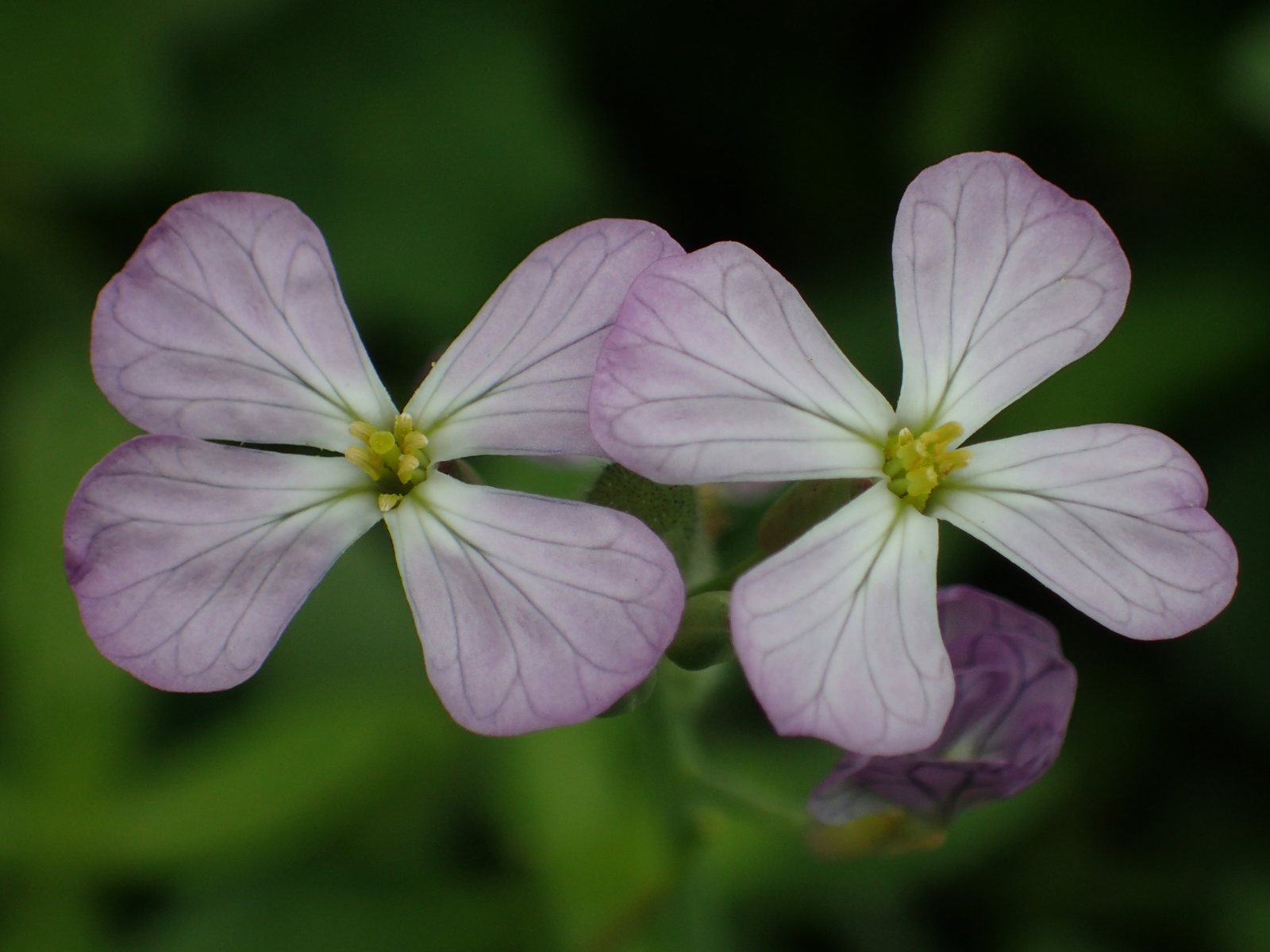
- White to pale pink, often with purple veins, on tall stems if plants are left to bolt in late spring or summer.
- Foliage
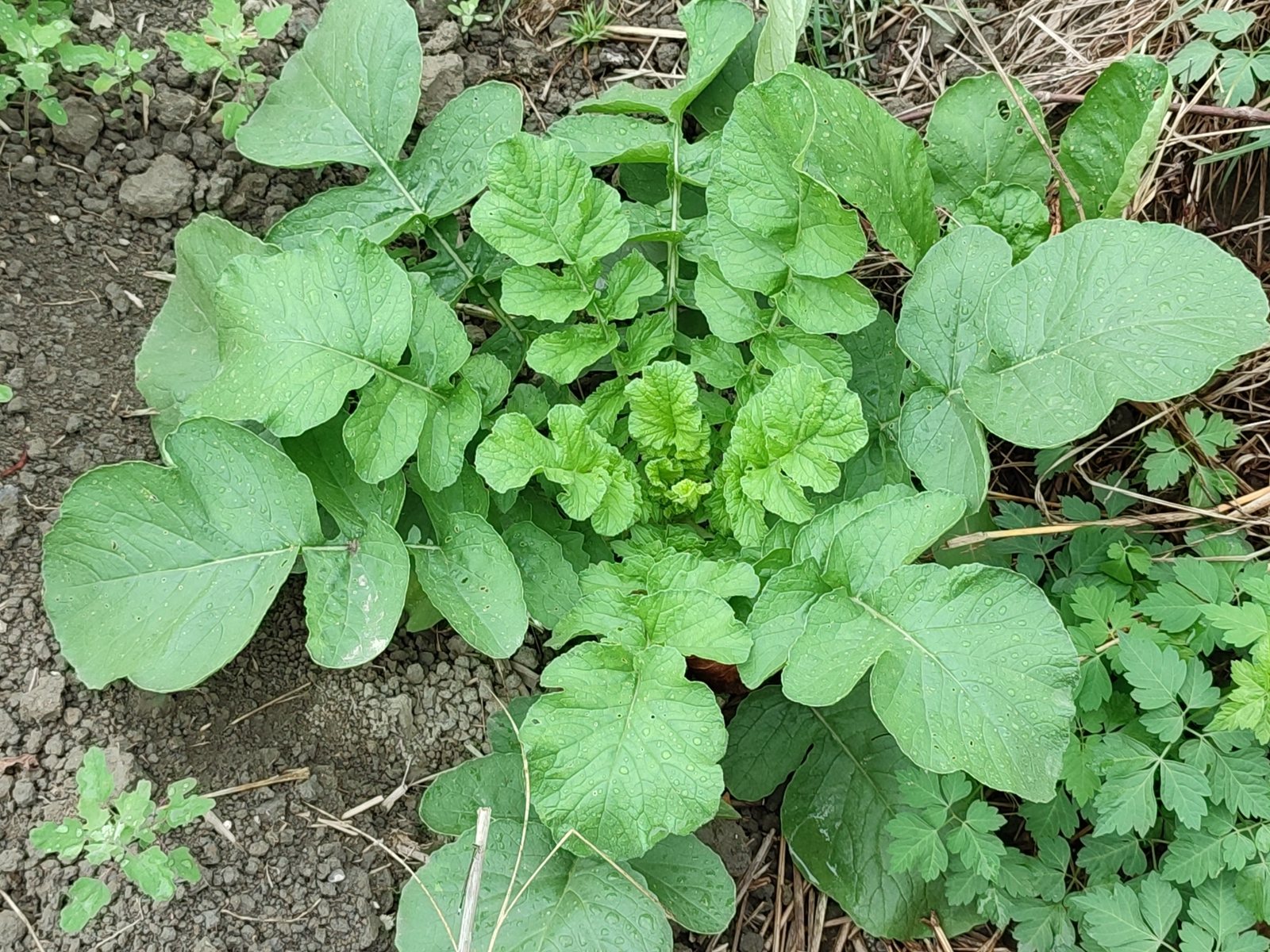
- Green, rough-haired leaves with irregularly lobed edges, forming a loose rosette.
- Growth
- Fast; usually ready to harvest in 3-5 weeks, longer in cold weather.
- Care needed
- Low
The year at a glance
- Low allergen
- Edible
| J | F | M | A | M | J | J | A | S | O | N | D | |
|---|---|---|---|---|---|---|---|---|---|---|---|---|
| Fruit | ||||||||||||
| Plant |
Northern hemisphere months. In Australia, shift them by six.
- Difficulty
- Easy
- Toughness
- Fairly tough
Will it suit your garden?
Pick your zone, country, light and whether you have pets.
Full sun is 6 or more hours of direct sun a day, part shade 3 to 6 hours, shade under 3.
How it grows
Planting day
0.5 ft (0.15 m)
After 1 year
0.7 ft (0.22 m)
full size
Full size in one season.
From a typical nursery size, at an average rate for this kind of plant. A rule of thumb, not a forecast.
Good to know
- Cats and dogs
- Safe
- Growth rate
- Fast
Care
Jobs through the year
- WaterMar–Apr, Sep–Oct, every 7 days
- Water established crops if rainfall is insufficient; keep newly sown rows moist.
- WaterMay–Jun, Aug, every 3 days
- Check before watering and keep soil evenly moist; reduce watering after rain.
- MulchMar, Aug
- Incorporate a modest amount of mature compost before sowing; avoid fresh manure.
- ProtectMar–May, Aug–Sep
- Cover new sowings immediately with fine insect mesh against flea beetles and root fly.
- HarvestApr–Jun, Sep–Oct
- Pull roots at 5–8 cm long, usually 3–5 weeks after sowing, before pithiness or bolting.
- Sow directly about 0.5 in (1 cm) deep; avoid transplanting, which can disturb root development.
- Thin seedlings to 2-3 in (5-8 cm) apart soon after emergence.
- Water before the soil dries out, especially while roots are swelling.
- Use modest amounts of mature compost; avoid fresh manure and high-nitrogen feeds.
- Sow small batches every 1-2 weeks during cool weather rather than one large crop.
Pruning. No pruning is needed. Harvest before flower stems develop; remove bolting plants unless you want flowers or seed.
Harvest
Pull roots when they are about 2-3 in (5-8 cm) long, usually 3-5 weeks after sowing; uncover a shoulder or pull a sample to check size. Harvest promptly while roots are firm and crisp, as older roots become pithy and hotter. Young, healthy leaves are also edible, raw or cooked.
Through the year
- Late winter
- In mild climates, prepare a sunny bed and begin sowing once soil is workable; use protection if conditions remain cold.
- Spring
- Direct-sow small batches every 1-2 weeks and thin seedlings promptly.
- Late spring
- Check root size frequently and harvest before plants become woody or bolt.
- Summer
- Pause sowing during hot weather; in cool districts, continue with reliable moisture and some afternoon shade.
- Late summer
- Resume sowing as temperatures fall, allowing several weeks of growing weather before persistent frost.
- Autumn
- Harvest remaining roots and remove crop debris; in frost-free districts, continue sowing through the cooler season.
In the garden
- Plant short rows along vegetable-bed edges for an easily reached crop.
- Use repeated rows in a potager for orderly patches of fresh green foliage.
- Grow in troughs or containers near the kitchen for frequent small harvests.
- Sow between slower-growing vegetables, harvesting before their leaves close over the space.
Garden styles it suits: Potager (kitchen garden), Edible landscape, Homestead, Cottage garden, Small-space and Family-friendly.
Plant it with: Lettuce, Spinach, Carrots, Spring onions, Peas and Chervil.
Wildlife: Plants left to flower provide pollen and nectar for bees and other insects, but flowering reduces root quality. Seedlings may be eaten by slugs and snails.
Problems to watch for
- Flea beetles pepper leaves with small holes: cover seedlings with fine insect mesh immediately after sowing and secure the edges.
- Cabbage root fly maggots tunnel into roots: use insect mesh over a clean bed and rotate away from previous brassica crops.
- Bolting, hot flavour or pithy roots: grow in cool weather, maintain moisture and harvest promptly.
- Leafy tops with little root development: thin crowded seedlings, provide adequate sun and avoid excess nitrogen.
Safety
Not known to be toxic to people, cats, dogs or horses. Roots and leaves are edible, although large amounts may cause digestive upset, and the peppery flavour can irritate sensitive mouths.
Easily confused with
Cherry Belle radish (Raphanus sativus 'Cherry Belle')
Produces round, red roots rather than elongated red roots with distinct white tips.
Turnip (Brassica rapa subsp. rapa)
Usually forms broader, rounder roots and takes longer to mature; leaves alone can be difficult to distinguish when young.
The name
Raphanus comes from the Greek name for radish, while sativus means cultivated.
Propagation. Grow from seed sown directly where plants will mature. Seed saved from flowering plants may cross with other radishes nearby and may not produce roots true to French Breakfast.
Checked against open data
- Accepted botanical name
- Raphanus sativus
- In the US and Canada
- Introduced in Alaska, Canada, Greenland, Hawaii, the lower 48 states, Pacific Basin and Puerto Rico.
Sources: GBIF (CC BY 4.0) and USDA PLANTS. The care and design notes are LandscapeGPT's own.
See it in your own yard.
Upload a photo of your yard and see it redesigned with plants that suit your climate, each checked against your zone.