Frogfruit
Phyla nodiflora. Family Verbenaceae. Groundcover.
Also called Turkey-tangle fogfruit, Common frogfruit, Matchweed, Creeping lip plant.
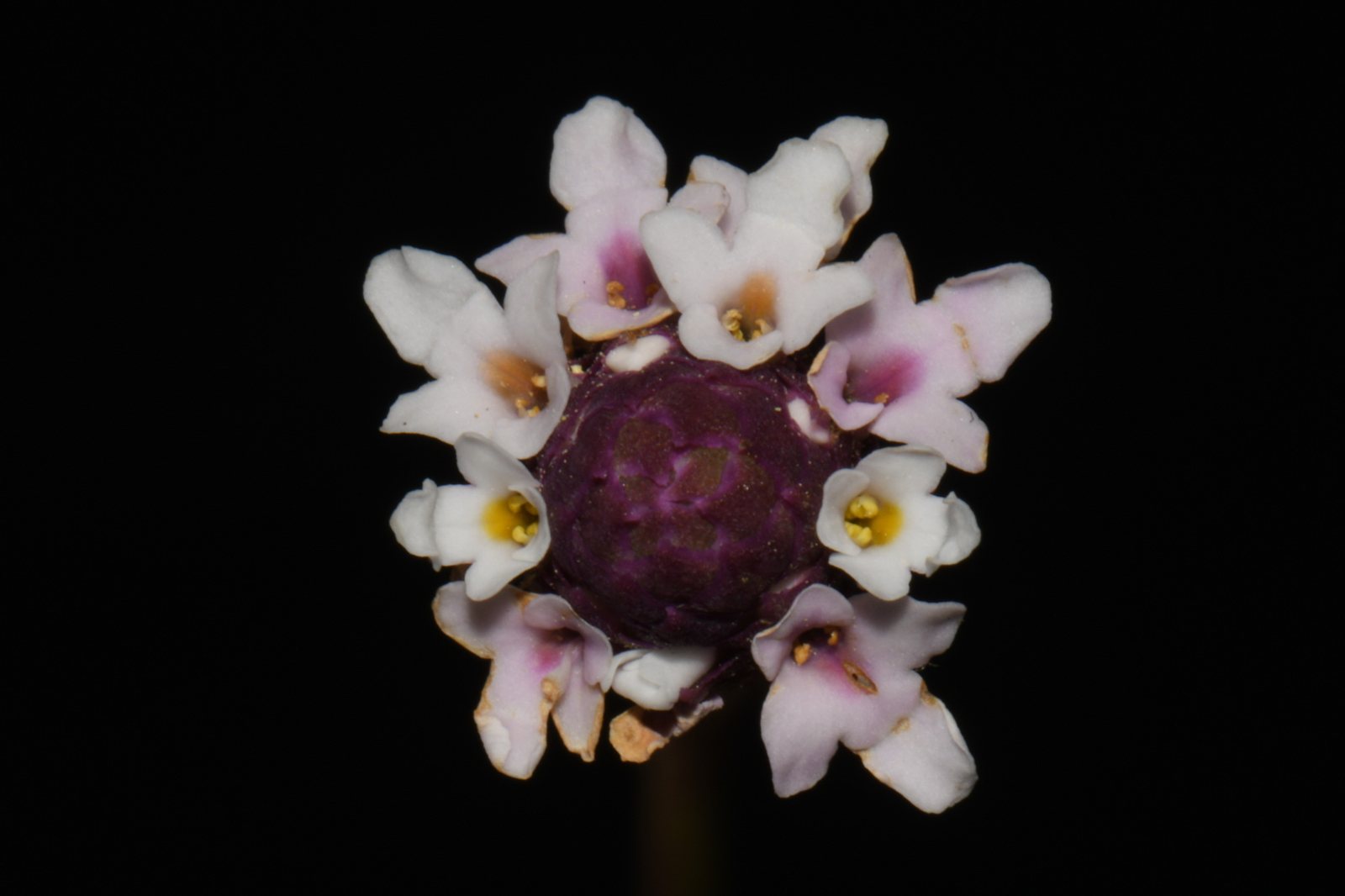
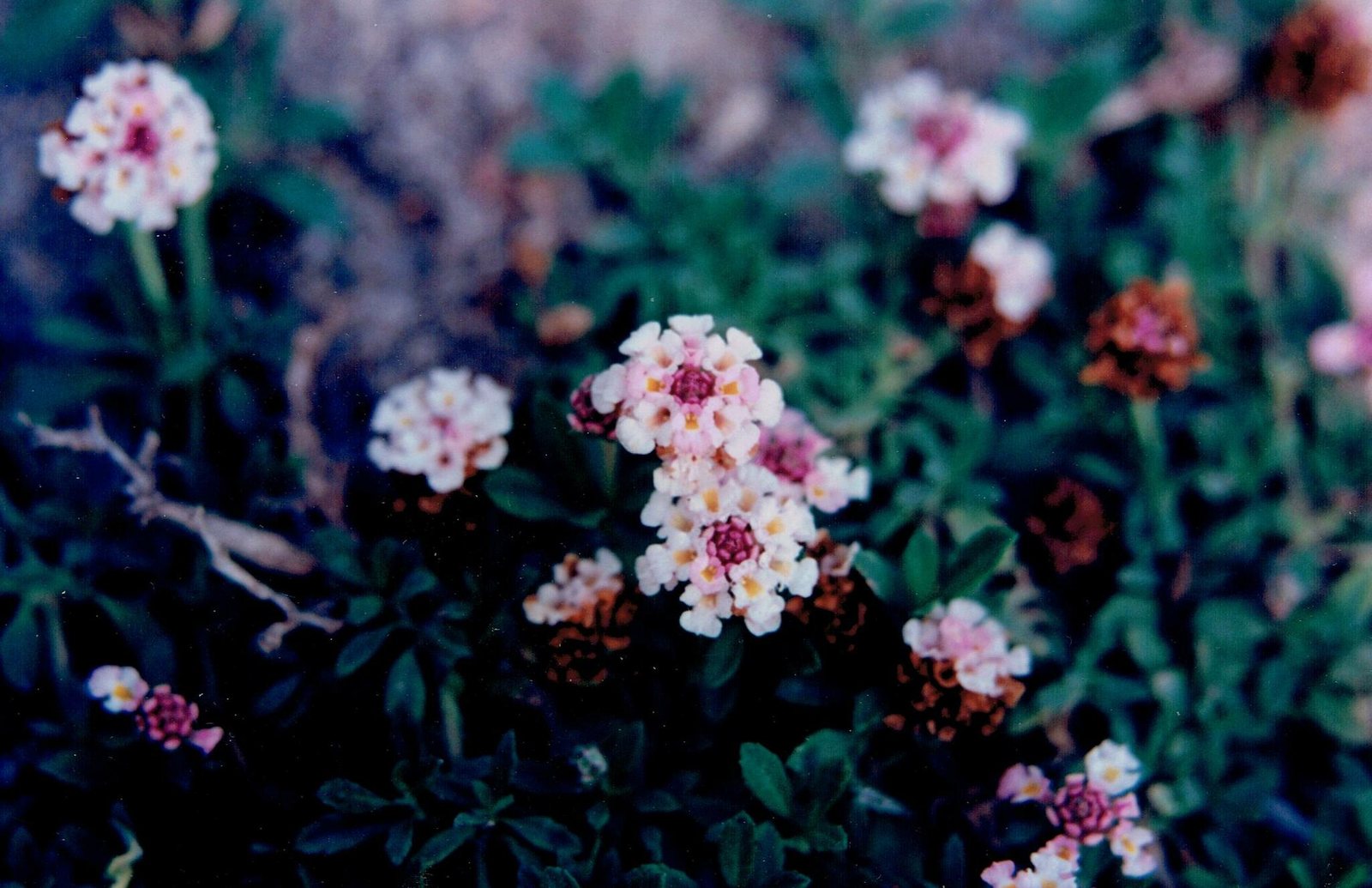
Frogfruit is a creeping perennial that roots along its stems, forming a low mat dotted with tiny white to pale lilac flowers. Gardeners grow it as a flowering lawn alternative, between widely spaced paving stones and as groundcover for pollinators. It tolerates light foot traffic once established, but flowering patches attract bees and are not ideal for barefoot play.
At a glance
- Sun
- Full sun to partial shade; flowering and mat density are best in sun.
- Water
- Moderate while establishing; low to moderate once rooted. Tolerates seasonal wetness and some drought, but prolonged dry weather can thin the cover.
- Soil
- Adaptable to sandy, loamy or clay soils, including alkaline soils; avoid permanently stagnant, waterlogged ground.
- Height
- 0.25-0.5 ft (0.08-0.15 m)
- Spread
- 3-6 ft (0.9-1.8 m) or more; rooting stems can spread indefinitely where conditions suit.
- Flowers
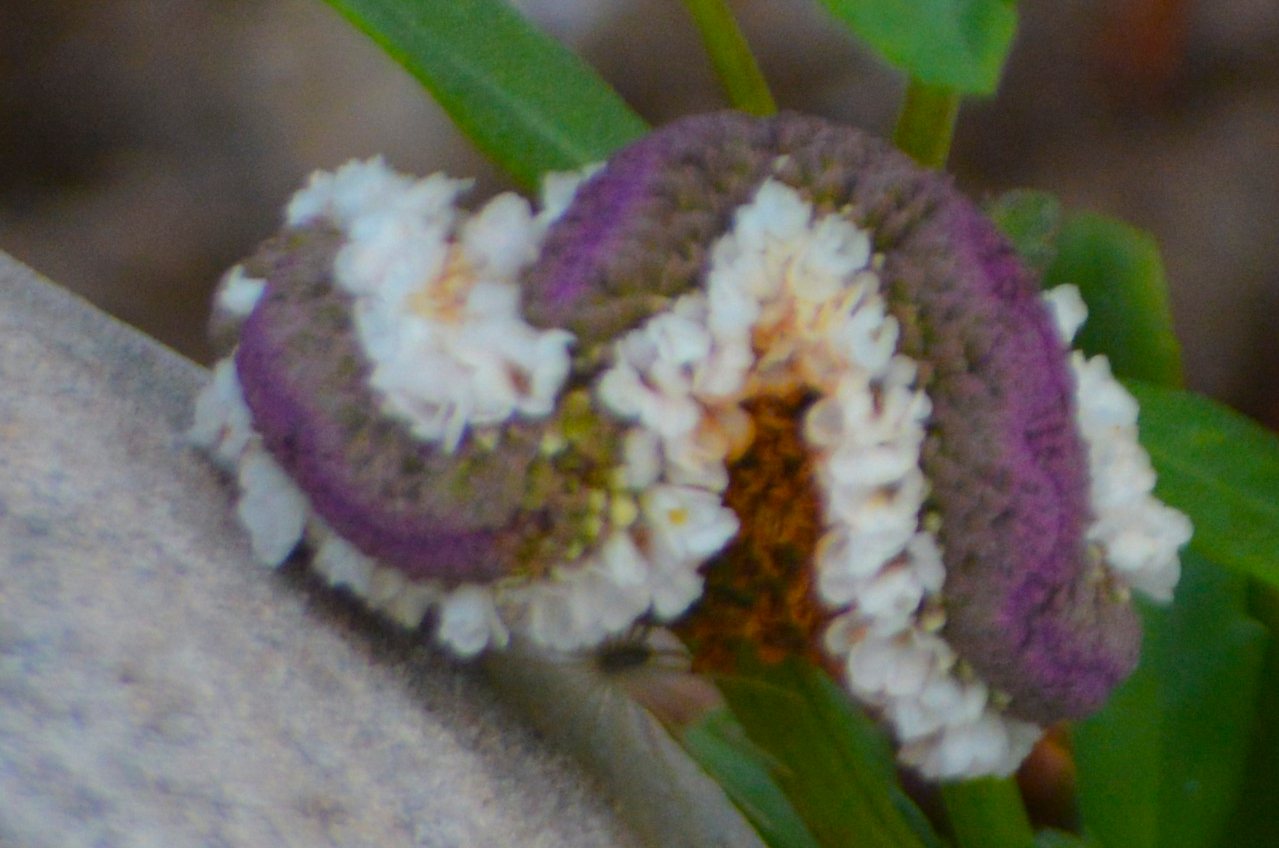
- Late spring through autumn, potentially year-round in frost-free climates; tiny white to pale lilac flowers surround darker purple centres in short, button-like heads.
- Foliage
- Evergreen. Small, opposite green leaves, usually toothed toward their tips, on creeping stems.
- Growth
- Fast in warm weather with adequate moisture.
- Care needed
- Low
The year at a glance
- Pollinators
- Drought tolerant
- Heat tolerant
- Wildlife
- Low allergen
| J | F | M | A | M | J | J | A | S | O | N | D | |
|---|---|---|---|---|---|---|---|---|---|---|---|---|
| Flowers | ||||||||||||
| Plant |
Northern hemisphere months. In Australia, shift them by six.
- Difficulty
- Moderate
- Toughness
- Fairly tough
Will it suit your garden?
Pick your zone, country, light and whether you have pets.
Full sun is 6 or more hours of direct sun a day, part shade 3 to 6 hours, shade under 3.
How it grows
Planting day
0.1 ft (0.03 m)
After 1 year
0.3 ft (0.08 m)
After 2 years
0.4 ft (0.12 m)
full size
About 2 years to full size.
From a typical nursery size, at an average rate for this kind of plant. A rule of thumb, not a forecast.
Good to know
- Cats and dogs
- Safe
- Native to
- the US and Australia
- In the garden
- Spreads vigorously: plan to contain it.
- Growth rate
- Fast
Care
Jobs through the year
- WaterMay, Sep–Oct, every 14 days
- Water established mats only if soil is dry; water new plants more often until runners root.
- WaterJun–Aug, every 7 days
- During prolonged drought, water deeply to maintain green cover and flowering.
- PruneApr–May
- Remove frost-killed stems once new growth reveals surviving growth.
- PruneMay–Sep, every 21 days
- Trim escaping runners before they root in neighbouring beds.
- FeedMay
- Feed lightly only if growth is weak on poor soil.
- ProtectOct–Nov
- Not reliably winter-hardy in zones 6–7; pot rooted sections and overwinter frost-free.
- Water new plants regularly until their runners have rooted into the surrounding soil.
- Once established, water during prolonged drought if you want continuous green cover and flowering.
- Use little or no fertiliser; feed lightly in spring only if growth is weak on poor soil.
- Keep mulch away from spreading runners where you want them to root.
- Edge beds regularly and pull runners out of neighbouring plants before they establish.
- Keep heavy foot traffic off new plantings; established mats tolerate occasional walking, not intensive play.
Pruning. Trim wandering stems whenever they cross bed edges or paving. In spring, shear away frost-damaged growth; occasional high mowing can tidy a lawn-style planting, but removes flowers.
Through the year
- Spring
- Remove dead or frost-damaged stems once new growth begins.
- Late spring
- Plant after hard frosts have passed, watering regularly while runners establish.
- Summer
- Check bed edges and remove runners spreading into neighbouring plants.
- Summer
- Water during extended dry spells if the mat becomes thin or stops flowering.
- Early autumn
- Lift rooted sections for propagation where there is enough warm weather left for establishment.
- Winter
- Reduce watering as growth slows; expect browning or dormancy where frost occurs.
In the garden
- Use as a flowering alternative to lawn in sunny areas receiving only light foot traffic.
- Plant between widely spaced stepping stones, keeping flowering growth away from barefoot routes.
- Let it knit together the foreground of warm-climate pollinator borders with blanket flowers and coreopsis.
- Use it beneath widely spaced ornamental grasses to cover bare soil without hiding their clumps.
- Allow it to trail over low retaining walls where spreading stems can be contained.
Garden styles it suits: Wildlife garden, Pollinator garden, Low-maintenance, Coastal, Desert / xeriscape and Native meadow.
Plant it with: Blanket flower, Lanceleaf coreopsis, Gulf muhly, Blue grama and Yarrow.
Wildlife: Flowers provide nectar for bees, butterflies and other small insects. In parts of its American range, the foliage feeds caterpillars of butterflies including the white peacock, phaon crescent and common buckeye.
Problems to watch for
- Unwanted spread: stems root wherever they touch suitable soil; trim edges and lift rooted runners before they enter other plantings.
- Thin growth in shade: move to a sunnier position or open up overhead cover rather than adding fertiliser.
- Drought browning: water deeply during extended dry periods; rooted plants often recover when moisture returns.
- Frost damage: foliage may brown or die back near its cold limit; leave it until spring, then remove dead growth.
Safety
Not known to be toxic to people, cats, dogs or horses. No particular part is recognised as poisonous, although species-specific safety information is limited and it should not be treated as an edible plant.
Where it spreads. Rooting stems can spread aggressively through beds and lawns in warm regions, including the southern United States and warmer parts of Australia. It is native in parts of both countries, so vigorous spread does not necessarily mean it is an introduced invasive there. Do not confuse it with Phyla canescens, an invasive weed in Australia;
Easily confused with
Lippia (Phyla canescens)
Usually has greyer, more densely hairy foliage and pink to lilac flower heads. The two species can be difficult to separate, so seek expert identification where invasive-plant restrictions apply.
Corsican mint (Mentha requienii)
Has much smaller, rounded leaves with a strong mint scent when crushed; its flowers do not form frogfruit's raised button-like heads.
White clover (Trifolium repens)
Has leaves divided into three leaflets and larger, rounded flower heads; frogfruit has simple leaves arranged in opposite pairs.
The name
The species name nodiflora means 'node-flowered', referring to the flower stalks arising at the stem nodes.
Propagation. Lift and replant rooted sections of stem in spring or early summer. Stem cuttings also root readily in moist growing medium; keep them lightly shaded until established.
Checked against open data
- Accepted botanical name
- Phyla nodiflora
- In the US and Canada
- Native in the lower 48 states, Puerto Rico and US Virgin Islands. Introduced in Hawaii and Pacific Basin.
- Native range
- Alabama, Albania, Aldabra, Algeria, Andaman Is., Angola, Argentina Northeast, Argentina Northwest, Argentina South, Arizona, Arkansas and Aruba.
- Measured
- Soil pH 6 to 8.5. Average height 30 cm.
Sources: GBIF (CC BY 4.0), USDA PLANTS and Trefle (CC BY 4.0). The care and design notes are LandscapeGPT's own.
See it in your own yard.
Upload a photo of your yard and see it redesigned with plants that suit your climate, each checked against your zone.