Gray dogwood
Cornus racemosa. Family Cornaceae. Shrub.
Also called Grey dogwood, Panicled dogwood.
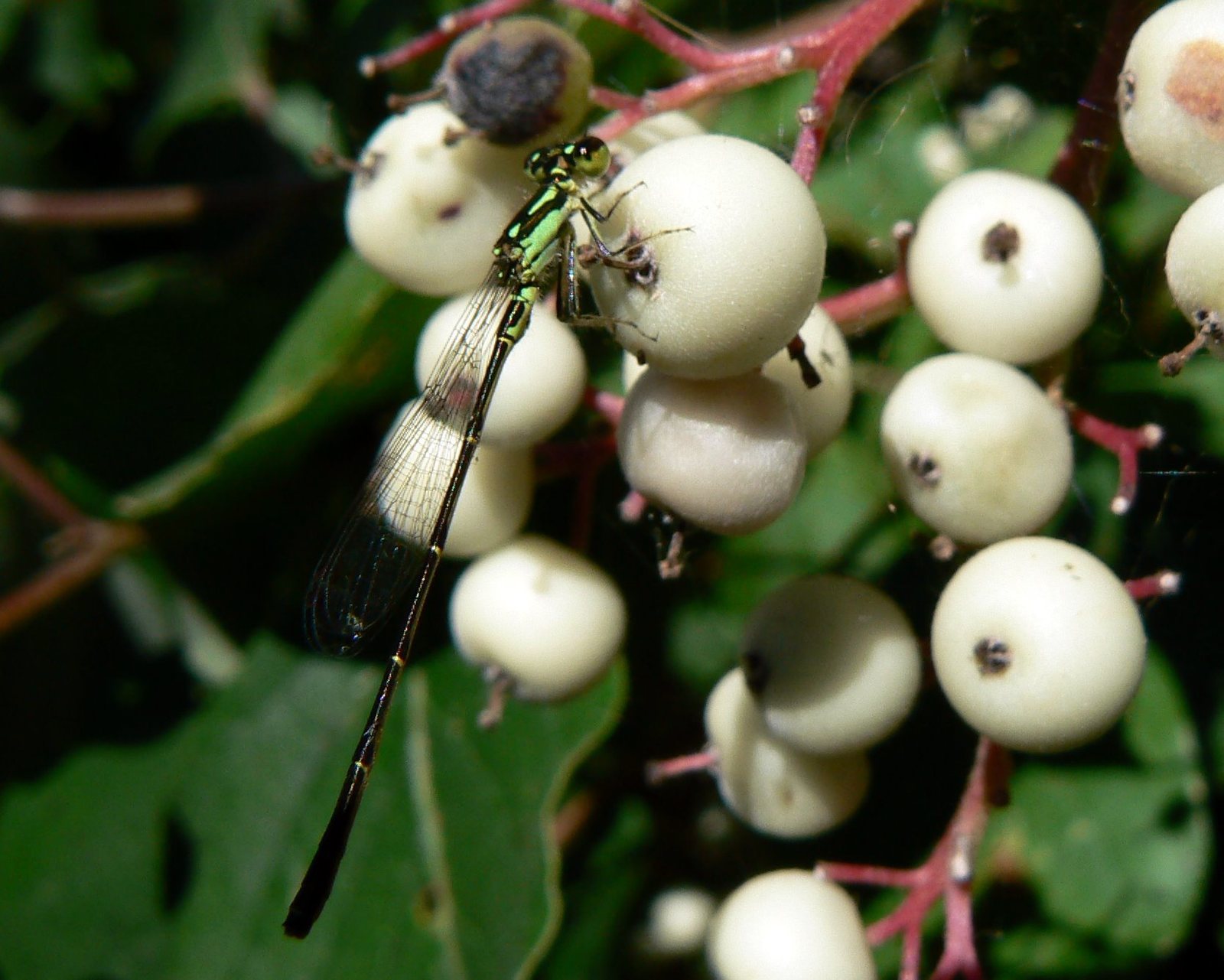
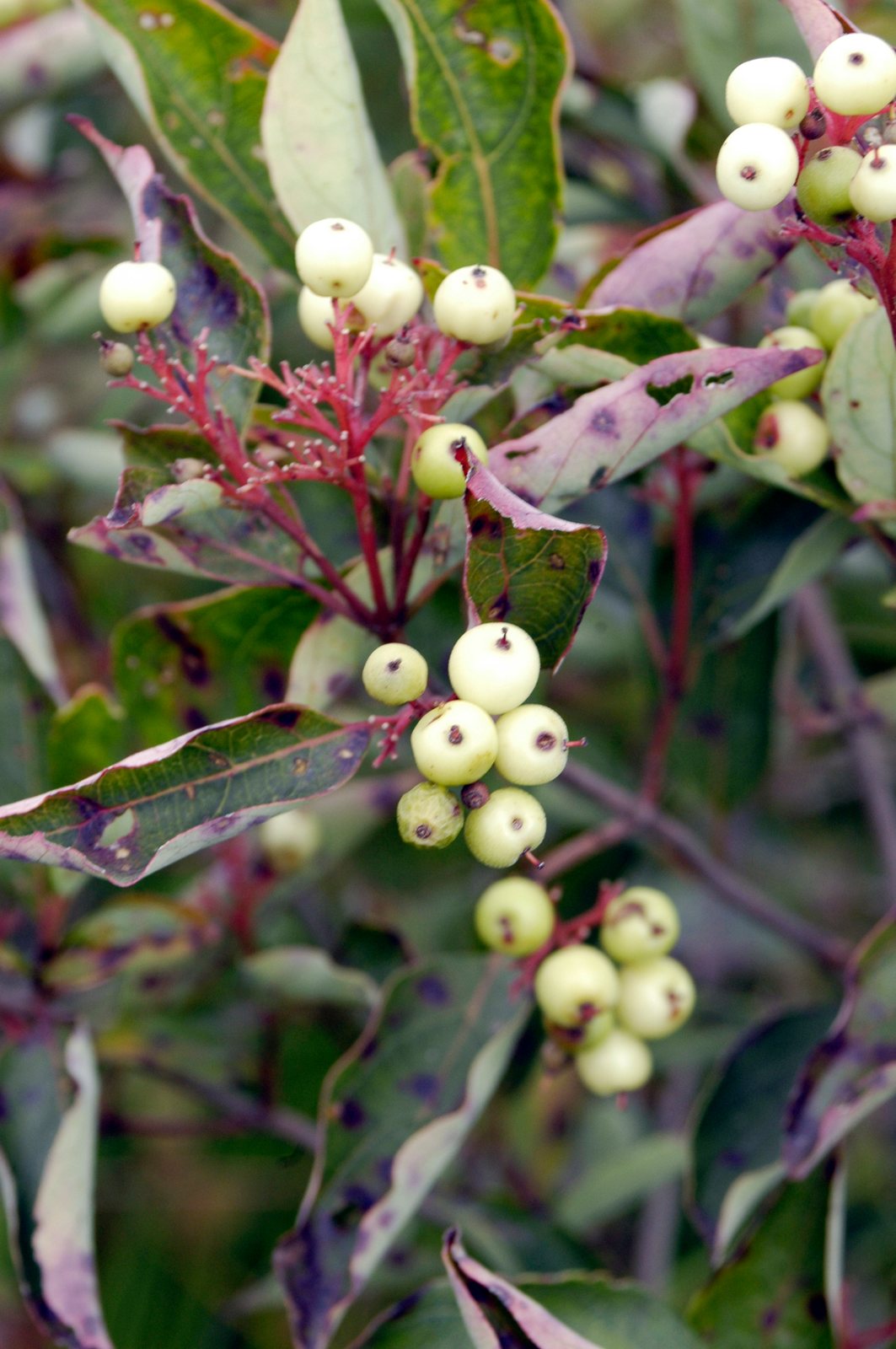
Gray dogwood is a deciduous, suckering shrub native to eastern and central North America. Gardeners grow it for its white flower clusters, white berries on red stalks, and ability to form a dense wildlife hedge or woodland-edge thicket.
At a glance
- Sun
- Full sun to partial shade; flowering, fruiting and autumn colour are usually better with more sun.
- Water
- Water regularly during the first growing season. Established plants tolerate short dry spells, though growth is strongest in evenly moist soil.
- Soil
- Adaptable to clay, loam and sandy soils, including alkaline ground. Prefers moist, well-drained soil but tolerates occasional wetness and relatively dry sites once established.
- Height
- 10-15 ft (3-4.6 m)
- Spread
- 10-15 ft (3-4.6 m), spreading wider over time through suckers
- Flowers
- Small creamy-white flowers in branched clusters in late spring to early summer.
- Foliage
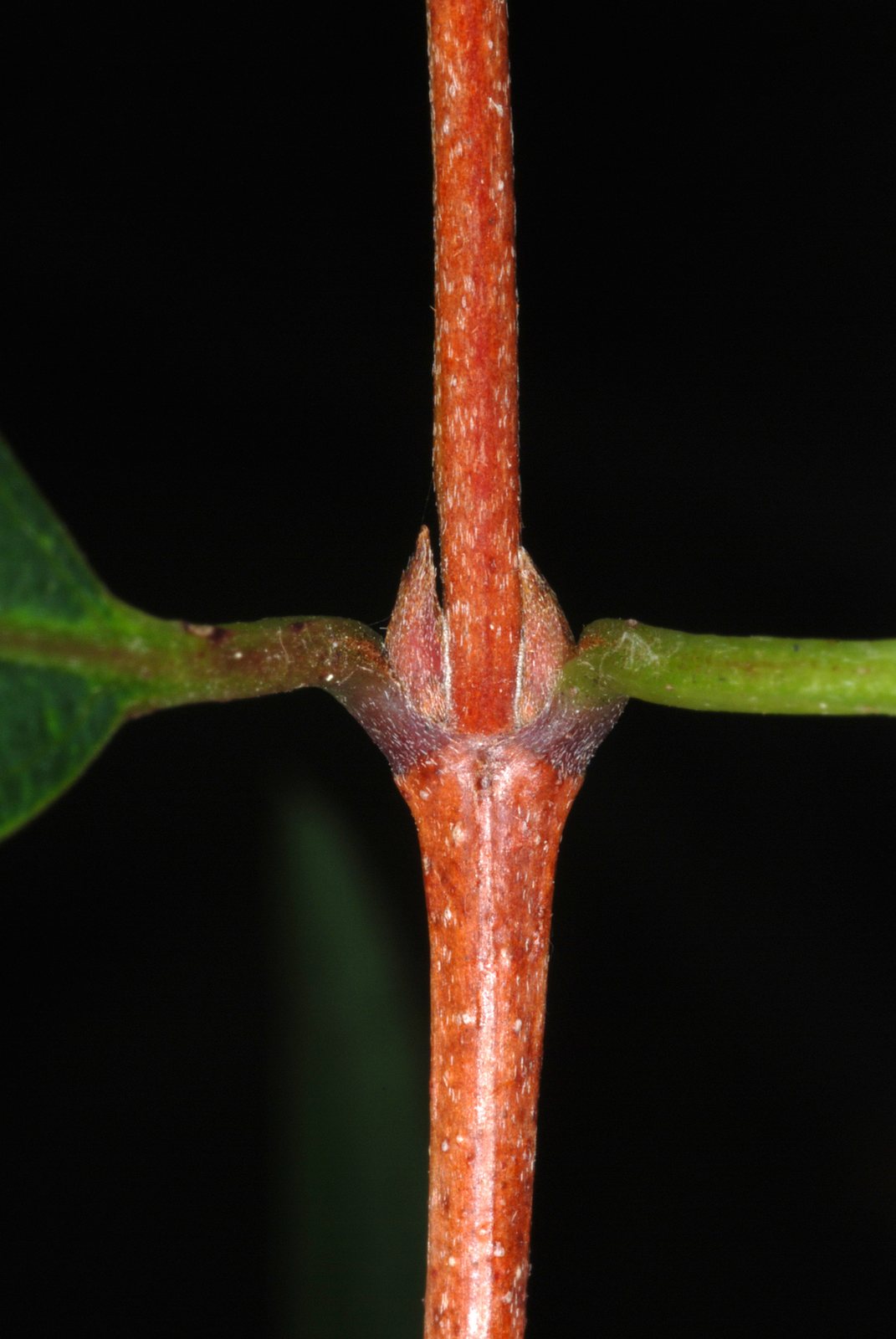
- Opposite, pointed green leaves with curved veins; autumn colour ranges from muted red to purple and is not equally strong every year.
- Growth
- Moderate to fast; suckering plants gradually form colonies.
- Care needed
- Low
The year at a glance
- Pollinators
- Cold hardy
- Wildlife
- Low allergen
| J | F | M | A | M | J | J | A | S | O | N | D | |
|---|---|---|---|---|---|---|---|---|---|---|---|---|
| Flowers | ||||||||||||
| Fruit | ||||||||||||
| Plant |
Northern hemisphere months. In Australia, shift them by six.
- Difficulty
- Easy
- Toughness
- Very tough
Will it suit your garden?
Pick your zone, country, light and whether you have pets.
Full sun is 6 or more hours of direct sun a day, part shade 3 to 6 hours, shade under 3.
How it grows
Planting day
1.6 ft (0.5 m)
After 1 year
4 ft (1.3 m)
After 2 years
7 ft (2.2 m)
After 3 years
10 ft (3 m)
After 5 years
12 ft (3.8 m)
full size
About 4 years to full size.
From a typical nursery size, at an average rate for this kind of plant. A rule of thumb, not a forecast.
Good to know
- Cats and dogs
- Safe
- Native to
- the US and Canada
- In the garden
- Spreads vigorously: plan to contain it.
- Growth rate
- Fast
Care
Jobs through the year
- WaterApr–May, Sep–Oct, every 14 days
- Water established shrubs deeply only when soil is dry; water more regularly during the first growing season.
- WaterJun–Aug, every 10 days
- Water established shrubs during extended dry spells; skip when rainfall maintains soil moisture.
- MulchMar–Apr
- Apply 5–8 cm of organic mulch, keeping it clear of stem bases.
- PruneFeb–Mar
- Remove dead or crossing wood; cut up to one-third of the oldest stems to ground level if crowded.
- PruneMay–Aug
- Remove unwanted suckers at their origin; avoid shearing flowering and fruiting branches.
- Water deeply during dry weather in the first growing season, rather than giving frequent light sprinklings.
- Spread 2-3 in (5-8 cm) of organic mulch over the root area, keeping it clear of the stems.
- Avoid routine feeding; use a light compost dressing in spring if growth is weak on poor soil.
- Remove unwanted suckers at their point of origin before they enlarge the colony.
- Allow room for its mature width rather than planting it beside narrow paths or small beds.
Pruning. In late winter or early spring, remove dead or crossing wood and cut up to one-third of the oldest stems to ground level if renewal is needed. Avoid routine shearing, which spoils its natural shape and reduces flowering and fruiting.
Through the year
- Late winter
- Remove damaged stems and thin older growth if the shrub has become crowded.
- Spring
- Plant while conditions are cool, water thoroughly and mulch the root area.
- Late spring
- Check expanding leaves for mildew or spotting; water at soil level rather than wetting the foliage.
- Summer
- Water young plants during dry spells and remove suckers spreading beyond the intended area.
- Late summer
- Leave the white berries and red fruit stalks for birds and seasonal interest.
- Autumn
- Plant new shrubs where the soil remains workable; water well before prolonged dry or frozen conditions.
In the garden
- Plant as an informal boundary hedge where its suckering habit can create a broad, dense screen.
- Use along a woodland edge with serviceberry and viburnums for layered flowers, fruit and autumn colour.
- Plant in a large wildlife border with asters and goldenrods, leaving room for the shrub to expand.
- Use in naturalistic bank plantings where a spreading root system and dense cover are useful.
Garden styles it suits: Woodland, Wildlife garden, Native hedgerow, Rewilded, Low-maintenance and Autumn colour.
Plant it with: Serviceberry, Blackhaw viburnum, Ninebark, New England aster, Wild bergamot and Switchgrass.
Wildlife: Flowers support visiting bees and other insects. Birds eat the white fruits, and established thickets provide nesting cover and shelter; deer may browse young growth.
Problems to watch for
- Unwanted suckering: remove new shoots promptly, digging out their connecting roots where practical; choose a different shrub if space is tight.
- Powdery mildew or leaf spots: improve airflow, avoid overhead watering and remove heavily affected fallen leaves; minor late-season damage rarely needs treatment.
- Dogwood sawfly: inspect leaf undersides for groups of feeding larvae and hand-pick them while small; caterpillar-specific Bt products do not control sawflies.
- Poor flowering in deep shade: thin nearby vegetation or move young plants to a brighter position.
Safety
Not known to be toxic to people, cats, dogs or horses. The berries are not recommended as human food, and eating plant material may cause digestive upset in pets or people.
Where it spreads. Spreads vigorously by suckers and can encroach on meadows, prairie remnants and open ground within its native range in eastern and central North America. It is a native thicket-former there rather than an introduced invasive plant; avoid it where a tightly contained shrub is needed.
Easily confused with
Red-osier dogwood (Cornus sericea)
Usually has conspicuous red young stems in winter and broader, flatter flower clusters. Gray dogwood has mostly gray older stems and branched, somewhat domed flower clusters.
Silky dogwood (Cornus amomum)
Has blue to bluish-white ripe fruits and silky hairs on young growth and leaf undersides; gray dogwood has white fruits held on conspicuous red stalks.
Pagoda dogwood (Cornus alternifolia)
Has alternate rather than opposite leaves, tiered branches and dark blue-black fruits; gray dogwood has opposite leaves and white fruits.
The name
Gray dogwood refers to the gray bark of older stems, while racemosa refers to its clustered flowers.
Propagation. Lift rooted suckers during dormancy, keeping a good portion of roots attached, or take softwood cuttings in early summer. Seed needs dormancy-breaking treatment and can be slow and irregular to germinate.
Checked against open data
- Accepted botanical name
- Cornus racemosa
- In the US and Canada
- Native in Canada and the lower 48 states.
- Native range
- Connecticut, District of Columbia, Illinois, Indiana, Iowa, Kentucky, Maine, Manitoba, Maryland, Masachusettes, Michigan and Minnesota.
- Measured
- Soil pH 4.8 to 7.4. Average height 65 cm.
Sources: GBIF (CC BY 4.0), USDA PLANTS and Trefle (CC BY 4.0). The care and design notes are LandscapeGPT's own.
See it in your own yard.
Upload a photo of your yard and see it redesigned with plants that suit your climate, each checked against your zone.