Gray-headed coneflower
Ratibida pinnata. Family Asteraceae. Perennial.
Also called Grey-headed coneflower, Yellow coneflower, Prairie coneflower.
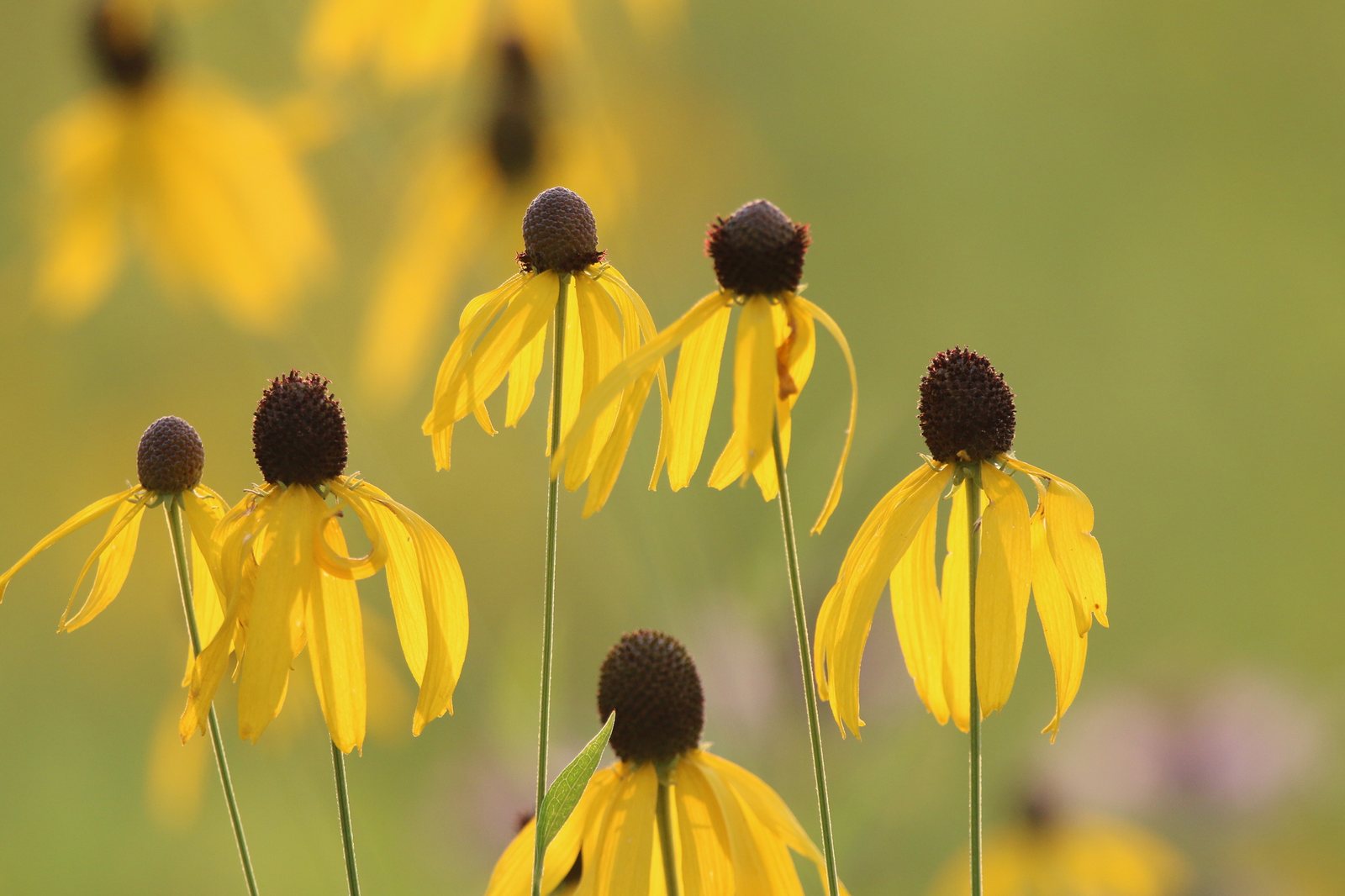
This upright perennial from central and eastern North America carries drooping yellow petals around raised, gray-brown cones. Gardeners grow it for its long summer flowering, value to pollinators and natural fit among prairie grasses.
At a glance
- Sun
- Full sun is best; tolerates light shade but may flower less and lean.
- Water
- Water regularly during establishment. Once established, it tolerates dry spells; water during prolonged drought for better flowering.
- Soil
- Well-drained sandy, loamy or clay soil, preferably moderately fertile. Tolerates lean soil and seasonal dryness, but not persistent waterlogging.
- Height
- 3-5 ft (0.9-1.5 m)
- Spread
- 1.5-2 ft (0.45-0.6 m)
- Flowers
- Summer into early autumn; yellow, downward-curving petals surround prominent cones that turn from gray to brown.
- Foliage
- Green, rough-textured leaves divided into narrow lobes; lower leaves are larger than those near the flowers.
- Growth
- Moderate to fast; seed-grown plants may take until their second year to flower well.
- Care needed
- Low
The year at a glance
- Pollinators
- Deer resistant
- Drought tolerant
- Cold hardy
- Wildlife
- Low allergen
| J | F | M | A | M | J | J | A | S | O | N | D | |
|---|---|---|---|---|---|---|---|---|---|---|---|---|
| Flowers | ||||||||||||
| Fruit | ||||||||||||
| Plant |
Northern hemisphere months. In Australia, shift them by six.
- Difficulty
- Easy
- Toughness
- Very tough
Will it suit your garden?
Pick your zone, country, light and whether you have pets.
Full sun is 6 or more hours of direct sun a day, part shade 3 to 6 hours, shade under 3.
How it grows
Planting day
1 ft (0.3 m)
After 1 year
2.2 ft (0.68 m)
After 2 years
3 ft (1.1 m)
After 3 years
4 ft (1.2 m)
full size
About 2 years to full size.
From a typical nursery size, at an average rate for this kind of plant. A rule of thumb, not a forecast.
Good to know
- Cats and dogs
- Safe
- Native to
- the US and Canada
- Growth rate
- Fast
Care
Jobs through the year
- WaterApr–May, Sep, every 21 days
- Water established plants only in prolonged drought; new plants need more frequent deep watering.
- WaterJun–Aug, every 14 days
- Soak established plants during prolonged dry spells for better flowering; skip after adequate rain.
- PruneFeb–Mar
- Cut winter-standing stems to 5–10 cm above the crown before new growth.
- DivideMar–Apr
- Divide only crowded clumps with declining flowering or sparse centres; water divisions thoroughly.
- MulchApr
- Apply only a light mulch and keep it clear of the crown.
- ProtectMay
- Add discreet supports early where wind or rich soil makes stems lean.
- Water new plants deeply when the root zone begins to dry during their first growing season.
- Avoid routine fertilizer; rich feeding encourages tall, floppy stems.
- Keep mulch light and clear of the crown, especially in damp climates.
- Use a discreet support early in growth if plants lean in exposed sites or rich soil.
- Divide crowded clumps in spring when flowering declines or the centre becomes sparse.
Pruning. Leave stems and seedheads standing through winter for birds and structure, then cut them to 2-4 in (5-10 cm) above the ground in late winter or early spring. Remove spent heads earlier if you want to limit self-seeding.
Through the year
- Late winter
- Cut back old stems before new shoots develop, leaving a short stub above each crown.
- Spring
- Plant nursery-grown plants and divide established clumps if needed; water divisions thoroughly.
- Late spring
- Install supports where needed before stems grow tall.
- Summer
- Water young plants during dry weather and check for leaning stems.
- Early autumn
- Keep seedheads for birds, or remove them before seeds fall to reduce seedlings.
- Late autumn
- Sow seed outdoors in a prepared seedbed or pots so winter cold can help break dormancy.
In the garden
- Plant in loose groups through a sunny meadow border with little bluestem and switchgrass.
- Use behind shorter perennials so the tall flower stems rise above lower planting.
- Combine with purple coneflowers and blazing stars for contrasting flower shapes and colours.
- Leave seedheads among ornamental grasses for autumn and winter structure.
Garden styles it suits: Native meadow, Midwest prairie, New perennial (prairie), Wildlife garden, Pollinator garden and Cottage garden.
Plant it with: Little bluestem, Switchgrass, Purple coneflower, Wild bergamot, Prairie blazing star and Butterfly weed.
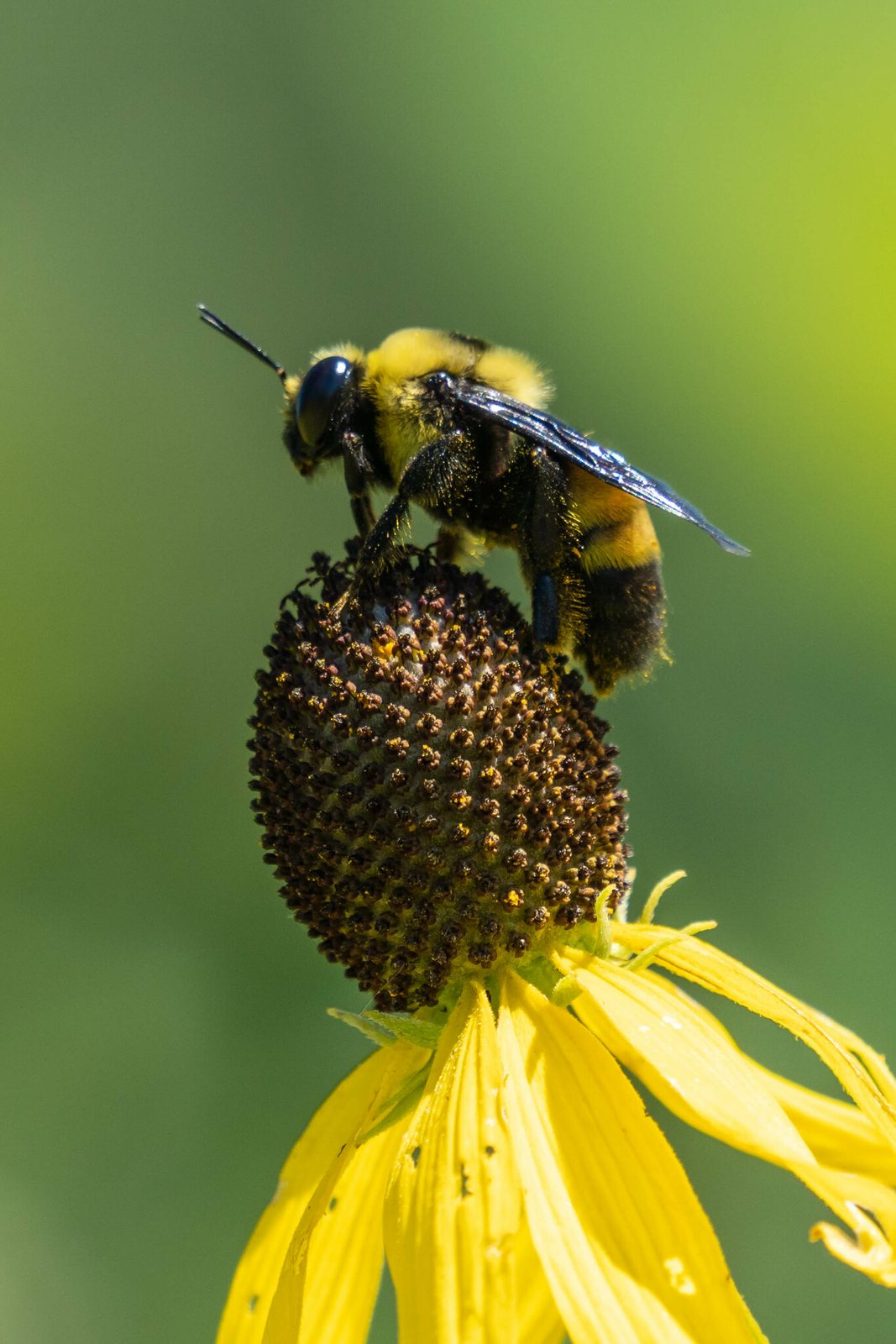
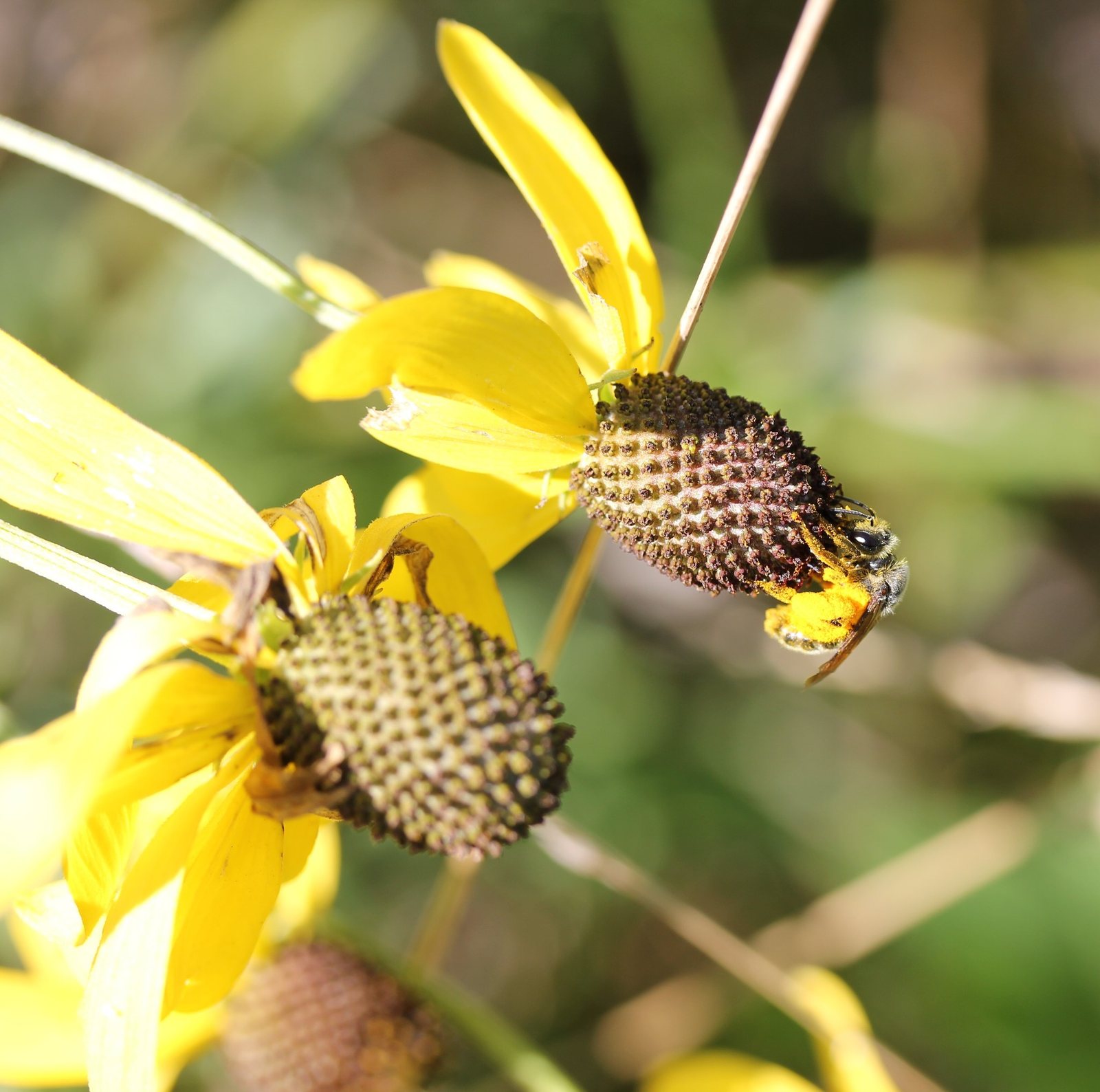
Wildlife: Flowers attract bees, butterflies and other pollinating insects. Finches and other seed-eating birds feed on the mature seedheads.
Problems to watch for
- Flopping stems: provide full sun, avoid fertilizer and use early supports where soil is rich or the site is exposed.
- Powdery mildew or leaf spots: allow good air circulation, water at soil level and remove badly affected fallen foliage.
- Crown or root rot in wet soil: improve drainage or move plants to a better-drained position.
- Unwanted seedlings: remove seedheads before they shed and pull surplus seedlings while small.
Safety
Not known to be toxic to people, cats, dogs or horses. No particular plant part is established as poisonous, but species-specific safety information is limited; do not treat it as an edible plant.
Easily confused with
Mexican hat (Ratibida columnifera)
Its central cone is much longer and narrower, forming a tall cylinder; petals may be yellow, red-brown or both. Gray-headed coneflower has a shorter, rounded to oval cone.
Cutleaf coneflower (Rudbeckia laciniata)
Usually taller, with broader leaf lobes and greenish cones. Gray-headed coneflower has more narrowly divided leaves and gray-brown cones.
Black-eyed Susan (Rudbeckia hirta)
Usually shorter, with mostly undivided, hairy leaves and dark brown centres; its petals generally spread outward rather than hanging strongly downward.
The name
The name pinnata refers to the feather-like division of the leaves, while gray-headed describes the cone's grayish appearance before it matures.
Propagation. Divide clumps in spring, or grow from seed. Sow outdoors in autumn, or give seed about 4-8 weeks of cold, moist treatment before spring sowing; press it into the surface and cover only lightly.
Checked against open data
- Accepted botanical name
- Ratibida pinnata
- In the US and Canada
- Native in Canada and the lower 48 states.
- Native range
- Alabama, Arkansas, Florida, Georgia, Illinois, Indiana, Iowa, Kansas, Kentucky, Louisiana, Masachusettes and Michigan.
- Measured
- Soil pH 5.6 to 6.8. Average height 109 cm.
Sources: GBIF (CC BY 4.0), USDA PLANTS and Trefle (CC BY 4.0). The care and design notes are LandscapeGPT's own.
See it in your own yard.
Upload a photo of your yard and see it redesigned with plants that suit your climate, each checked against your zone.