Great white trillium
Trillium grandiflorum. Family Melanthiaceae. Perennial.
Also called Large-flowered trillium, White trillium, White wake-robin.
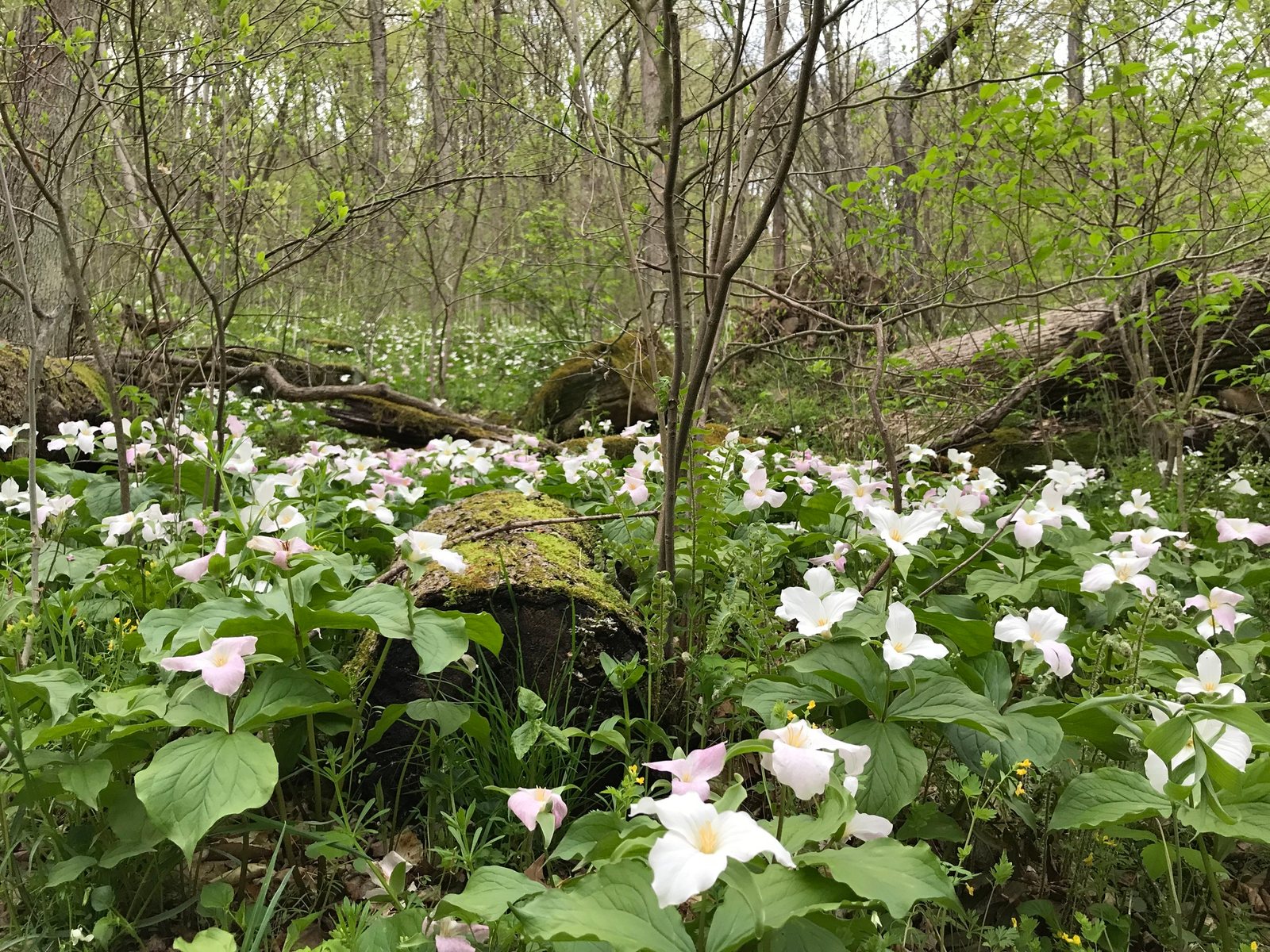
Great white trillium is a slow-growing woodland perennial native to eastern North America, grown for its large, three-petalled white spring flowers above a whorl of three broad leaves. It forms long-lived clumps in cool, humus-rich shade, then usually disappears below ground in summer. Buy nursery-propagated plants rather than wild-collected rhizomes.
At a glance
- Sun
- Partial shade or dappled shade beneath deciduous trees; avoid hot afternoon sun.
- Water
- Keep evenly moist during spring growth, with good drainage. Do not let the soil become completely dry during summer dormancy.
- Soil
- Humus-rich, well-drained woodland soil, preferably slightly acidic to neutral; tolerates mildly alkaline soil.
- Height
- 1-1.5 ft (0.3-0.45 m)
- Spread
- 1-1.5 ft (0.3-0.45 m), slowly forming wider colonies
- Flowers
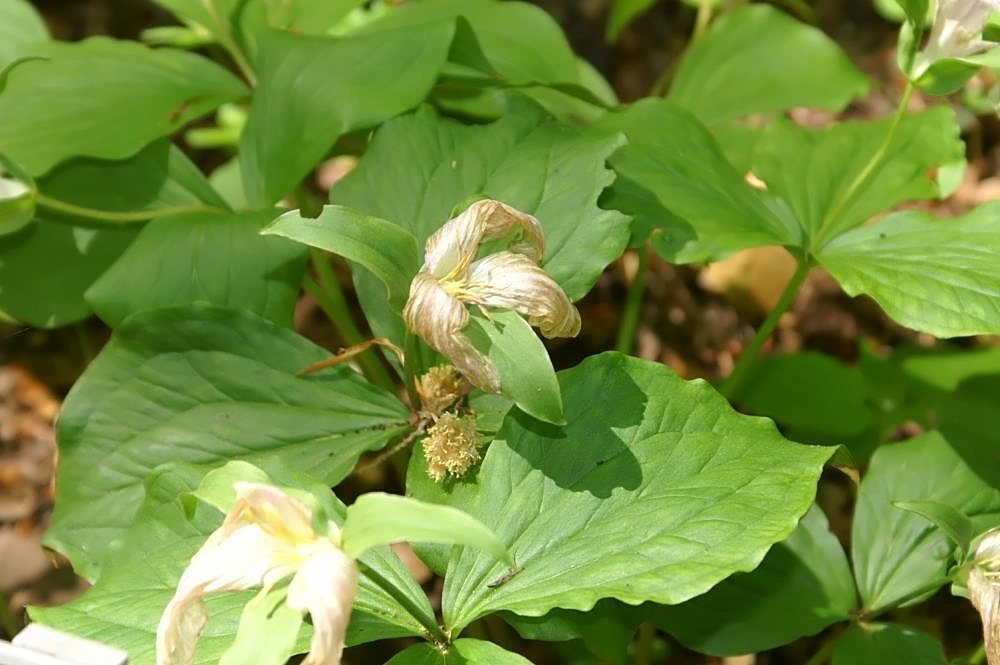
- Mid- to late spring; large white flowers often turn pink as they age.
- Foliage
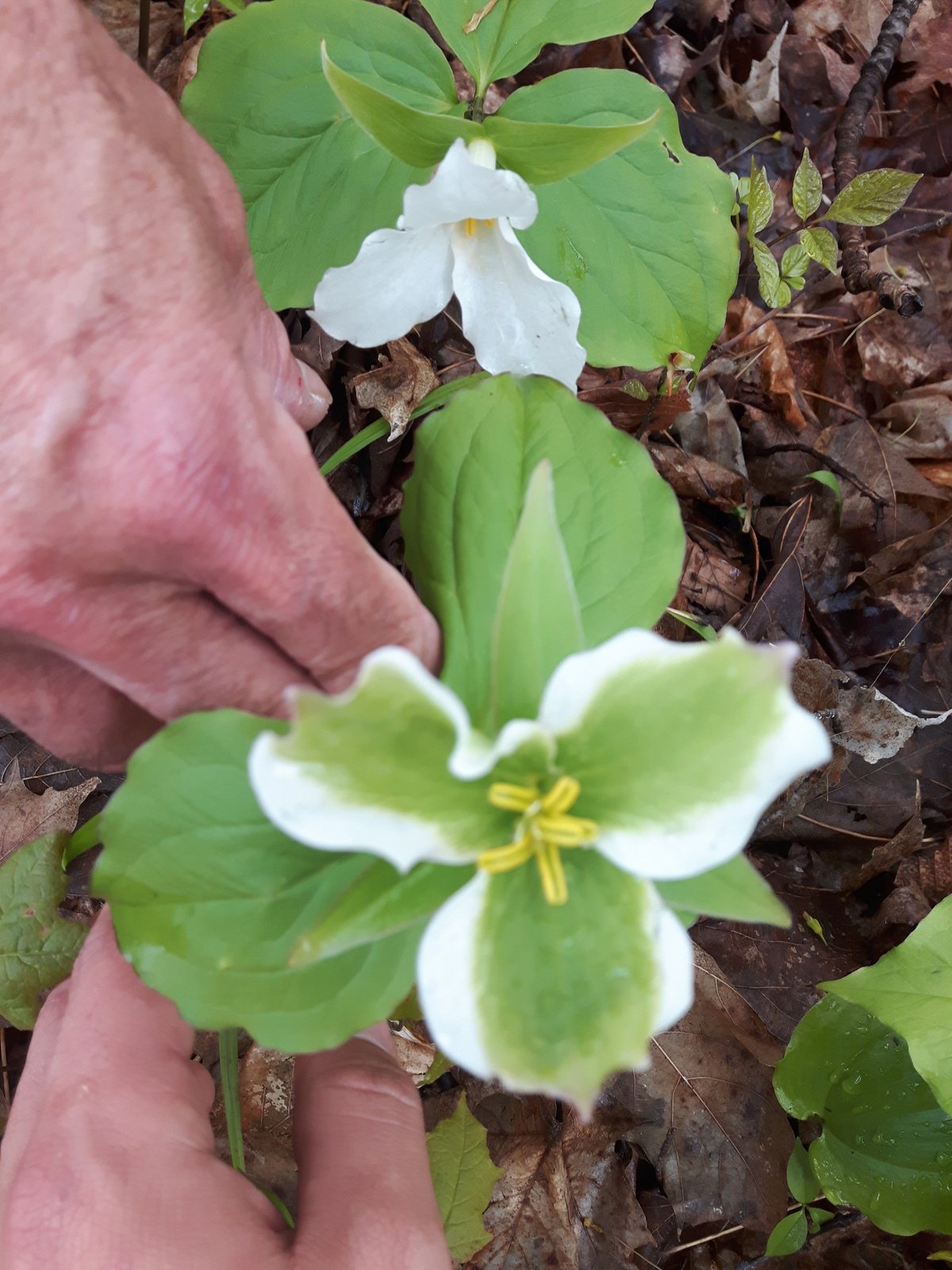
- Three broad, pointed green leaves held in a whorl beneath each flower; foliage yellows and dies back in summer.
- Growth
- Slow; young plants can take several years to flower.
- Care needed
- Low
The year at a glance
- Pollinators
- Cold hardy
- Wildlife
- Low allergen
| J | F | M | A | M | J | J | A | S | O | N | D | |
|---|---|---|---|---|---|---|---|---|---|---|---|---|
| Flowers | ||||||||||||
| Fruit | ||||||||||||
| Plant |
Northern hemisphere months. In Australia, shift them by six.
- Difficulty
- Moderate
- Toughness
- Needs looking after
Will it suit your garden?
Pick your zone, country, light and whether you have pets.
Full sun is 6 or more hours of direct sun a day, part shade 3 to 6 hours, shade under 3.
How it grows
Planting day
1 ft (0.3 m)
After 1 year
1 ft (0.32 m)
After 2 years
1.1 ft (0.33 m)
After 3 years
1.1 ft (0.35 m)
After 5 years
1.2 ft (0.38 m)
full size
About 5 years to full size.
From a typical nursery size, at an average rate for this kind of plant. A rule of thumb, not a forecast.
Good to know
- Cats and dogs
- Mildly toxic: may upset a stomach
- Native to
- the US and Canada
- Growth rate
- Slow
Care
Jobs through the year
- WaterMar–May, every 7 days
- In dry weather, keep established plants evenly moist during spring growth without waterlogging.
- WaterJun–Sep, every 14 days
- Check dormant clumps during drought and water if soil is becoming very dry; new plants need closer attention.
- MulchOct–Nov
- Top-dress lightly with leaf mould or well-rotted compost and retain loose fallen leaves.
- ProtectMar–May, every 7 days
- Protect emerging shoots from slugs and browsing deer.
- ProtectJun
- Leave all green foliage intact and mark clumps before summer dormancy to prevent accidental digging.
- DivideSep–Oct
- Divide dormant clumps only when necessary; otherwise leave shallow rhizomes undisturbed.
- Water during dry spring weather so the root zone stays moist but not waterlogged.
- Apply a thin layer of leaf mould or well-rotted compost each autumn; avoid heavy feeding.
- Leave foliage intact until it has completely yellowed so the rhizome can replenish its reserves.
- Keep cultivation and digging away from the shallow rhizomes, and mark dormant clumps.
- Leave established clumps undisturbed; divide only when necessary.
Pruning. No routine pruning is needed. Remove dead foliage after it has fully yellowed, but do not cut or pick green stems.
Through the year
- Early spring
- Watch for emerging shoots and protect them from slugs and browsing deer.
- Spring
- Water during dry spells and enjoy the flowers without picking their leafy stems.
- Early summer
- Allow foliage to yellow naturally; mark clumps before they disappear.
- Summer
- Check dormant planting areas during drought and water if the soil becomes very dry.
- Autumn
- Plant nursery-propagated rhizomes or carefully divide established clumps if necessary.
- Late autumn
- Top-dress with leaf mould and retain a loose covering of fallen leaves.
In the garden
- Plant in small groups beneath deciduous trees for a white spring display before the canopy closes.
- Combine with ferns and hostas, whose later foliage fills the space left by dormant trilliums.
- Use beside shaded woodland paths where the flowers can be seen closely without stepping into the planting.
- Include in a shaded white garden with foamflower and Solomon's seal.
Garden styles it suits: Woodland, Wildflower, White garden, Secret garden, Traditional and Romantic rose garden.
Plant it with: Foamflower, Solomon's seal, Wild ginger, Christmas fern, Hostas and Virginia bluebells.
Wildlife: Flowers attract some native bees and other insects. Ants carry away the seeds for their nutritious attached structures, helping disperse them. Deer readily browse the shoots.
Problems to watch for
- Slugs and snails chew emerging shoots: inspect during damp evenings, remove by hand, and use wildlife-conscious slug control where needed.
- Deer browse leaves and flowers: protect plants with fencing or a suitable repellent; repeated browsing can weaken clumps.
- Rhizome rot in waterlogged soil: improve drainage or move plants to a raised, humus-rich woodland bed.
- Poor flowering after planting or disturbance: allow several years to establish, retain all green foliage, and check for drought or excessive shade.
Safety
Roots and rhizomes contain saponins and may cause nausea, vomiting or diarrhoea if eaten by people. Toxicity information for cats, dogs and horses is limited and inconsistent, so treat the plant as potentially harmful rather than safe to eat; keep pets and livestock from chewing it.
Easily confused with
Nodding trillium (Trillium cernuum)
Its smaller white flower hangs beneath the leaves; great white trillium holds its larger flower upright above them.
White trillium (Trillium ovatum)
This western North American species looks very similar and also ages pink. It generally has shorter anthers and proportionally longer filaments; origin and close inspection are often needed.
Painted trillium (Trillium undulatum)
Its white petals have wavy edges and a conspicuous red-purple marking near the base, unlike the usually plain white petals of great white trillium.
The name
Trillium refers to the plant's flower and leaf parts occurring in threes, while grandiflorum means large-flowered.
Propagation. Sow fresh seed promptly in a sheltered outdoor seed bed or pots; germination is slow and may take two seasonal cycles, with flowering often taking five to seven years or longer. Established, multi-crowned clumps can be divided carefully in autumn, but recover slowly.
Checked against open data
- Accepted botanical name
- Trillium grandiflorum
- In the US and Canada
- Native in Canada and the lower 48 states.
- Native range
- Alabama, Connecticut, Delaware, Georgia, Illinois, Indiana, Iowa, Kentucky, Maine, Maryland, Masachusettes and Michigan.
- Measured
- Average height 23 cm.
Sources: GBIF (CC BY 4.0), USDA PLANTS and Trefle (CC BY 4.0). The care and design notes are LandscapeGPT's own.
See it in your own yard.
Upload a photo of your yard and see it redesigned with plants that suit your climate, each checked against your zone.