Green Island ficus
Ficus microcarpa 'Green Island'. Family Moraceae. Shrub.
Also called Green Island fig.
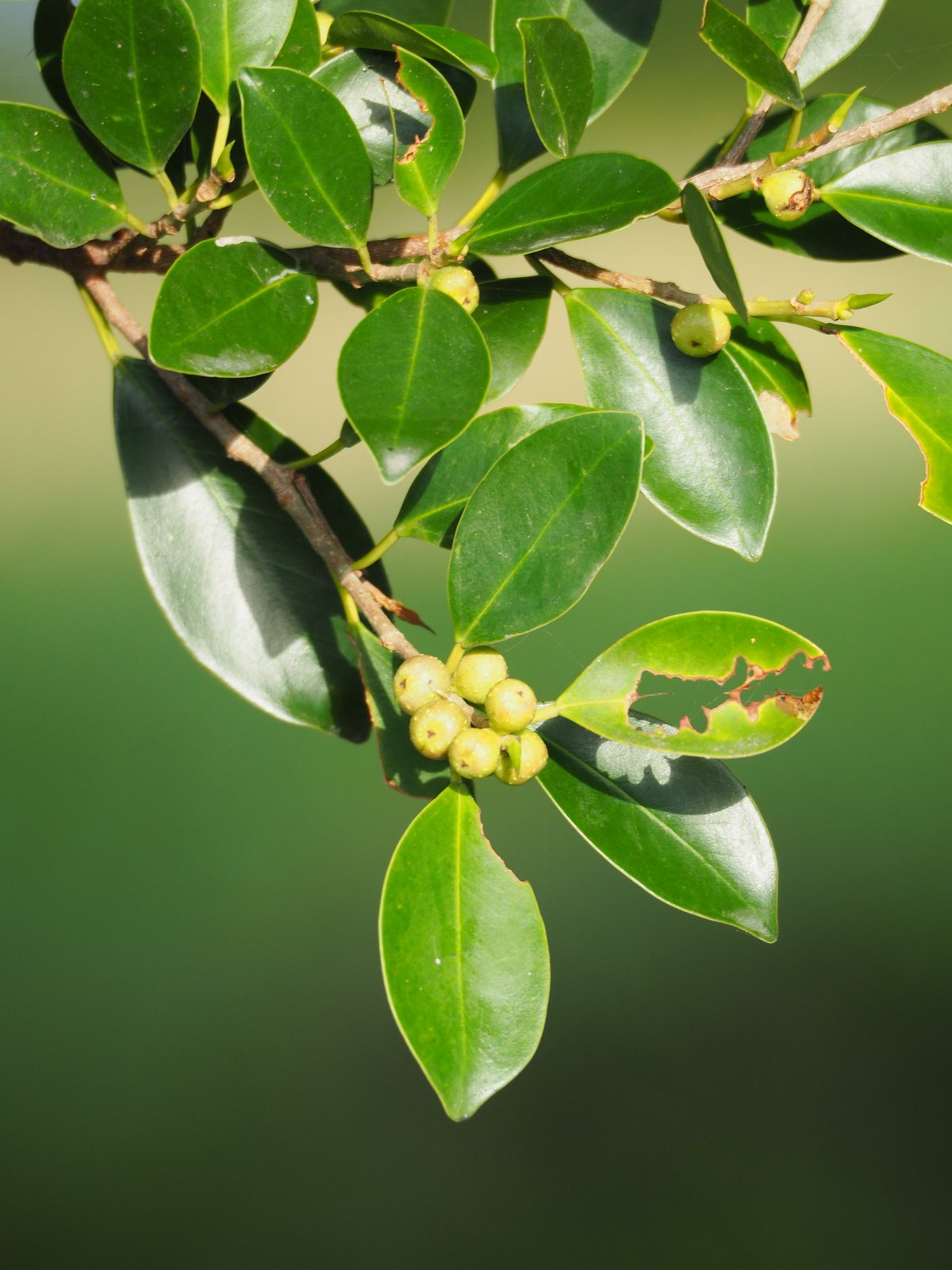
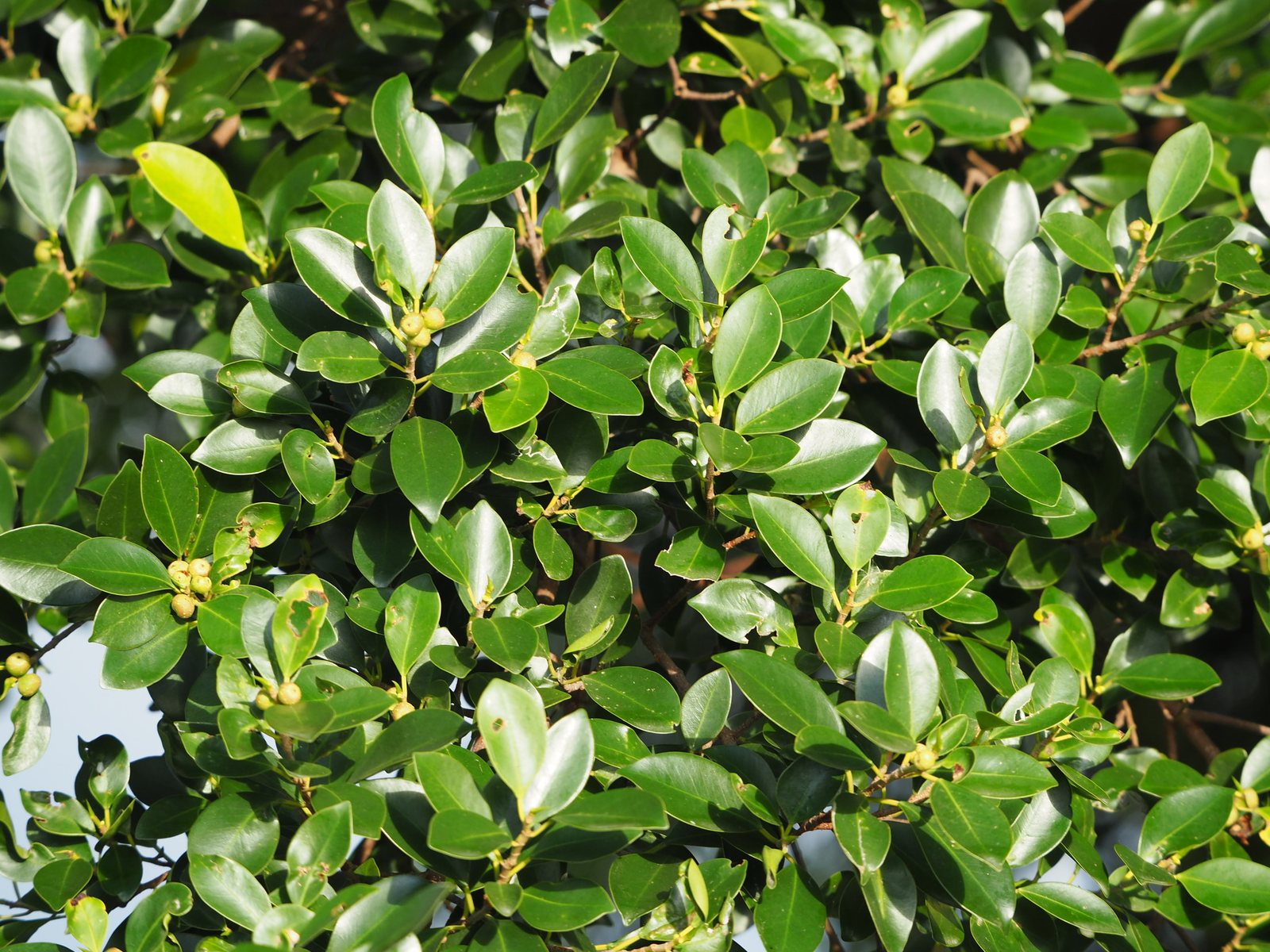
Green Island ficus is a compact, evergreen selection of Ficus microcarpa, grown for its rounded, glossy leaves and dense, spreading habit. It makes a low hedge or clipped mound in frost-free gardens and a container plant elsewhere; in most of the UK and Canada, it needs a bright indoor position over winter.
At a glance
- Sun
- Full sun to partial shade outdoors; bright light indoors. Acclimatise indoor plants gradually before placing them in direct outdoor sun.
- Water
- Water regularly while establishing, then let the surface soil dry between thorough waterings. Established plants tolerate short dry spells but not persistently waterlogged roots.
- Soil
- Well-drained soil, including sandy or limestone soils. Use a free-draining potting mix in containers.
- Height
- 2-4 ft (0.6-1.2 m), typically maintained as a low shrub
- Spread
- 3-5 ft (0.9-1.5 m)
- Foliage
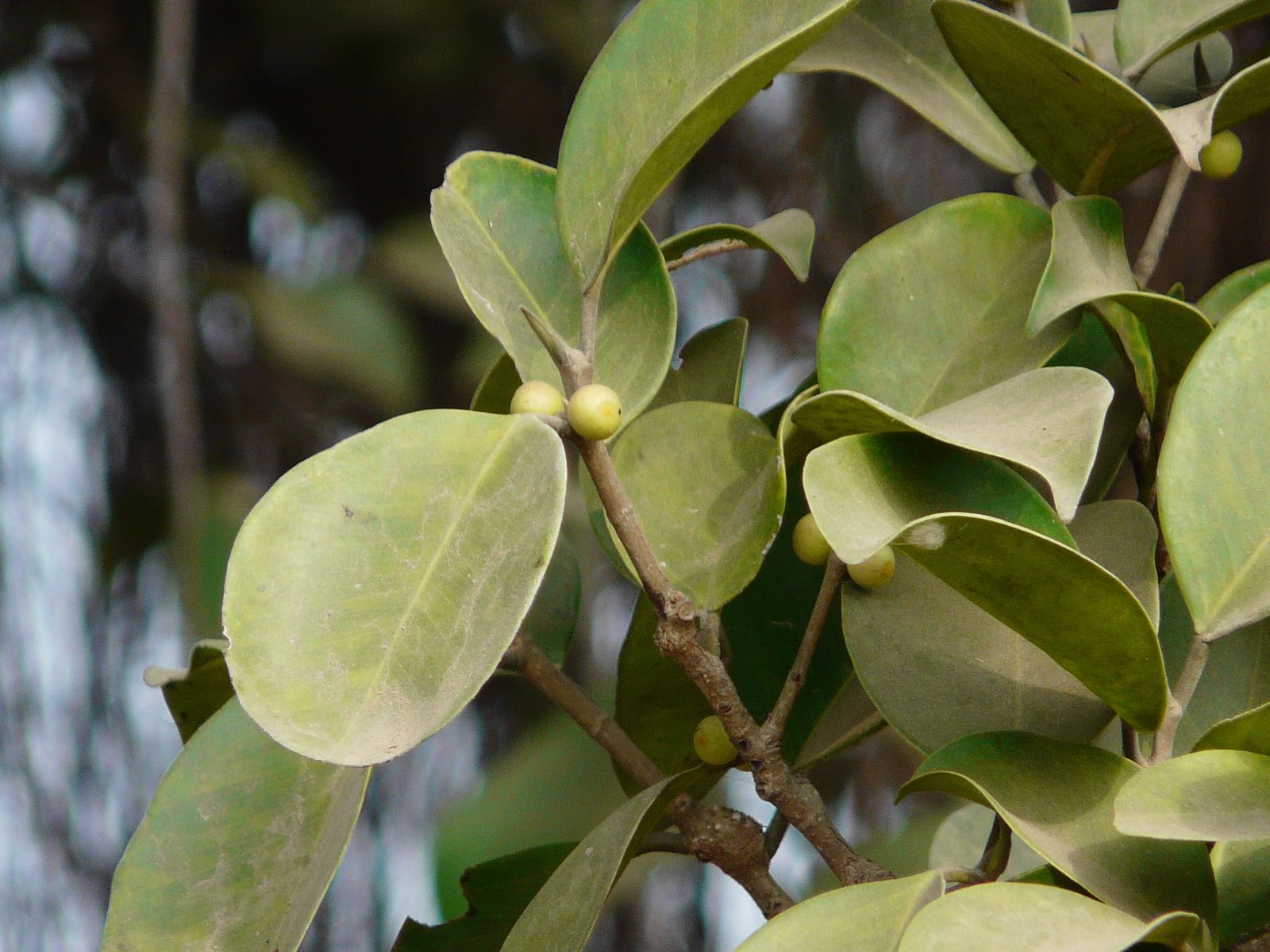
- Evergreen. Small, thick, rounded to broadly oval leaves, glossy dark green when mature; new growth is lighter green.
- Growth
- Slow to moderate in warm conditions; much slower indoors or in cool weather.
- Care needed
- Low
The year at a glance
- Heat tolerant
- Low allergen
| J | F | M | A | M | J | J | A | S | O | N | D | |
|---|---|---|---|---|---|---|---|---|---|---|---|---|
| Plant |
Northern hemisphere months. In Australia, shift them by six.
- Difficulty
- Moderate
- Toughness
- Fairly tough
Will it suit your garden?
Pick your zone, country, light and whether you have pets.
Full sun is 6 or more hours of direct sun a day, part shade 3 to 6 hours, shade under 3.
How it grows
Planting day
1.6 ft (0.5 m)
After 1 year
1.8 ft (0.56 m)
After 2 years
2 ft (0.62 m)
After 3 years
2.2 ft (0.68 m)
After 5 years
2.7 ft (0.81 m)
About 7 years to full size.
From a typical nursery size, at an average rate for this kind of plant. A rule of thumb, not a forecast.
Good to know
- Cats and dogs
- Toxic
- Invasive in
- the US
- Growth rate
- Slow
Care
Jobs through the year
- WaterApr–May, Sep–Oct, every 14 days
- Check established plants; water deeply only when surface soil dries; young plants and pots need more frequent checks.
- WaterJun–Aug, every 7 days
- Water established plants if surface soil is dry; never leave roots waterlogged.
- WaterJan–Mar, Nov–Dec, every 14 days
- Check overwintering pots and water only when surface mix dries; empty saucers.
- FeedApr–May
- Apply balanced slow-release fertilizer once active growth resumes.
- MulchMay
- Apply a light organic mulch, keeping stem bases clear.
- PruneMay–Aug
- Trim lightly to shape above a leaf or side shoot; wear gloves against irritating sap.
- ProtectJan–May, Sep–Dec
- Not winter-hardy locally: grow in a movable pot, overwinter bright and frost-free, and return outside after frost.
- Water new plants deeply when the root zone begins to dry; reduce watering once established.
- Keep container drainage holes clear and empty standing water from saucers.
- Apply a balanced, slow-release fertiliser in spring at the label rate; avoid feeding plants that are barely growing.
- Mulch garden plants lightly, leaving a clear gap around the stems.
- Bring containers under cover before cold nights; protect outdoor plants from frost and cold wind.
Pruning. Trim lightly during spring and summer to maintain a low hedge or rounded mound, cutting just above a leaf or side shoot. Remove dead or damaged stems as needed, and wear gloves because cut stems release irritating milky sap.
Through the year
- Spring
- Plant outdoors once frost risk has passed and the soil is warm, or repot crowded container plants.
- Spring
- Apply fertiliser and refresh mulch without covering the stem bases.
- Early summer
- Trim new growth to shape and take stem cuttings if more plants are wanted.
- Summer
- Check soil moisture during hot weather and inspect leaf undersides for scale and mealybugs.
- Autumn
- Move containers indoors before cold nights, checking for pests first.
- Winter
- Keep sheltered plants in bright light, away from draughts, and water less while growth is slow.
In the garden
- Clip into a low evergreen hedge along paths or around warm-climate courtyards.
- Repeat rounded mounds beside paving for a restrained, architectural planting.
- Use as a glossy green foreground beneath palms and taller tropical shrubs.
- Grow in large, well-drained containers on sheltered patios, with winter protection where needed.
Garden styles it suits: Modern tropical, Contemporary minimal, Modern courtyard, Formal, Tropical and Florida subtropical.
Plant it with: Lilyturf, Mondo grass, Dwarf schefflera, Lady palm, Cast-iron plant and Croton.
Wildlife: Dense foliage offers shelter for small garden animals. The species' tiny figs can feed birds where its specialist pollinating wasp is present, although this cultivar is grown for foliage rather than wildlife value.
Problems to watch for
- Scale insects and mealybugs: inspect stems and leaf undersides; remove small infestations by hand and use a labelled horticultural oil or insecticidal soap when needed.
- Thrips: distorted or folded new leaves can shelter these insects; remove badly affected tips and seek locally recommended treatment if damage continues.
- Root rot: yellowing leaves and decline in wet soil require better drainage and less frequent watering; remove badly rotted roots when repotting.
- Leaf drop after moving or chilling: keep light, temperature and watering steady, and protect the plant from frost and cold draughts.
Safety
Treat as toxic to cats and dogs: chewing leaves or stems can cause mouth irritation, drooling, vomiting or diarrhoea. Milky sap from leaves and stems can irritate people's skin and eyes, and swallowing plant material can cause stomach upset. Horse-specific toxicity information is limited; keep plants and clippings out of grazing areas.
Where it spreads. Ficus microcarpa is invasive in Florida and Hawaii, where birds spread seeds from fertile figs. Seed production depends on its specialist pollinating wasp. Green Island is a compact cultivar, but should not be assumed sterile or exempt from local restrictions; check regional guidance before planting.
Easily confused with
Weeping fig (Ficus benjamina)
Usually has thinner leaves with long, pointed tips and a more upright, weeping tree habit; Green Island has broader, rounder leaves and a compact, spreading habit.
Autograph tree (Clusia rosea)
Has much larger, thicker leaves arranged in opposite pairs; Green Island ficus has smaller, alternate leaves.
Natal plum (Carissa macrocarpa)
Has opposite leaves, forked thorns and conspicuous white flowers; Green Island ficus is thornless with alternate leaves.
The name
Ficus is the Latin name for a fig, and microcarpa means small-fruited.
Propagation. Take leafy stem cuttings in late spring or summer and root them in a moist, free-draining medium with warmth and humidity. Wear gloves when handling the milky sap; cuttings retain the cultivar's characteristics.
Checked against open data
- Accepted botanical name
- Ficus microcarpa
- In the US and Canada
- Native in Pacific Basin. Introduced in Hawaii, the lower 48 states, Pacific Basin and Puerto Rico.
- Measured
- Average height 2500 cm.
Sources: GBIF (CC BY 4.0), USDA PLANTS and Trefle (CC BY 4.0). The care and design notes are LandscapeGPT's own.
See it in your own yard.
Upload a photo of your yard and see it redesigned with plants that suit your climate, each checked against your zone.