Hairy golden aster
Heterotheca villosa. Family Asteraceae. Perennial.
Also called Hairy false goldenaster, Golden aster.
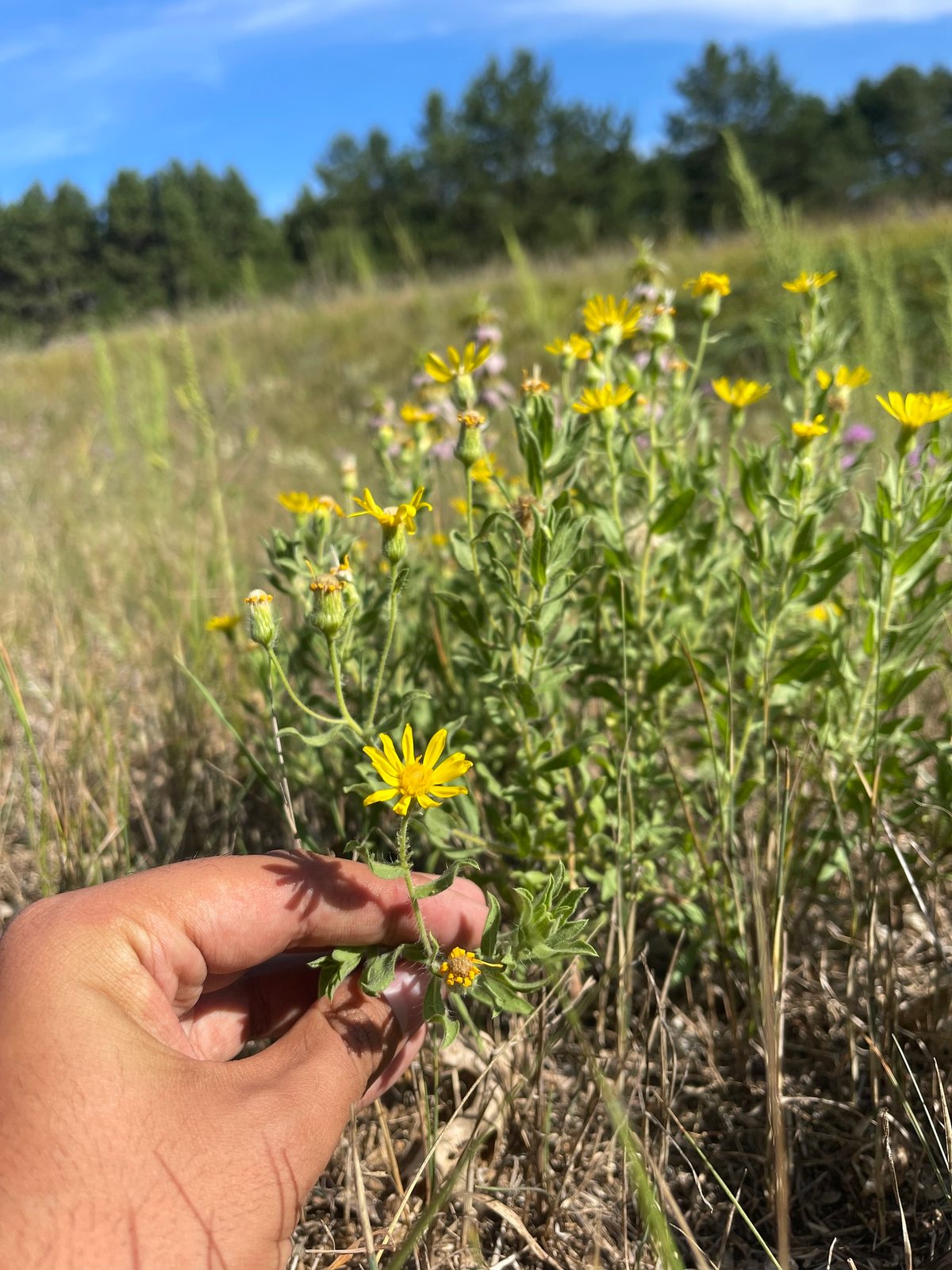
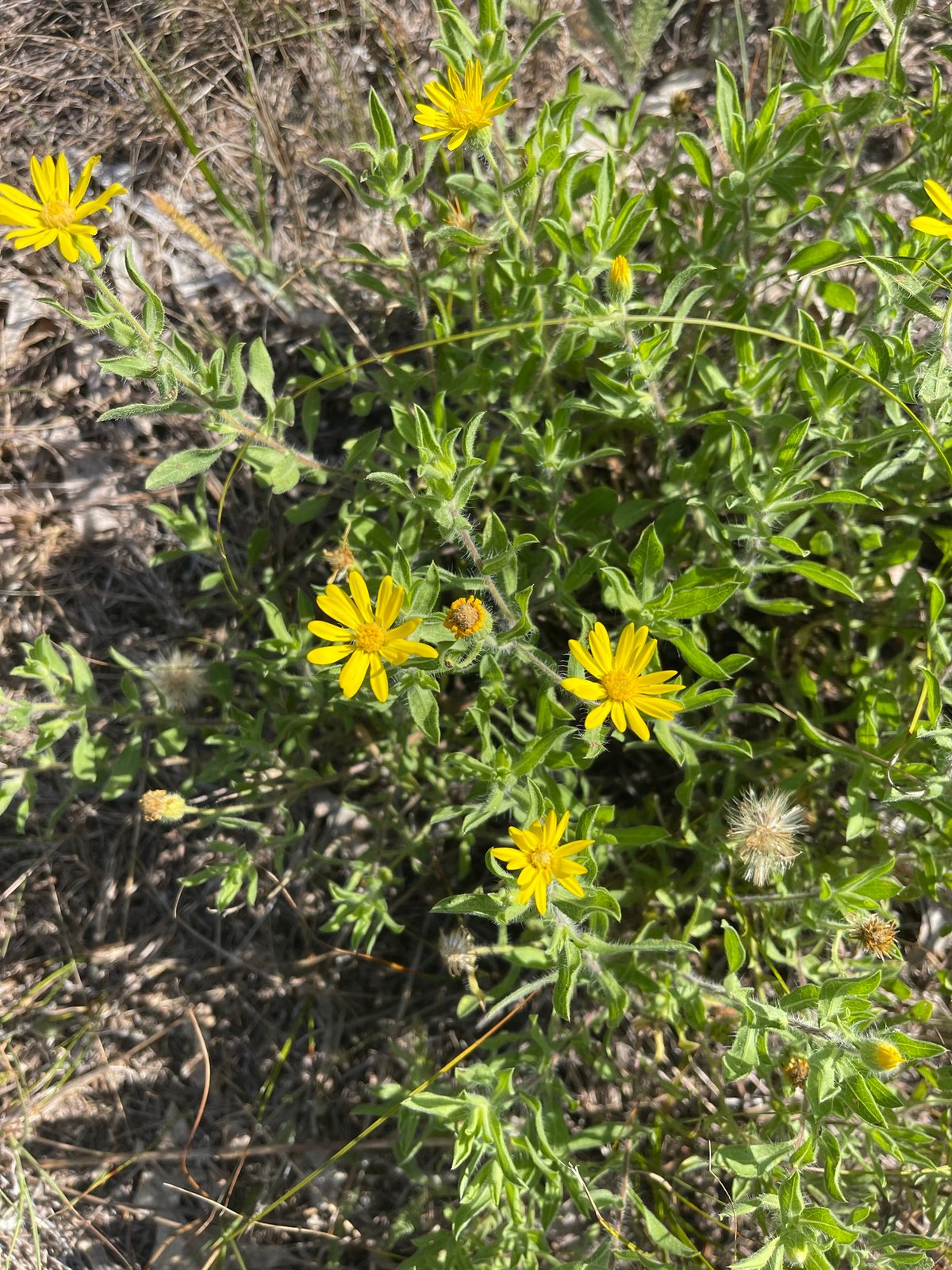
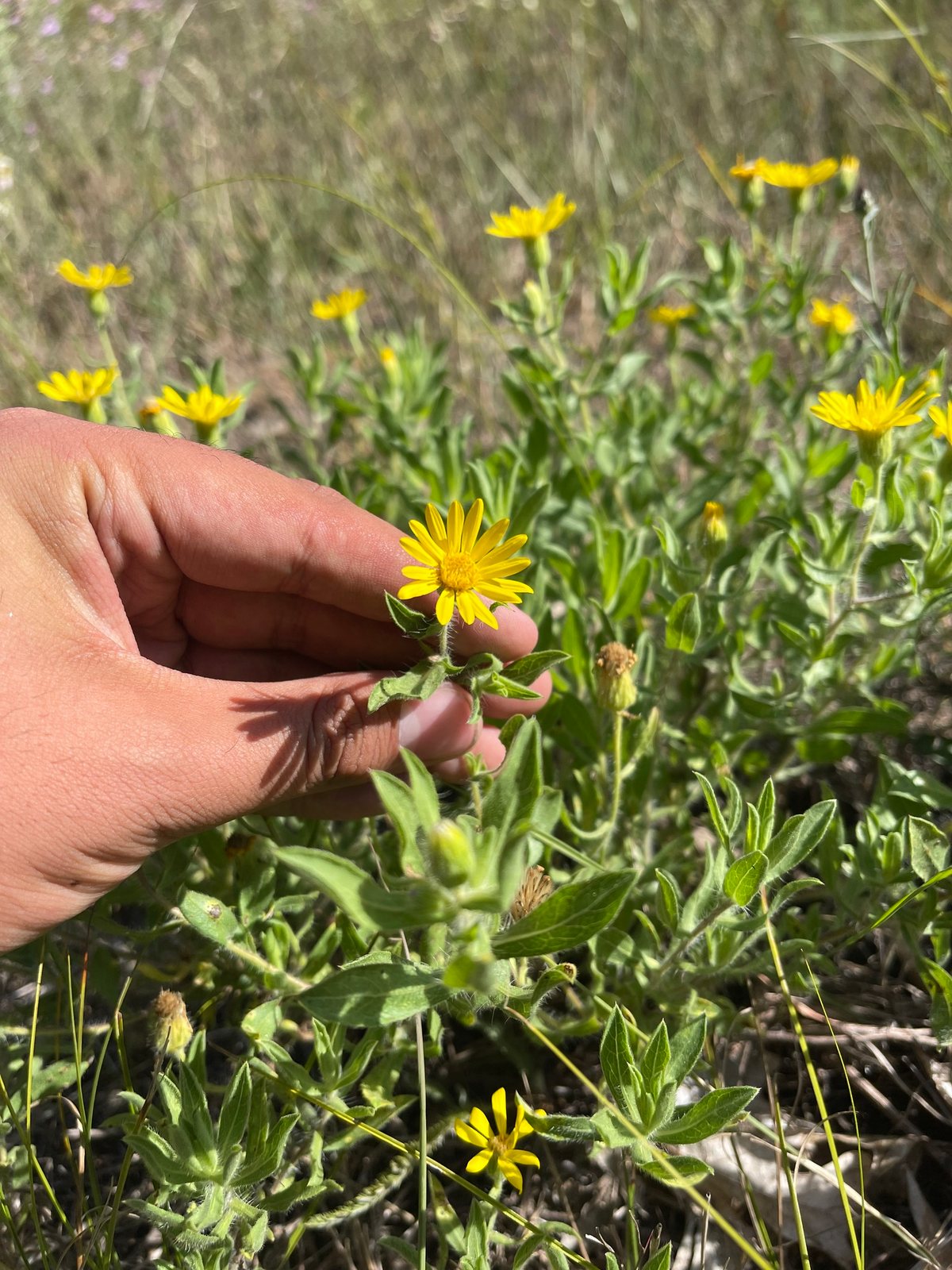
Hairy golden aster is a drought-tolerant perennial native to western and central North America, with hairy foliage and yellow daisy-like flowers. Gardeners grow it for summer-to-autumn colour in sunny gravel gardens, dry borders and prairie-style plantings.
At a glance
- Sun
- Full sun.
- Water
- Low once established. Water young plants regularly while roots develop; established plants usually need watering only during prolonged drought.
- Soil
- Well-drained sandy, gravelly or rocky soil, including lean soils. Avoid waterlogged ground and heavy soil that stays wet in winter.
- Height
- 1-2 ft (0.3-0.6 m)
- Spread
- 1-2 ft (0.3-0.6 m)
- Flowers
- Yellow daisy-like flowers from summer into autumn; timing varies with climate and the origin of the plants.
- Foliage
- Small, alternate, oblong to lance-shaped green or grey-green leaves covered with hairs; stems are also hairy.
- Growth
- Moderate.
- Care needed
- Low
The year at a glance
- Pollinators
- Drought tolerant
- Cold hardy
- Wildlife
- Low allergen
| J | F | M | A | M | J | J | A | S | O | N | D | |
|---|---|---|---|---|---|---|---|---|---|---|---|---|
| Flowers | ||||||||||||
| Fruit | ||||||||||||
| Plant |
Northern hemisphere months. In Australia, shift them by six.
- Difficulty
- Easy
- Toughness
- Very tough
Will it suit your garden?
Pick your zone, country, light and whether you have pets.
Full sun is 6 or more hours of direct sun a day, part shade 3 to 6 hours, shade under 3.
How it grows
Planting day
1 ft (0.3 m)
After 1 year
1.1 ft (0.35 m)
After 2 years
1.3 ft (0.4 m)
After 3 years
1.5 ft (0.45 m)
full size
About 3 years to full size.
From a typical nursery size, at an average rate for this kind of plant. A rule of thumb, not a forecast.
Good to know
- Cats and dogs
- Safe
- Native to
- the US and Canada
- Growth rate
- Moderate
Care
Jobs through the year
- WaterApr–May, Sep, every 21 days
- Check established clumps and water only during prolonged dry spells; young plants need more frequent checks.
- WaterJun–Aug, every 14 days
- Water established clumps deeply only during prolonged drought, allowing soil to dry between waterings.
- PruneFeb–Mar
- Cut dead stems just above the crown before new growth starts.
- MulchApr
- Use a thin gravel mulch rather than thick organic material around the crown.
- DeadheadJul–Oct, every 14 days
- Remove faded flowers if limiting self-seeding; leave some heads and stems for wildlife.
- ProtectOct–Nov
- Clear fallen leaves from the crown and maintain free drainage through winter.
- Plant in full sun with sharp drainage, especially where winters are wet.
- Water deeply during establishment, then let the soil dry between waterings.
- Avoid routine feeding; rich soil and excess fertiliser can produce weak, sprawling growth.
- Use a thin gravel mulch rather than thick, moisture-holding mulch around the crown.
- Remove unwanted seedlings while small if you want to limit its spread.
Pruning. Cut dead stems back to just above the crown in late winter or early spring, before new growth develops. Remove spent flowers during the growing season if you want to reduce self-seeding.
Through the year
- Early spring
- Cut back old stems and check that the crown is not sitting in wet soil or buried under mulch.
- Spring
- Plant nursery-grown plants after the soil is workable; water thoroughly and allow space for mature clumps.
- Late spring
- Remove unwanted seedlings and weed around young plants.
- Summer
- Water new plants during dry spells; avoid frequent watering of established clumps.
- Late summer
- Deadhead to limit self-seeding, or leave some flowers to mature for seed collection.
- Autumn
- Leave healthy stems standing for winter habitat and keep fallen leaves from smothering the crown.
In the garden
- Plant in sunny gravel gardens with low grasses for yellow flowers above contrasting fine foliage.
- Use near the front of dry perennial borders with purple coneflowers and prairie clovers.
- Repeat small groups through prairie-style plantings to extend flowering into late summer.
- Grow on sunny banks or rocky slopes where drainage is good and irrigation is limited.
Garden styles it suits: Dry gravel garden, Desert / xeriscape, Native meadow, Pollinator garden, Midwest prairie and Low-maintenance.
Plant it with: Little bluestem, Prairie dropseed, Purple prairie clover, Pale purple coneflower, Prairie smoke and Butterfly weed.
Wildlife: The flowers attract native bees, butterflies and other flower-visiting insects. Leaving some stems standing provides shelter for small invertebrates.
Problems to watch for
- Crown or root rot in wet ground: improve drainage or move the plant to a raised, gravelly position; avoid winter irrigation.
- Floppy stems in shade or rich soil: move to full sun, stop feeding and reduce unnecessary watering.
- Powdery mildew can occur: provide airflow, avoid crowding and remove badly affected foliage.
- Unwanted self-seeding: remove fading flower heads before seeds mature and pull seedlings promptly.
Safety
Not known to be toxic to people, cats, dogs or horses, but species-specific safety information is limited. No particular poisonous part is established; it is not a food plant, so discourage eating it.
Easily confused with
Camphorweed (Heterotheca subaxillaris)
Usually an annual or biennial rather than a persistent clump-forming perennial. It often grows taller, has broader lower leaves and develops a strongly branched upper stem.
Showy goldenrod (Solidago speciosa)
Bears many tiny yellow flower heads in upright plumes, rather than the conspicuous individual yellow daisies of hairy golden aster.
The name
The species name villosa means hairy, referring to the hairs on the leaves and stems.
Propagation. Grow from seed, sown shallowly in a well-drained seed mix in spring or outdoors in autumn. Some seed lots benefit from a period of cold, moist conditions before germination. Divide established clumps in spring, keeping roots attached to each section.
Checked against open data
- Accepted botanical name
- Heterotheca villosa
- In the US and Canada
- Native in Canada and the lower 48 states.
- Native range
- Alberta, Colorado, Kansas, Manitoba, Michigan, Montana, Nebraska, North Dakota, Ontario, Saskatchewan, South Dakota and Wyoming.
- Measured
- Soil pH 6 to 7.5. Average height 16 cm.
Sources: GBIF (CC BY 4.0), USDA PLANTS and Trefle (CC BY 4.0). The care and design notes are LandscapeGPT's own.
See it in your own yard.
Upload a photo of your yard and see it redesigned with plants that suit your climate, each checked against your zone.