Imperial bromeliad
Alcantarea imperialis. Family Bromeliaceae. Perennial.
Also called Giant imperial bromeliad, Giant bromeliad.
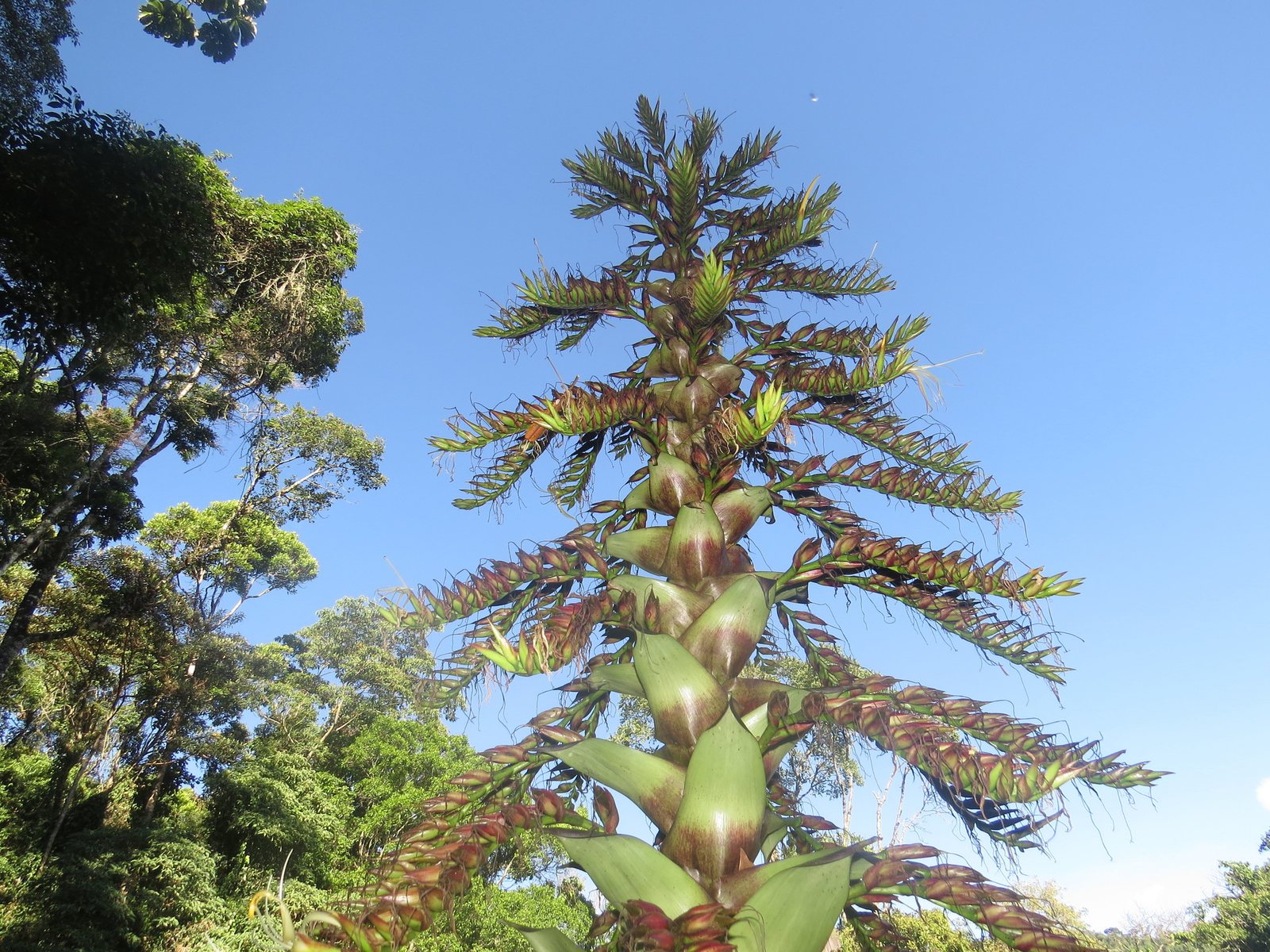
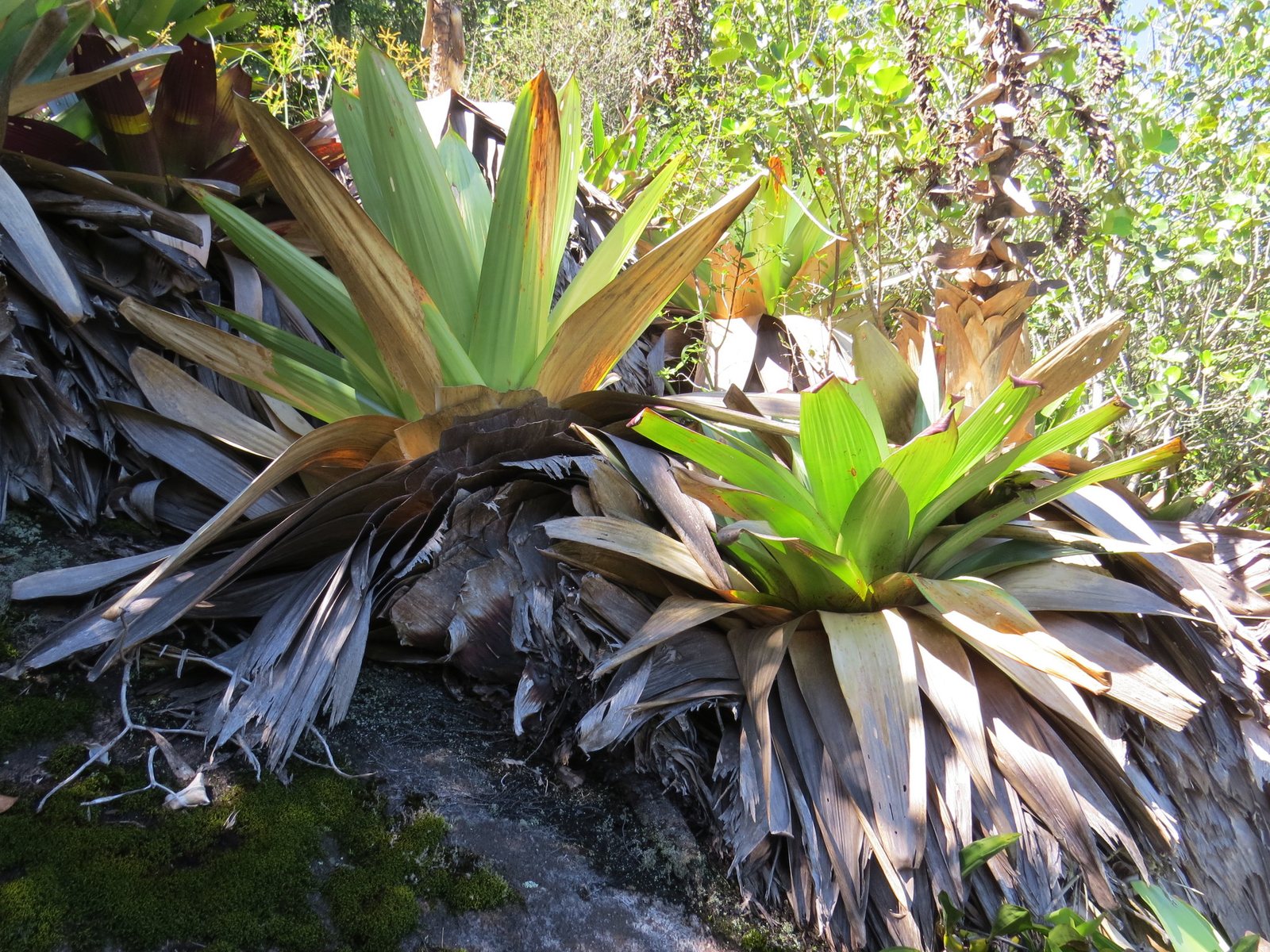
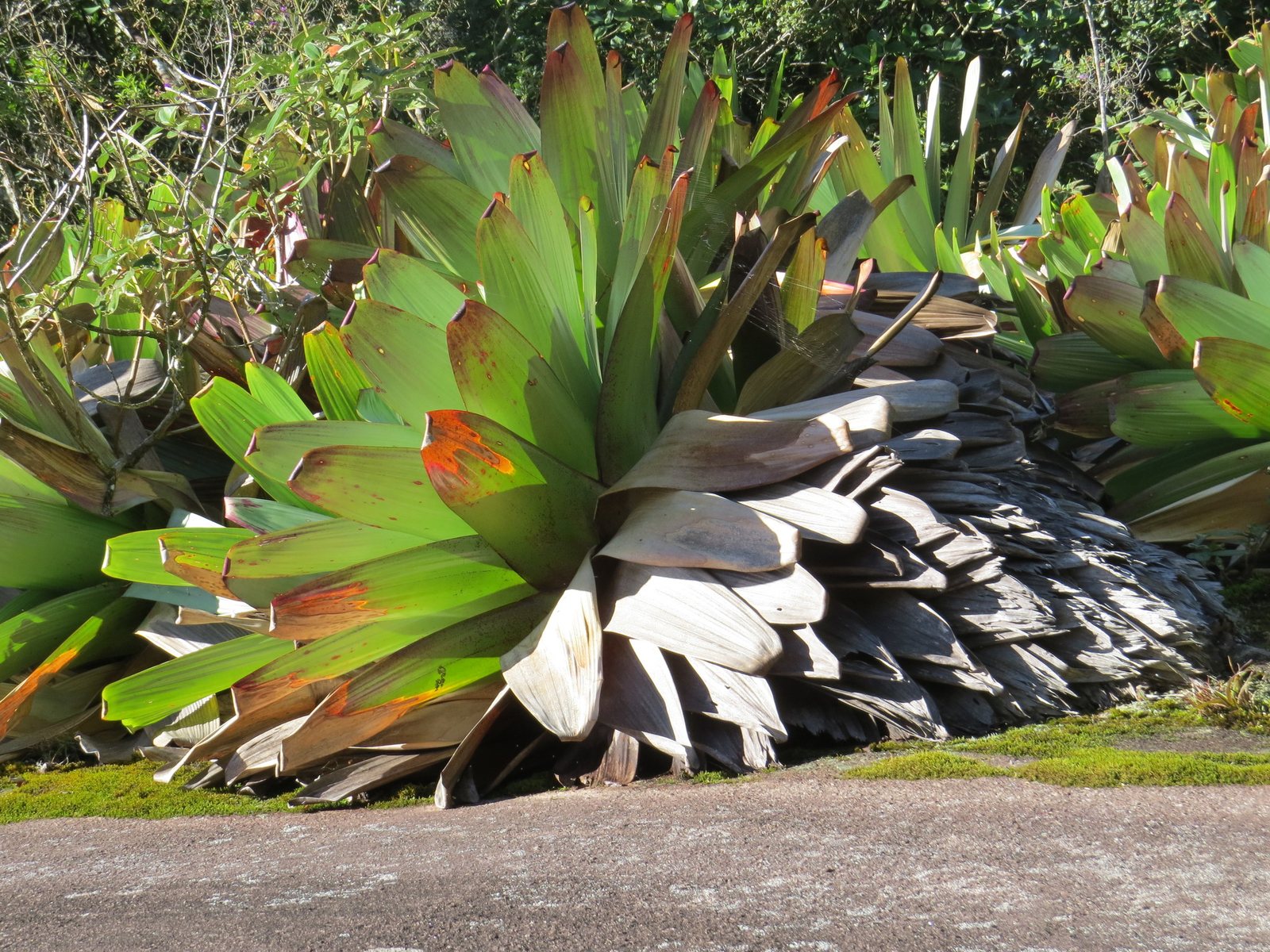
This giant evergreen bromeliad from rocky slopes in Brazil forms a broad rosette of stiff, arching leaves with a central water-holding tank. Gardeners grow it for its sculptural foliage, which can be green, bronze or burgundy depending on the plant and growing conditions. It needs a warm, sheltered garden or a large container brought under cover for winter.
At a glance
- Sun
- Full sun to partial shade; acclimatise shade-grown plants gradually before placing them in strong sun.
- Water
- Moderate; water the root zone when the surface begins to dry, and keep fresh water in the central tank during warm weather. Reduce watering in cool conditions.
- Soil
- Very free-draining soil or a coarse, airy container mix; avoid heavy soil that stays wet around the base.
- Height
- 4-5 ft (1.2-1.5 m) in leaf; 6-10 ft (1.8-3 m) when flowering
- Spread
- 4-6 ft (1.2-1.8 m)
- Flowers
- A tall, branched flower spike with creamy-white to pale yellow flowers, usually in summer once the rosette is mature; each rosette flowers only once.
- Foliage
- Evergreen. Broad, leathery, strap-shaped leaves in a large funnel-shaped rosette; colours range from silvery green to bronze and burgundy, often with reddish undersides.
- Growth
- Slow; flowering often takes 10 years or more.
- Care needed
- Low
The year at a glance
- Pollinators
- Heat tolerant
- Wildlife
- Low allergen
| J | F | M | A | M | J | J | A | S | O | N | D | |
|---|---|---|---|---|---|---|---|---|---|---|---|---|
| Flowers | ||||||||||||
| Plant |
Northern hemisphere months. In Australia, shift them by six.
- Difficulty
- Moderate
- Toughness
- Fairly tough
Will it suit your garden?
Pick your zone, country, light and whether you have pets.
Full sun is 6 or more hours of direct sun a day, part shade 3 to 6 hours, shade under 3.
How it grows
Planting day
1 ft (0.3 m)
After 1 year
1.7 ft (0.52 m)
After 2 years
2.4 ft (0.74 m)
After 3 years
3 ft (0.96 m)
After 5 years
4 ft (1.4 m)
full size
About 5 years to full size.
From a typical nursery size, at an average rate for this kind of plant. A rule of thumb, not a forecast.
Good to know
- Cats and dogs
- Safe
- Growth rate
- Slow
Care
Jobs through the year
- WaterJun–Aug, every 7 days
- Check established roots and water if the surface is drying; flush and refill the central tank.
- WaterApr–May, Sep–Oct, every 14 days
- Water only as the surface dries; containers and young plants need more frequent checks.
- WaterJan–Mar, Nov–Dec, every 21 days
- Under frost-free cover, keep roots barely moist and avoid stagnant tank water in cool conditions.
- FeedMay–Aug, every 30 days
- Apply dilute balanced fertiliser sparingly to the root zone.
- PruneApr–Sep
- Remove dead outer leaves and spent stalks; retain the mother rosette until offsets establish.
- ProtectMay–Jun
- Move containers outside only after frost risk passes and acclimatise gradually to sun.
- ProtectJan–Apr, Oct–Dec
- Keep in bright, frost-free shelter with good airflow; move indoors earlier if frost threatens.
- Plant with the base of the rosette above the soil surface, leaving room for its full spread.
- Water the surrounding root zone in dry weather, but never leave a container standing in water.
- Flush the central tank periodically with fresh water to remove accumulated debris and salts.
- Feed lightly in spring and summer with a dilute balanced fertiliser applied to the root zone; heavy feeding can weaken foliage colour.
- Protect from frost. In colder regions, move containers into a bright, frost-free space before autumn temperatures fall.
- Keep mulch clear of the rosette base to discourage rot.
Pruning. Remove dead outer leaves at their base as needed, without cutting into the living rosette. After flowering, cut away the spent stalk and remove the mother rosette only when it has declined and any offsets are established.
Through the year
- Spring
- Repot container plants if necessary, using a coarse, free-draining mix.
- Late spring
- Move overwintered plants outdoors once frost risk has passed, gradually increasing their sun exposure.
- Summer
- Water during dry spells, refresh tank water and feed lightly.
- Late summer
- Check leaf bases for scale insects and mealybugs, especially on sheltered container plants.
- Autumn
- Move containers under bright, frost-free cover where winters are cold; reduce feeding and watering.
- Winter
- Maintain good airflow and keep the root zone only lightly moist in cool conditions.
In the garden
- Use a single mature rosette as a focal point beside an entrance or at the end of a path, allowing space for its broad leaves.
- Repeat widely spaced plants through gravel or stone mulch for a strong architectural rhythm.
- Combine with palms, cycads and broad-leaved tropical plants for contrasting foliage shapes.
- Grow in a large, stable container on a sunny terrace where winter protection is practical.
Garden styles it suits: Architectural minimal, Modern tropical, Contemporary minimal, Luxury resort, Brazilian tropical modernism and Tropical.
Plant it with: Bird of paradise, Foxtail agave, Sago palm, Cordyline and Xanadu philodendron.
Wildlife: Flowers provide nectar for visiting insects and, within their range, hummingbirds. Water held between the leaves can shelter small aquatic organisms, but may also support mosquito larvae.
Problems to watch for
- Root or basal rot in waterlogged soil: improve drainage, keep the crown above soil level and reduce watering in cool weather.
- Scale insects or mealybugs hidden between leaves: inspect regularly, remove small infestations by hand and use a labelled treatment if necessary.
- Sun scorch after a sudden move into strong sunlight: introduce brighter conditions gradually; damaged patches will not turn green again.
- Frost damage: protect before freezing weather or move containers under cover; wet, cold conditions increase the risk of rotting damaged tissue.
Safety
Not known to be toxic to people, cats, dogs or horses, although species-specific information, especially for horses, is limited. No part is recognised as poisonous; the stiff leaves and pointed tips can cause mechanical injury.
Easily confused with
Giant vriesea (Vriesea gigantea)
Its green leaves usually carry conspicuous pale, net-like markings, unlike the largely unpatterned leaves of imperial bromeliad.
Orange bromeliad (Aechmea blanchetiana)
It has clearly toothed leaf margins, often orange foliage in sun, and a brightly coloured red-and-yellow flower display; imperial bromeliad has essentially smooth leaf margins.
The name
Alcantarea honours Brazil's Emperor Pedro II, whose name included Alcântara, and imperialis means imperial.
Propagation. Separate offsets when they are well developed, ideally with roots and about one-third the size of the parent rosette. Some plants produce few offsets; seed is another option but takes many years to produce a large specimen.
Checked against open data
- Accepted botanical name
- Alcantarea imperialis
- Native range
- Brazil Southeast.
Sources: GBIF (CC BY 4.0) and Trefle (CC BY 4.0). The care and design notes are LandscapeGPT's own.
See it in your own yard.
Upload a photo of your yard and see it redesigned with plants that suit your climate, each checked against your zone.