Indian blanket
Gaillardia pulchella. Family Asteraceae. Annual.
Also called Firewheel, Annual blanket flower.
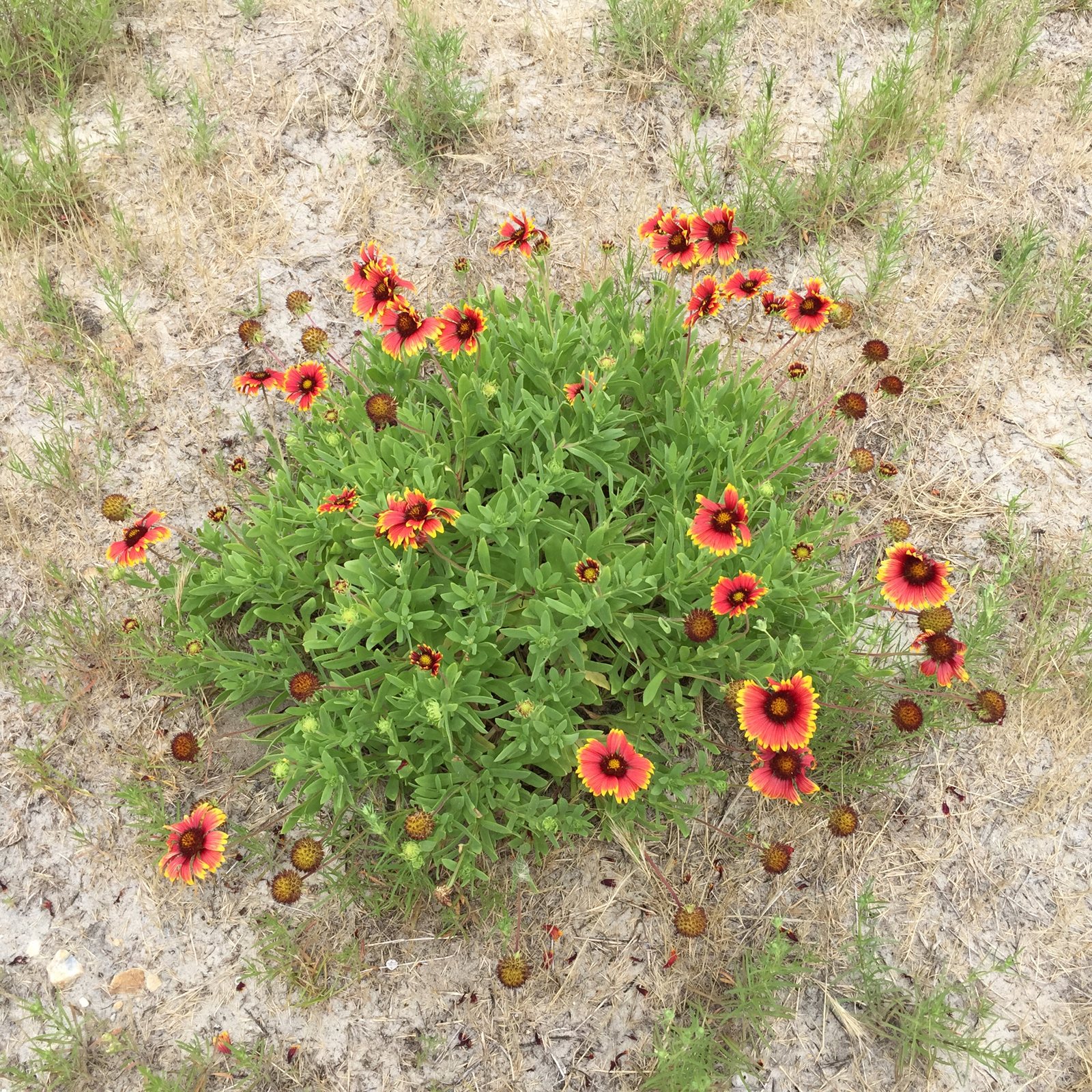
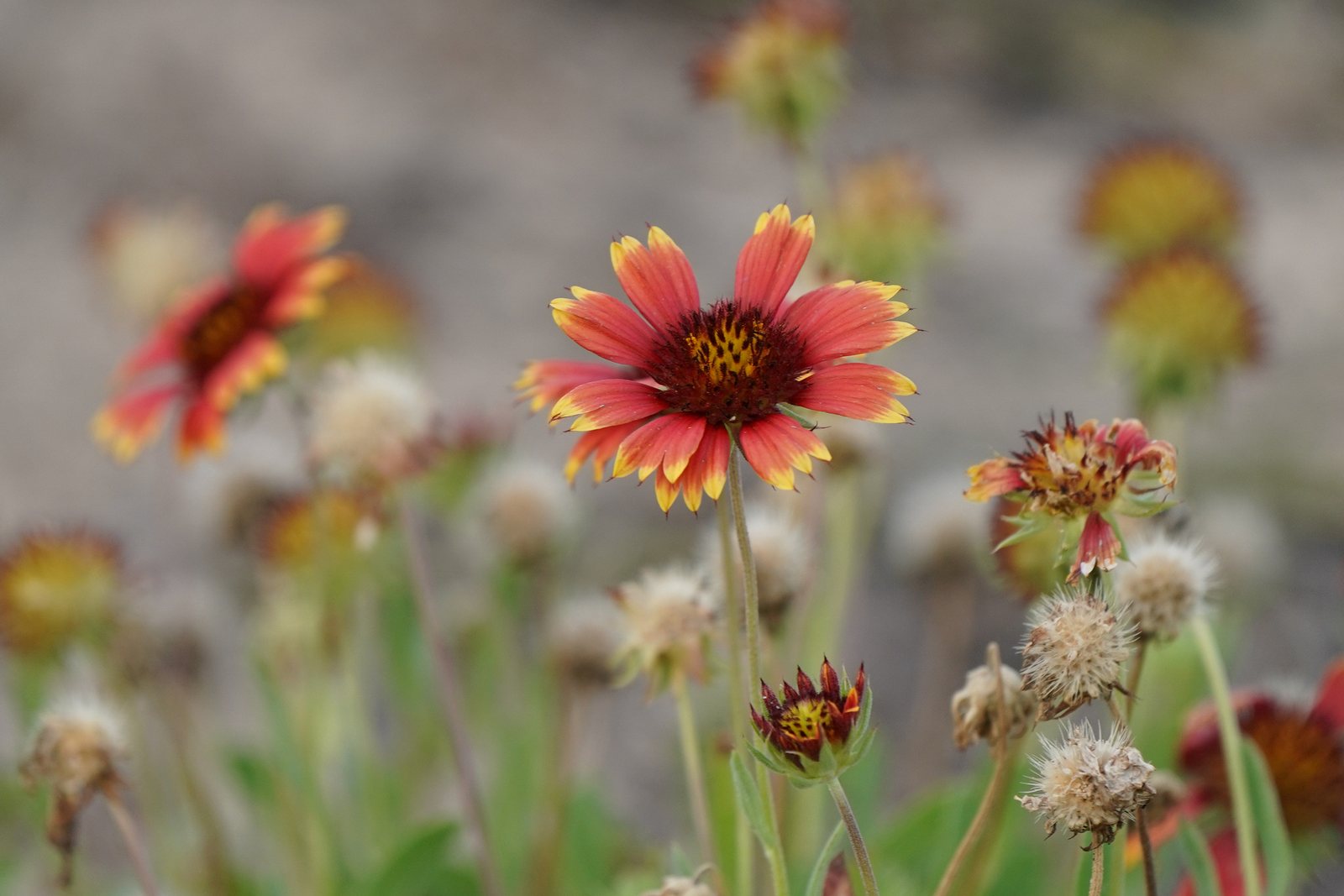
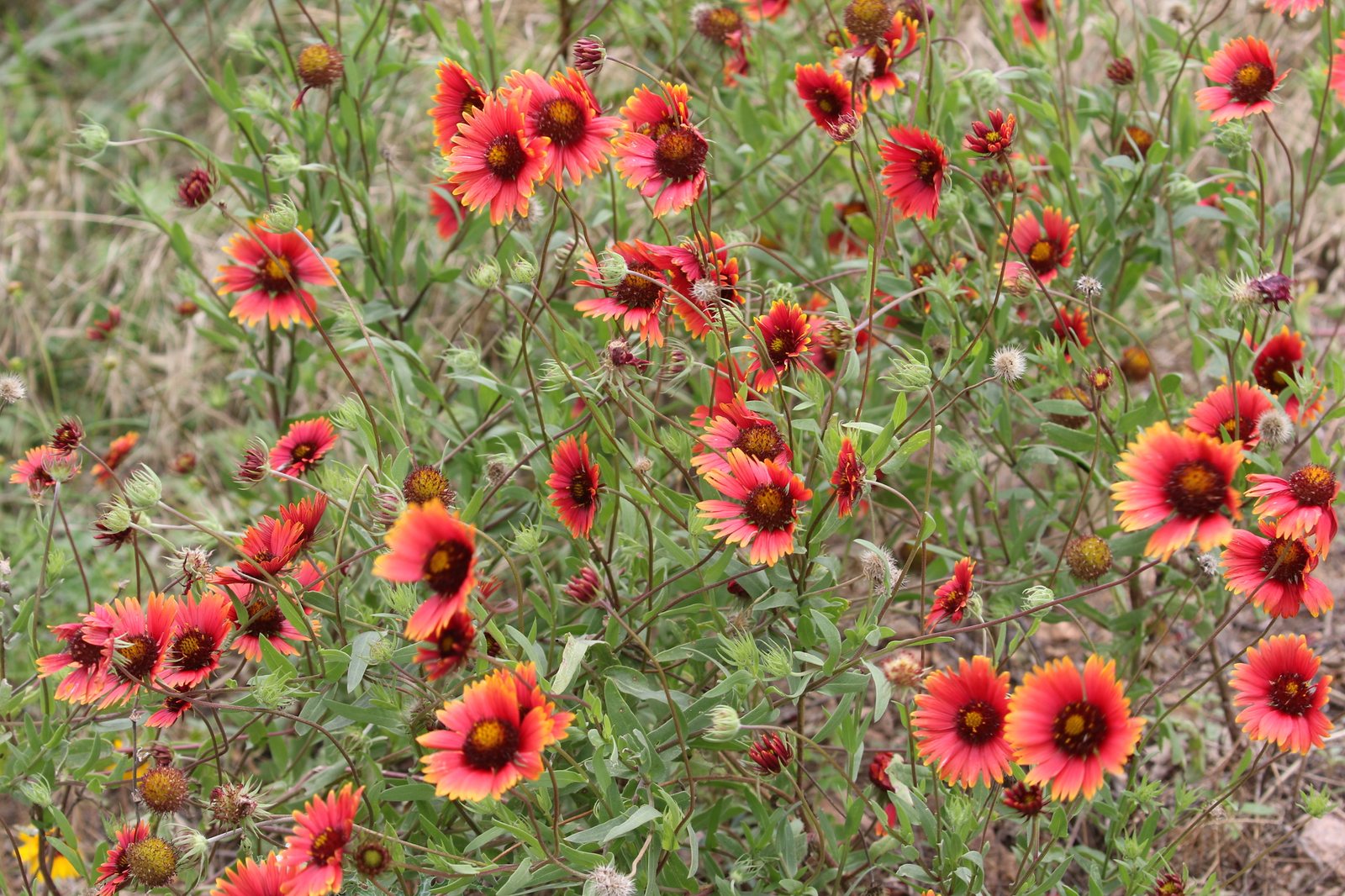
Indian blanket is grown as an annual for its red-and-yellow daisy flowers, which attract bees and butterflies through summer. Native to much of the southern and central United States and Mexico, it thrives in sunny, freely draining sites and tolerates heat, sandy soil and drought once established. It may persist as a short-lived perennial in frost-free climates.
At a glance
- Sun
- Full sun; flowering and stem strength decline in shade.
- Water
- Water regularly while seedlings establish, then during prolonged dry spells. Let the soil dry between waterings; containers need more frequent checks.
- Soil
- Well-drained sandy, gravelly or loamy soil, including poor soils. Avoid waterlogged ground and heavy applications of compost or fertiliser.
- Height
- 1-2 ft (0.3-0.6 m)
- Spread
- 1-2 ft (0.3-0.6 m)
- Flowers
- Late spring or early summer until autumn frost; usually red rays tipped with yellow around a reddish-brown centre. Some seed strains have mainly yellow or red flowers.
- Foliage
- Hairy, grey-green to green leaves, narrow to lance-shaped, with smooth, toothed or occasionally lobed edges.
- Growth
- Fast; normally flowers in its first growing season from seed.
- Care needed
- Low
The year at a glance
- Pollinators
- Deer resistant
- Drought tolerant
- Heat tolerant
- Wildlife
- Low allergen
| J | F | M | A | M | J | J | A | S | O | N | D | |
|---|---|---|---|---|---|---|---|---|---|---|---|---|
| Flowers | ||||||||||||
| Fruit | ||||||||||||
| Plant |
Northern hemisphere months. In Australia, shift them by six.
- Difficulty
- Easy
- Toughness
- Very tough
Will it suit your garden?
Pick your zone, country, light and whether you have pets.
Full sun is 6 or more hours of direct sun a day, part shade 3 to 6 hours, shade under 3.
How it grows
Planting day
0.5 ft (0.15 m)
After 1 year
1.5 ft (0.45 m)
full size
Full size in one season.
From a typical nursery size, at an average rate for this kind of plant. A rule of thumb, not a forecast.
Good to know
- Cats and dogs
- Safe
- Native to
- the US
- Invasive in
- Australia
- In the garden
- Spreads vigorously: plan to contain it.
- Growth rate
- Fast
Care
Jobs through the year
- WaterMay–Jun, every 14 days
- Water rooted plants only when soil is dry; seedlings need more frequent watering.
- WaterJul–Aug, every 10 days
- Water established plants deeply during extended dry spells; let soil dry between waterings.
- WaterSep–Oct, every 14 days
- Water only during dry spells while plants remain alive and flowering.
- DeadheadJun–Oct, every 7 days
- Remove faded flowers to prolong bloom; leave a few seed heads for birds if wanted.
- PruneOct–Nov
- Cut down or pull plants after frost kills them.
- Plant out after frost danger has passed, spacing plants about 12-18 in (30-45 cm) apart.
- Water seedlings until rooted, then water deeply only when the soil has dried.
- Avoid routine feeding in garden soil; rich soil encourages floppy growth and fewer flowers.
- Keep mulch away from the crown and avoid moisture-retaining mulch on damp sites.
- Pull unwanted seedlings early and remove seed heads where self-sowing is unwelcome.
Pruning. Remove faded flower heads throughout the flowering season to encourage more blooms, leaving a few for seed if wanted. Pull or cut down plants after frost kills them.
Through the year
- Early spring
- In cool climates, sow indoors 6-8 weeks before the expected last frost; press seeds onto the surface and cover only lightly.
- Spring
- After frost danger passes, direct-sow into warming soil or plant out hardened-off seedlings.
- Late spring
- Thin crowded seedlings and water young plants until their roots are established.
- Summer
- Remove spent flowers and water during extended dry weather.
- Early autumn
- Collect dry seed heads if you want seed for next season; remove the rest to limit spreading.
- Late autumn
- Remove frost-killed plants. In frost-free areas, remove exhausted plants when flowering declines.
In the garden
- Plant in loose groups near the front of sunny borders for a long season of warm-coloured flowers.
- Combine with fine-textured grasses in dry meadow-style planting for movement and contrast.
- Use in gravel gardens with other drought-tolerant flowers where drainage is sharp.
- Grow in sunny containers with drainage holes, using compact seed strains where space is limited.
- Include in pollinator plantings within its native range, allowing some seed heads to mature.
Garden styles it suits: Wildflower, Pollinator garden, Dry gravel garden, Desert / xeriscape, Hot border and Southwestern.
Plant it with: Lanceleaf coreopsis, Purple coneflower, Butterfly milkweed, Little bluestem, Prairie dropseed and Moss rose.
Wildlife: Flowers provide pollen and nectar for bees and butterflies. Seed-eating birds may visit mature seed heads.
Problems to watch for
- Root and crown rot: plants decline in wet soil; improve drainage and replace affected plants in a drier position.
- Powdery mildew: white coating develops on leaves, especially in crowded planting; increase spacing and remove badly affected foliage.
- Aphids: clusters on tender shoots can distort growth; dislodge them with water and encourage ladybirds and other predators.
- Floppy growth and weak flowering: usually caused by shade, rich soil or excess feeding; move future plantings into full sun and reduce fertiliser.
Safety
Not known to be toxic to cats, dogs or horses. Serious poisoning in people is not generally associated with this plant, but it is not edible; its hairy foliage and contact with the plant can cause skin irritation or an allergic rash in sensitive people. Wear gloves if your skin reacts.
Where it spreads. Self-seeds readily on open, disturbed ground. Outside its native range, it is regarded as an environmental weed in parts of Queensland and New South Wales, Australia; avoid allowing it to spread into dunes, roadsides or native vegetation.
Easily confused with
Perennial blanket flower (Gaillardia aristata)
Usually forms a persistent perennial clump and often has larger flower heads. Flower colour overlaps, so colour alone is not a reliable distinction.
Hybrid blanket flower (Gaillardia × grandiflora)
A hybrid involving Indian blanket and perennial blanket flower, commonly sold as named perennial cultivars. Appearance overlaps strongly; nursery labels and perennial habit are more useful than flower colour.
Plains coreopsis (Coreopsis tinctoria)
Has finely divided, threadlike foliage and yellow flowers with a dark red basal ring, rather than the broad, hairy leaves and prominent central disc of Indian blanket.
The name
Gaillardia honours the French botanist Gaillard de Charentonneau, and pulchella means 'pretty' in Latin.
Propagation. Grow from seed, sown indoors before the last frost or directly outdoors after frost danger has passed. Seeds need only a light covering. Self-sown seedlings are common, and saved seed from named cultivars may not produce identical flowers.
Checked against open data
- Accepted botanical name
- Gaillardia pulchella
- In the US and Canada
- Native in the lower 48 states. Introduced in Alaska, Canada, Hawaii and Pacific Basin.
- Native range
- Arizona, Colorado, Kansas, Mexico Northeast, Mexico Northwest, Missouri, Nebraska, New Mexico, Oklahoma, South Dakota and Texas.
- Measured
- Soil pH 7 to 8.5. Average height 50 cm.
Sources: GBIF (CC BY 4.0), USDA PLANTS and Trefle (CC BY 4.0). The care and design notes are LandscapeGPT's own.
See it in your own yard.
Upload a photo of your yard and see it redesigned with plants that suit your climate, each checked against your zone.