Indiangrass
Sorghastrum nutans. Family Poaceae. Ornamental grass.
Also called Indian grass, Yellow Indiangrass.
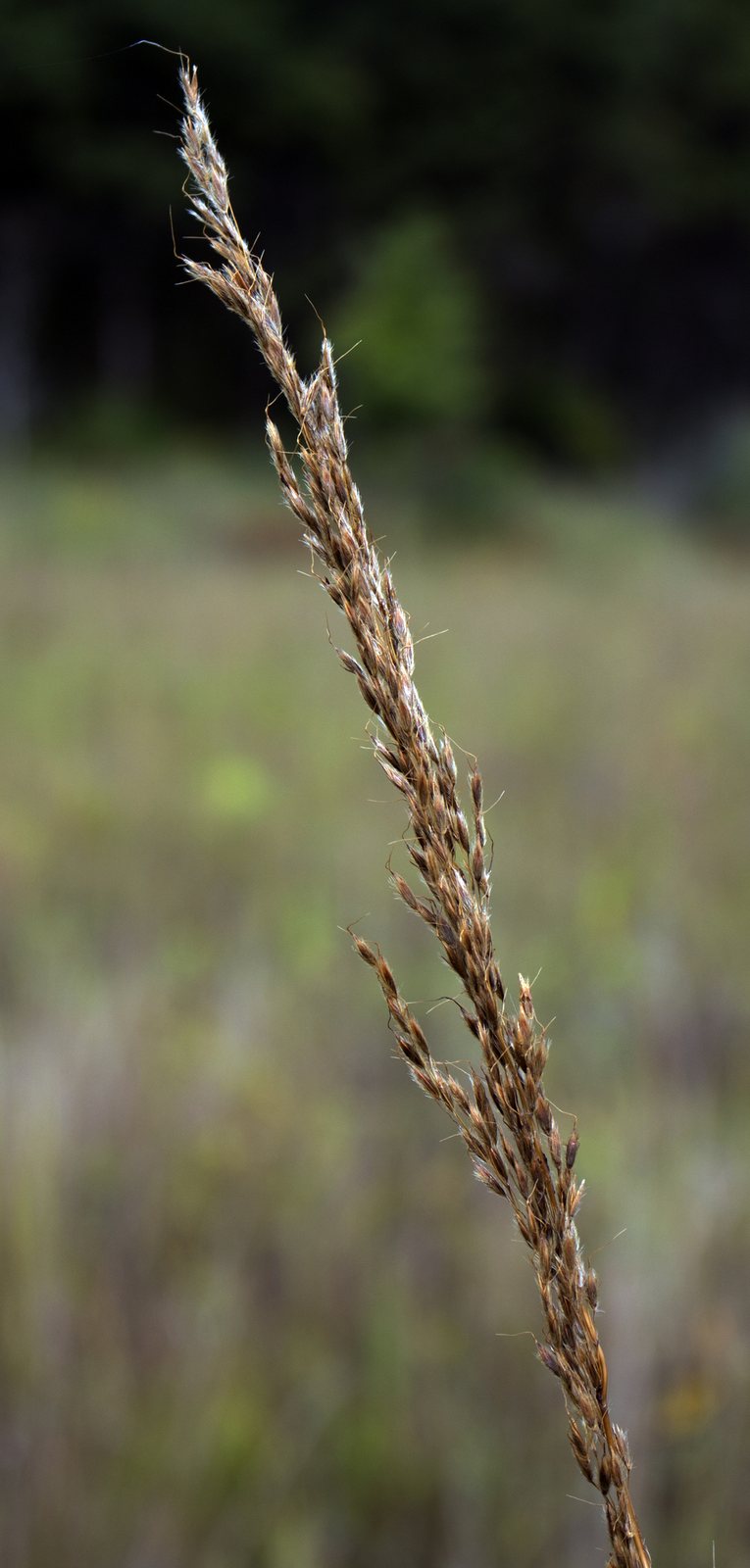
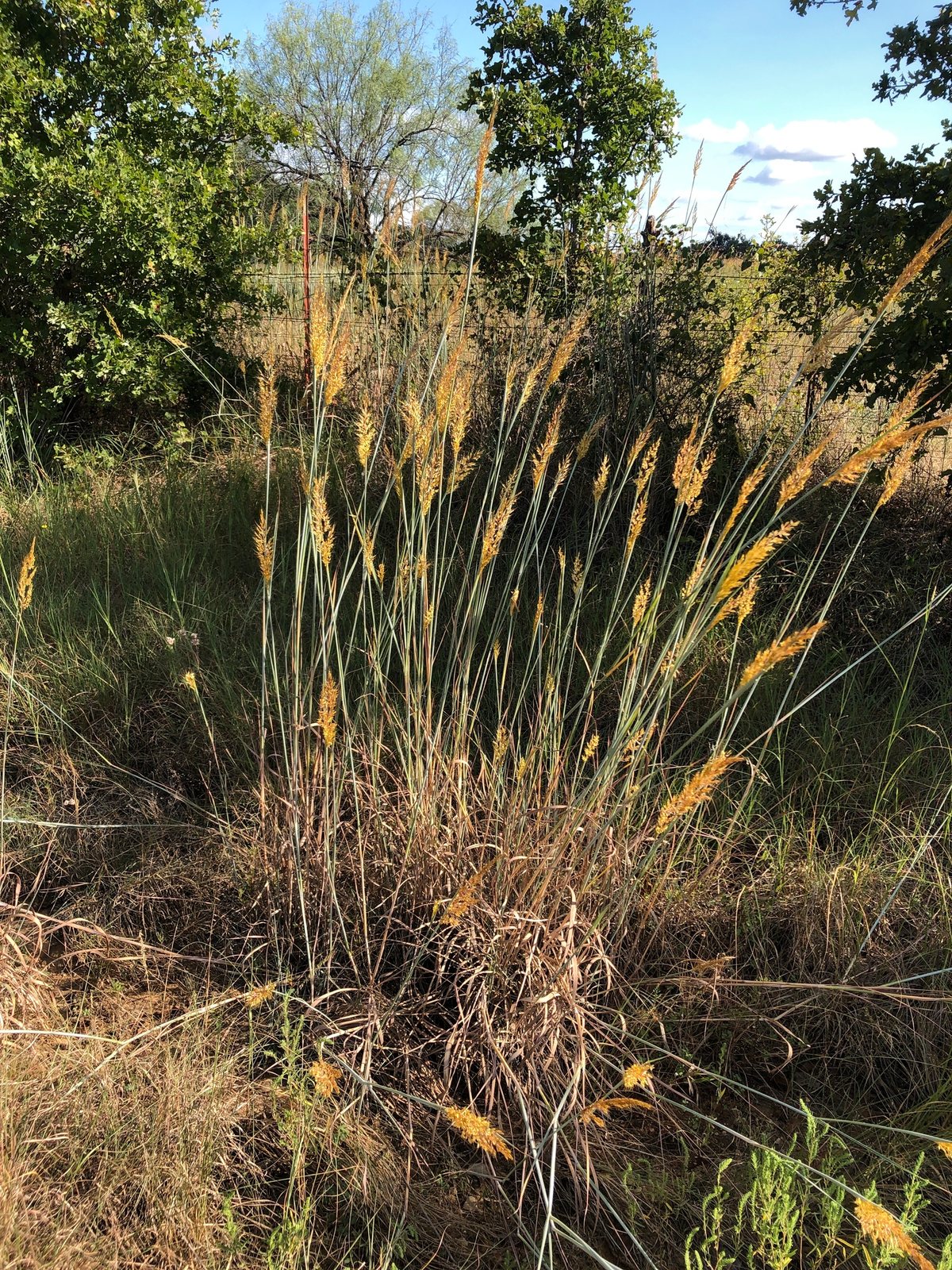
Indiangrass is a tall, warm-season perennial grass native to North American prairies and open ground. Gardeners grow it for its upright blue-green leaves, golden-brown flower plumes and autumn colour, with stems that often remain attractive through winter.
At a glance
- Sun
- Full sun; shade reduces flowering and makes stems more likely to flop.
- Water
- Moderate while establishing; low once established. Tolerates drought and occasional wet soil, but not prolonged waterlogging.
- Soil
- Adaptable to clay, loam and sandy soil with reasonable drainage; tolerates poor soil and a broad pH range.
- Height
- 3-7 ft (0.9-2.1 m), including flower stems
- Spread
- 2-3 ft (0.6-0.9 m), gradually widening
- Flowers
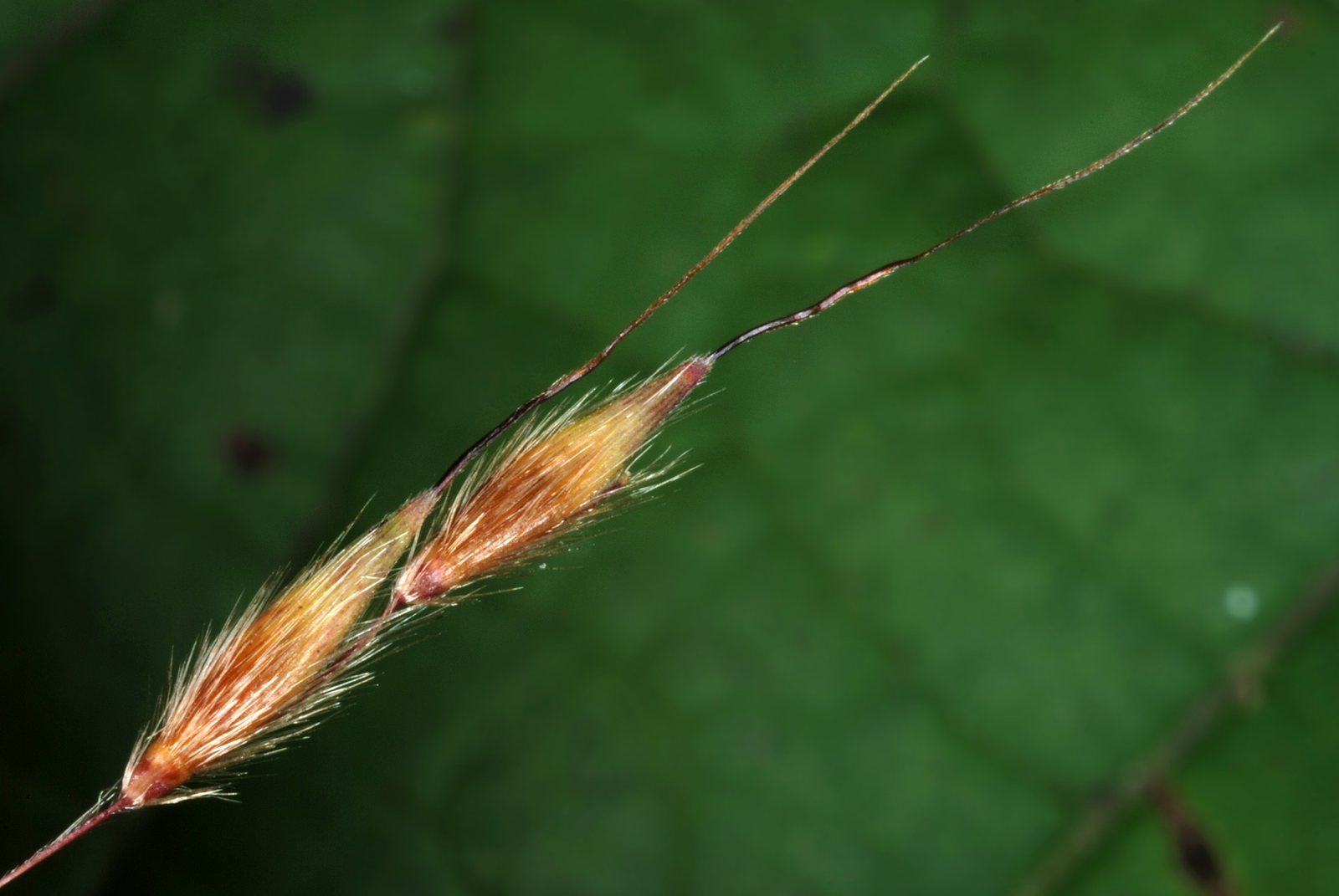
- Late summer to early autumn; narrow golden-brown plumes with conspicuous yellow anthers.
- Foliage
- Upright to arching blue-green leaves turn yellow, orange or bronze in autumn, then straw-coloured in winter.
- Growth
- Moderate; starts growing late in spring and develops quickly in summer warmth.
- Care needed
- Low
The year at a glance
- Deer resistant
- Drought tolerant
- Cold hardy
- Heat tolerant
- Wildlife
| J | F | M | A | M | J | J | A | S | O | N | D | |
|---|---|---|---|---|---|---|---|---|---|---|---|---|
| Flowers | ||||||||||||
| Fruit | ||||||||||||
| Plant |
Northern hemisphere months. In Australia, shift them by six.
- Difficulty
- Easy
- Toughness
- Very tough
Will it suit your garden?
Pick your zone, country, light and whether you have pets.
Full sun is 6 or more hours of direct sun a day, part shade 3 to 6 hours, shade under 3.
How it grows
Planting day
1.1 ft (0.35 m)
After 1 year
2.7 ft (0.81 m)
After 2 years
4 ft (1.3 m)
After 3 years
5 ft (1.5 m)
full size
About 3 years to full size.
From a typical nursery size, at an average rate for this kind of plant. A rule of thumb, not a forecast.
Good to know
- Cats and dogs
- Safe
- Native to
- the US and Canada
- Growth rate
- Moderate
Care
Jobs through the year
- WaterApr–May, Sep, every 28 days
- Established clumps need water only in prolonged dry weather; water new plants more often.
- WaterJun–Aug, every 21 days
- Water established clumps deeply only during prolonged drought; keep first-year plants more regularly watered.
- PruneFeb–Mar
- Cut old stems to 10-15 cm before new growth begins.
- DivideApr–May
- Divide congested clumps once fresh shoots appear; this is not needed annually.
- MulchApr–May
- Apply a light mulch around new plants, leaving crowns uncovered.
- DeadheadSep–Oct
- Remove plumes before seed sheds only if seedlings are unwanted; otherwise leave for birds.
- Water deeply during dry spells in the first growing season; established plants rarely need routine watering.
- Avoid routine feeding: rich soil and excess nitrogen encourage floppy growth.
- Keep a light mulch around new plants, leaving the crown uncovered.
- Divide congested clumps in spring once new shoots appear.
- Remove unwanted seedlings while small, especially beside paths and gravel.
Pruning. Leave the stems standing over winter, then cut them to 4-6 in (10-15 cm) above ground in late winter or early spring, before new growth begins.
Through the year
- Late winter
- Cut down old stems before fresh shoots emerge.
- Spring
- Plant container-grown plants and water thoroughly; allow room for mature clumps.
- Late spring
- Divide established clumps as active growth begins and remove unwanted seedlings.
- Summer
- Water new plantings during dry spells; avoid feeding established clumps.
- Early autumn
- Leave flower plumes for seed-eating birds, or remove them before seed ripens if seedlings are unwanted.
- Late autumn
- Retain standing stems for winter structure and wildlife shelter.
In the garden
- Plant in repeated groups through prairie-style borders with coneflowers and black-eyed Susans.
- Use at the back of sunny borders for height and a light seasonal screen.
- Combine with asters and goldenrods for late-season colour and contrasting flower shapes.
- Position where low autumn sunlight can catch the golden seed heads.
Garden styles it suits: Native meadow, New perennial (prairie), Midwest prairie, Wildlife garden, Low-maintenance and Winter interest.
Plant it with: Purple coneflower, Black-eyed Susan, New England aster, Butterfly weed, Prairie blazing star and Showy goldenrod.
Wildlife: Seeds feed birds, and standing clumps provide cover for insects and small animals. In its native range, the foliage supports several grass-feeding butterfly and skipper larvae. Flowers are wind-pollinated rather than a nectar source.
Problems to watch for
- Flopping stems: move to full sun, stop feeding and avoid overly rich soil; discreetly support existing stems if necessary.
- Crown rot in persistently wet soil: improve drainage or move the plant to a site without standing winter water.
- Rust or leaf spots: improve airflow, water at soil level and remove affected dead foliage during the annual cutback.
- Unwanted seedlings: remove seed heads before they shed and pull seedlings while their roots are small.
Safety
Young leaves may contain cyanogenic compounds and can pose a poisoning risk to grazing livestock, including horses; do not offer clippings as feed. Toxicity in cats, dogs and people is not well documented, so do not treat the plant as edible.
Easily confused with
Switchgrass (Panicum virgatum)
Switchgrass has open, airy flower panicles rather than the denser golden-brown plumes of Indiangrass.
Big bluestem (Andropogon gerardii)
Big bluestem has several finger-like flowering branches resembling a turkey's foot, rather than a single narrow plume.
The name
Sorghastrum means resembling sorghum, while nutans means nodding, referring to the drooping parts of the flower head.
Propagation. Divide clumps in spring as growth starts. Sow seed in autumn outdoors, or give spring-sown seed a cold, moist period to improve germination; seedlings may differ from named parent plants.
Checked against open data
- Accepted botanical name
- Sorghastrum nutans
- In the US and Canada
- Native in Canada and the lower 48 states.
- Native range
- Alabama, Arizona, Arkansas, Colorado, Connecticut, Delaware, District of Columbia, Florida, Georgia, Honduras, Illinois and Indiana.
- Measured
- Soil pH 5 to 7.5. Average height 66 cm.
Sources: GBIF (CC BY 4.0), USDA PLANTS and Trefle (CC BY 4.0). The care and design notes are LandscapeGPT's own.
See it in your own yard.
Upload a photo of your yard and see it redesigned with plants that suit your climate, each checked against your zone.