Ixora
Ixora coccinea. Family Rubiaceae. Shrub.
Also called Jungle geranium, Flame of the woods, Jungle flame.
Ixora is a tropical evergreen shrub grown for dense clusters of small, tubular flowers and glossy leaves. It flowers for months in warm conditions and suits hedges, borders and containers where the soil is acidic. In the UK, Canada and frost-prone parts of the United States and Australia, grow it in a pot that can spend winter in a warm, bright greenhouse or conservatory.
At a glance
- Sun
- Full sun to partial shade; flowering is best with at least six hours of direct sun. Light afternoon shade helps in very hot, dry locations.
- Water
- Keep the root zone evenly moist during active growth, but never waterlogged. Water less in winter, allowing the surface to begin drying between waterings.
- Soil
- Humus-rich, well-drained, acidic soil, ideally pH 5.0-6.0. Use ericaceous potting compost in containers; alkaline soil commonly causes yellow leaves.
- Height
- 4-6 ft (1.2-1.8 m), sometimes reaching 10-12 ft (3-3.7 m) when mature and unpruned; dwarf cultivars stay smaller
- Spread
- 3-6 ft (0.9-1.8 m)
- Flowers
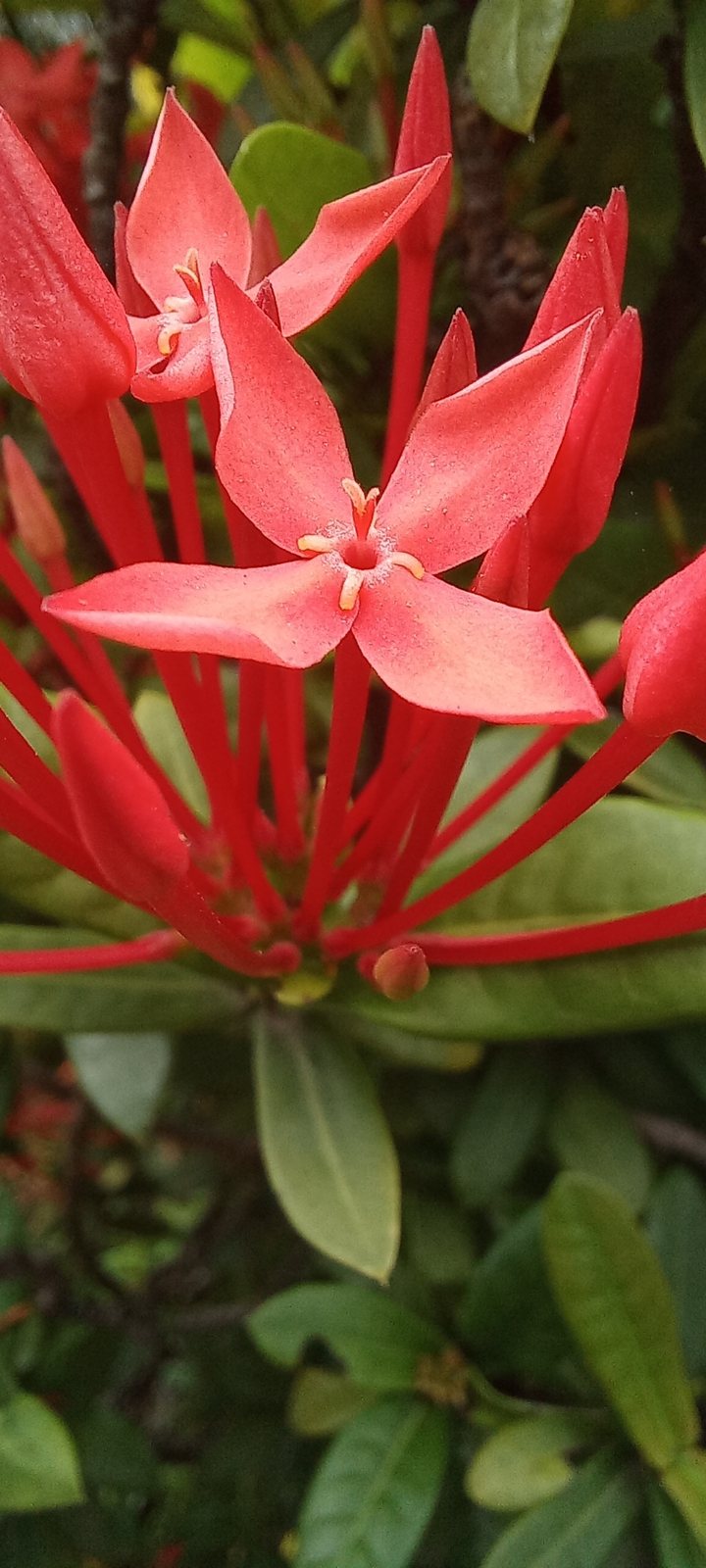
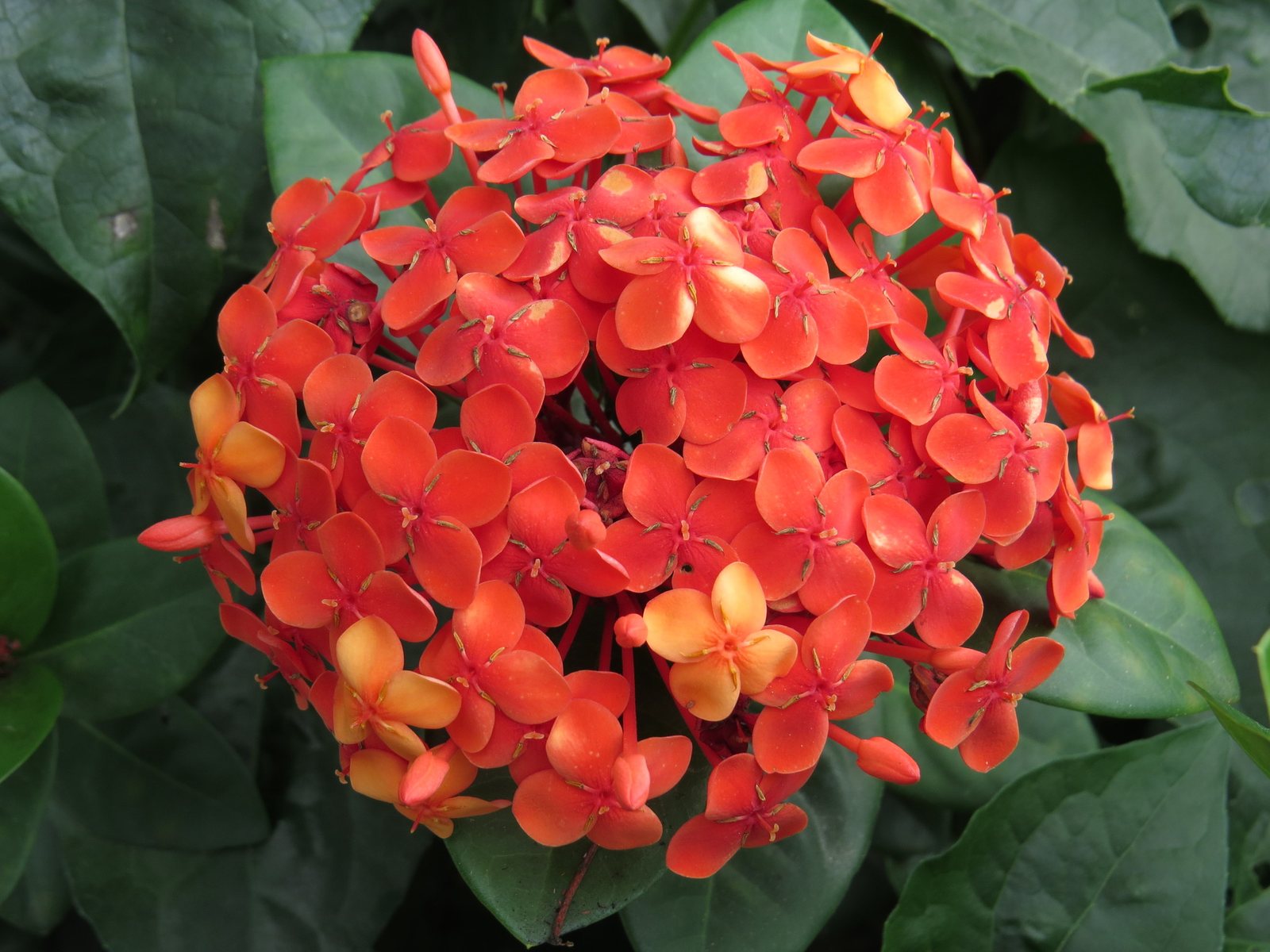
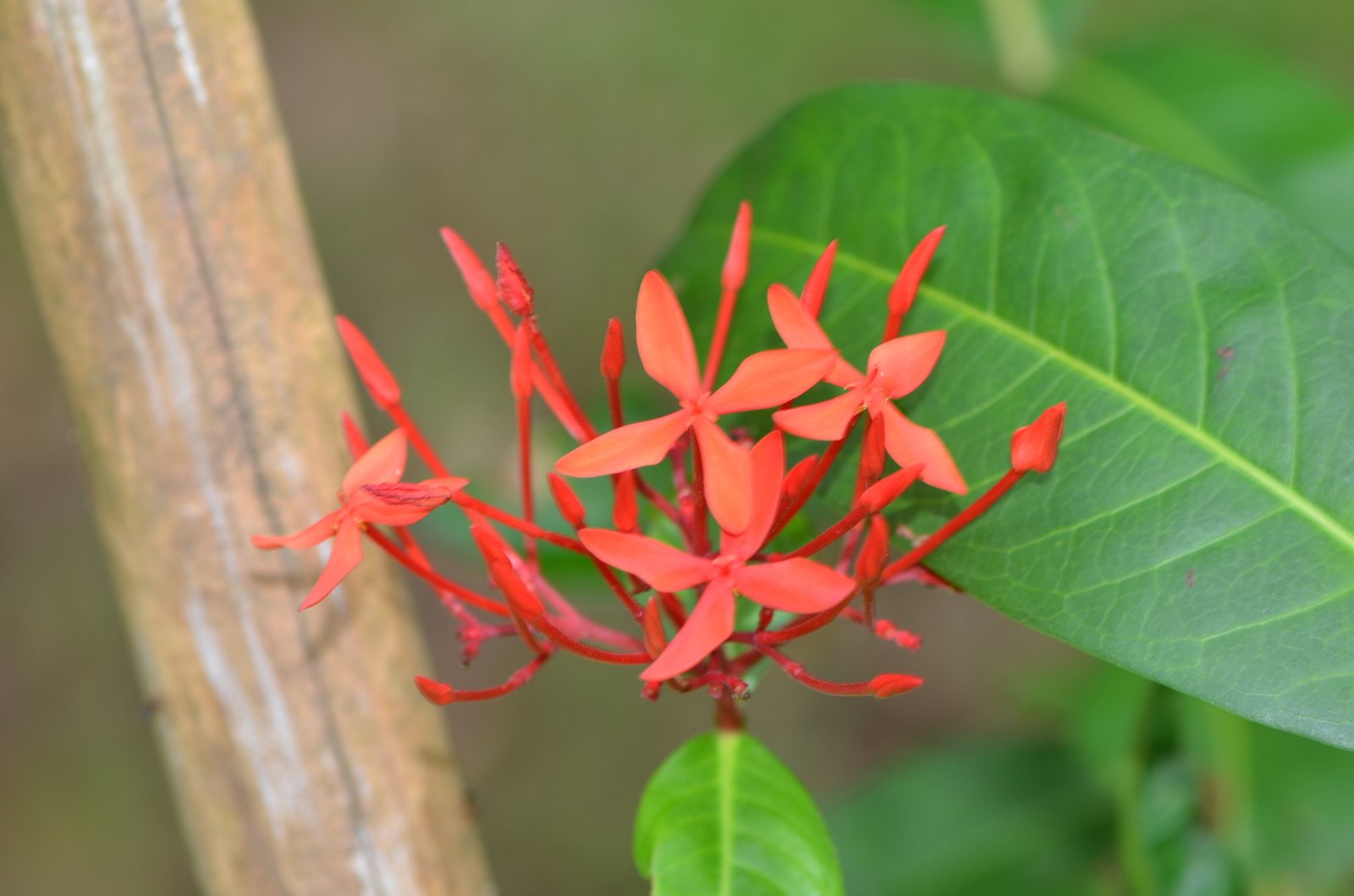
- Mainly late spring through autumn, potentially year-round in tropical conditions; dense clusters of scarlet flowers, with orange, pink, yellow and white forms also available.
- Foliage
- Evergreen. Opposite, leathery, glossy dark-green leaves with smooth edges and pointed tips.
- Growth
- Moderate in warm, humid conditions; slow in cool weather.
- Care needed
- Medium
The year at a glance
- Pollinators
- Heat tolerant
- Low allergen
| J | F | M | A | M | J | J | A | S | O | N | D | |
|---|---|---|---|---|---|---|---|---|---|---|---|---|
| Flowers | ||||||||||||
| Plant |
Northern hemisphere months. In Australia, shift them by six.
- Difficulty
- Hard
- Toughness
- Needs looking after
Will it suit your garden?
Pick your zone, country, light and whether you have pets.
Full sun is 6 or more hours of direct sun a day, part shade 3 to 6 hours, shade under 3.
How it grows
Planting day
1.6 ft (0.5 m)
After 1 year
2.1 ft (0.65 m)
After 2 years
2.7 ft (0.81 m)
After 3 years
3 ft (0.96 m)
After 5 years
4 ft (1.3 m)
About 7 years to full size.
From a typical nursery size, at an average rate for this kind of plant. A rule of thumb, not a forecast.
Good to know
- Cats and dogs
- Safe
- Growth rate
- Slow
Care
Jobs through the year
- WaterMar–May, Sep–Oct, every 7 days
- In this climate grow in a movable pot; water when the surface starts drying, preferably with rainwater.
- WaterJun–Aug, every 3 days
- Keep container roots evenly moist; check more often in heat and let excess water drain.
- WaterJan–Feb, Nov–Dec, every 14 days
- In warm winter shelter, water as the surface dries without letting the root ball dry completely.
- FeedApr–Aug, every 28 days
- Apply fertilizer for acid-loving shrubs at its labelled rate and frequency.
- MulchMay
- Add a thin organic mulch to large pots, keeping stems clear.
- PruneJul–Sep
- Lightly shorten long shoots after a main flowering flush; avoid repeated shearing.
- ProtectJan–May, Sep–Dec
- Keep in bright, warm shelter whenever nights fall below 10°C; inspect for scale and mealybugs.
- ProtectJun
- Move pots outdoors only when nights stay above 10°C, gradually acclimating them to sun.
- Water deeply when the soil surface starts to dry; empty container saucers after watering.
- Feed during spring and summer with a fertilizer for acid-loving shrubs, following the label rate.
- Spread 2-3 in (5-8 cm) of organic mulch over the roots, keeping it clear of the stems.
- Use rainwater where tap water is hard, and keep plants away from lime-rich soil and concrete runoff.
- Bring container plants under cover before nights fall below 50°F (10°C), providing bright light and frost-free warmth.
Pruning. Lightly shorten shoots after a main flush of flowers to keep the shrub compact, and remove dead or damaged wood as needed. Avoid repeated shearing, which removes developing flower buds.
Through the year
- Late winter
- Check sheltered plants for scale insects and mealybugs; water sparingly without letting the root ball dry out completely.
- Spring
- Repot crowded container plants into slightly larger pots with fresh ericaceous compost, and begin feeding as growth resumes.
- Late spring
- Move pots outdoors once nights remain above 50°F (10°C), gradually introducing them to stronger sunlight.
- Summer
- Keep roots evenly moist, maintain mulch and inspect yellowing leaves for signs of iron deficiency.
- After the main flowering flush
- Lightly trim long shoots to shape the shrub without cutting back the whole canopy.
- Early autumn
- In cool climates, check pots for pests and move them into warm, bright shelter before chilly nights arrive.
In the garden
- Plant as a flowering hedge in frost-free gardens, allowing enough room to avoid frequent clipping.
- Group beside crotons and cordylines for contrasting leaf colour and a tropical effect.
- Use a compact cultivar in a large patio container, especially where garden soil is alkaline.
- Mass along a sunny entrance border for repeated blocks of flower colour and evergreen structure.
Garden styles it suits: Modern tropical, Tropical, Luxury resort, Modern courtyard, Florida subtropical and Caribbean.
Plant it with: Gardenia, Croton, Cordyline, Tropical hibiscus and Bromeliads.
Wildlife: The nectar-rich flowers attract butterflies and other insects; hummingbirds may visit where they occur.
Problems to watch for
- Yellow leaves with green veins usually indicate iron deficiency caused by alkaline soil or water. Check soil pH, switch to rainwater where practical and use an appropriate chelated iron treatment; grow in ericaceous compost if the ground is unsuitable.
- Scale insects and mealybugs collect on stems and leaf undersides. Remove small infestations by hand and treat persistent infestations with a labelled horticultural oil or insecticidal soap.
- Sooty mould grows on honeydew from sap-feeding pests. Control the insects, manage ants that protect them and gently wash affected foliage.
- Root rot can follow persistent waterlogging. Improve drainage, let excess water escape from pots and avoid watering already-wet soil.
Safety
Not known to be toxic to people, cats, dogs or horses. Reliable information about ingestion of individual parts, including the berries, is limited, so do not treat it as an edible plant or allow pets to graze on it.
Easily confused with
Pentas (Pentas lanceolata)
Pentas has five-pointed flowers and softer, usually hairy leaves; ixora flowers have four lobes and the leaves are glossy and leathery.
Lantana (Lantana camara)
Lantana has rough, toothed, aromatic leaves and often multicoloured flower heads; ixora has smooth-edged, glossy leaves and longer tubular flowers.
The name
The species name coccinea means scarlet, referring to the flower colour of the typical form.
Propagation. Take semi-ripe stem cuttings in summer and root them in a free-draining medium with warmth and high humidity. Seed is possible, but seedlings may not match the parent plant.
Checked against open data
- Accepted botanical name
- Ixora coccinea
- In the US and Canada
- Introduced in the lower 48 states, Pacific Basin, Puerto Rico and US Virgin Islands.
- Native range
- Bangladesh, Cambodia, India, Sri Lanka, Thailand and Vietnam.
Sources: GBIF (CC BY 4.0), USDA PLANTS and Trefle (CC BY 4.0). The care and design notes are LandscapeGPT's own.
See it in your own yard.
Upload a photo of your yard and see it redesigned with plants that suit your climate, each checked against your zone.