Japanese plum
Prunus salicina. Family Rosaceae. Tree.
Also called Chinese plum.
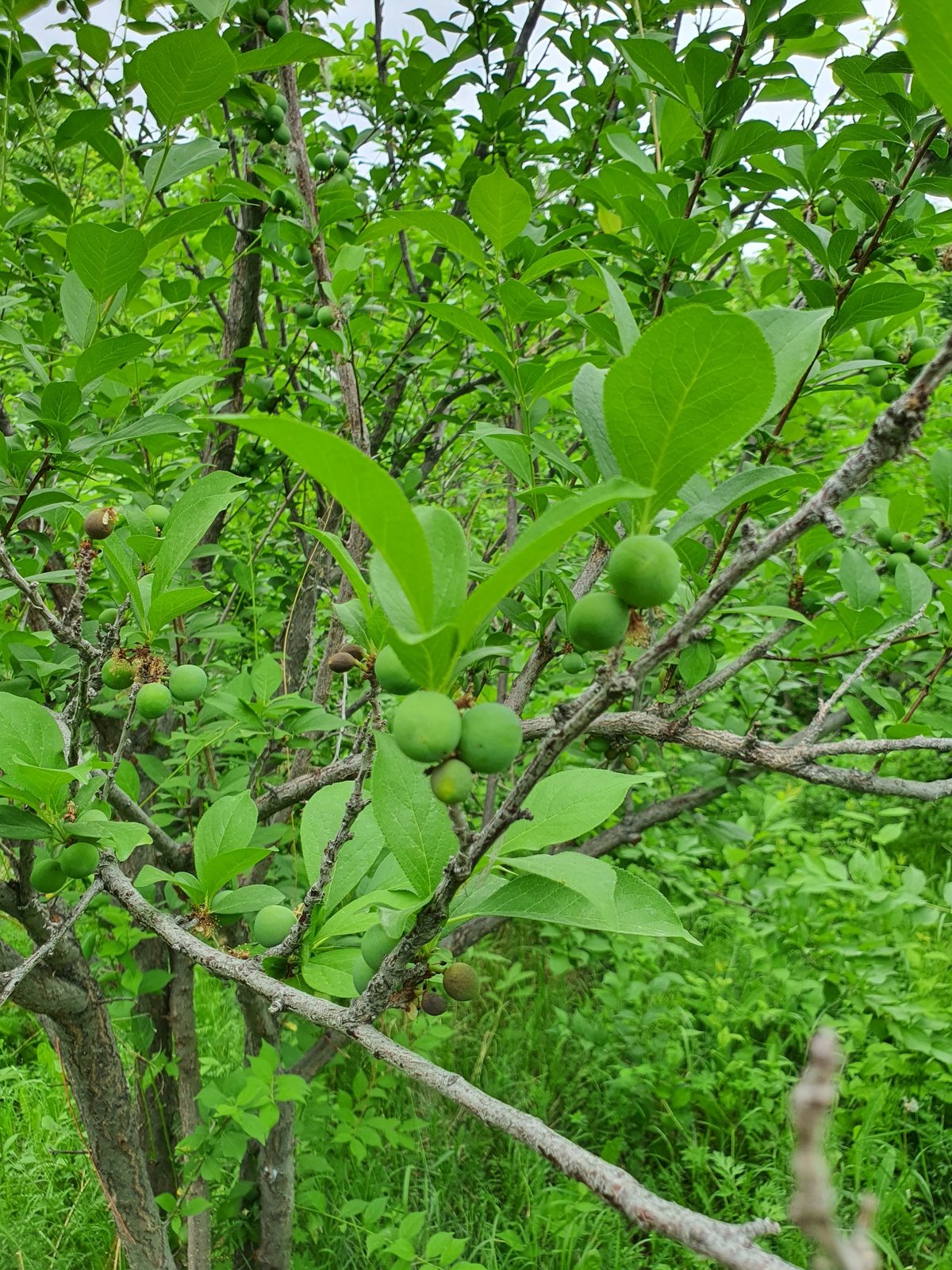
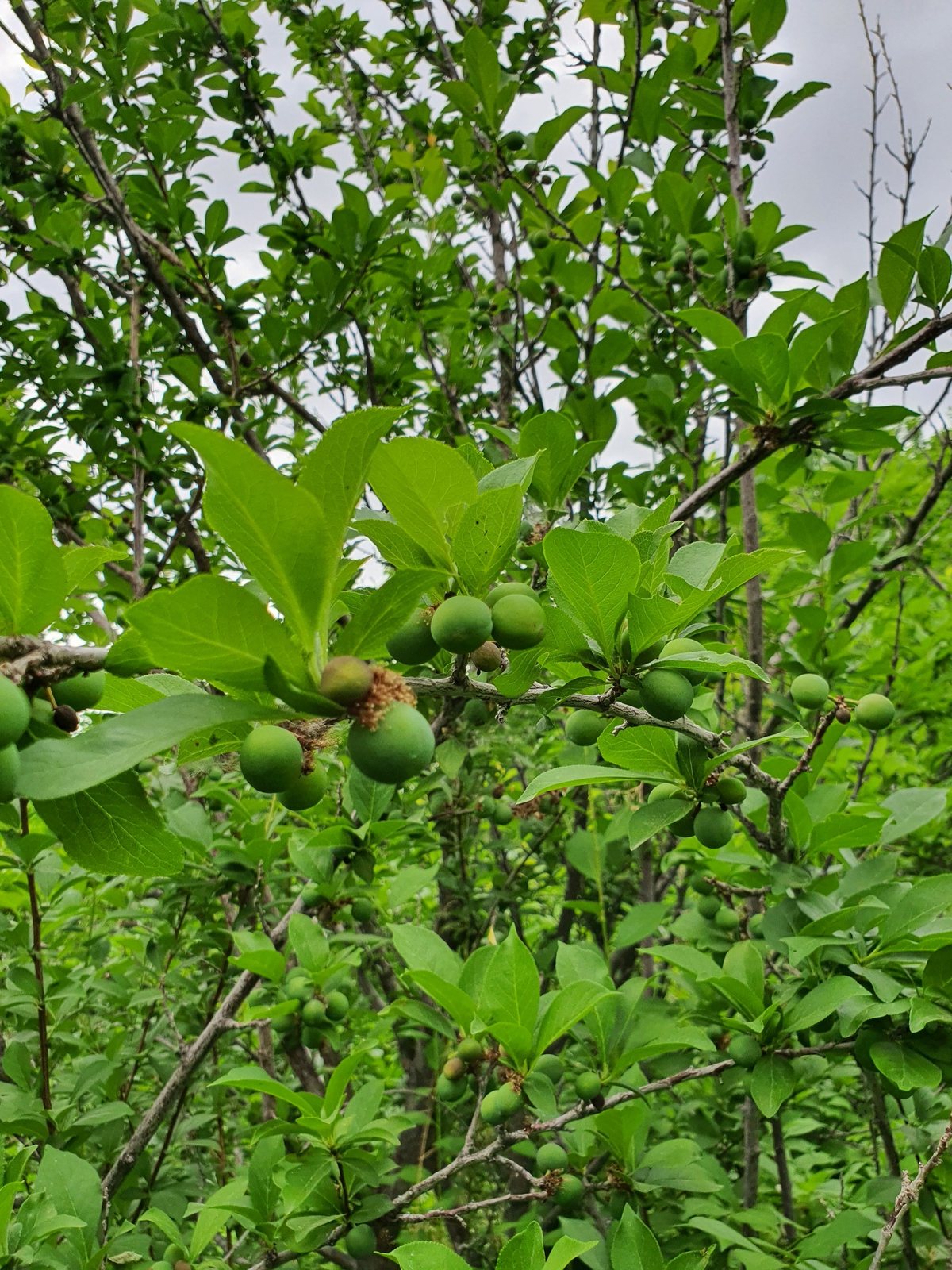
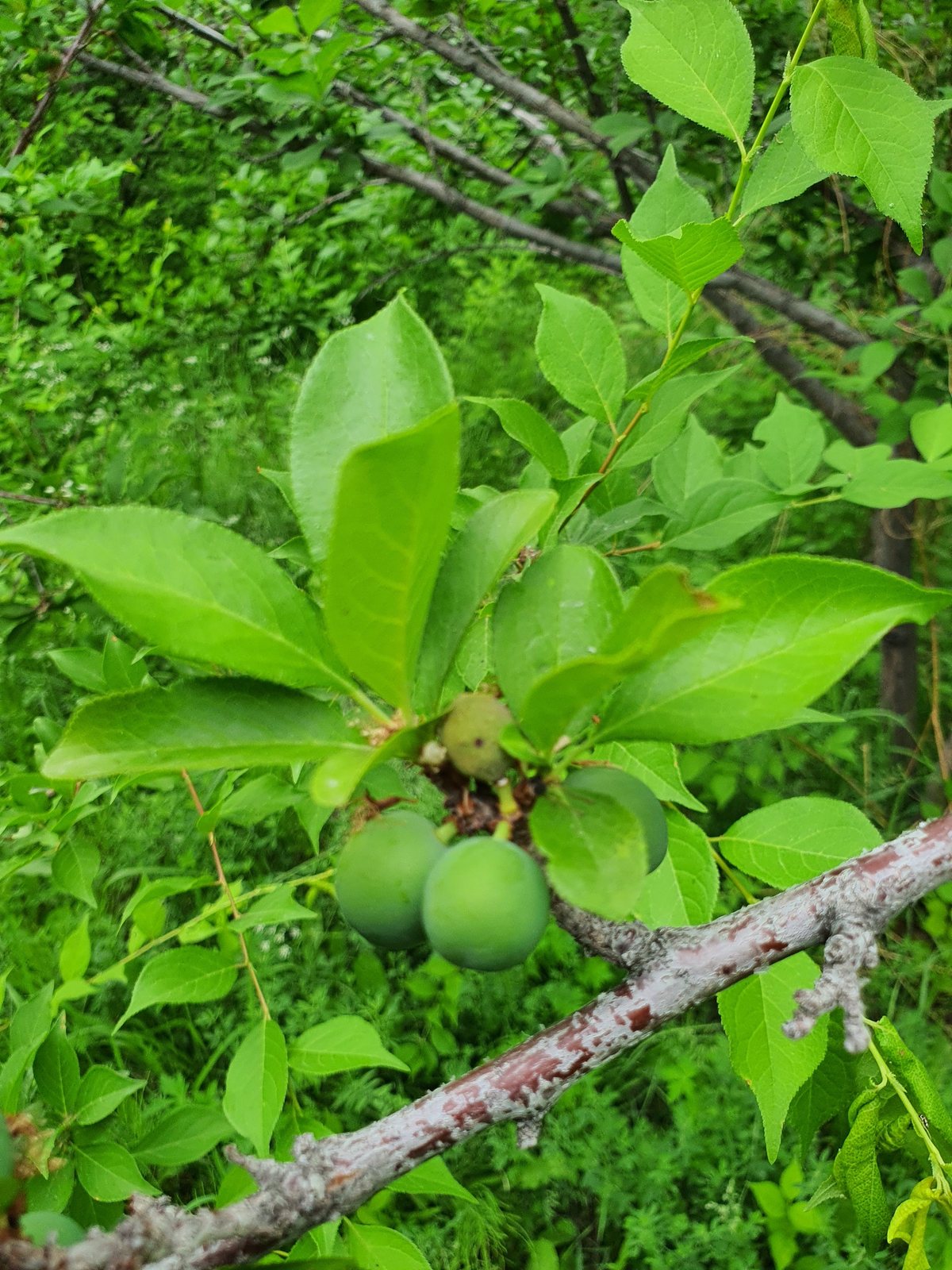
Japanese plum is a deciduous fruit tree grown for early white blossom and juicy plums with red, purple or yellow skins. Despite its common name, it originated in China; most garden varieties need a compatible pollination partner, and reliable crops depend on avoiding spring frosts and having enough summer warmth.
At a glance
- Sun
- Full sun, with at least 6-8 hours of direct light; choose a warm, sheltered position outside frost pockets.
- Water
- Water deeply during establishment and during dry spells as fruit develops; avoid waterlogged soil.
- Soil
- Fertile, well-drained loam is ideal; tolerates other soil textures if drainage is good. Aim for a slightly acidic to neutral pH.
- Height
- 15-30 ft (4.5-9 m); grafted garden trees can be smaller, depending on rootstock and pruning.
- Spread
- 15-25 ft (4.5-7.6 m); rootstock and training affect the final width.
- Flowers
- White flowers in late winter to early spring, usually before the leaves; timing varies with climate and cultivar.
- Foliage
- Narrow, pointed green leaves with finely toothed edges; autumn colour is usually yellow.
- Growth
- Moderate to fast when young.
- Care needed
- High
The year at a glance
- Pollinators
- Heat tolerant
- Wildlife
- Low allergen
- Edible
| J | F | M | A | M | J | J | A | S | O | N | D | |
|---|---|---|---|---|---|---|---|---|---|---|---|---|
| Flowers | ||||||||||||
| Fruit | ||||||||||||
| Plant |
Northern hemisphere months. In Australia, shift them by six.
- Difficulty
- Hard
- Toughness
- Fairly tough
Will it suit your garden?
Pick your zone, country, light and whether you have pets.
Full sun is 6 or more hours of direct sun a day, part shade 3 to 6 hours, shade under 3.
How it grows
Planting day
7 ft (2 m)
After 1 year
8 ft (2.3 m)
After 2 years
9 ft (2.6 m)
After 3 years
9 ft (2.9 m)
After 5 years
11 ft (3.5 m)
About 16 years to full size.
From a typical nursery size, at an average rate for this kind of plant. A rule of thumb, not a forecast.
Good to know
- Cats and dogs
- Toxic
- Growth rate
- Fast
Care
Jobs through the year
- WaterApr–May, Oct, every 14 days
- Water established trees deeply if soil is dry; young trees need more frequent watering.
- WaterJun–Sep, every 7 days
- Water during dry weather as fruit develops, avoiding waterlogged soil.
- FeedMar
- Feed modestly only if growth is weak; avoid heavy nitrogen applications.
- MulchMar–Apr
- Apply 5-8 cm of organic mulch, leaving the trunk clear.
- PruneJun–Aug
- Prune lightly once in dry weather, retaining young fruiting wood and short spurs.
- PruneMay–Jun
- Thin fruit after the natural drop, leaving plums 10-15 cm apart.
- ProtectMar–Apr
- Cover blossom during forecast night frosts, uncovering it during the day.
- HarvestJul–Sep
- Pick according to cultivar timing when fruit tastes ripe and yields slightly.
- ProtectSep–Nov
- Collect fallen and mummified fruit, clear diseased debris and loosen tight ties.
- Choose a cultivar suited to your winter temperatures and winter chilling; hardiness does not guarantee a reliable fruit crop.
- Unless your cultivar is reliably self-fertile, plant a compatible Japanese plum or suitable hybrid with overlapping bloom; European plums are generally unsuitable pollination partners.
- Water newly planted trees deeply whenever the root zone starts to dry, and continue watering established trees during prolonged dry weather.
- Spread organic mulch 2-3 in (5-8 cm) deep over the root area, keeping it clear of the trunk.
- Feed modestly in spring if growth is weak; avoid heavy nitrogen applications that encourage leafy growth at the expense of fruit.
- Thin young fruit after the natural fruit drop, leaving roughly 4-6 in (10-15 cm) between plums to improve size and reduce branch breakage.
Pruning. Train young trees to an open-centred framework, then prune established trees lightly in dry summer weather to remove crowded, damaged and inward-growing branches. Retain a mixture of young fruiting wood and short fruiting spurs, and avoid wet-weather or winter pruning where silver leaf and bacterial canker are concerns.
Harvest
Pick plums in summer when they have developed their cultivar's mature colour, yield slightly to gentle pressure and come away with a light twist; taste is a better guide than colour alone. Harvest in several passes and handle gently, as ripe fruit bruises easily. Grafted trees usually give their first worthwhile crop about 3-5 years after planting, depending on rootstock, tree size and growing conditions.
Through the year
- Dormant season
- Plant bare-root trees when the ground is workable and not waterlogged; check rootstock size and pollination compatibility before buying.
- Late winter to early spring
- Watch opening blossom for frost risk; cover small trees overnight with horticultural fleece where practical, removing it during the day for pollinators.
- Spring
- Refresh mulch, water during dry spells and feed lightly if growth is weak.
- Late spring to early summer
- Thin crowded fruit after the natural drop and check heavily laden branches for strain.
- Summer
- Harvest ripe fruit in several passes and prune lightly during a dry spell.
- Autumn
- Collect fallen and mummified fruit, remove tree ties that are becoming tight and clear diseased debris.
In the garden
- Plant in a mixed home orchard with compatible plum cultivars for cross-pollination and a longer harvest.
- Use as a flowering fruit tree in an edible garden, allowing space to reach the canopy for thinning and picking.
- Train a suitable grafted tree as a fan against a sunny wall in cooler climates to improve warmth and access.
- Place beside a kitchen garden with low flowering plants nearby to support pollinating insects, keeping the trunk area mulched.
Garden styles it suits: Backyard orchard, Edible landscape, Homestead, Potager (kitchen garden), Cottage garden and Food forest.
Plant it with: Chives, Thyme, Yarrow, Calendula, Borage and White clover.
Wildlife: The early flowers provide pollen and nectar for bees when weather permits them to fly. Birds and mammals eat ripe fruit, so use securely fitted wildlife-safe netting if you need to protect the crop, and check it regularly.
Problems to watch for
- Poor fruit set: early blossom is vulnerable to frost, and many cultivars need cross-pollination. Choose a sheltered site outside frost pockets and confirm that a compatible partner flowers at the same time.
- Brown rot: fruit develops spreading brown decay and may remain on the tree as shrivelled mummies. Remove affected fruit promptly, collect mummies and prune for airflow.
- Black knot, particularly in North America: hard black swellings develop on branches. Cut affected wood well below visible knots during dry weather and dispose of it; seek local guidance if infection is extensive.
- Aphids: colonies curl young leaves and produce sticky honeydew. Check shoot tips, encourage natural predators and use a firm water spray on accessible infestations; avoid spraying open flowers.
Safety
Ripe fruit flesh is edible, but the kernels inside the stones, leaves and stems contain cyanogenic compounds and can poison people, cats, dogs and horses if eaten. Chewed kernels and wilted foliage are particular concerns; poisoning can be serious or fatal. Whole stones also present choking and intestinal blockage hazards, especially to dogs.
Easily confused with
European plum (Prunus domestica)
Often has oval fruit with a noticeable seam and broader, sometimes slightly hairy leaves; Japanese plum usually has smoother, narrower leaves and rounder fruit.
Cherry plum (Prunus cerasifera)
Usually bears smaller, cherry-sized plums and smaller leaves; some ornamental forms have purple foliage. Japanese plum cultivars generally produce substantially larger fruit.
Japanese apricot (Prunus mume)
Usually flowers earlier, often with strongly fragrant pink or white blooms, and bears downy, apricot-like fruit rather than the smooth-skinned fruit of Japanese plum.
The name
The common name reflects its long cultivation and development in Japan, while salicina means willow-like, referring to its relatively narrow leaves.
Propagation. Named cultivars are propagated by budding or grafting onto compatible plum rootstocks. Seedlings vary in fruit quality, size and chilling needs, do not come true to the parent cultivar and usually take longer to bear.
Checked against open data
- Accepted botanical name
- Prunus salicina
- Native range
- China North-Central, China South-Central, China Southeast, Khabarovsk, Manchuria, Primorye, Taiwan and Vietnam.
- Measured
- Average height 800 cm.
Sources: GBIF (CC BY 4.0) and Trefle (CC BY 4.0). The care and design notes are LandscapeGPT's own.
See it in your own yard.
Upload a photo of your yard and see it redesigned with plants that suit your climate, each checked against your zone.