Joshua tree
Yucca brevifolia. Family Asparagaceae. Tree.
Also called Western Joshua tree.
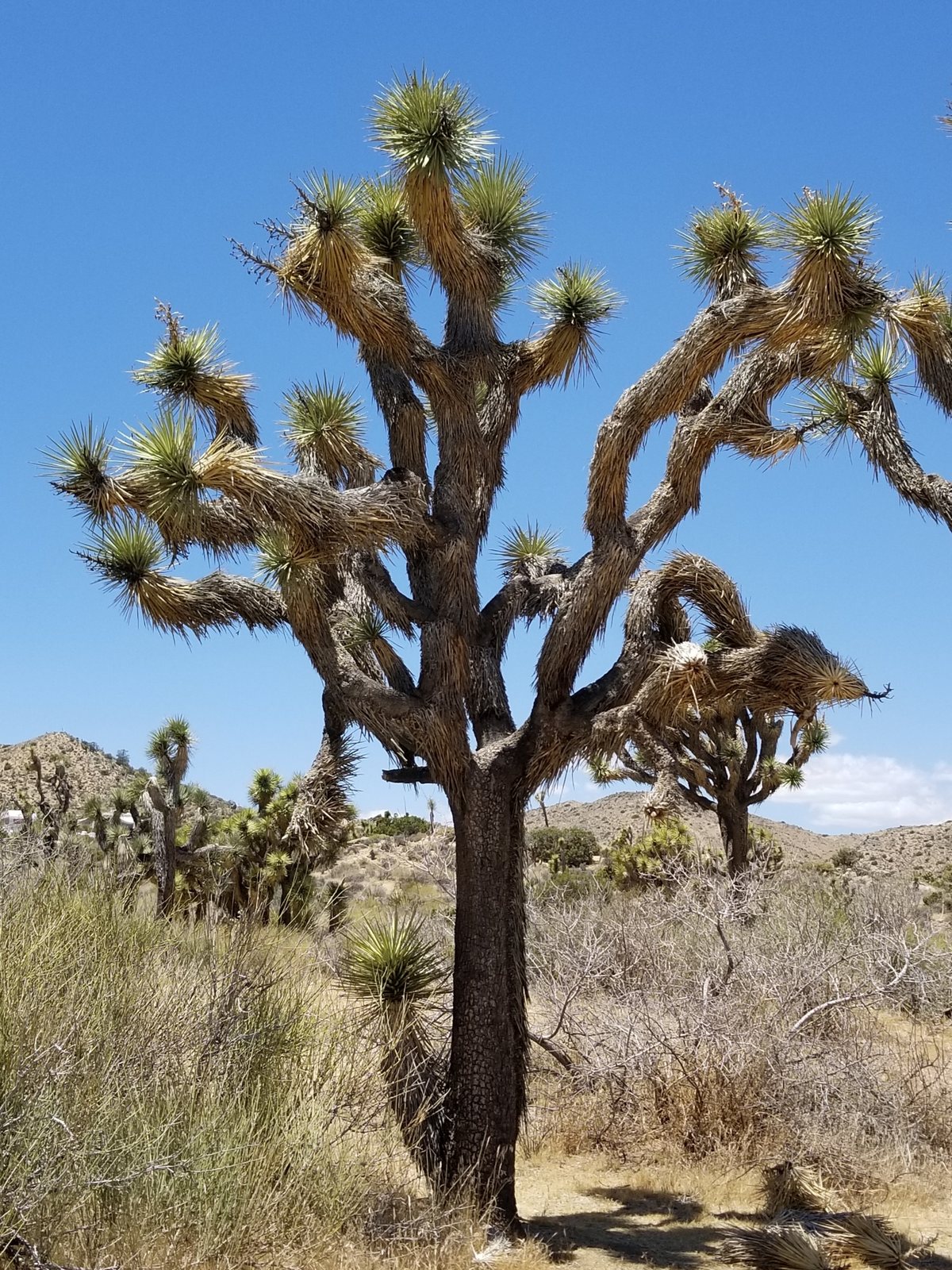
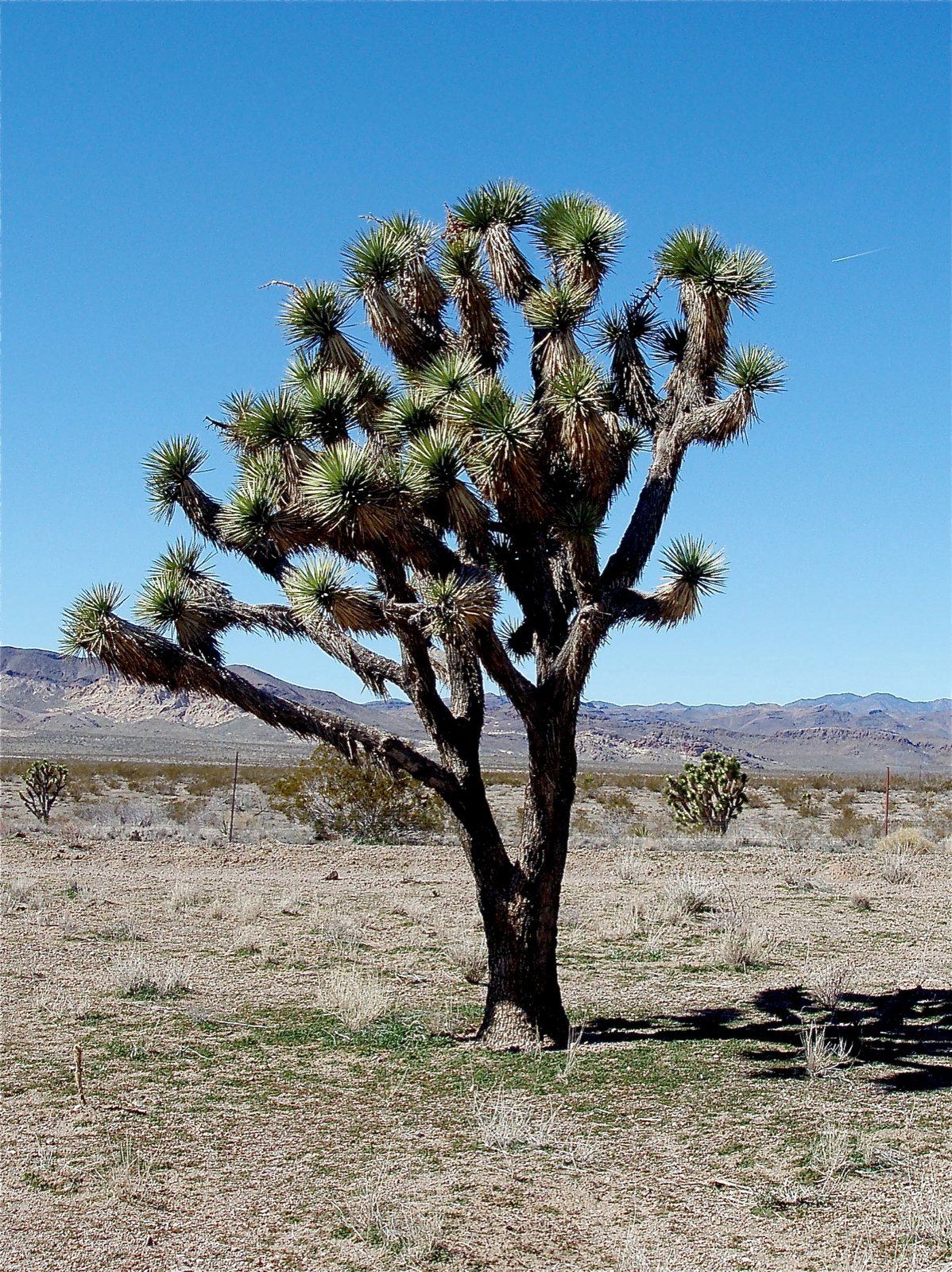
Joshua tree is a slow-growing, evergreen desert tree with a rough trunk, irregular branches and dense clusters of stiff, pointed leaves. Gardeners grow it for its sculptural outline in dry landscapes with ample space. It needs excellent drainage and suits arid gardens far better than places with wet winters or humid summers.
At a glance
- Sun
- Full sun.
- Water
- Low once established. Water young plants deeply, then let the root zone dry before watering again; established trees generally need supplemental water only during prolonged drought.
- Soil
- Sharply drained sandy, gravelly or rocky soil. Avoid heavy clay, low spots and soil kept damp by lawn irrigation.
- Height
- 15-30 ft (4.6-9.1 m), occasionally taller in the wild
- Spread
- 10-20 ft (3-6.1 m)
- Flowers
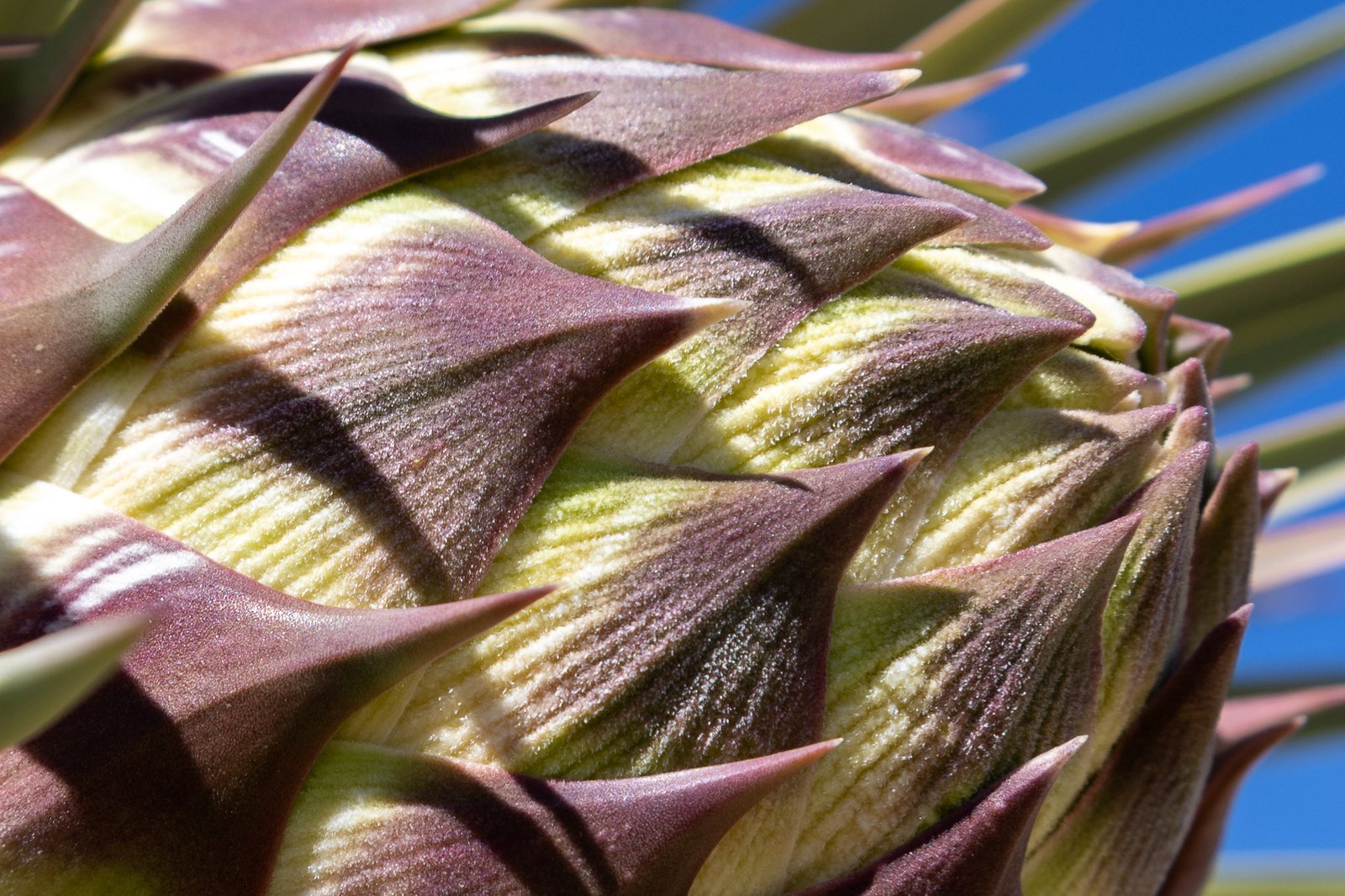
- Dense clusters of creamy-white to greenish-white flowers in spring, sometimes beginning in late winter. Flowering varies with plant maturity and weather and may not occur every year.
- Foliage
- Evergreen. Short, rigid, sword-shaped green to blue-green leaves with sharp tips and finely toothed margins, clustered at branch ends.
- Growth
- Slow; develops its mature tree form over decades.
- Care needed
- Low
The year at a glance
- Pollinators
- Deer resistant
- Drought tolerant
- Heat tolerant
- Wildlife
- Low allergen
| J | F | M | A | M | J | J | A | S | O | N | D | |
|---|---|---|---|---|---|---|---|---|---|---|---|---|
| Flowers | ||||||||||||
| Plant |
Northern hemisphere months. In Australia, shift them by six.
- Difficulty
- Hard
- Toughness
- Fairly tough
Will it suit your garden?
Pick your zone, country, light and whether you have pets.
Full sun is 6 or more hours of direct sun a day, part shade 3 to 6 hours, shade under 3.
How it grows
Planting day
7 ft (2 m)
After 1 year
7 ft (2.2 m)
After 2 years
8 ft (2.3 m)
After 3 years
8 ft (2.5 m)
After 5 years
9 ft (2.8 m)
About 32 years to full size.
From a typical nursery size, at an average rate for this kind of plant. A rule of thumb, not a forecast.
Good to know
- Cats and dogs
- Toxic
- Native to
- the US
- Growth rate
- Slow
Care
Jobs through the year
- WaterApr–May, Sep, every 28 days
- Established trees rarely need water; soak only after prolonged drought and complete soil drying.
- WaterJun–Aug, every 28 days
- Water established trees only during prolonged drought; young trees need closer soil checks.
- MulchApr–May
- Use gravel rather than moisture-retaining mulch and keep the trunk clear.
- PruneMay–Jul
- Remove only dead or damaged branches in dry weather; never top or strip healthy leaves.
- ProtectJan–Mar, Oct–Dec
- Keep winter rain and runoff from pooling at roots; protect young trees during exceptional freezes.
- Buy nursery-propagated plants; do not collect wild trees. Joshua trees are legally protected in parts of their native range, including California.
- Plant a young specimen in spring, keeping its original soil level and allowing room for its mature crown.
- Water deeply during establishment, but allow the soil to dry between waterings; reduce watering sharply in cool weather.
- Use gravel rather than moisture-retaining mulch around the base, and keep the trunk clear.
- Do not routinely fertilize; avoid lawn fertilizer and frequent irrigation around the roots.
Pruning. Prune only to remove dead or damaged branches, preferably in dry weather in late spring or summer. Do not top the tree or strip away healthy leaves; wear eye protection and thick gloves around the sharp foliage.
Through the year
- Spring
- Plant nursery-grown young trees after severe frost risk has passed, in a sunny site with sharp drainage.
- Spring
- Check for flower buds and keep irrigation away from developing flower clusters and leaf crowns.
- Summer
- Check soil moisture before watering young trees; let the root zone dry between deep soakings.
- Late summer
- Inspect for scale insects, damaged leaves and soft areas at the trunk base.
- Autumn
- Reduce supplemental watering as temperatures fall and clear debris that traps moisture against the trunk.
- Winter
- Check drainage after rain and prevent runoff or irrigation from pooling around the roots.
In the garden
- Use as a sculptural focal point in a spacious gravel garden, well away from paths and seating.
- Combine with boulders, low desert shrubs and open gravel to echo its Mojave Desert habitat.
- Plant against a plain wall or open sky where its irregular branching makes a strong silhouette.
- Pair with drought-adapted grasses and smaller succulents that share its need for dry, freely drained soil.
Garden styles it suits: Desert modern, Architectural minimal, Desert / xeriscape, Southwestern, Dry gravel garden and California native.
Plant it with: Mojave sage, Blackbrush, Desert marigold, Banana yucca, Indian ricegrass and Beavertail prickly pear.
Wildlife: Native yucca moths pollinate the flowers, and their larvae eat some developing seeds. The crown provides shelter and nesting sites for desert birds, while flowers and seeds support other native wildlife. Outside its native pollinator range, flowering plants may not set seed without hand pollination.
Problems to watch for
- Root or crown rot in wet soil: stop unnecessary irrigation and correct drainage; badly rotted trees may not recover.
- Poor performance in humid or rainy climates: use a sheltered, sharply drained site, but choose a more suitable plant if the soil remains wet through winter.
- Scale insects: inspect leaf bases and stems; remove small infestations by hand and use a labelled treatment if they persist.
- Cold injury, especially with wet roots: protect young plants during exceptional freezes and keep the root zone freely drained.
Safety
Treat the leaves and roots as toxic to cats, dogs and horses if eaten: yuccas contain saponins that can cause drooling, vomiting or diarrhoea, with potentially more serious effects in horses. Species-specific information on poisoning in people is limited, so do not eat the plant. Sharp leaf tips can injure people and animals even without ingestion.
Easily confused with
Eastern Joshua tree (Yucca jaegeriana)
Usually has shorter leaves and a more densely branched crown, with branching beginning lower down. Formerly treated as a variety of Joshua tree, it can be difficult to distinguish from young plants without knowing their…
Mojave yucca (Yucca schidigera)
Has much longer leaves with conspicuous curling threads along their edges and usually a shorter, less extensively branched trunk.
Soaptree yucca (Yucca elata)
Has long, narrow, flexible leaves with white marginal threads and a tall, open flower stalk rather than Joshua tree's dense flower clusters.
The name
The botanical epithet brevifolia means 'short-leaved', referring to its relatively short leaves compared with those of many other yuccas.
Propagation. Usually grown from fresh seed sown in spring in a warm, freely draining seed mix. Some plants produce basal offsets, but these can be difficult to separate and establish; seed-grown nursery plants are generally the better choice. Obtain seed and plants legally rather than collecting from wild populations.
Checked against open data
- Accepted botanical name
- Yucca brevifolia
- In the US and Canada
- Native in the lower 48 states.
- Native range
- Arizona, California, Mexico Northwest, Nevada and Utah.
- Measured
- Average height 914 cm.
Sources: GBIF (CC BY 4.0), USDA PLANTS and Trefle (CC BY 4.0). The care and design notes are LandscapeGPT's own.
See it in your own yard.
Upload a photo of your yard and see it redesigned with plants that suit your climate, each checked against your zone.