Lemon cucumber
Cucumis sativus 'Lemon'. Family Cucurbitaceae. Annual.
Also called Yellow lemon cucumber.
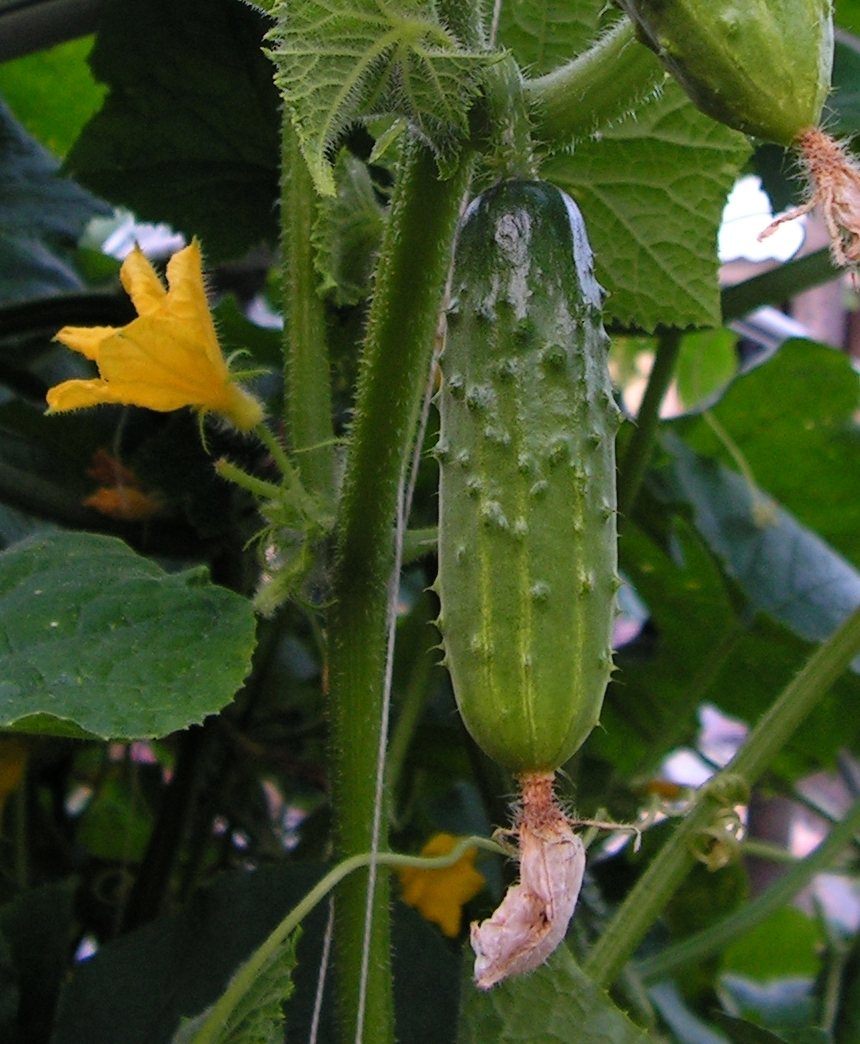
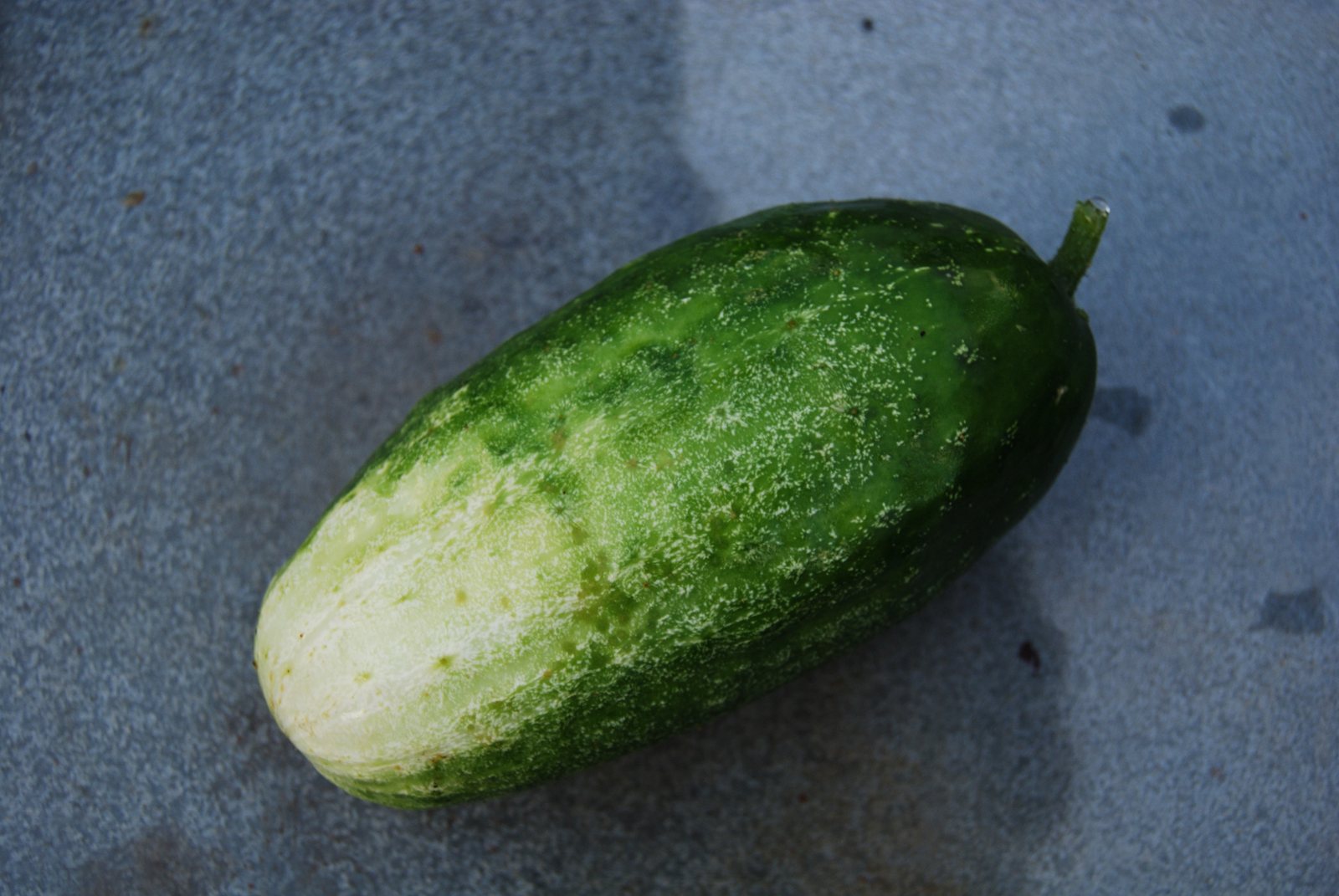
Lemon cucumber is a warm-season vegetable grown as an annual for its round, pale-yellow fruits. The crisp flesh has a mild cucumber flavour, not a lemon flavour, and is useful fresh or pickled. Its trailing vines can spread across a vegetable bed or climb a trellis.
At a glance
- Sun
- Full sun; aim for at least 6-8 hours of direct sunlight daily.
- Water
- Keep the root zone evenly moist, especially during flowering and fruiting. Water deeply when the surface soil begins to dry; containers may need daily watering in hot weather.
- Soil
- Fertile, well-drained soil enriched with compost, preferably pH 6.0-7.0.
- Height
- 6-12 in (0.15-0.3 m) as ground cover; 5-8 ft (1.5-2.4 m) on a trellis
- Spread
- 3-6 ft (0.9-1.8 m) when trailing; allow 1.5-2 ft (0.45-0.6 m) between trellised plants
- Flowers
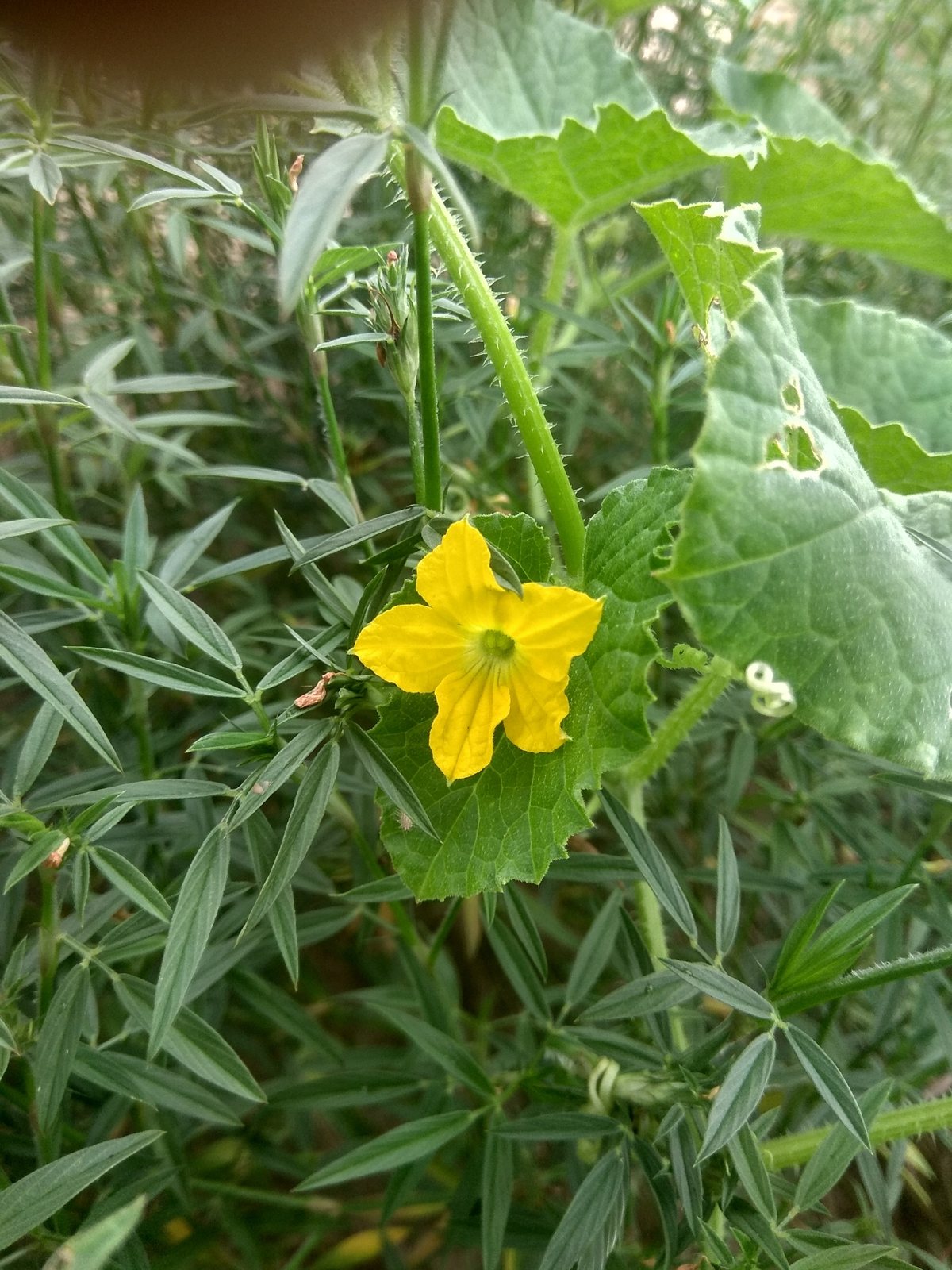
- Yellow flowers from late spring or summer until cool weather; separate male and female flowers grow on the same plant.
- Foliage
- Rough, hairy green leaves with broad, shallow lobes; stems carry curling tendrils.
- Growth
- Fast in warm weather
- Care needed
- Medium
The year at a glance
- Pollinators
- Low allergen
- Edible
| J | F | M | A | M | J | J | A | S | O | N | D | |
|---|---|---|---|---|---|---|---|---|---|---|---|---|
| Flowers | ||||||||||||
| Fruit | ||||||||||||
| Plant |
Northern hemisphere months. In Australia, shift them by six.
- Difficulty
- Moderate
- Toughness
- Needs looking after
Will it suit your garden?
Pick your zone, country, light and whether you have pets.
Full sun is 6 or more hours of direct sun a day, part shade 3 to 6 hours, shade under 3.
How it grows
Planting day
0.5 ft (0.15 m)
After 1 year
0.7 ft (0.22 m)
full size
Full size in one season.
From a typical nursery size, at an average rate for this kind of plant. A rule of thumb, not a forecast.
Good to know
- Cats and dogs
- Safe
- Growth rate
- Fast
Care
Jobs through the year
- WaterMay, Sep–Oct, every 5 days
- For ground-grown plants, water when surface soil starts drying; check new transplants more often.
- WaterJun–Aug, every 3 days
- Keep the root zone evenly moist, watering deeply at soil level and adjusting for rain.
- FeedApr–May
- Incorporate mature compost before planting.
- FeedJun–Sep, every 14 days
- Apply vegetable fertilizer at the label rate during cropping; avoid excessive nitrogen.
- MulchJun
- Mulch warm soil to retain moisture without covering the stem base.
- ProtectMay–Jun
- Protect young plants from slugs and cucumber beetles where present; uncover flowers for bees.
- HarvestJul–Oct
- Cut pale-yellow fruit at 5–8 cm across; pick remaining usable fruit before frost.
- Plant outside after frost danger has passed and the soil has warmed to at least 60°F (16°C).
- Mix compost into the bed before planting, then mulch once the soil is warm.
- Water at soil level to keep moisture steady and avoid repeatedly wetting the leaves.
- Feed with a vegetable fertiliser according to its label; avoid excessive nitrogen, which encourages leafy growth.
- Install a trellis at planting and guide young stems onto it with loose ties.
- Leave flowers accessible to bees; poor pollination reduces fruit set.
Pruning. Routine pruning is unnecessary. During growth, remove badly diseased leaves and guide or shorten wayward shoots only where needed to keep paths clear.
Harvest
Begin checking for fruit about 60-75 days after sowing in warm conditions. Pick when the cucumbers are roughly 2-3 in (5-8 cm) across and pale yellow, before they turn deep golden and develop tougher skins and larger seeds. Cut the stalk with scissors and harvest frequently to encourage further cropping.
Through the year
- Late winter
- Order seed and choose a sunny bed or a large container with a sturdy support.
- Spring
- For an early start, sow indoors in individual pots 3-4 weeks before your expected last frost; provide warmth and strong light.
- Late spring
- Harden off seedlings and plant after frost danger passes and soil warms; alternatively, sow directly into warm soil.
- Early summer
- Mulch warm soil, guide vines onto supports and begin regular checks for pests.
- Summer
- Maintain even watering, feed as needed and pick pale-yellow fruit frequently.
- Autumn
- Harvest remaining usable fruit before frost and remove spent vines; do not leave diseased crop debris in the bed.
In the garden
- Train up a trellis at the sunny edge of a vegetable garden to keep fruit off the soil.
- Use in a potager with lettuce and culinary herbs, where the yellow fruit adds seasonal colour.
- Grow in a large container with a climbing frame on a sunny patio.
- Allow vines to trail across a mulched vegetable bed where there is room for their full spread.
Garden styles it suits: Potager (kitchen garden), Cottage garden, Edible landscape, Homestead, Family-friendly and Small-space.
Plant it with: Lettuce, Dill, Nasturtium, French marigold and Bush beans.
Wildlife: Flowers provide pollen and nectar for bees. Insect mesh must be removed or opened during flowering unless you hand-pollinate.
Problems to watch for
- Powdery mildew: white patches develop on leaves, often late in the season. Improve airflow, maintain steady watering and remove badly affected leaves; use a locally approved treatment if needed.
- Aphids: colonies gather on soft shoots and leaf undersides. Dislodge them with water or use insecticidal soap labelled for edible crops, avoiding open flowers.
- Cucumber beetles, especially in North America: beetles chew leaves and can spread bacterial wilt. Protect young plants with insect mesh, removing it when flowers need pollination; remove wilted, infected plants.
- Poor fruit set or misshapen fruit: cold weather, uneven watering or inadequate pollination can be responsible. Keep moisture steady and, if bees are scarce, transfer pollen from a male flower to the centre of a female flower with a small brush.
Safety
Ordinary cucumber fruit and foliage are not known to be toxic to people, cats, dogs or horses. Exceptionally bitter fruit can contain high levels of cucurbitacins and cause serious gastrointestinal illness; spit it out and discard the whole fruit rather than eating or cooking it.
Easily confused with
Crystal Apple cucumber (Cucumis sativus 'Crystal Apple')
Also produces rounded cucumbers, but fruits are usually cream to pale green rather than the characteristic yellow of 'Lemon'; appearance overlaps, so a reliable seed label is the best guide.
Lemon (Citrus limon)
A woody evergreen tree with leathery leaves and aromatic, thick-skinned fruit; lemon cucumber is a soft, hairy vine with tendrils.
The name
The cultivar name 'Lemon' refers to the fruit's rounded shape and yellow skin, not its flavour.
Propagation. Grow from seed, either directly in warm soil or in individual pots indoors. Avoid disturbing the roots when transplanting. Saved seed may not grow true if other cucumber varieties flower nearby; reliable seed saving requires controlled pollination and fully mature fruit.
Checked against open data
- Accepted botanical name
- Cucumis sativus
- In the US and Canada
- Introduced in Hawaii, the lower 48 states, Pacific Basin and Puerto Rico.
- Native range
- Assam, Bangladesh, China South-Central, China Southeast, East Himalaya, Myanmar, Nepal, Thailand and West Himalaya.
- Measured
- Average height 200 cm.
Sources: GBIF (CC BY 4.0), USDA PLANTS and Trefle (CC BY 4.0). The care and design notes are LandscapeGPT's own.
See it in your own yard.
Upload a photo of your yard and see it redesigned with plants that suit your climate, each checked against your zone.