Lilly pilly
Syzygium smithii. Family Myrtaceae. Tree.
Also called Common lilly pilly, Small-leaved lilly pilly, Acmena smithii.
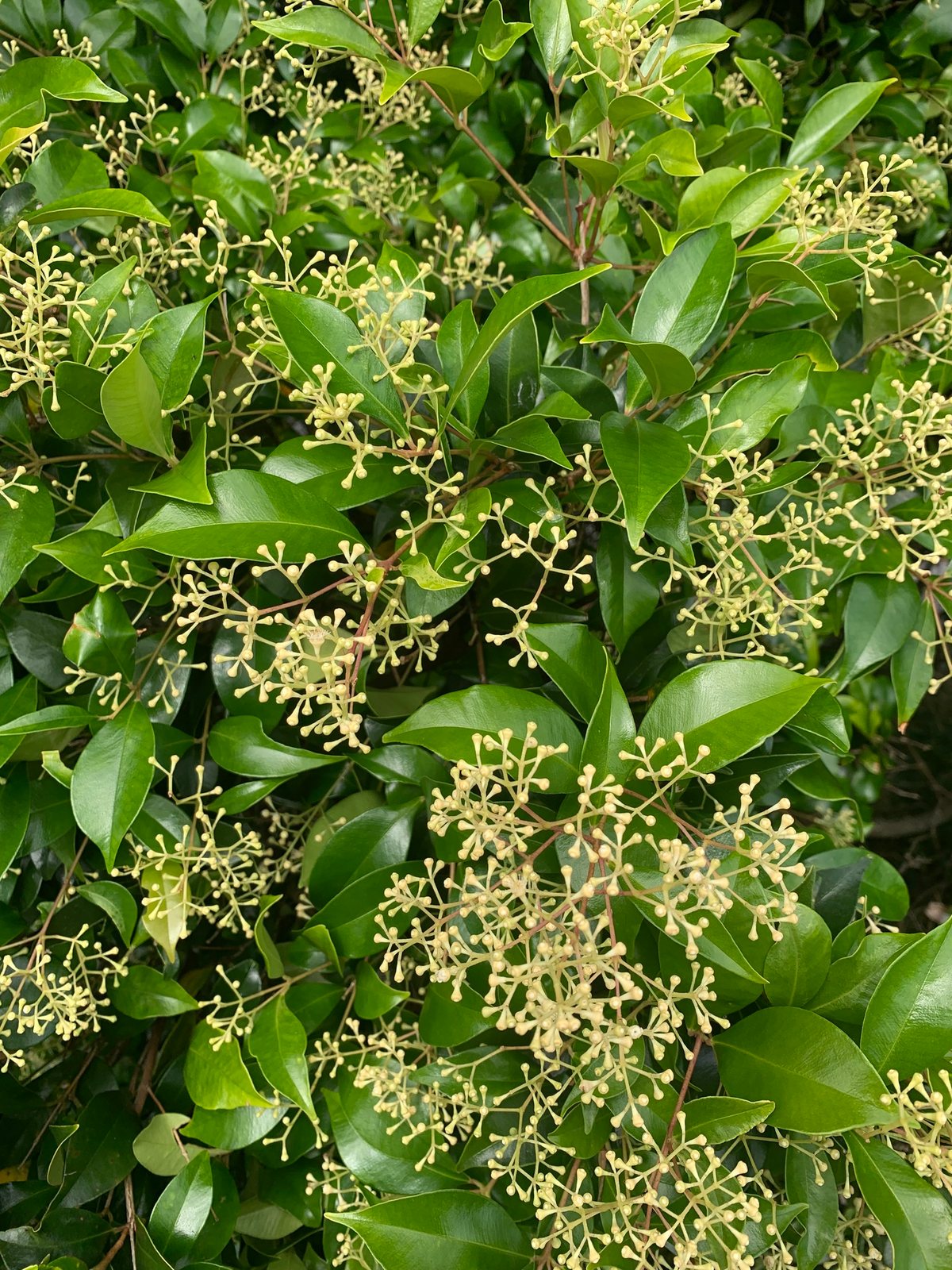
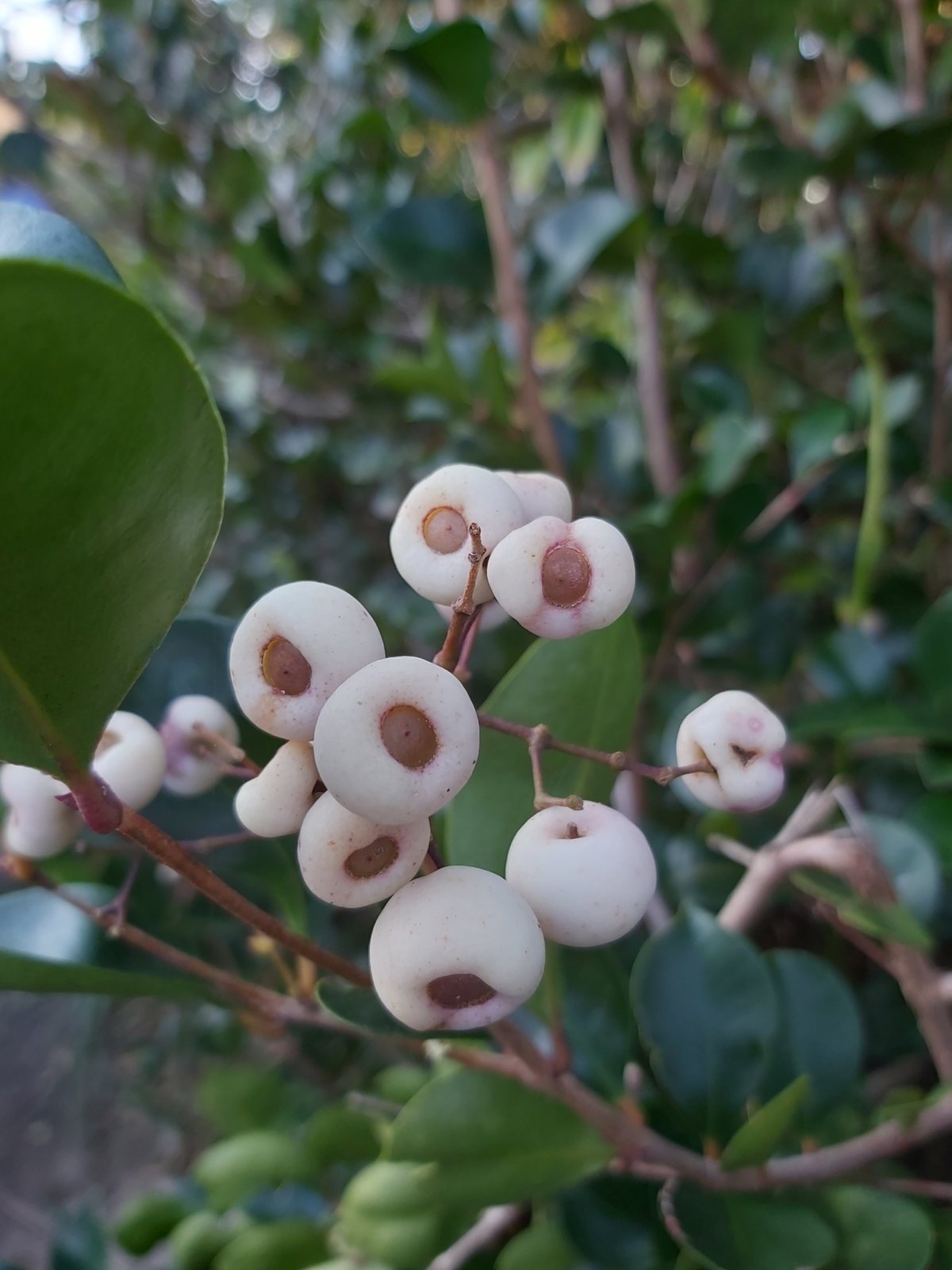
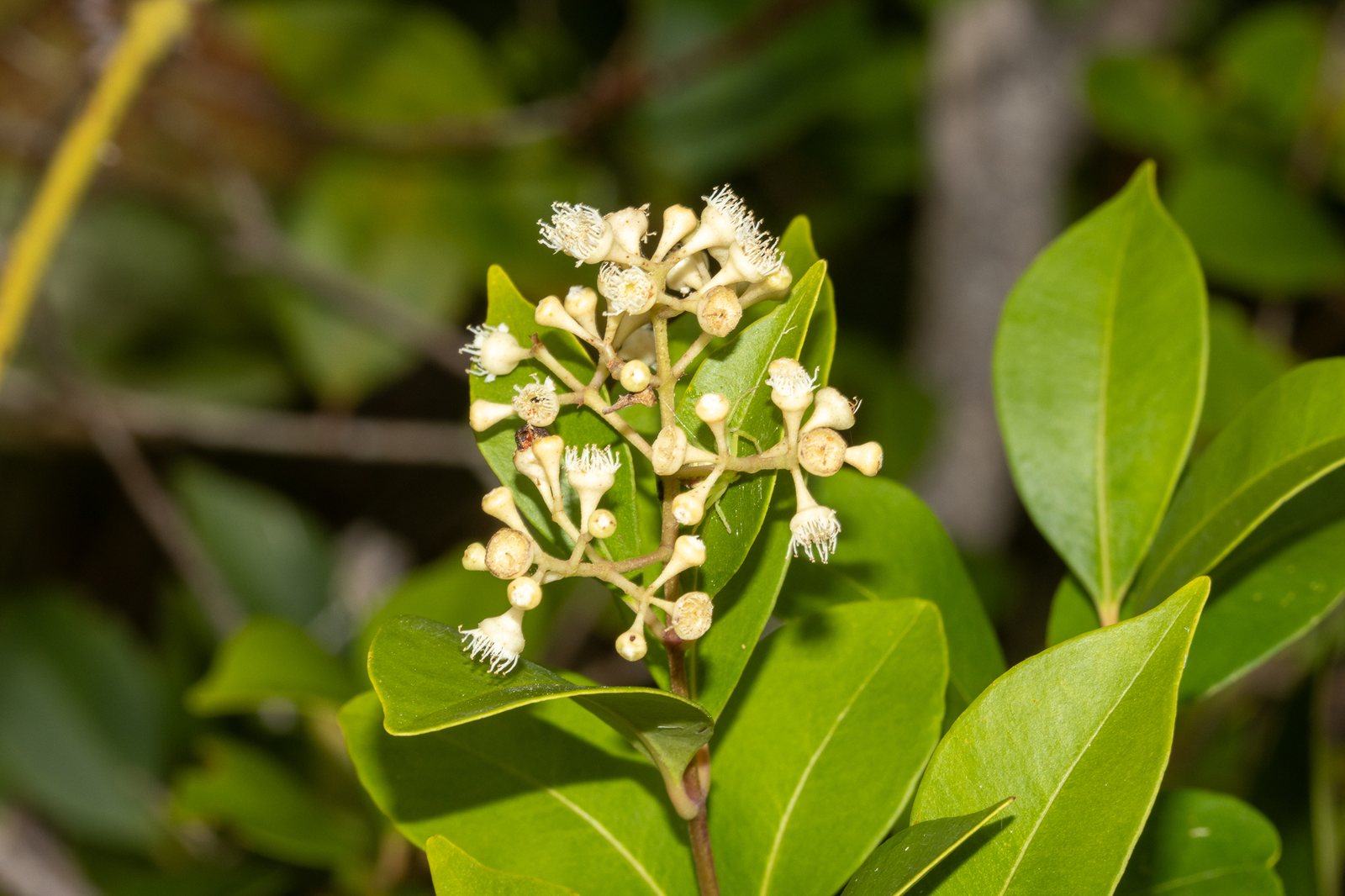
An evergreen Australian rainforest tree grown for its dense, glossy foliage, cream flowers and pink to purple berries. It makes a useful screen, clipped hedge or shade tree in mild climates, but the full-sized species needs substantial room unless regularly pruned. In colder regions, it needs a container and frost-free winter shelter.
At a glance
- Sun
- Full sun to partial shade; growth is denser in good light.
- Water
- Keep young plants evenly moist. Established trees tolerate short dry spells, but hedges grow best with deep watering during prolonged dry weather.
- Soil
- Moist, well-drained soil enriched with organic matter; tolerates clay where drainage is adequate. Slightly acidic to neutral soil is ideal.
- Height
- 30-50 ft (9-15 m) in gardens; potentially taller in rainforest conditions
- Spread
- 15-30 ft (4.5-9 m) if left unclipped
- Flowers
- Late spring to summer; small, fluffy cream-white flowers in clusters.
- Foliage
- Evergreen. Opposite, glossy green leaves with pointed tips; new growth is often bronze or reddish.
- Growth
- Moderate to fast with warmth, moisture and fertile soil
- Care needed
- Medium
The year at a glance
- Pollinators
- Heat tolerant
- Wildlife
- Low allergen
| J | F | M | A | M | J | J | A | S | O | N | D | |
|---|---|---|---|---|---|---|---|---|---|---|---|---|
| Flowers | ||||||||||||
| Fruit | ||||||||||||
| Plant |
Northern hemisphere months. In Australia, shift them by six.
- Difficulty
- Hard
- Toughness
- Needs looking after
Will it suit your garden?
Pick your zone, country, light and whether you have pets.
Full sun is 6 or more hours of direct sun a day, part shade 3 to 6 hours, shade under 3.
How it grows
Planting day
7 ft (2 m)
After 1 year
9 ft (2.6 m)
After 2 years
11 ft (3.3 m)
After 3 years
13 ft (3.9 m)
After 5 years
17 ft (5.1 m)
About 16 years to full size.
From a typical nursery size, at an average rate for this kind of plant. A rule of thumb, not a forecast.
Good to know
- Cats and dogs
- Safe
- Native to
- Australia
- Growth rate
- Fast
Care
Jobs through the year
- WaterApr–May, Sep–Oct, every 14 days
- For established in-ground trees in frost-free sites, water if soil is dry; young trees and pots need more frequent checks.
- WaterJun–Aug, every 7 days
- Deep-water established in-ground trees during prolonged dry weather; keep young trees evenly moist.
- WaterJan–Mar, Nov–Dec, every 14 days
- Check overwintering pots and water lightly before the root ball dries; do not leave pots standing in water.
- FeedApr–May
- Apply balanced slow-release fertilizer at the label rate.
- MulchMay
- Mulch the root zone with organic material, keeping the trunk clear.
- PruneApr–May
- Once severe frost risk has passed, remove dead, damaged or crossing branches.
- PruneJun–Aug, every 30 days
- For hedges only, lightly trim new growth; clipping reduces flowers and fruit.
- ProtectJan–May, Sep–Dec
- Not reliably hardy outdoors in zones 6–7; grow in a movable pot and shelter bright and frost-free before frosts.
- ProtectMay–Sep, every 14 days
- Inspect shoots for scale and rust; follow local plant-health advice if rust is suspected.
- Water deeply through the first two growing seasons, allowing excess water to drain away.
- Apply organic mulch over the root zone, keeping it clear of the trunk.
- Feed in spring with a balanced slow-release fertiliser at the label rate; avoid heavy feeding late in the growing season.
- Protect young plants from frost and cold, drying winds.
- Water container plants before the root ball dries out completely, and use a pot with open drainage holes.
Pruning. For hedges, lightly trim new growth in late spring and summer, keeping the base wider than the top; frequent clipping reduces flowers and fruit. For a tree, remove dead, damaged or crossing branches in late winter or early spring, after severe frost risk has passed.
Through the year
- Spring
- Plant after frost risk has passed, water thoroughly and mulch the root zone.
- Spring
- Apply a measured feed and check young plants for frost damage before pruning.
- Late spring
- Trim hedges after a flush of growth, or leave unclipped plants to flower.
- Summer
- Water deeply during dry spells and inspect shoots for scale insects.
- Autumn
- Clear fallen fruit from paths and remove unwanted seedlings.
- Winter
- Protect young plants during frosts and move containers under bright, frost-free shelter where winters are cold.
In the garden
- Clip into a tall evergreen boundary hedge for year-round privacy.
- Leave as a small to medium shade tree in a spacious lawn or mixed border.
- Use as a green backdrop to tree ferns, clivias and other shade-tolerant planting.
- Plant in a mixed Australian native screen, allowing space for its mature crown.
Garden styles it suits: Australian native, Formal, Woodland, Wildlife garden, Tropical and Green on green.
Plant it with: Lomandra, Dianella, Clivia, Bird's nest fern, Australian tree fern and Native violet.
Wildlife: Flowers attract bees and other insects. Birds eat the fruit, disperse the seeds and use dense growth for shelter.
Problems to watch for
- Scale insects and sooty mould: inspect stems and leaf undersides, control associated ants and treat accessible infestations with horticultural oil according to the label.
- Myrtle rust: yellow-orange pustules and distorted young growth need prompt attention; follow local plant-health advice and avoid moving infected plants or cuttings.
- Root decline in waterlogged soil: improve drainage and reduce watering; do not plant into ground that stays saturated.
- Frost scorch: shelter young plants and wait until spring growth begins before removing damaged shoots.
Safety
Not known to be toxic to people, cats, dogs or horses, although animal-specific safety information is limited. The ripe flesh is edible, but leaves and seeds are not customary foods; large amounts of fruit may cause stomach upset.
Where it spreads. An invasive environmental weed in parts of New Zealand, particularly the northern North Island, where birds spread its seeds into native vegetation. Check local planting restrictions and remove seedlings beyond the planting area.
Easily confused with
Brush cherry (Syzygium australe)
Often has broader leaves with noticeably wavy margins and reddish pear-shaped fruit. Lilly pilly usually has flatter leaf margins and more rounded fruit; garden forms can blur these differences.
Magenta lilly pilly (Syzygium paniculatum)
Typically has vivid magenta fruit and leaves with blunter, sometimes notched tips. Syzygium smithii generally has more distinctly pointed leaf tips and paler pink to purple fruit.
The name
The species name smithii honours the English botanist James Edward Smith.
Propagation. Sow fresh seed after removing the fruit flesh; seed loses viability as it dries. Take semi-ripe cuttings during summer to reproduce a selected plant, though rooting can be variable.
Checked against open data
- Accepted botanical name
- Syzygium smithii
- Native range
- New South Wales, Queensland and Victoria.
- Measured
- Average height 1600 cm.
Sources: GBIF (CC BY 4.0) and Trefle (CC BY 4.0). The care and design notes are LandscapeGPT's own.
See it in your own yard.
Upload a photo of your yard and see it redesigned with plants that suit your climate, each checked against your zone.